


Antique Dining Table Centerpiece
An antique dining table centerpiece commands attention at the heart of the room, bringing historical elegance and silver or glass brilliance to formal gatherings.
Antique Dining Table Centerpiece
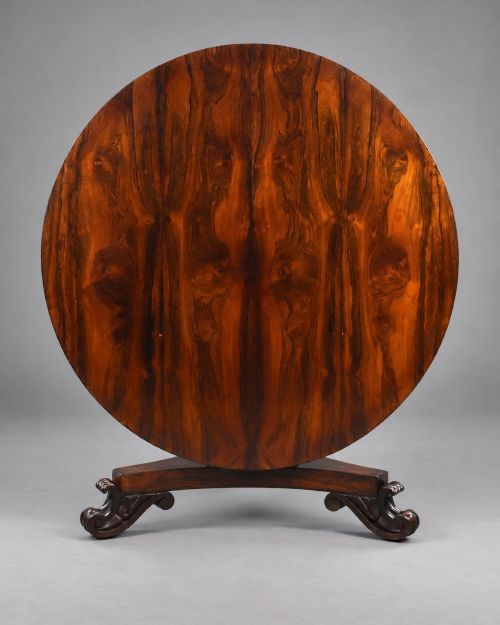
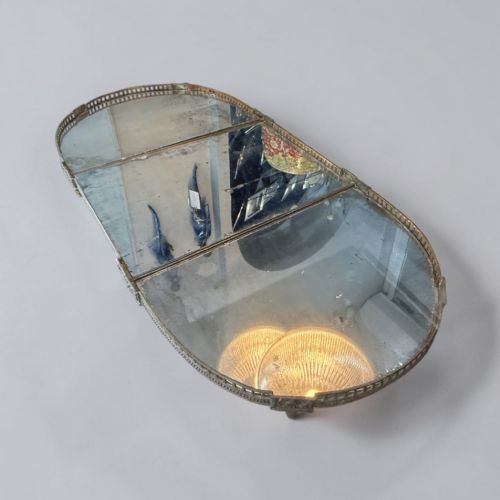
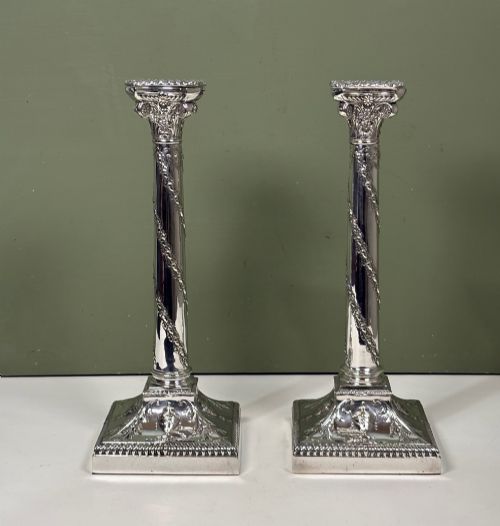
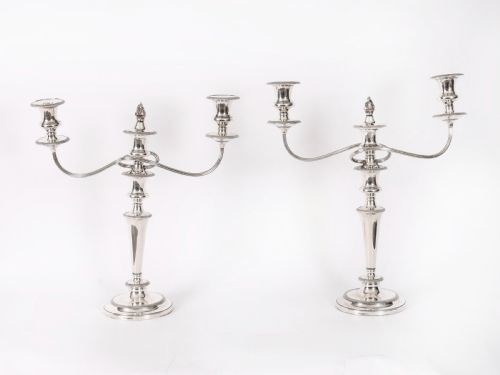
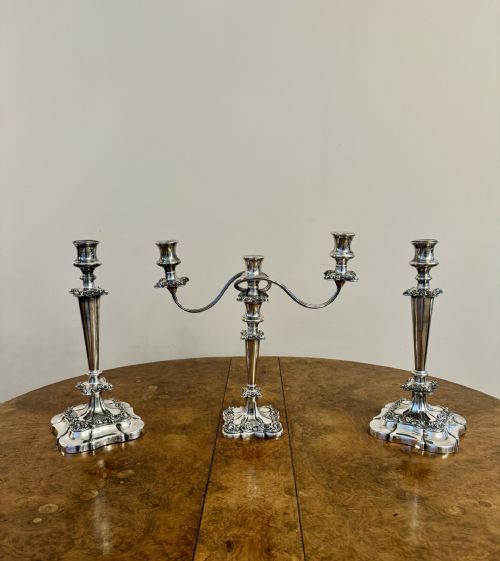
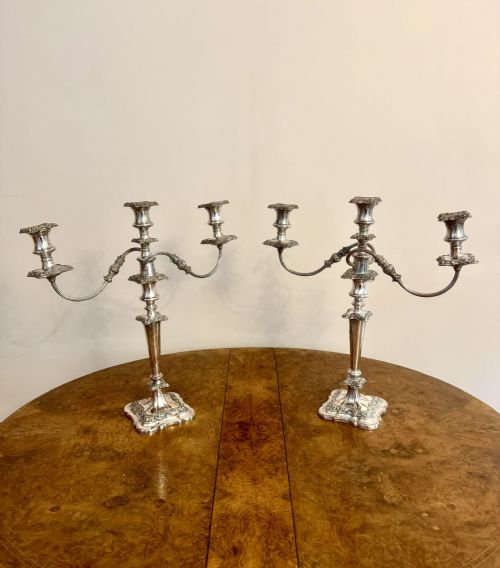
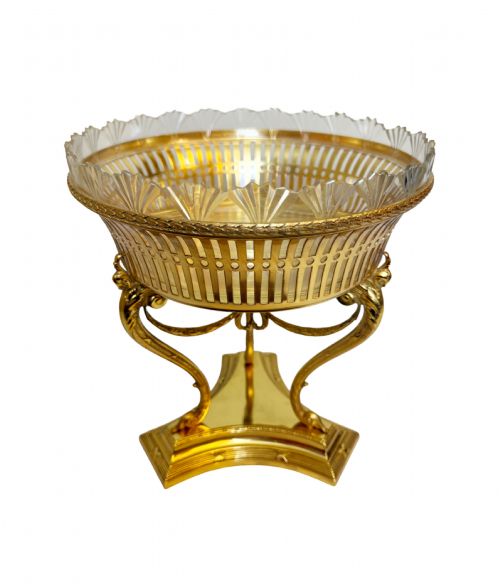
An antique dining table centerpiece encompasses grand candelabras, multi-tiered epergnes, and decorative bowls designed to anchor a formal dining setting. Buyers seeking these focal points encounter substantial Victorian and Edwardian examples alongside earlier Regency and Georgian pieces.
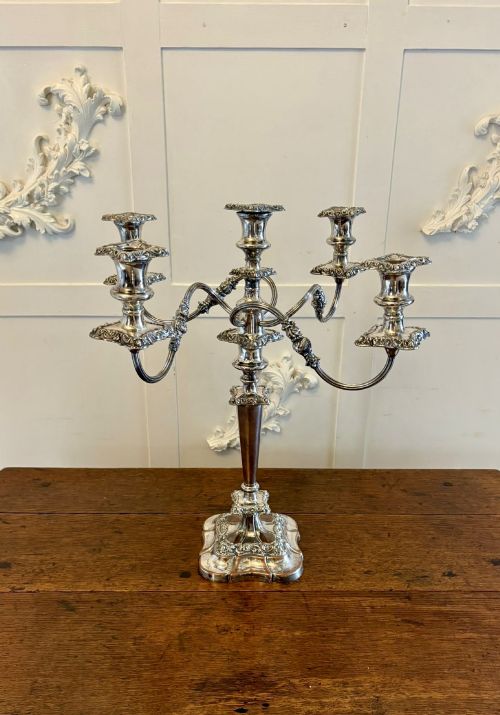
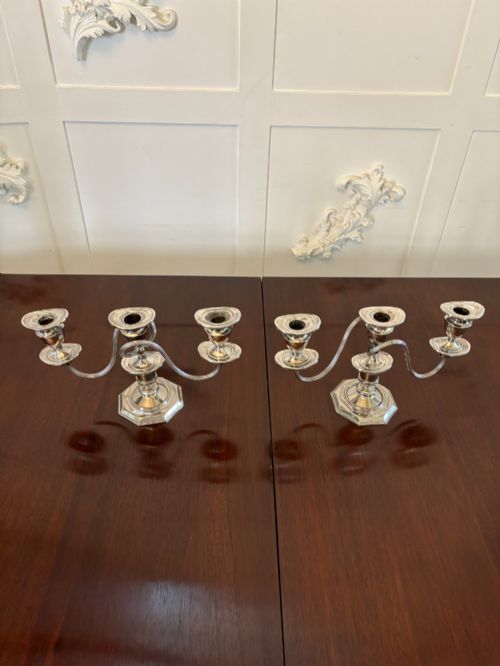
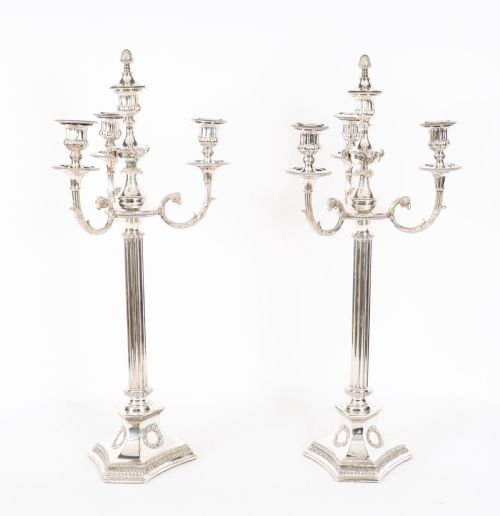
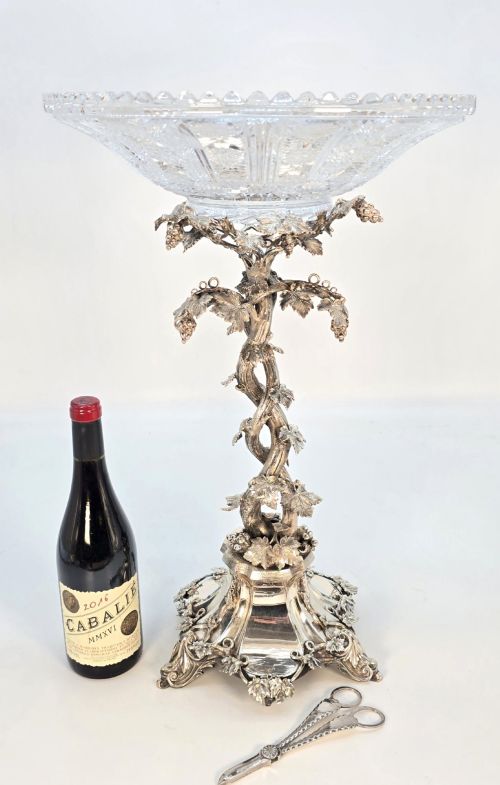
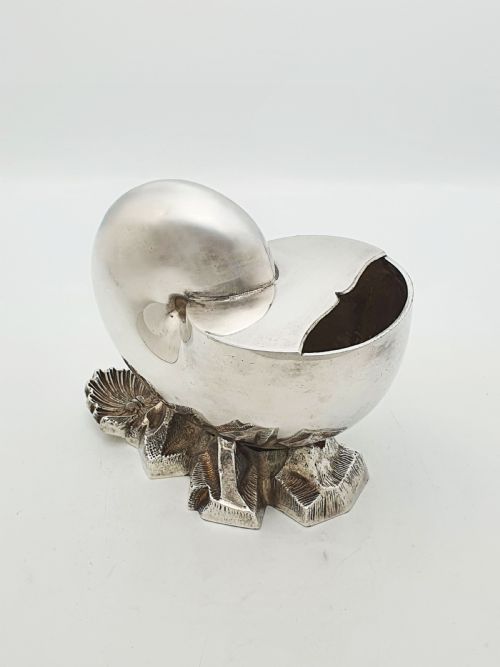
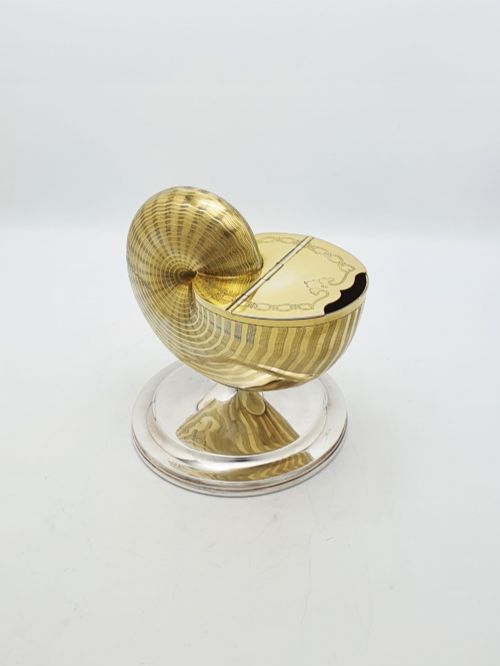
The selection ranges from tall five-branch silver plated candelabras with detachable sconces to cut glass bowls and figural silver centrepieces. These items reflect the elaborate tablescapes of the nineteenth and early twentieth centuries, fashioned to impress guests during substantial meals.
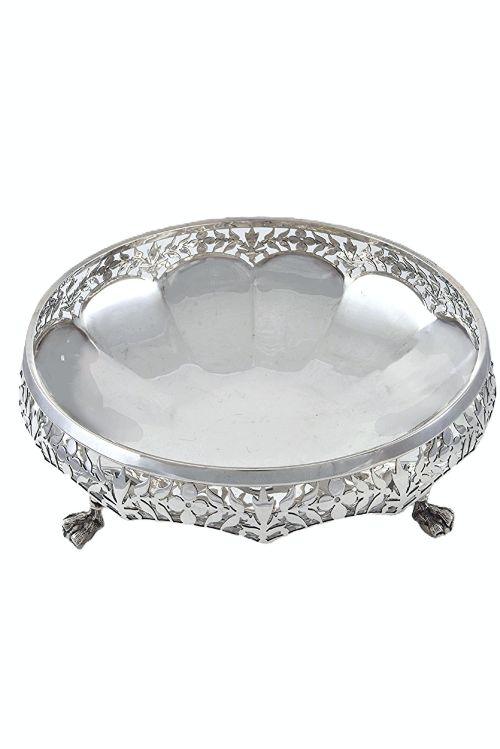
Origins span English workshops, French foundries, and continental makers, incorporating styles from Neoclassical revival to ornate Rococo and Art Nouveau. Each form serves as a distinct sculptural addition, whether configured for candlelight, fruit display, or floral arrangements.
Materials and construction methods
Silversmiths utilised sterling silver and silver plate over base metals, often employing heavy casting techniques to achieve sturdy multi-light candelabras and detailed cruet sets. Plating methods of the nineteenth century applied generous silver layers that withstand decades of careful cleaning while retaining their reflective surface.
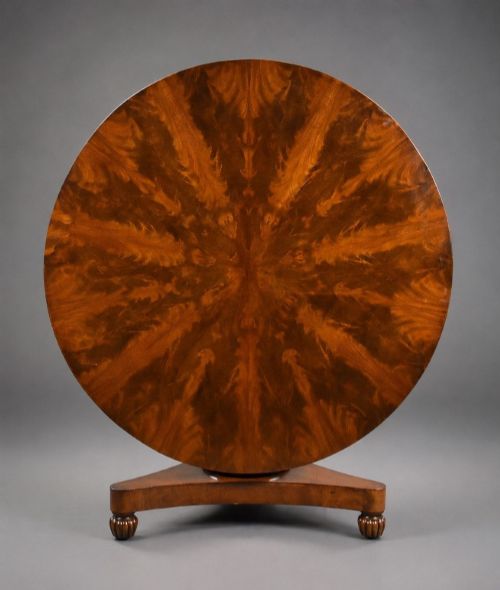
Cut glass inserts, cranberry glass bowls, and etched glass epergnes were shaped by skilled glassblowers and cutters, then fitted precisely into metal mounts. Mahogany structures, seen in rotating lazy susans and cheese coasters, relied on traditional joinery and carved turning to combine utility with refined timber grains.
Antique Dining Table Centerpiece Retail Price Guide 2026
Typical asking prices for dining table centerpiece among the pieces listed under this phrase on Sellingantiques today, from the lower quarter to the upper quarter. They describe what is for sale here now, not the wider market.
Listings feature items from the Regency period through the Edwardian era, spanning silver plate, sterling silver, mahogany, and cut glass.
Distinguishing fineness in design
Quality rests in the crispness of chased and cast ornamentation, where superior pieces exhibit deep relief without softening in floral or scroll motifs. Maker marks from established firms such as Garrard or Walker & Hall indicate higher standards of workshop execution and metal purity.
The integrity of component parts, including matching detachable sconces, unblemished cut glass inserts, and stable weight distribution in multi-branch candelabras, separates standard domestic items from exhibition-grade examples. Thicker silver plate and well-preserved mercury gilding on bronze elements preserve the original visual impact.
Garrard & Co·Walker & Hall·William Hutton & Sons·Gioielleria Agliardi Cassino·Lerolle Fres
The Antique Dining Table Centerpiece Glossary
- Candelabra
- A branched candlestick holding multiple lights. Larger Victorian examples often feature removable arms to convert the piece into a single candlestick.
- Epergne
- An ornamental centrepiece featuring a central bowl with hanging baskets or trumpets. These were traditionally used for sweetmeats, fruit, or flowers.
- EPNS
- Electroplated Nickel Silver. A common base metal method introduced in the nineteenth century for coating durable white metal alloys with a layer of pure silver.
- Sconce
- The socket or pan at the top of a candlestick designed to catch dripping wax. Detachable versions facilitate easier cleaning after use.
- Cruet set
- A matched group of glass bottles or containers held within a metal stand for condiments and sauces. They occupied a central position on formal dining tables.
Antique Dining Table Centerpiece: Frequently Asked Questions
What is an epergne used for?
An epergne serves as an elaborate table centerpiece designed to hold fruit, sweetmeats, or floral displays across its central bowl and hanging baskets.
Victorian hosts utilised these multi-tiered structures to add height and visual variety to formal dining arrangements.
How do I clean silver plated centerpieces?
Cleaning requires a soft microfiber cloth and a gentle silver polish formulated specifically for plated items. Vigorous rubbing should be avoided to protect the underlying metal layer from exposure.
Detachable sconces and glass inserts can be removed and washed separately in warm soapy water before reassembly.
Are candelabras marked with dates?
Makers often stamped sterling silver pieces with assay office marks and date letters that identify the exact year of manufacture. Silver plated items rely on stylistic markers, registry numbers, or maker stamps rather than official date hallmarks.
Examining the casting style and screw-threads beneath the base helps determine the period.
How do I style a centerpiece on a table?
Placing a large candelabra or epergne directly in the middle of a dining table creates an immediate focal point without obstructing conversation across the room. Lower branches and wide bowls allow candles to burn safely above seated guests.
Surrounding the base with seasonal foliage or matching candlesticks unifies the overall tablescape.