
Antique Dining Pedestals
These antique dining pedestals and pillar tables provide the sturdy support and flexible format needed for large dining arrangements.
Antique Dining Pedestals
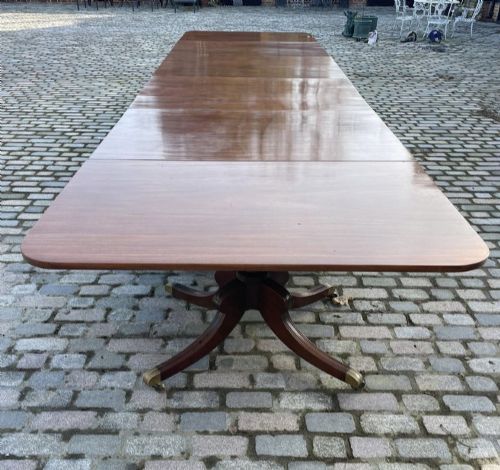
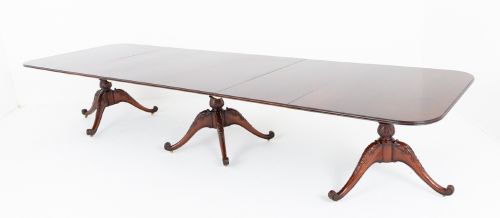
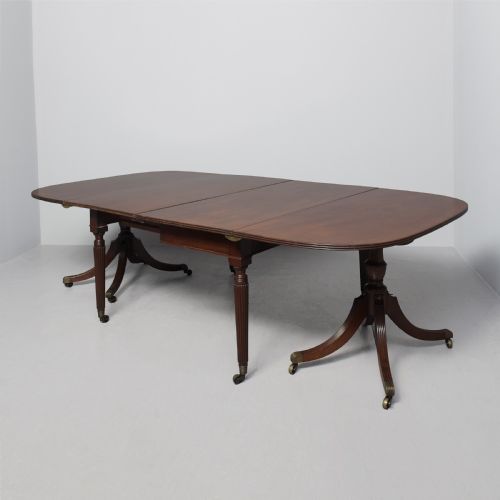
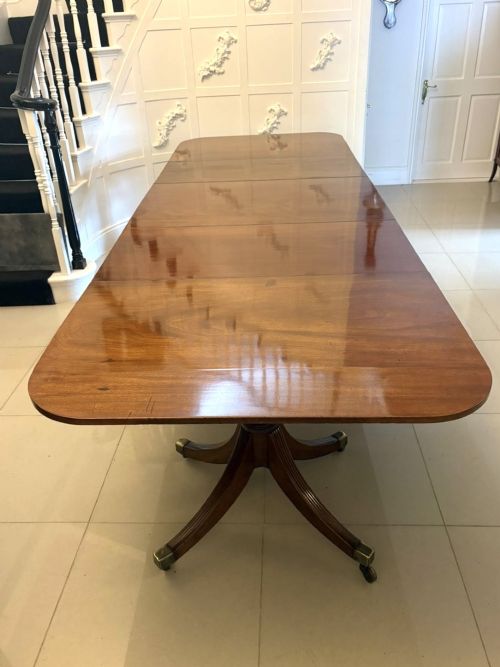
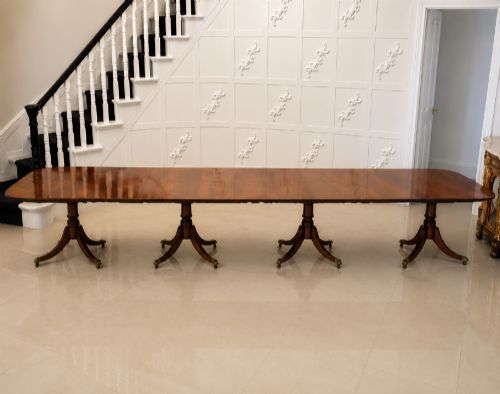
When searching for antique dining pedestals, buyers encounter multi-pillar extending tables designed to seat large dinner parties across several removable sections.
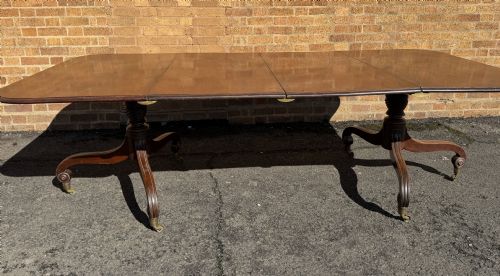
The selection ranges from early George III and Regency twin-pillar formats to extensive Victorian and Edwardian three- and four-pedestal banquet tables.
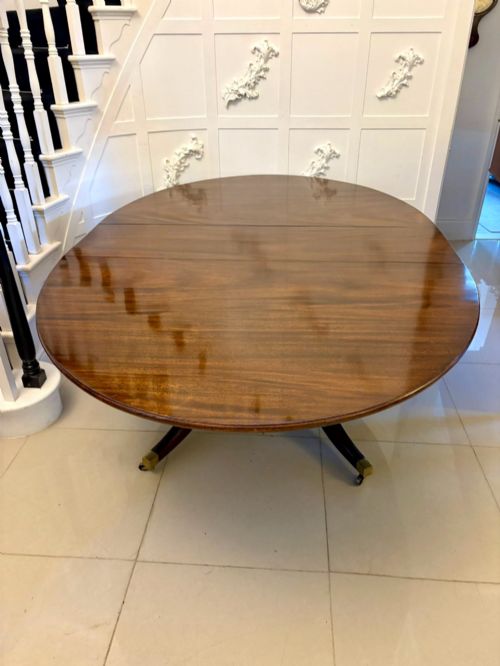
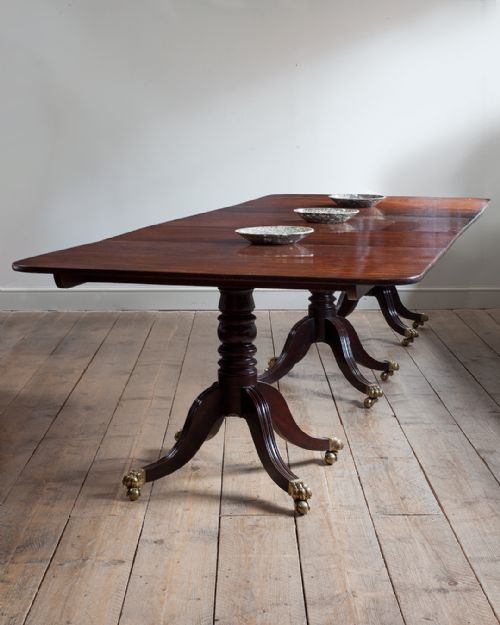
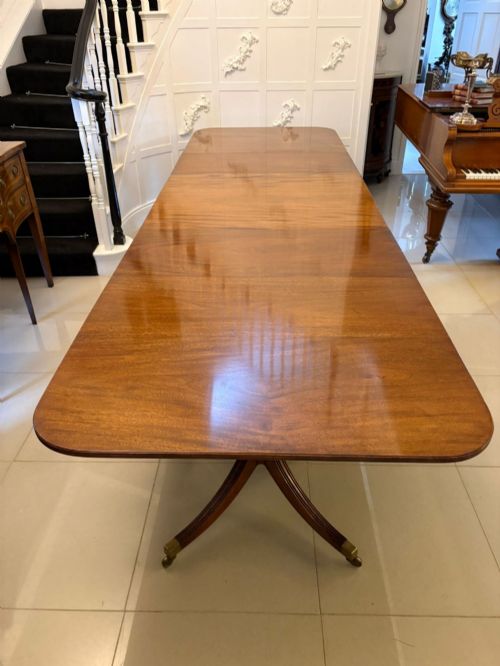
Makers utilised solid timbers and figured veneers to construct these centrepieces, often pairing polished mahogany with brass castors for ease of movement.
Materials and construction methods
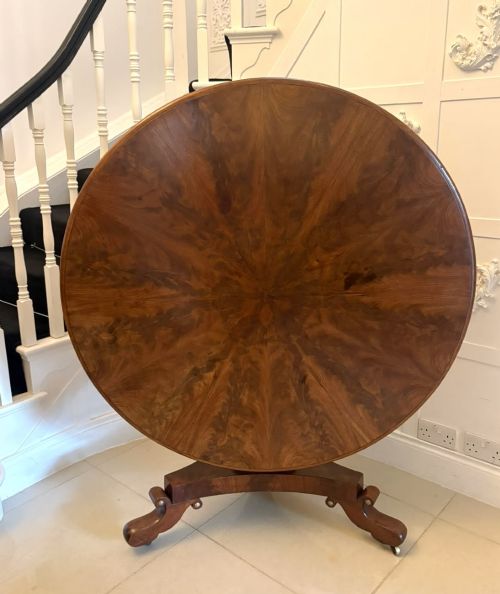
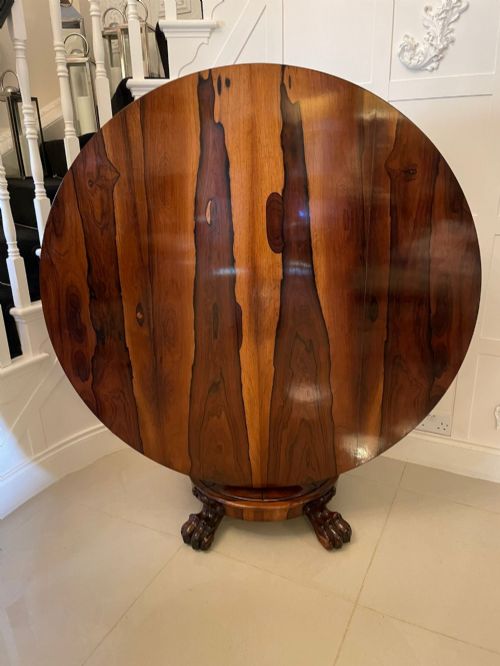
Cabinet makers relied heavily on dense mahogany, rosewood and burr walnut, frequently applying flame veneer or boxwood inlay to tabletop surfaces.
Pillar supports incorporate turned or carved wooden columns rising from tripod or quadrapod bases fitted with cast brass toes and castors.
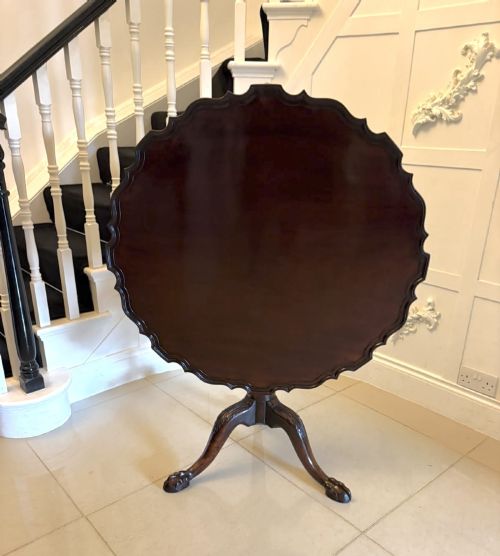
Several tables include tilt-top mechanisms designed to store flat against the wall, saving precious floor space after dinner.
Assessing quality in pedestal tables
Superior examples display crisp hand-carved detailing on the pedestal bases and consistent grain matching across multiple extension leaves.
The smoothness of the internal runner mechanism and the stability of the central pillars distinguish workshop pieces of high merit from standard production.
Gillows of Lancaster·Hewetsons London·Thomas Butler of London
The Antique Dining Pedestals Glossary
- Pedestal
- A central columnar support resting on branching feet that holds the weight of a large table top.
- Extending table
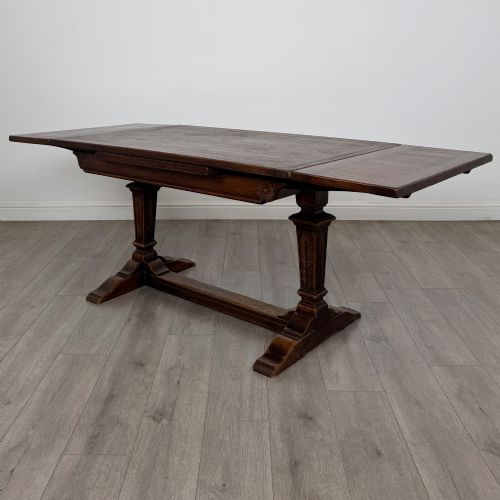
- A dining table designed with drop-in leaves and internal runners to expand seating capacity.
- Tilt top
- A table top hinged to tip vertically when not in use, allowing convenient storage against a wall.
- Flame mahogany
- A distinct wood veneer figure resembling flickering flames, sliced from timber forks.
Antique Dining Pedestals: Frequently Asked Questions
How do multi-pillar tables extend?
These tables utilise internal wooden runners and drop-in leaves supported by additional central pedestals when fully pulled apart.
This configuration allows hosts to adjust the table length according to the number of guests attending.
What periods do these pedestals date from?
The listings span the Georgian, Regency, William IV, Victorian and Edwardian eras, stretching into early twentieth-century revivals.
Earlier pieces typically feature solid mahogany construction while later Victorian examples often incorporate burr walnut and rosewood.
Are tilt-top tables stable for dining?
Tilt-top tables lock securely into a horizontal position via a brass catch or wooden peg mechanism beneath the top.
When unlocked, the top pivots downward for compact storage against the perimeter of a room.
How many diners do three-pedestal tables seat?
Three-pedestal formats generally accommodate twelve to sixteen diners depending on the presence of extra insertion leaves.
Four-pedestal banquet variants extend further to seat over twenty people comfortably.