

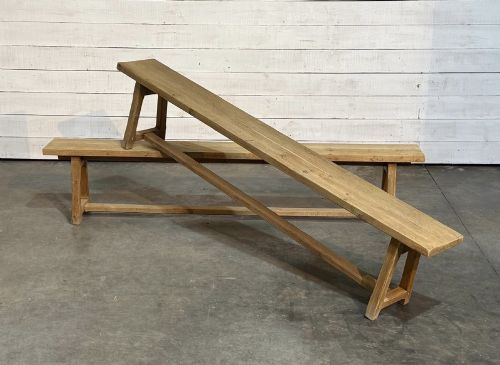
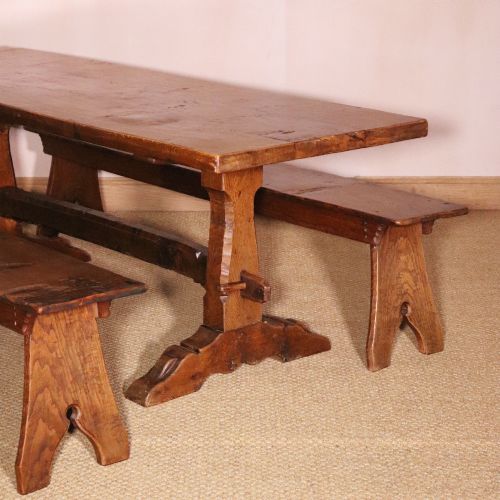
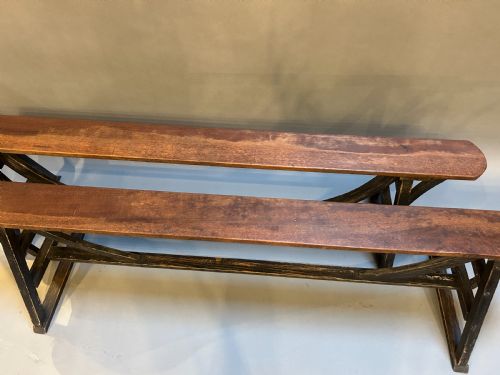
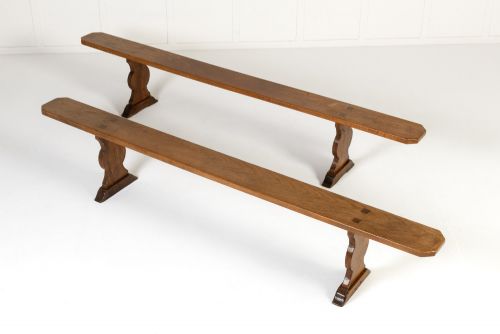




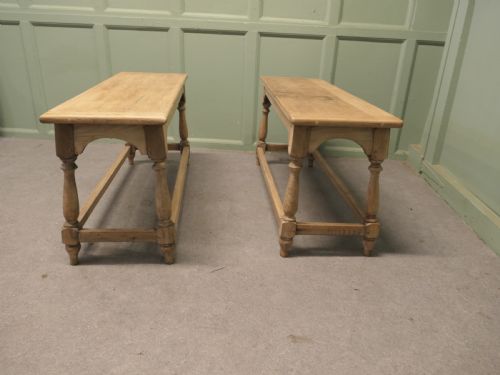
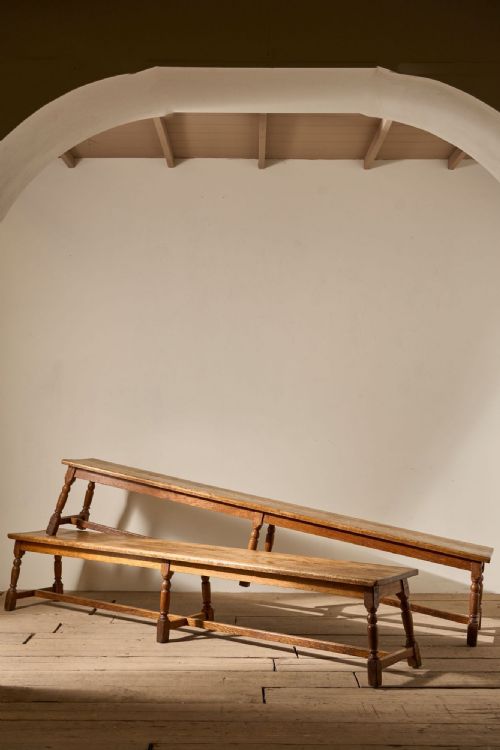


Antique Dining Bench Pair
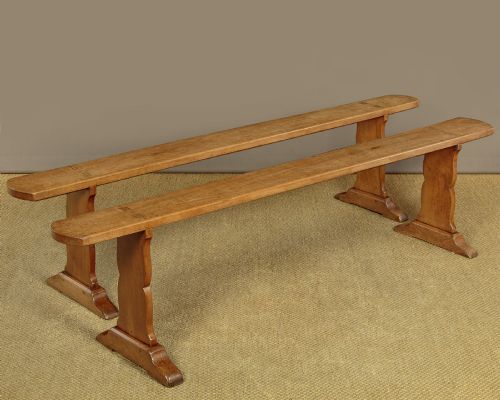
An antique dining bench pair offers a practical seating arrangement for long tables, pairing matching timbers with the character of past centuries.
Antique Dining Bench Pair
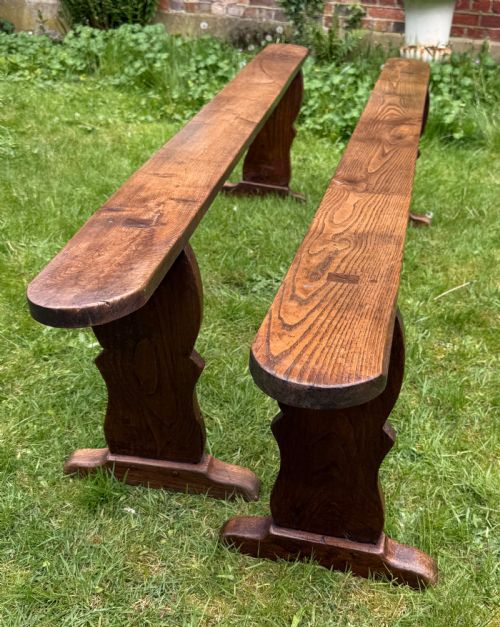
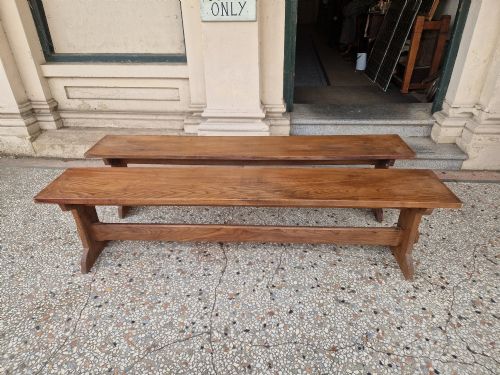
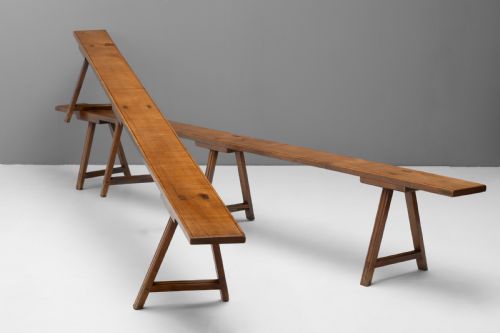
When you search for an antique dining bench pair, you find matched sets of long seating designed to accompany large tables in kitchens and dining rooms. These pieces originate from various periods including the 19th century, Victorian era, and early 20th century.
Most examples serve communal dining purposes, emerging from domestic kitchens, schoolrooms, and halls where sturdy seating for multiple diners proved essential. Finding them in matched pairs remains a specific attribute that distinguishes these listings from single seating.
How they were made
Joiners and country craftsmen constructed these seats using solid native timbers such as oak, pine, cherrywood, elm, and fruitwood. These woods were chosen for their local availability and structural strength.
Construction techniques relied on traditional jointing methods, utilising pegged mortise and tenon joints to withstand heavy daily use. Surfaces often show the marks of hand-planing and natural weathering over generations.
Antique Dining Bench Pair Retail Price Guide 2026
Typical asking prices for dining bench pair among the pieces listed under this phrase on Sellingantiques today, from the lower quarter to the upper quarter. They describe what is for sale here now, not the wider market.
Several school benches retain the ink stains and carved initials of generations of restless pupils.
What varies in quality
Quality rests primarily in the integrity of the timber and the depth of the surface patina developed through decades of domestic use. Pieces retaining their original uncompromised finish demonstrate superior character compared to heavily restored surfaces.
Proportion and matching symmetry between the two benches determine the visual success of the pair. Sturdiness of the original underframe construction separates robust daily seating from examples requiring structural intervention.
The Antique Dining Bench Pair Glossary
- Refectory
- A long dining table or associated seating designed for communal meals in large halls or monastic spaces.
- Joint bench
- A piece of seating constructed with tight mortise and tenon joints, often associated with early oak furniture traditions.
- Fruitwood
- A dense timber derived from fruit-bearing trees such as cherry or pear, prized by country makers for its fine grain.
- Settee
- An upholstered or wooden bench featuring a backrest, providing more formal seating than a backless bench.
Antique Dining Bench Pair: Frequently Asked Questions
How were dining benches used historically?
These benches provided practical, space-saving seating alongside long dining tables in kitchens, halls, and schoolrooms. Their length allowed multiple diners to sit together easily.
They offered a communal alternative to individual chairs, sliding neatly beneath tables when not in use to maximise floor space.
Can I mix these benches with modern tables?
Matching antique benches with contemporary tables creates a striking contrast between old timber and modern design. The warm patinas of pine, oak, and cherrywood anchor contemporary dining spaces.
Consider the height and length of your table carefully to ensure the benches slide underneath comfortably and provide correct ergonomic seating.
How do I care for antique wooden benches?
Maintain wooden surfaces by dusting regularly with a dry cloth and avoiding excessive moisture. Natural beeswax applied occasionally helps nourish the historic timber.
Keep benches away from direct heat sources and strong sunlight to prevent the wood from drying out or splitting over time.
What defines French Provincial style?
French Provincial furniture reflects the regional vernacular craftsmanship of 18th and 19th-century rural France. It combines sturdy utility with gentle curves and local fruitwood or oak timbers.
These pieces prioritise practical domestic function while displaying subtle decorative details characteristic of their specific region of origin.