


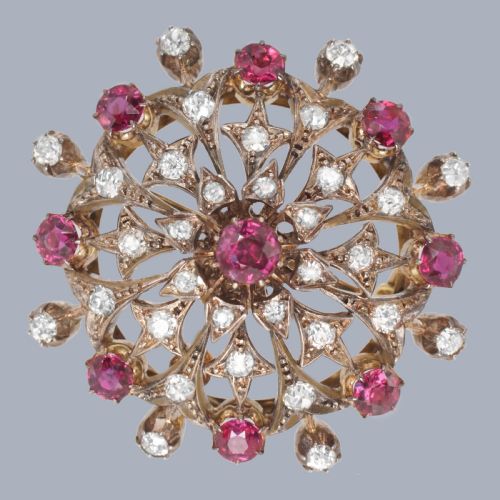

Antique Diamond Star
An antique diamond star combines celestial motifs with old-cut stones, offering a wearable piece of history designed to catch the light.
Antique Diamond Star
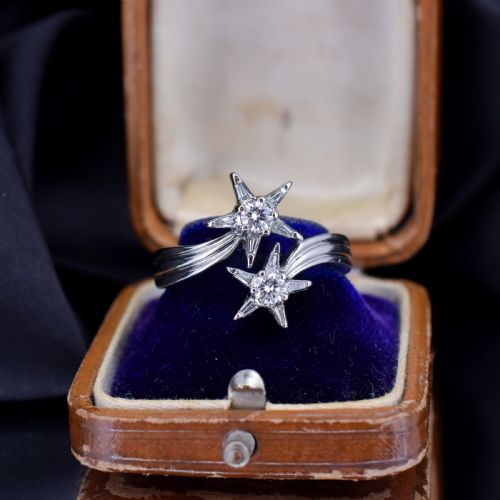
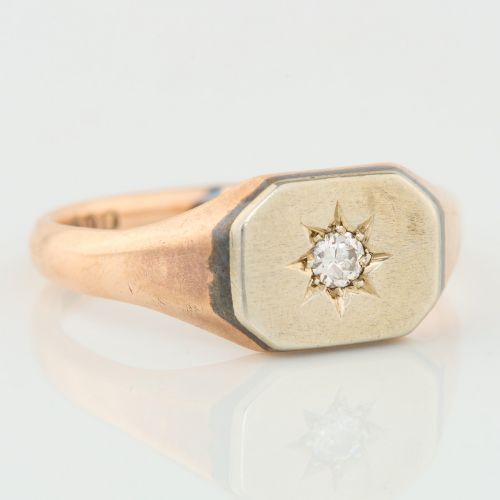
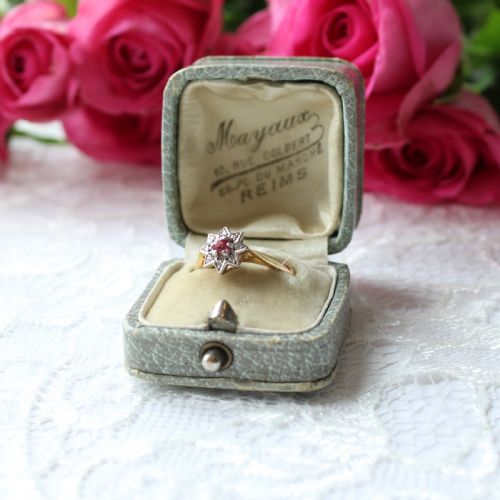
When searching for an antique diamond star, buyers encounter pieces from the Victorian and Edwardian periods, alongside nineteenth-century and early twentieth-century examples. These items take the form of rings, brooches, pendants, and lockets, frequently incorporating stellar motifs.
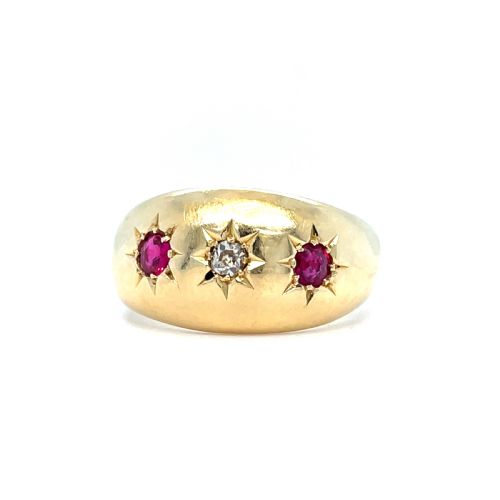
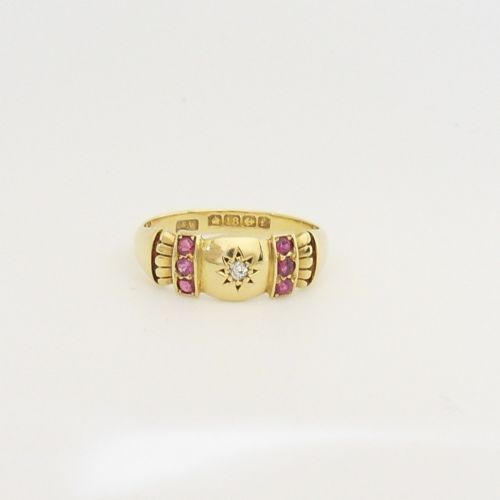
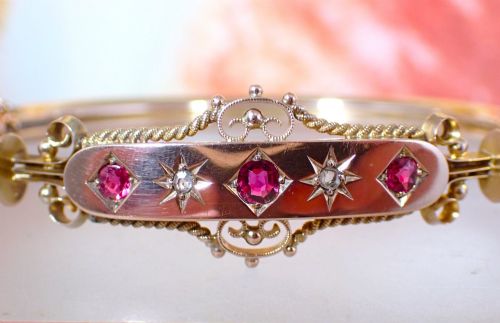
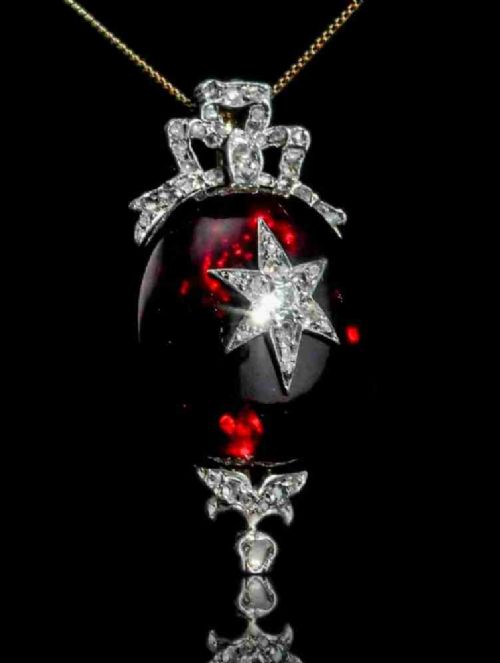
The most common versions met on this page are gypsy rings and starburst pendants, often combining diamonds with rubies, sapphires, pearls, or garnet cabochons. Pieces range from delicate 9ct and 18ct gold settings to substantial silver-topped brooches carrying substantial diamond carat weights.
Originating predominantly from British and European workshops, these jewels reflect the romantic and revivalist aesthetics of the nineteenth century. Buyers select them for their combination of fine metalwork and celestial symbolism.
How they were made
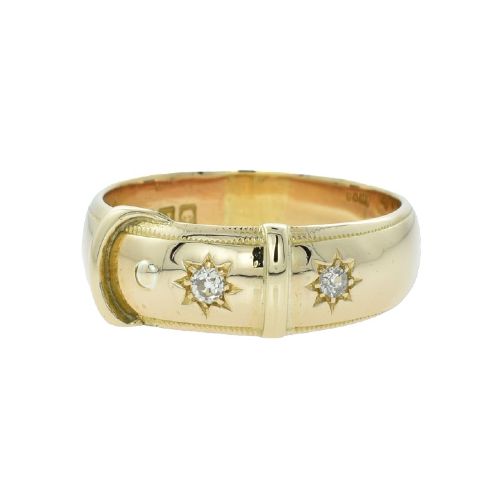
Jewellers utilised yellow gold, ranging from 9ct to 18ct, alongside silver-topped settings designed to enhance the brilliance of old-cut diamonds against a dark background. Stones were hand-set into star motifs, gypsy mounts, or closed-back bezels.
Craftsmen incorporated natural pearls, rubies, sapphires, and turquoise into gold frames using claw, flush, or gypsy settings. Many brooches and pendants featured convertible fittings, allowing a single piece to function as both a necklace ornament and a fastener.
Some Victorian stars hide secret compartments or mourning hair behind rock crystal cabochons.
What varies in quality
The distinction between tiers rests upon the weight and cut of the diamonds, where old European and rose-cut stones dictate the presence and distribution of light. Heavier gold gauges and intact hallmarks also separate standard production from superior examples.
Construction integrity defines the upper range, seen in secure stone settings, well-matched secondary gems such as rubies or pearls, and the retention of original conversion fittings on brooches and pendants.
The Antique Diamond Star Glossary
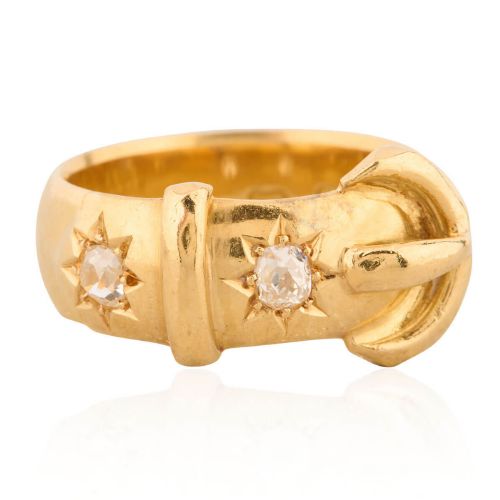
- Gypsy ring
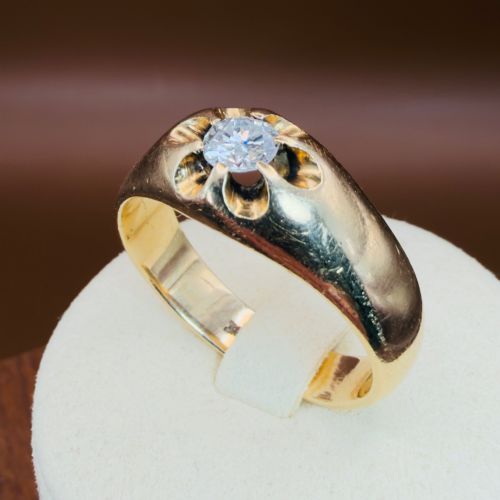
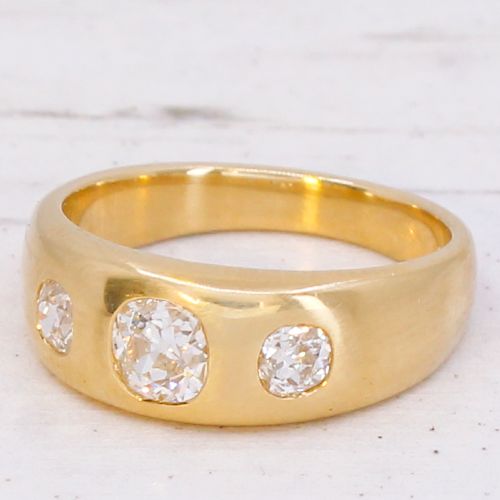
- A style where stones are flush-set directly into a heavy tapered band, popular during the nineteenth century. This mounting protects the girdle of the diamond.
- Old-cut diamond
- A hand-faceted stone predating modern brilliant cuts, characterised by a smaller table, higher crown, and open culet. These diamonds produce a softer, candlelit sparkle.
- Starburst
- A design arrangement where stones or engraving radiate outward from a central point to form a star shape. This motif dominated Victorian celestial jewellery.
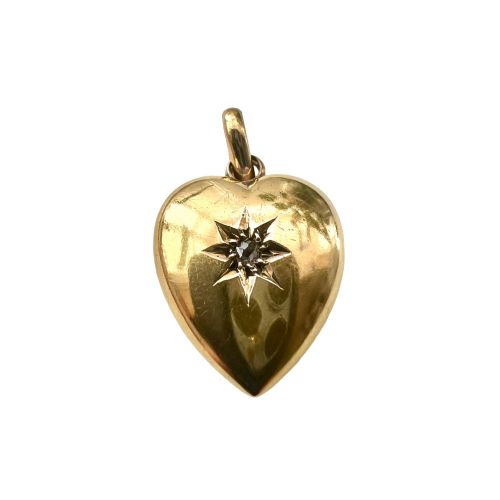
- Puffy heart
- A three-dimensional hollow pendant formed from two soldered metal halves, often decorated with star-set diamonds. They were popular tokens of affection in the late Victorian era.
- Trilogy ring
- A setting featuring three principal stones, frequently combining diamonds with rubies or sapphires. The arrangement represents past, present, and future.
Antique Diamond Star: Frequently Asked Questions
How do I wear an antique diamond star brooch?
Antique diamond star brooches can be pinned to lapels, silk scarves, or heavy winter coats using their original pin and catch mechanisms. Many include hidden loops at the rear, allowing them to hang from a chain as a pendant.
Because these pieces often feature delicate old-cut stones in silver and gold settings, it is best to secure them to sturdy fabrics to prevent pulling or tilting during wear.
How can I date my antique diamond star jewellery?
Dating relies on examining the metal hallmarks, setting styles, and the cut of the diamonds. Victorian pieces often utilise closed-back settings or silver-topped gold, while Edwardian examples incorporate lighter open-work platinum or yellow gold mounts.
Assay office marks and date letters stamped inside rings or on pendant loops provide precise confirmation of the year of manufacture.
Are antique diamond star pendants convertible?
Many antique star pendants include detachable pin stems and folding loops on the reverse, designed so the owner could wear the piece as either a brooch or a necklace ornament. This versatility was common in the nineteenth century.
Inspecting the back of a piece reveals hinges and safety catches that indicate dual-purpose functionality.