



Vintage Celestial Jewellery
Vintage celestial jewellery captures the enduring fascination with the night sky through rings, pendants, and brooches crafted in gold, silver, and gemstones.
Vintage Celestial Jewellery
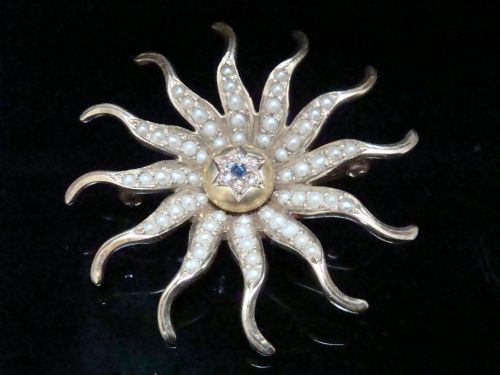
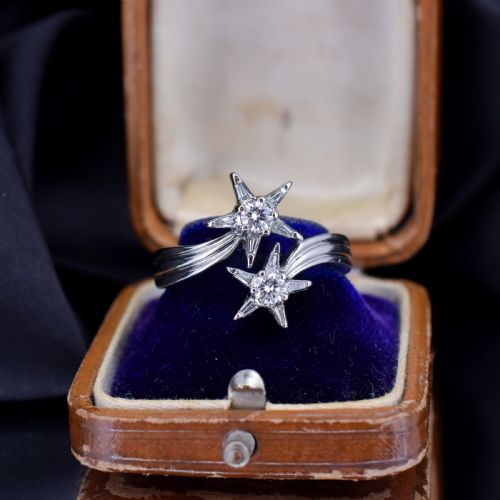
When searching for vintage celestial jewellery, buyers encounter a distinct array of star and crescent motifs spanning the Victorian, Edwardian, and mid-century periods. These pieces take the form of rings, pendants, and brooches designed to evoke astronomical bodies.
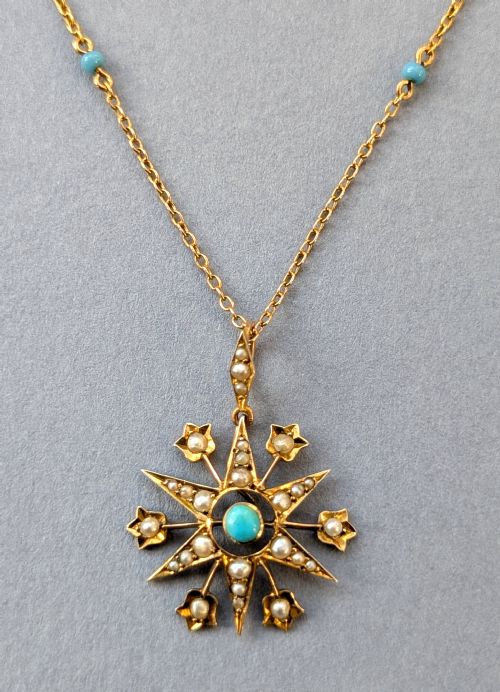
The most common examples on this page are turquoise star rings, diamond double star rings, and sapphire or ruby crescent brooches. These items combine precious metals with stones like seed pearls and turquoise to create miniature night skies.
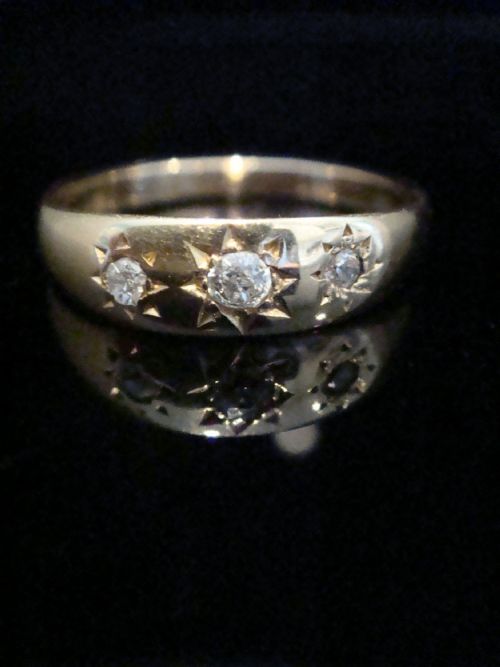
The selection ranges from nineteenth-century gypsy set bands to 1960s yellow gold and white gold pendants. Each piece reflects the aesthetic preferences of its specific era while maintaining the overarching celestial theme.
How they were made
The construction of these pieces relies heavily on various carats of yellow and white gold, alongside silver and platinum alternatives. Gemstones including diamonds, rubies, sapphires, and turquoise are set directly into the metal or held within claw and gypsy settings.
Intricate detailing is achieved using seed pearls and paste stones to highlight the contours of stars and crescent moons. Goldsmiths utilised traditional techniques such as gypsy setting to embed stones flush with the band surface.
Listings span six distinct periods from the nineteenth century to 1960, utilising gold, silver, diamonds, and turquoise.
What varies in quality
The distinction between standard and superior pieces rests upon the choice of materials and the complexity of the stone setting. Items featuring substantial diamonds or high-grade sapphires alongside heavier gold weights represent the upper tier of craftsmanship.
Subtleties in the arrangement of seed pearls and the precision of the star motifs indicate the level of care taken by the original maker. The structural integrity of the mounting and the depth of the metalwork further define the overall execution.
Hirsch & Oppenheimer
The Vintage Celestial Jewellery Glossary
- Gypsy ring
- A ring style where stones are flush-set directly into the thick band of the metal. This technique creates a smooth surface.
- Crescent brooch
- A curved brooch shaped like a moon, frequently adorned with alternating gemstones and pearls. This form was especially popular during the Victorian period.
- Seed pearl
- A very small, naturally formed pearl often used in delicate clusters. These pearls enhance the shimmering effect of star and moon motifs.
- Paste
- Hand-cut glass used to imitate gemstones in antique pieces. It provides a bright sparkle without using precious minerals.
Vintage Celestial Jewellery: Frequently Asked Questions
What is vintage celestial jewellery?
Vintage celestial jewellery encompasses decorative items featuring motifs of stars, crescent moons, and other astronomical symbols. These pieces date from the nineteenth century through to the mid-twentieth century.
They primarily manifest as rings, brooches, and pendants incorporating materials like gold, silver, diamonds, turquoise, and pearls.
How do I identify a Victorian celestial piece?
Victorian celestial pieces often utilise low or high carat yellow gold, sterling silver, and turquoise or seed pearl combinations. They frequently appear as crescent brooches or star-set rings.
Examinations of the back of the piece and the mounting style help confirm the nineteenth-century origins of the item.
How were gypsy set rings worn?
Gypsy set rings were designed for daily wear by both men and women during the Victorian and Edwardian eras. The flush setting prevented the stones from catching on clothing.
Their robust bands made them suitable as wedding bands or everyday dress rings.
What materials are common in these designs?
Gold in nine carat, fifteen carat, eighteen carat, and fourteen carat is frequently observed in these listings. Silver and white gold also appear in later mid-century items.
Gemstones include diamonds, rubies, sapphires, turquoise, seed pearls, and glass paste.