


Antique Diamond Plaque Ring
These antique diamond plaque ring examples offer geometric elegance and intricate filigree work, defining the pinnacle of early twentieth-century jewellery design.
Antique Diamond Plaque Ring
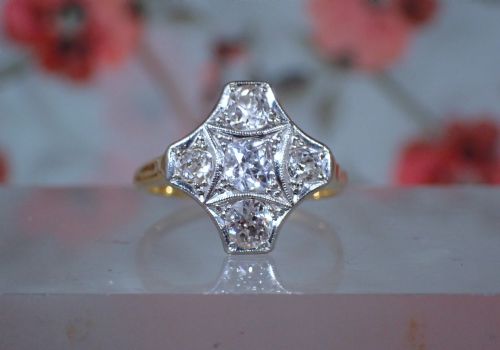
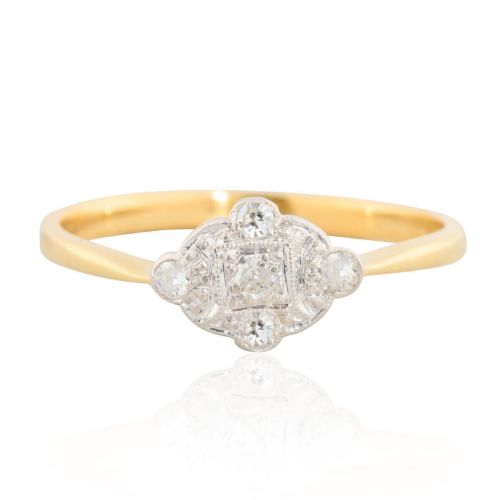
An antique diamond plaque ring presents a flat, ornamental top surface covered in gemstones, often taking an elongated geometric form. These pieces sit low on the finger and showcase the architectural lines typical of the period.
The most common examples encountered on this page date from the nineteen twenties and nineteen thirties, embracing the definitive Art Deco aesthetic. Buyers also find mid-century interpretations and earlier transitional pieces that bridge the Edwardian and modern eras.
Makers shaped these face-up geometric panels in various configurations, sometimes incorporating calibre-cut sapphires or rubies alongside the central diamonds. The stones sit within pierced metal frameworks that create a lace-like effect against the skin.
Materials and construction methods
Metals such as platinum, eighteen carat white gold, fourteen carat yellow gold and eighteen carat white gold form the structural base of these rings. Platinum became the preferred medium for piercing delicate channels and millegrain edges without losing strength.
Goldsmiths set old-cut diamonds and accent stones using grain and bezel techniques to maximise sparkle across the flat face. Sapphires and rubies frequently provide deep blue or red contrast within the symmetrical designs.
Antique Diamond Plaque Ring Retail Price Guide 2026
Typical asking prices for diamond plaque ring among the pieces listed under this phrase on Sellingantiques today, from the lower quarter to the upper quarter. They describe what is for sale here now, not the wider market.
Some rings combine diamonds with both rubies and sapphires, offering a miniature patriotic palette for the finger.
Separating standard examples from the finest pieces
The refinement of the pierced metalwork dictates the aesthetic success of the face, separating machine-like uniformity from hand-pierced individuality. Finer examples display crisp millegrain beadwork that remains sharp and even under magnification.
Gemstone selection creates the primary distinction across the range, with well-matched diamond cuts and vibrant saturated sapphires commanding attention. The integration of contrasting metal colours, such as yellow and white gold combinations, also elevates the complexity of the object.
The Antique Diamond Plaque Ring Glossary
- Plaque ring
- A ring featuring a flat, ornamental face that spreads across the finger. This broad surface allows for intricate geometric patterns of pavé-set stones.
- Millegrain
- A decorative technique involving tiny raised metal beads along the edge of a setting. It softens the metallic border and adds texture to the design.
- Old-cut diamond
- A hand-faceted diamond cut before modern optical standards were established in the twentieth century. These stones typically possess smaller tables and higher crowns.
- Art Deco
- A design style spanning the nineteen twenties and nineteen thirties characterised by symmetry, geometric lines and streamlined shapes. It influences the dominant aesthetic seen in this selection.
Antique Diamond Plaque Ring: Frequently Asked Questions
How do I wear an antique diamond plaque ring safely?
These pieces suit everyday wear provided you remove them during heavy manual tasks or swimming. The low profile helps protect the delicate framework from knocks.
Store each ring individually in a fabric-lined box to prevent the platinum or gold surfaces from scratching against other items in your collection.
What periods do these rings come from?
The examples on this page span the early to mid-twentieth century, with a strong concentration from the nineteen twenties and nineteen thirties. You will also encounter later revivals and pieces referencing earlier Edwardian styles.
Dates are determined by the mounting techniques, hallmarks and gemstone cutting styles characteristic of each decade.
Are sapphires and rubies common in these rings?
Coloured gemstones frequently appear alongside diamonds in these geometric settings, providing bold contrast against white metals. Sapphires and rubies are the most common accent stones used to outline the central plaque.
These coloured gems are often calibre-cut to fit tightly into specific channel shapes designed by the jeweller.
What metals were used for these rings?
Jewellers utilised platinum as the primary white metal for its strength in delicate pierced work. Yellow gold, white gold and fourteen to eighteen carat standard alloys also appear frequently.
Dual-tone combinations, such as yellow and white gold paired together, highlight the structural layers of the geometric face.