
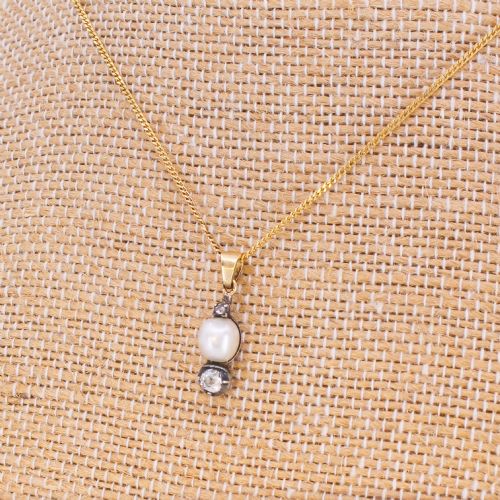
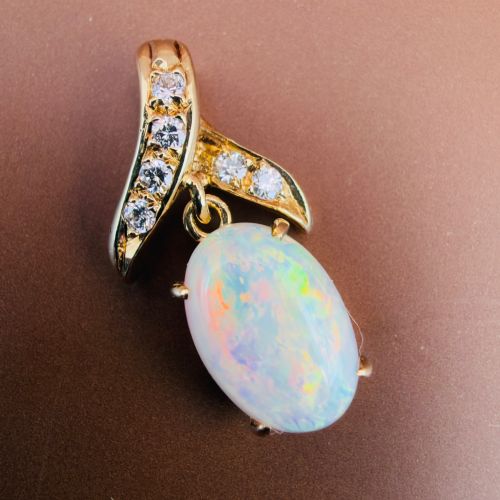

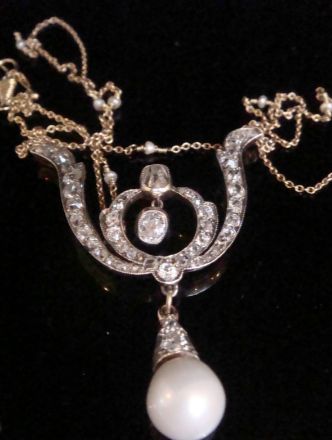
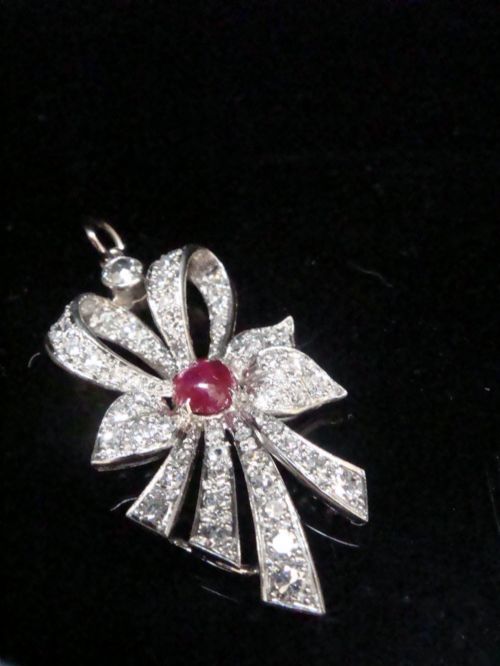
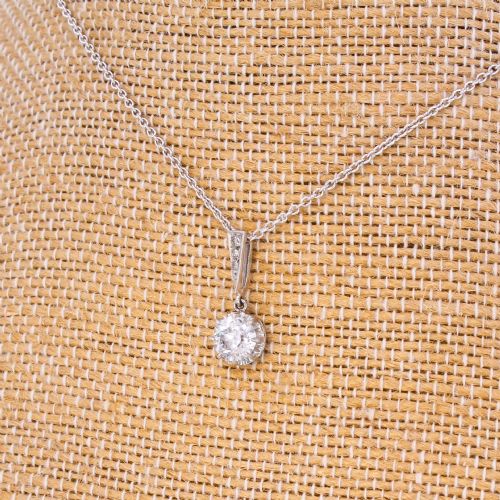
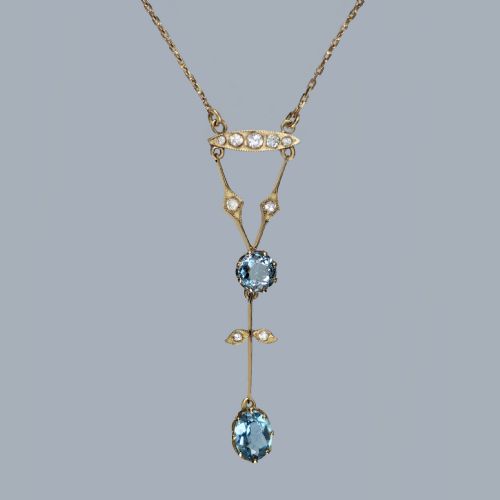

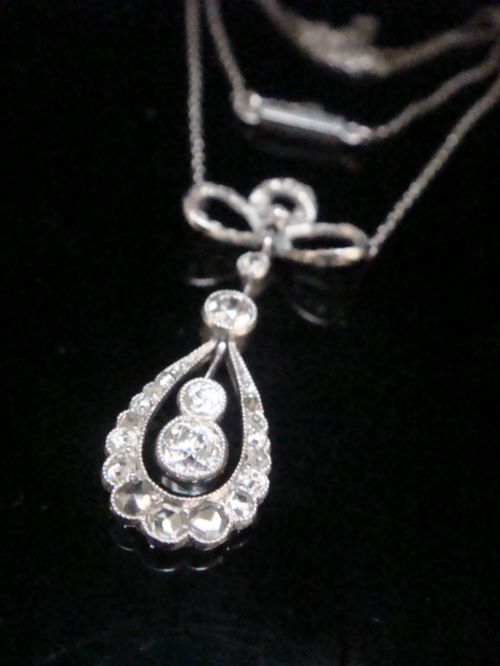


Antique Diamond Drop Necklace
An antique diamond drop necklace brings together period platinum and gold settings with stones chosen for their remarkable presence.
What an antique diamond drop necklace is
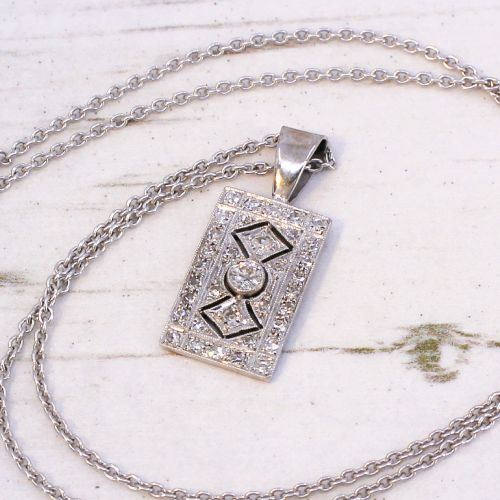
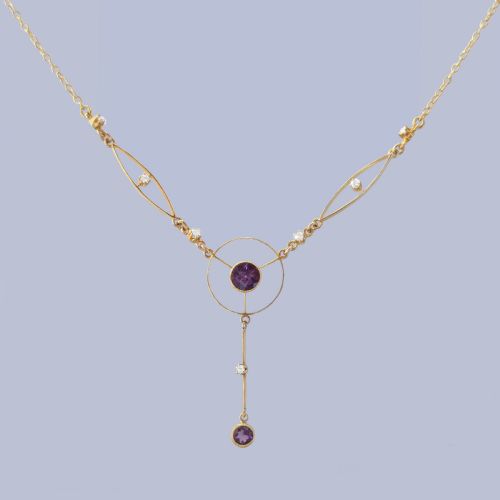
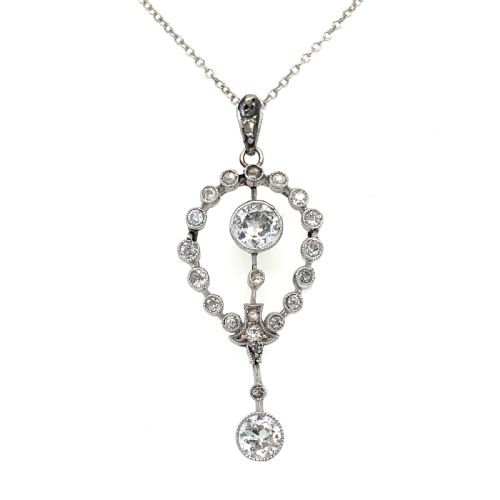
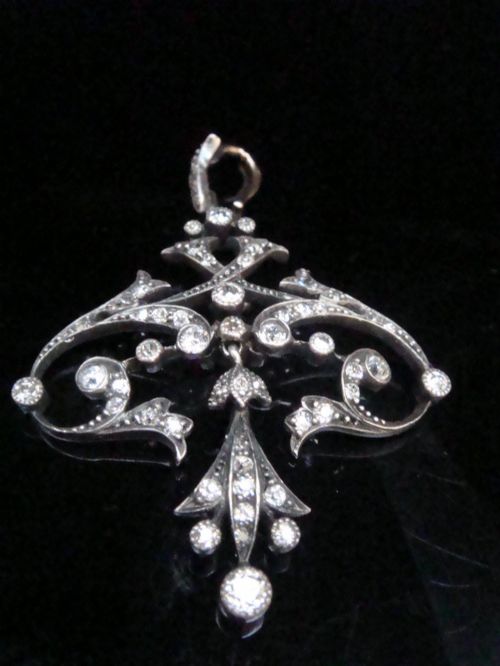
When you search for an antique diamond drop necklace, you are looking at pendant and fringe designs spanning the Victorian, Edwardian, Art Deco, and Mid-Century periods. These pieces combine central drop stones or pendant configurations suspended from fine chains or integrated collars.
The versions you are most likely to meet on this page lean heavily toward Art Deco platinum fringes and pendants from around nineteen thirty, alongside Edwardian and Mid-Century iterations. They utilise platinum, white gold, and yellow gold frames to hold old cut diamonds, frequently accented with onyx, fire opal, or enamel.
Victorian examples also appear, offering larger ornate yellow gold structures set with diamonds. Each piece reflects the characteristic jewellery design shifts of its respective decade, moving from elaborate Victorian ornamentation to geometric Art Deco precision.
How they were made
The construction of these pieces relies on precious metals such as platinum and eighteen carat white or yellow gold, shaped into intricate geometric frames, fringes, and pendant drops. Master jewellers set diamonds utilising traditional hand techniques suited to the metal hardness.
Makers incorporated contrasting materials like black onyx, enamel, and vibrant fire opal to highlight the central diamonds. Old cut diamonds were meticulously positioned within these platinum and gold mounts to maximise light reflection across the pendant and drop configurations.
Retail Price Guide 2026
Typical UK retail prices for diamond drop necklace, calculated from the Sellingantiques database of over a million retail prices indexed since 2003. This retail price guide relies exclusively on Sellingantiques data; no external sources or auction records are used, so the figures do not describe the wider market.
Old cut diamonds were shaped by candlelight, meaning jewellers specifically designed them to wink charmingly at dinner parties rather than blind pedestrians at noon.
What varies in quality
The distinction between tiers of these necklaces rests on the integration of the design and the calibre of the central stones. Finer examples display meticulous platinum or gold work that balances the weight of the fringe or pendant drop without rigidity.
Artistic execution in period pieces, particularly the precision of Art Deco geometry or Edwardian filigree, dictates the overall standing of the item. The choice of complementary materials, such as high grade fire opal or deep onyx, further separates standard production from exceptional examples.
The Antique Diamond Drop Necklace Glossary
- Platinum
- A dense, durable precious metal favoured in Edwardian and Art Deco jewellery for its strength in fine settings. It allows for delicate wirework and secure stone placement without bulk.
- Old Cut Diamond
- A diamond cut by hand before modern machinery, possessing a smaller table and larger culet. This facet arrangement produces a distinctive soft glow under candlelight.
- Fringe Necklace
- A necklace style featuring dangling stones or metal strands suspended along the front neckline. Art Deco interpretations often utilise this layout for dramatic movement.
- Fire Opal
- A transparent to translucent opal displaying warm body colours of orange, red, or yellow. It provides a striking contrast when paired with diamonds and platinum.
- Edwardian
- A jewellery period spanning the early twentieth century known for lacy platinum work and garland motifs. Pieces from this era emphasise lightness and feminine grace.
Frequently Asked Questions
How do I wear a diamond drop necklace?
These necklaces suit evening wear and formal occasions where the pendant or fringe can rest against solid fabrics. The drop design naturally draws the eye downward, making open necklines ideal for display.
Because many pieces feature delicate chains or antique clasps, pairing them with simpler outfits ensures the metalwork and stones remain the focal point.
How do I clean antique platinum jewellery?
Cleaning requires warm water, mild soap, and a soft brush to remove accumulated oils from behind the settings. Platinum is durable, but older collets and prongs benefit from gentle handling to preserve the metal integrity.
Avoid harsh chemical dips, particularly if the piece incorporates softer gems like fire opal or delicate enamel details.
What defines an Art Deco pendant?
Art Deco pendants rely on clean geometric lines, symmetrical arrangements, and contrasting materials like black onyx paired with white diamonds. Platinum was the primary metal of choice for achieving these sharp, architectural silhouettes.
Circa nineteen thirty pieces often feature calibrated stones cut specifically to fit rigid, linear channel or pavé settings.
Are old cut diamonds different from modern stones?
Old cut diamonds feature hand-cut facets that produce a characteristic chunky sparkle rather than the brilliant, uniform fire of modern stones. Their proportions were optimised under gaslight or candlelight to catch ambient room illumination.
This historical cutting method gives each stone an individual character unique to its period of origin.