

Antique Dessert Tableware
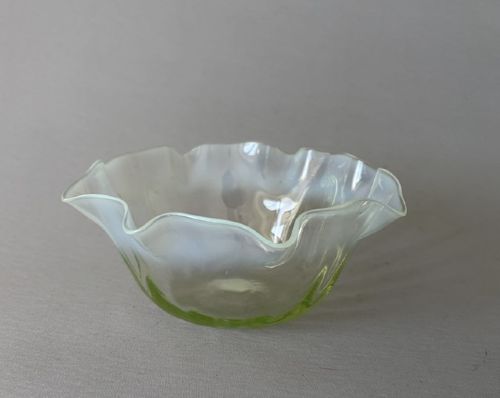
Antique dessert tableware brings together porcelain services, silver fruit knives, and crystal bowls designed for the final course of a formal meal.
Antique Dessert Tableware
Antique dessert tableware encompasses the specialised ceramics, glassware, and silver utensils created for serving fruit, puddings, custards, and sweet courses at the end of a meal. These items range from complete porcelain dessert services with matching comports and plates to individual serving implements like grape scissors, berry spoons, and strawberry dishes.
The pieces on this page emerge primarily from the Georgian, Victorian, and Edwardian periods, reflecting changing dining habits across the nineteenth and early twentieth centuries. Ceramic wares from factories such as Spode, Wedgwood, and Mintons appear alongside sterling silver cutlery and silver-plated accessories.
Materials and technique
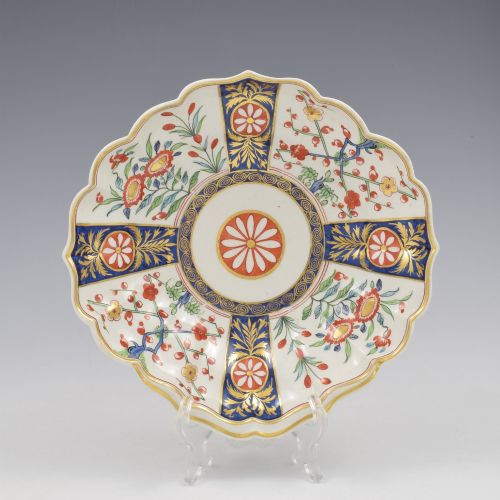
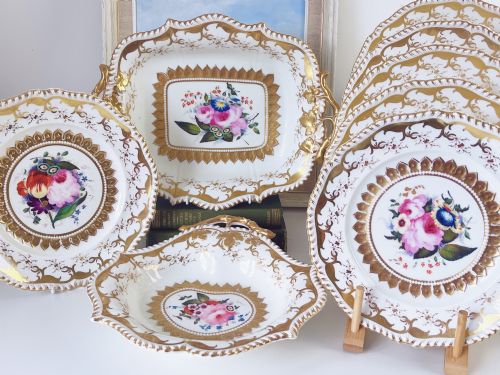
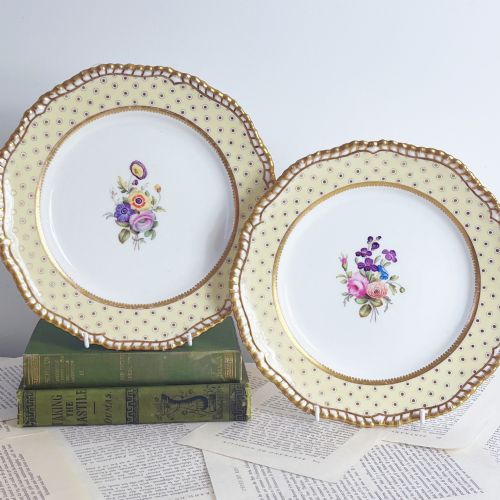
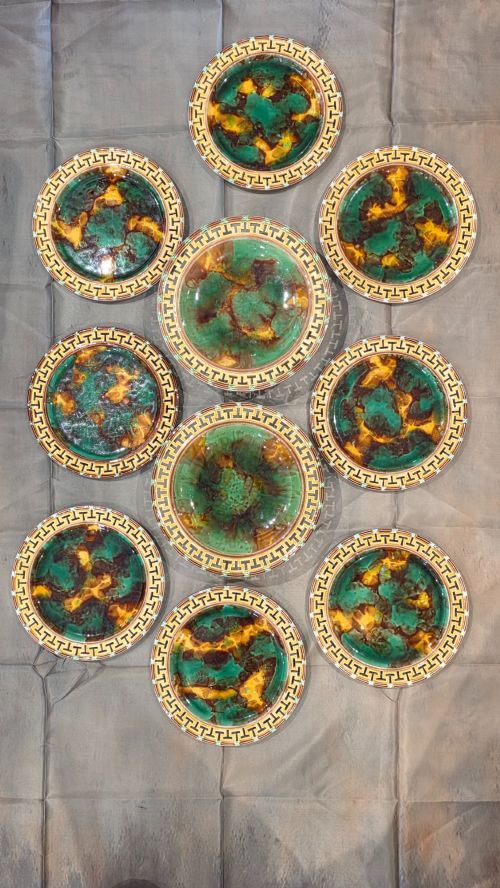
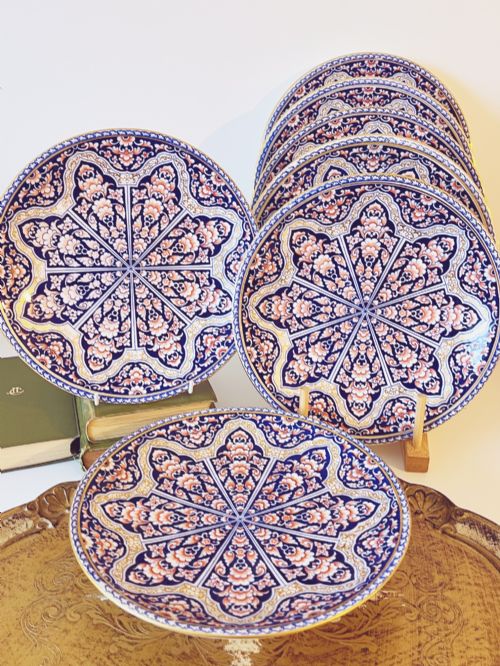
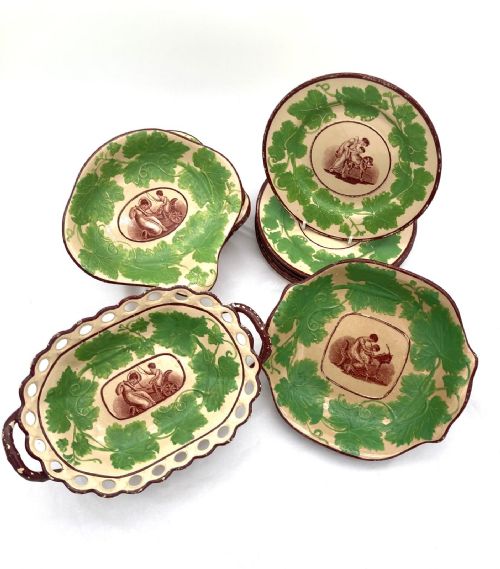
Porcelain and creamware form the foundation of many ceramic dessert sets, often decorated with hand-painted botanical motifs, armorial designs, or transfer printing. Earthenware variations like majolica and pottery also appear, bringing varied textures and glazed colour to the table.
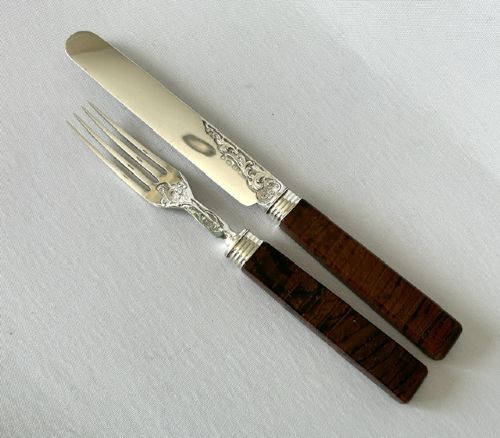
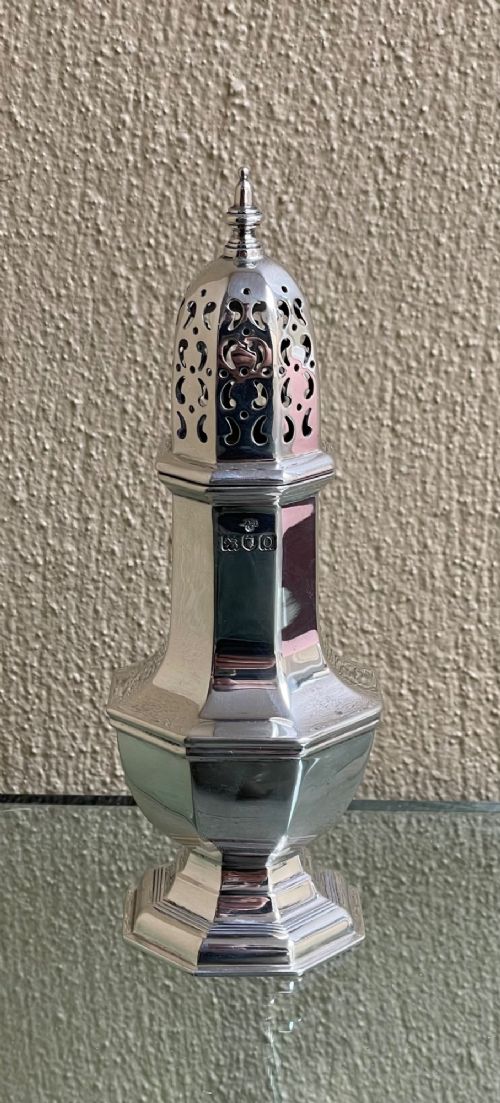
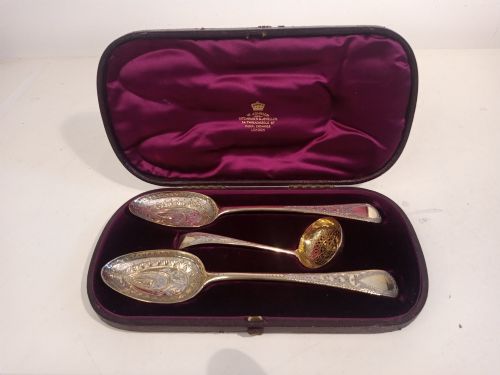
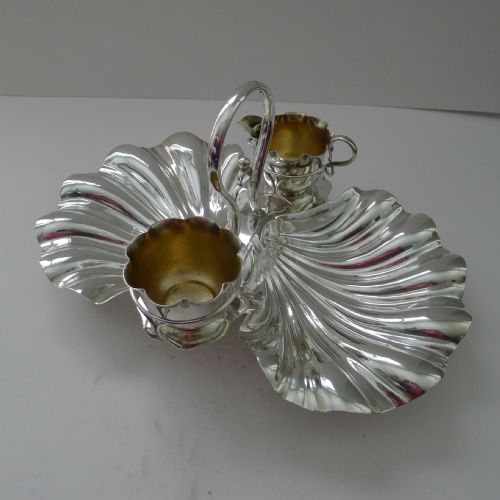
Metal utensils and serving pieces rely on sterling silver, silver gilt, and silver plate, frequently combined with materials like agate, velvet, and glass. Craftspeople utilised techniques such as piercing, engraving, and casting to shape fruit shears, sugar sifters, and knife handles.
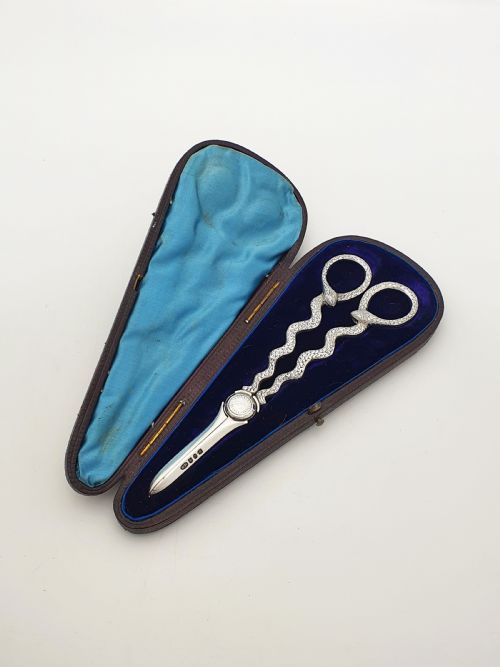
Victorian silversmiths designed grape scissors with coiled snake handles, ensuring diners could dispatch their fruit with appropriate reptile menace.
What varies in quality
Quality rests upon the fineness of the hand painting and the crispness of the moulding in ceramic services, where botanical details and armorial crests distinguish superior examples from standard production. The weight and balance of silver cutlery, together with the delicacy of piercing on grape scissors or sugar sifters, mark the skill of the silversmith.
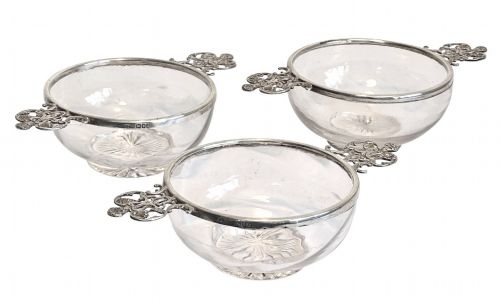
The preservation of original fitted presentation boxes and complete sets alters the character of these items, keeping matched components together across centuries. The integration of contrasting materials, such as silver-mounted glass bowls or agate handles, demonstrates an elevated standard of design.
Grainger Lee And Co·Spode·Wedgwood·Royal Crown Derby·William Comyns·Goldsmiths And Silversmiths Co·Daniel Arter·Walker And Hall·Doulton Burslem·Mintons·John Ridgway·Rockingham Pottery·Coalport·Georg Jensen·Viners
The Antique Dessert Tableware Glossary
- Comport
- A raised dish or bowl used for serving fruit or sweetmeats as the centrepiece of a dessert service.
- Berry spoon
- A large serving spoon with fruit and foliage engraved or embossed on the bowl, popular for serving soft fruits.
- Creamware
- A fine-grained, cream-coloured earthenware developed in the eighteenth century by potters like Wedgwood.
- Majolica
- A heavy earthenware type featuring colourful lead glazes fired over an opaque tin-white ground.
- Felspar
- A hard porcelain body introduced by Spode containing feldspathic material for increased durability.
- Streublumen
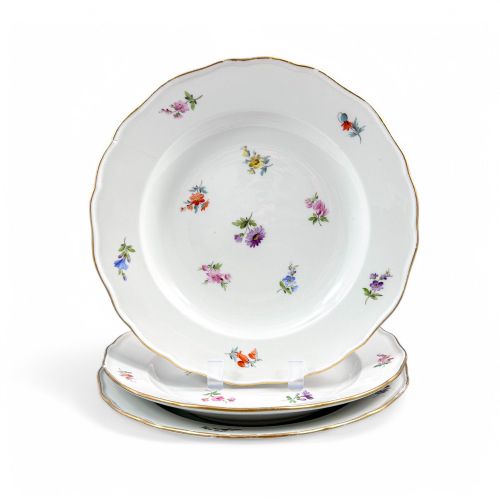
- A scattered flower decoration pattern painted onto porcelain surfaces, seen on eighteenth and nineteenth-century European wares.
Antique Dessert Tableware: Frequently Asked Questions
What was antique dessert tableware used for?
These items were used during the formal nineteenth-century custom of clearing the dining table for the final course of fruit, nuts, cheeses, and sweet dishes. Specialised implements like grape scissors, berry spoons, and custard cups ensured each food item had its proper tool.
Complete services included comports to elevate fruit and matching plates for guests, while separate silver sets handled specific treats like strawberries and cream.
How do I care for antique dessert porcelain?
Wash porcelain pieces by hand in warm water using a mild, non-abrasive detergent to protect hand-painted glazes, gold leaf, and delicate transfer prints. Avoid placing antique ceramics in modern dishwashers or exposing them to sudden temperature changes.
Store plates with felt dividers between them to prevent scratching the glaze surfaces when stacking.
How can I tell Georgian silver from Victorian silver?
Georgian silver generally displays simpler, neoclassical lines or heavier chased berry decorations on spoons, relying on duty marks and monarch profiles in the hallmarks. Victorian pieces often embrace more ornate revivals, including Rococo curves, textured handles, and specialised forms like snake-handled grape shears.
Checking the date letters and hallmarks stamped into the metal provides the exact year and maker for both periods.
Can I use antique silver cutlery for everyday dining?
Silver and silver-plated dessert cutlery can be used for dining, provided you wash and dry the pieces by hand immediately after use. Avoid acidic foods remaining on the silver surface for extended periods to prevent tarnishing.
Store silver in anti-tarnish rolls or lined boxes when not in use to preserve the finish.
What is the difference between a cream tureen and a custard cup?
A cream tureen is a larger, covered vessel designed to hold clotted cream or liquid cream for serving at the table, often supplied with a matching stand. Custard cups are small, individual open vessels made of glass or ceramic used for individual portions of baked custard.
Both items formed part of the elaborate nineteenth-century dessert table arrangement.