



Antique Desktop Book Slide
An antique desktop book slide keeps your working volumes upright and tidy on a desk, combining clever extending action with fine cabinet woods.
Antique Desktop Book Slide
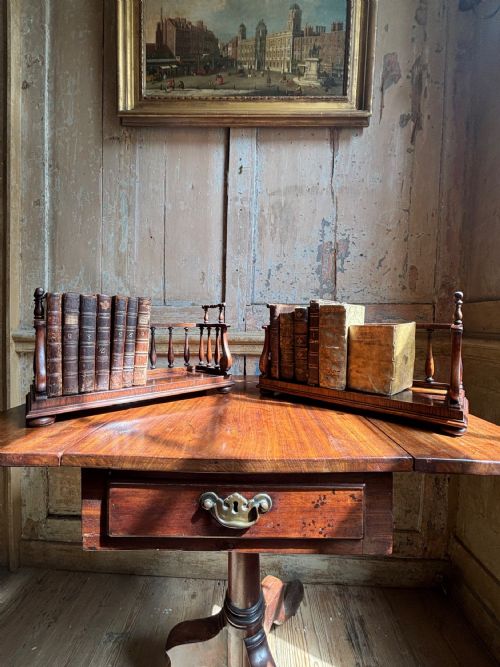
An antique desktop book slide is a functional desk accessory designed to hold a row of volumes securely between two upright ends. These pieces typically feature an extending mechanism that allows the length to adjust as your collection of books grows or shrinks.
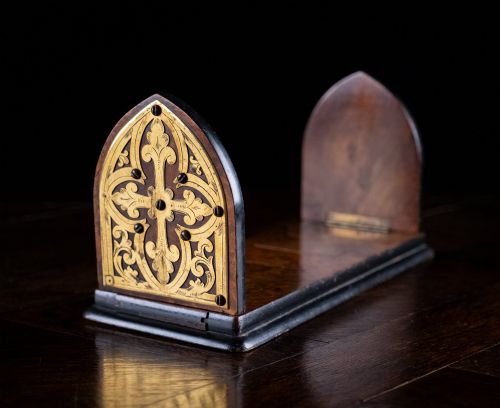
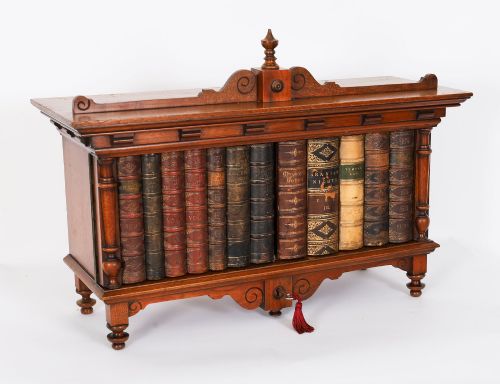
You will most frequently meet Victorian walnut and brass mounted examples on this page, alongside rosewood, oak, and coromandel variations. Forms range from simple extending wooden troughs to elaborately decorated novel rests fitted with painted plaques or stone inlay.
Originating in the nineteenth century, these stands served the home library and study before transitioning into decorative tabletop pieces. Makers produced them in various styles spanning Regency, Gothic Revival, and Edwardian periods.
Materials and Construction
Cabinet makers utilised dense hardwoods such as walnut, rosewood, oak, and exotic coromandel to build the main frames and sliding sections. These woods were chosen for stability and finished with polish to highlight the natural grain.
Brass mountings, hinges, and sliding tracks provide the mechanical strength needed for the extending action. Decorative details often incorporate inlaid bone, Tunbridge ware mosaics, Pietra Dura plaques, or painted porcelain panels set flush into the wood.
Antique Desktop Book Slide Retail Price Guide 2026
Typical asking prices for desktop book slide among the pieces listed under this phrase on Sellingantiques today, from the lower quarter to the upper quarter. They describe what is for sale here now, not the wider market.
Listings feature woods spanning walnut, rosewood, oak, boxwood, ebonised wood, and coromandel.
Distinctions in Quality
Quality rests on the precision of the extending mechanism and the crispness of the joinery. A superior slide moves smoothly along its track without binding, while lesser examples suffer from loose joints and stiff action.
The choice of materials and secondary ornamentation dictates the upper tier of these pieces. Solid burr walnut, finely detailed brass mounts, and intact mosaic or painted plaques separate standard utility stands from exceptional cabinet work.
Betjemanns patent·Gillows
The Antique Desktop Book Slide Glossary
- Book slide
- A desktop stand with extending sides designed to support a row of volumes. These items sit on a desk or table surface.
- Tunbridge ware
- Woodworking craftsmanship featuring tiny mosaic tesserae assembled to create pictorial motifs. This technique decorates the surface of specific book slides.
- Pietra Dura
- Inlay work utilising polished coloured stones to form decorative plaques. Examples on this page feature such stonework set into the wood.
- Gothic Revival
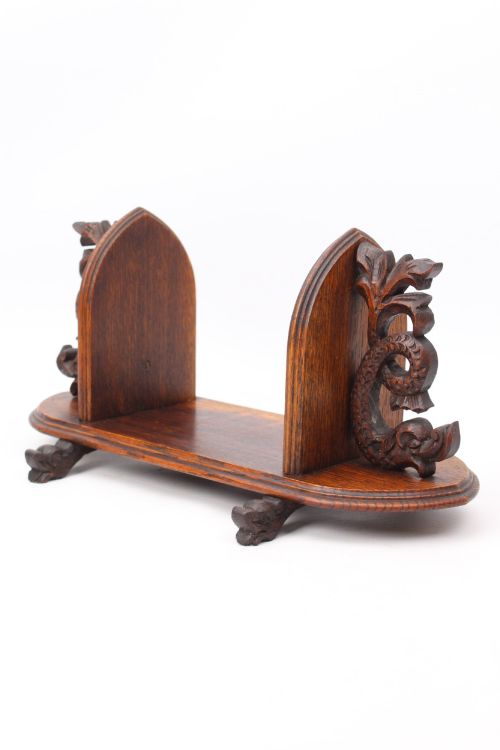
- An architectural and decorative style drawing inspiration from medieval forms. Pieces in this style often display pointed arches and heavy oak construction.
- Coromandel
- A dense, heavily figured timber imported from Asia. Cabinet makers utilised this dark wood for luxury desk accessories.
Antique Desktop Book Slide: Frequently Asked Questions
How do extending book slides work?
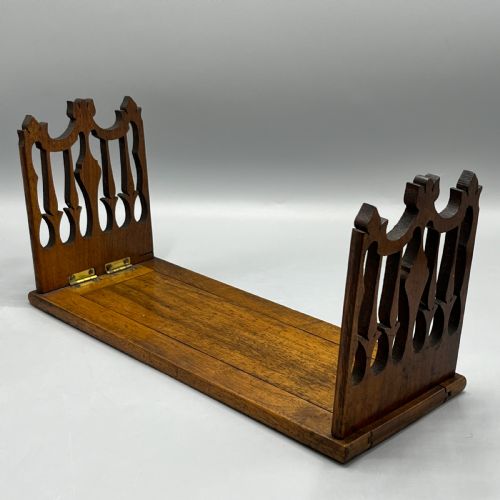
Most designs utilise a central wooden base with overlapping sliding sections that pull apart or push together. Brass tracks and hinges often guide the movement to keep the upright ends parallel.
This mechanical action allows the holder to accommodate anywhere from two or three volumes up to a full row of reference books.
Where were these stands used?
Victorian writers and readers placed them on library desks, reading tables, and Davenport writing boxes. They kept frequently consulted volumes close at hand without requiring a full bookcase.
Today, they serve a similar function on modern desks or mantelpieces while displaying decorative wood grains and inlaid panels.
What woods are most common?
Walnut and rosewood appear most frequently among nineteenth-century examples, often enhanced by brass mounts and banding. Oak and mahogany also feature prominently across different periods.
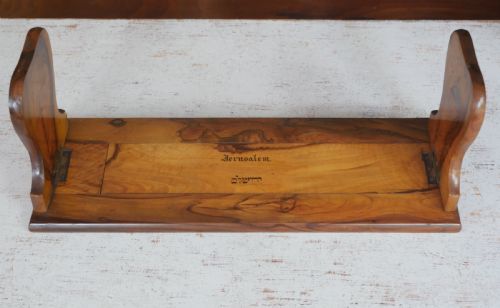
Exotic timbers like coromandel and olive wood indicate more decorative variants intended for prominent display in a study or drawing room.
How do I date a book slide?
Stylistic clues such as Gothic Revival arches, Regency proportions, or Edwardian simplicity provide a reliable starting point. Patent marks and brass hardware styles also point to specific decades of production.
Materials like Tunbridge ware or Pietra Dura inlay typically align with mid-Victorian manufacturing dates.