


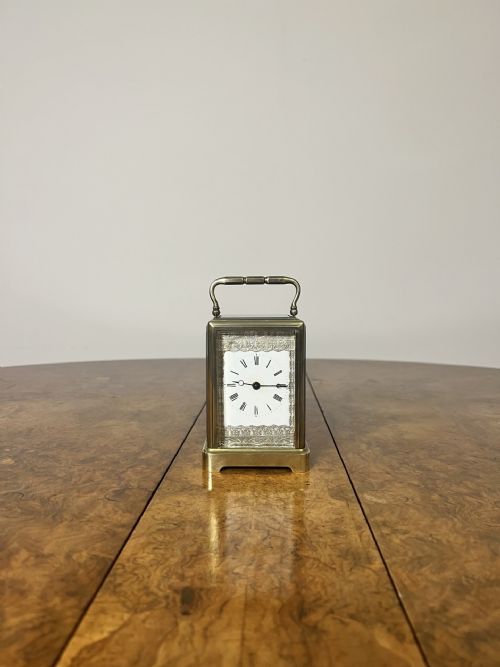


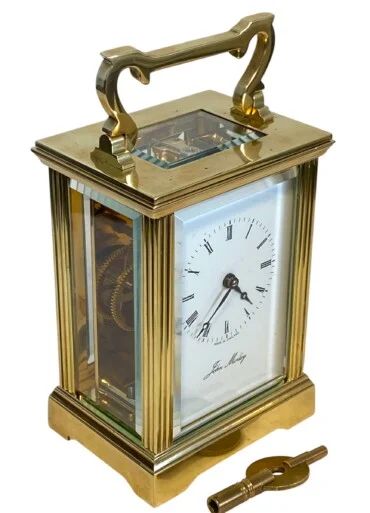


Antique Desk Timekeeper
An antique desk timekeeper brings mechanical precision and period craftsmanship to a workspace, offering reliable timekeeping housed in brass, mahogany or marble.
Antique Desk Timekeeper
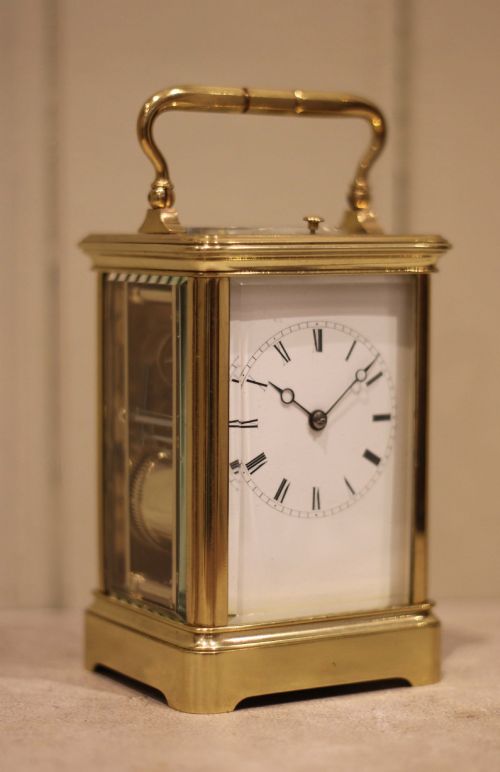
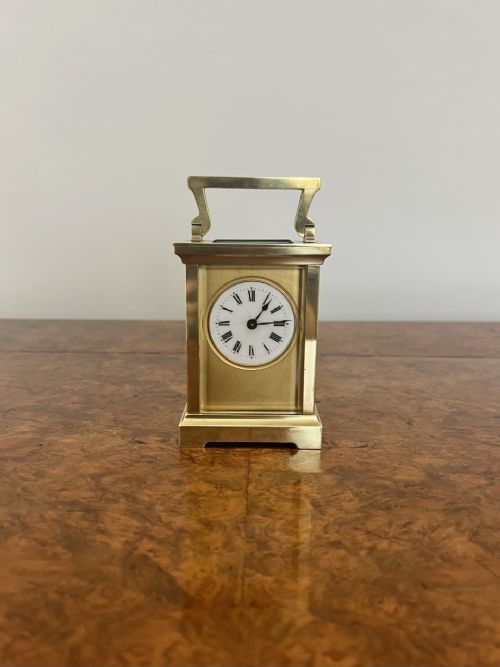
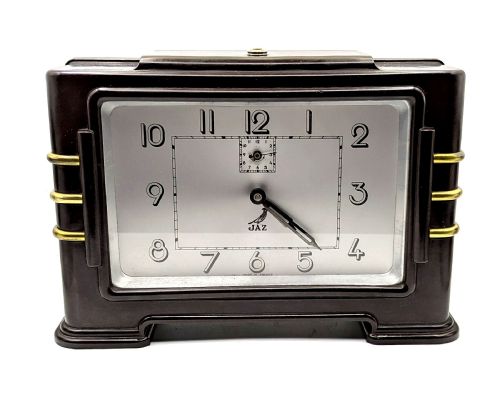
An antique desk timekeeper encompasses portable carriage clocks, mantel pieces adapted for tables, and nautical hour glasses designed for surface placement. These objects span the nineteenth century through the Edwardian era and into the Art Deco period, reflecting changing domestic and office interiors.
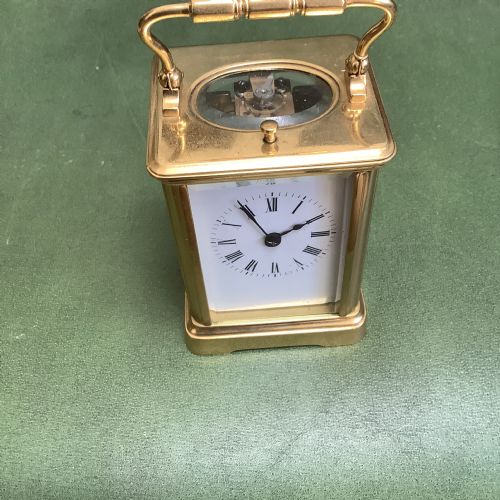
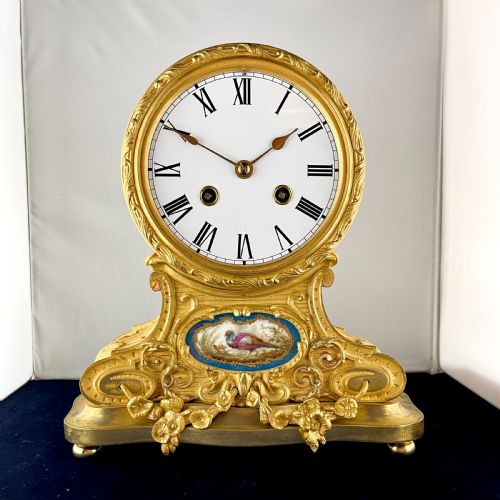
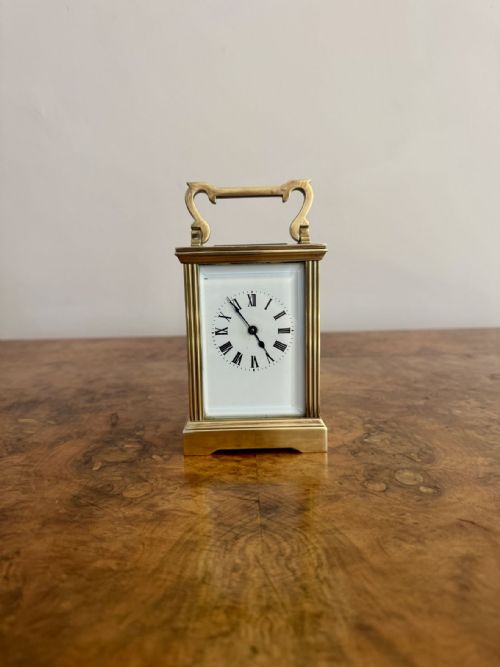
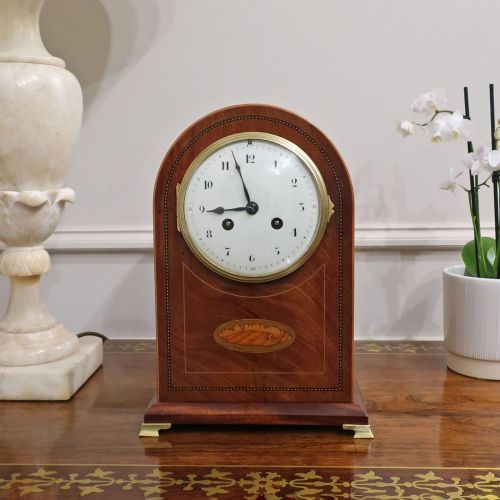
The most common examples encountered on this page are brass carriage clocks originating from French workshops, alongside mahogany mantel clocks created during the Victorian and Edwardian periods. Buyers also find specialised forms such as drumhead clocks, skeleton movements and hour glasses.
Origins range from English makers working in London and provincial towns to French horologists producing repeating movements in gorge cases. Each piece demonstrates how time was measured and displayed on writing desks and library tables across different decades.
Materials and Construction
The construction of an antique desk timekeeper relies heavily on cast and polished brass, often gilded or ormolu-mounted, forming robust cases for delicate gear trains. Enamel dials feature hand-painted Roman or Arabic numerals, protected beneath bevelled glass panels that allow visibility of the escapement.
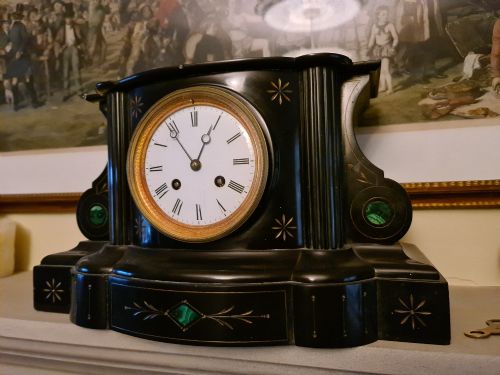
Cabinetmakers utilised dense hardwoods such as mahogany and satinwood, frequently incorporating brass inlay, marquetry or delicate stringing to ornament the wooden housings. Marble and sienna stone additionally served as heavy architectural bases for drumhead and architectural mantel movements.
Movements incorporate mechanical components including eight-day spring drives, platform escapements, fusee chains, and striking or repeating mechanisms. Specialised items such as hourglasses combine hand-blown glass bulbs with fitted wooden or metallic frames.
Some timekeepers feature repeating mechanisms built solely so owners could check the hour in the dark without lighting a candle.
Judging Quality and Execution
Quality in an antique desk timekeeper rests upon the refinement of the movement and the crispness of the case casting or cabinetwork. Finer examples feature engraved gilt brass gorge cases, jewelled lever platforms, and signed backplates from recognised makers.
Pickford of London·Drocourt Paris·John Morley·Duverdrey and Bloquel·J Batson and Son·W Burton·Piggin Norwich·Dent of London·Dwerrihouse and Bell
The Antique Desk Timekeeper Glossary
- Carriage clock
- A small, portable spring-driven timekeeper fitted with a carrying handle, originally designed for travel during the nineteenth century. These instruments frequently feature glass panels that expose the internal escapement.
- Fusee
- A conical pulley used in mechanical clocks to equalize the diminishing power of the mainspring as it unwinds. This mechanism ensures more consistent timekeeping throughout the duration of the power reserve.
- Gorge case
- A stepped brass carriage clock case style characterised by moulded top and bottom cornices. It represents a classic French housing design from the late nineteenth century.
- Striking and repeating
- A movement complication that sounds the hours and quarters on demand when a plunger is pressed, in addition to striking automatically on the hour. This function allowed owners to check the time in the dark.
- Platform escapement
- A small, self-contained regulating assembly mounted on a brass plate within nineteenth-century portable clocks. It replaced the traditional pendulum to allow accurate timekeeping in any position.
Antique Desk Timekeeper: Frequently Asked Questions
What is a carriage clock?
A carriage clock is a portable mechanical timekeeper housed in a brass and glass case, fitted with a hinged handle on top. They were developed in the nineteenth century for officers and travellers.
Most examples sit flat on a desk or mantelpiece and rely on a platform escapement rather than a swinging pendulum to regulate the gear train.
How do eight-day movements work?
An eight-day movement utilises a mainspring wound via a key or thumbpiece that requires resetting roughly once a week. This system provides sufficient power to drive the gear train and any accompanying strike train over that duration.
These movements allowed nineteenth-century owners to place timekeepers on desks without needing daily winding maintenance.
How do I date a desk clock?
Dating relies upon stylistic markers, case materials, dial typography, and signature stamps left by the maker or retailer on the movement backplate. Victorian and Edwardian pieces often display registration marks or specific cabinetry traits.
French carriage clocks from the late nineteenth century frequently feature serial numbers and maker stamps that help narrow down their decade of production.
Where were desk timekeepers used?
These timekeepers were placed upon library tables, writing desks, and mantelpieces in domestic homes, offices, and studies. Their portable nature allowed owners to move them between rooms as needed.
Smaller miniature versions served specifically for travel or compact writing surfaces where space was limited.