






Antique Decorative Bedroom Chair
An antique decorative bedroom chair brings intimate character to a corner, shaped by Victorian, Edwardian and nineteenth-century hands.
Antique Decorative Bedroom Chair
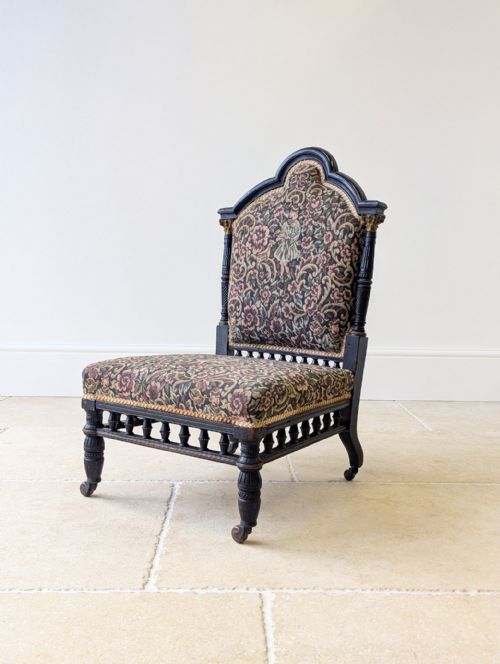
The search for an antique decorative bedroom chair brings into view low-slung seats, nursing chairs and salon armchairs built for private chambers rather than formal public rooms. You will find pieces crossing Victorian, Edwardian and nineteenth-century periods, often designed with lower profiles for comfort and dressing.
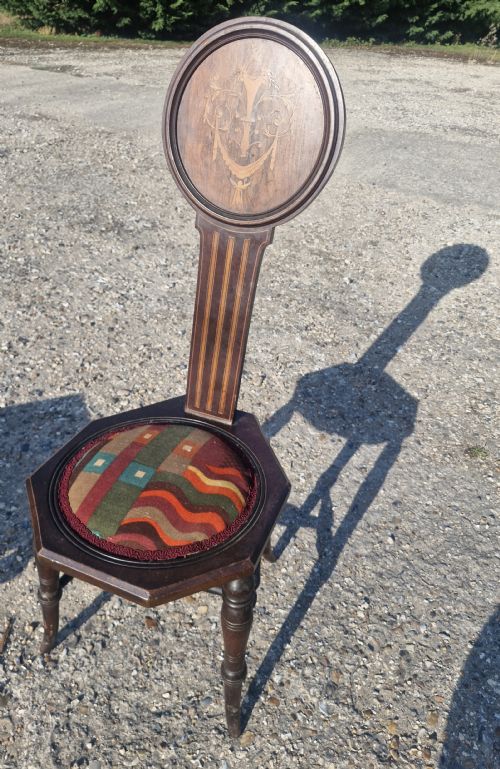
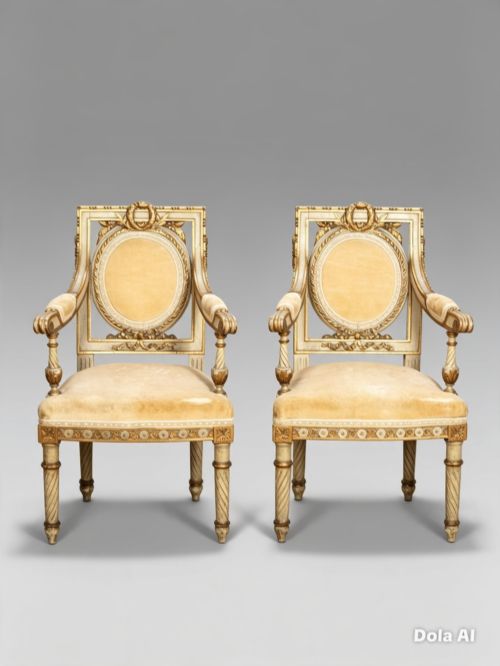
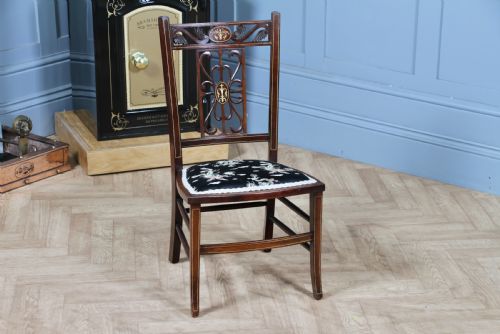
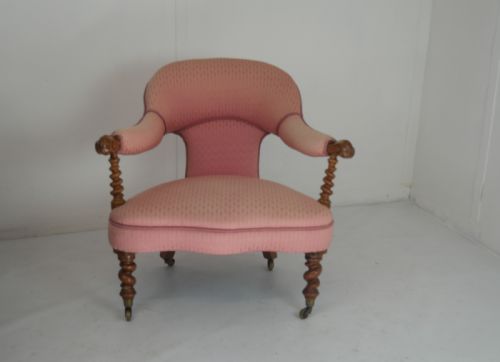
Forms span side chairs, X-frame armchairs, spinning chairs and nursing chairs constructed in mahogany, walnut, ebonised wood and papier-mâché. Stylistic influences draw on Aesthetic Movement, Louis XVI, Art Nouveau and Sheraton Revival traditions.
Most examples appearing here reflect the lighter proportions typical of private quarters, utilising applied decoration, paint and inlay rather than heavy architectural framing. They offer a distinct counterpoint to the larger seating found in reception rooms.
Materials and construction methods
Makers utilised solid timbers including mahogany, walnut and ebonised woods, often enhanced with wood inlay, hand carving and lacquer. Papier-mâché also appears, moulded and lacquered to provide a smooth, dark surface suited to painting and gilding.
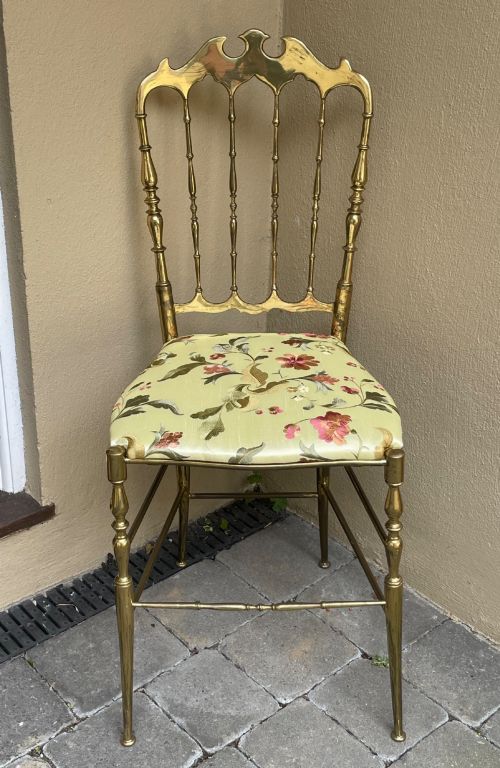
Upholstery relied on traditional textile coverings such as silk, supported by frame construction techniques typical of nineteenth-century cabinet makers. Brass details and painted highlights were applied to accent the carved framework of chairs from the Victorian and Edwardian eras.
Spinning chairs feature remarkably low seats because they were originally built for sitting close to the hearth while working wool.
Judging quality in domestic seating
Quality rests in the crispness of the hand carving, the precision of the wood inlay and the integrity of the underlying frame structure. Pieces showing deliberate proportion and clean lines in mahogany or walnut separate themselves from simpler utility seating.
The refinement of surface finishes, whether hand-painted details on papier-mâché or subtle turnings on ebonised beech and mahogany, indicates the original maker's investment of time. Intact textile upholstery and stable joinery preserve the intended character of the piece.
The Antique Decorative Bedroom Chair Glossary
- Aesthetic Movement
- A late nineteenth-century design style emphasising visual beauty over narrative content, frequently seen in ebonised finishes.
- Papier-mâché
- A composite material made from paper pulp or layers of paper mixed with glue, pressed and lacquered to form rigid chair backs and seats.
- Nursing chair
- A low-seated chair historically designed for comfortable infant feeding and personal grooming in the bedroom.
- Sheraton Revival
- A late nineteenth-century style drawing on eighteenth-century neoclassical furniture designs, typically featuring delicate mahogany and inlay.
- X-frame
- A structural chair design utilising intersecting diagonal members to form the support for the seat and arms.
Antique Decorative Bedroom Chair: Frequently Asked Questions
Where were these chairs used?
These decorative chairs were designed primarily for private dressing rooms, boudoirs and bedrooms rather than formal dining or drawing spaces. Their compact proportions made them suitable for tighter spaces.
Their lighter scale allowed servants or residents to move them easily around domestic quarters as needed for dressing or resting.
How do I clean wooden frames?
Dust the carved mahogany and walnut surfaces regularly with a soft, dry cloth to prevent buildup in the recessed details. Avoid modern silicone sprays that can damage older finishes.
For painted or lacquered papier-mâché, use minimal moisture and consult a specialist if the surface shows signs of flaking or crazing.
Can I use them daily?
Most antique bedroom chairs function well for light daily sitting, though their lower heights and delicate frames require a degree of care. They suit corners and dressing areas best.
Heavy daily use in busy family rooms may stress nineteenth-century joinery and historic silk or textile upholstery.
How are periods told apart?
Victorian pieces often favour darker ebonised woods, heavy carving and papier-mâché, while Edwardian examples lean towards lighter inlaid mahogany and Sheraton Revival motifs. Aesthetic Movement pieces stand out through geometric ebonised forms.
Nineteenth-century French variants frequently incorporate gilding and hand-painted details on curved, carved wooden frames.