

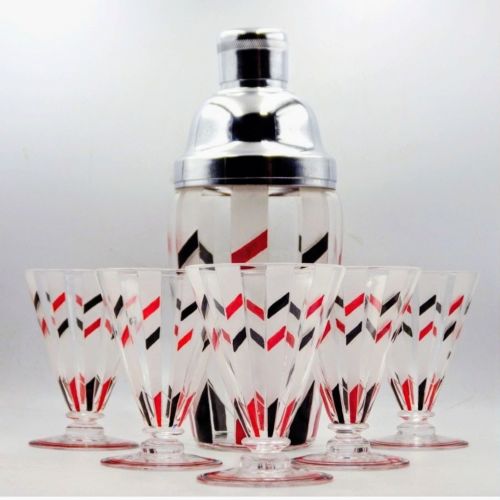
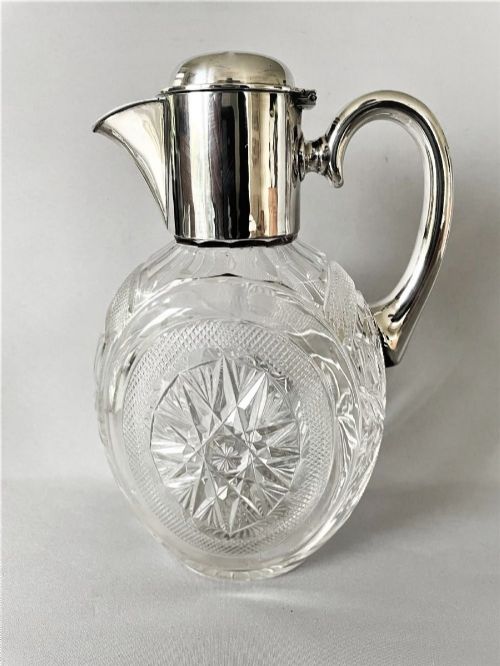
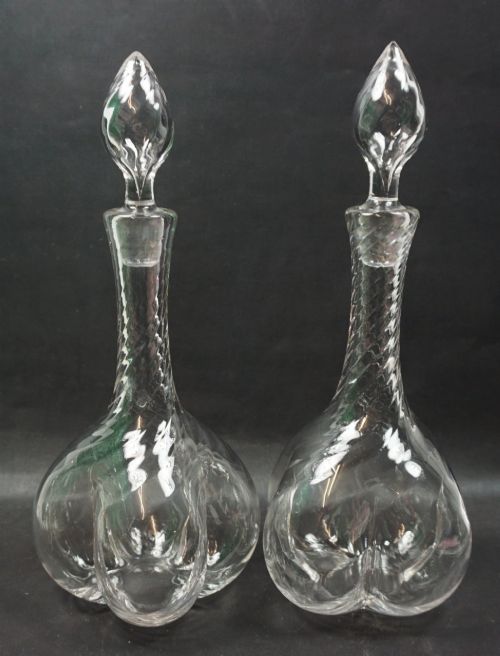
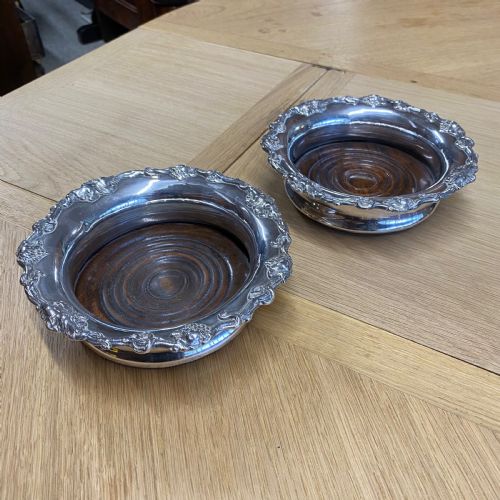

Antique Decanter Accessories
Antique decanter accessories keep bottles steady, pour wine cleanly and identify contents across Georgian, Victorian and Edwardian dining tables.
Antique Decanter Accessories
When you search for antique decanter accessories, you encounter items designed to serve, protect and organise wine bottles and decanters. These pieces span periods from the eighteenth century through the Edwardian era and into the Art Deco period.
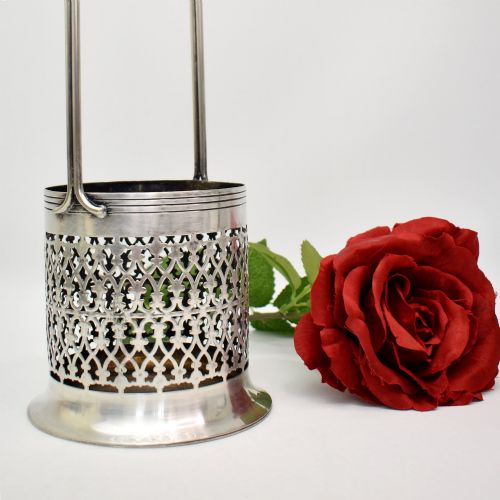
The selections on this page centre on wine coasters, decanter labels, wine funnels, cruet sets and bottle holders. The most frequent forms are coasters in silver plate, sterling silver and mahogany, alongside silver wine funnels and inscribed labels.
Materials and Construction
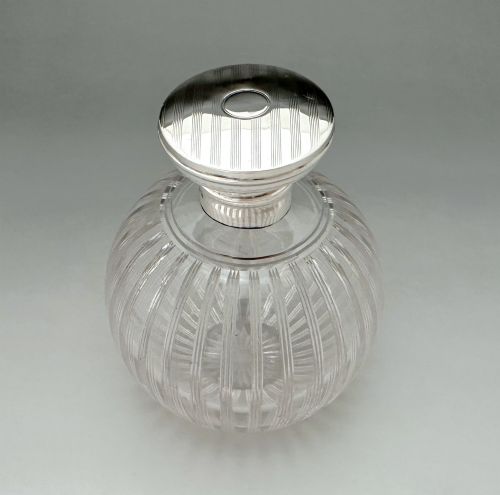
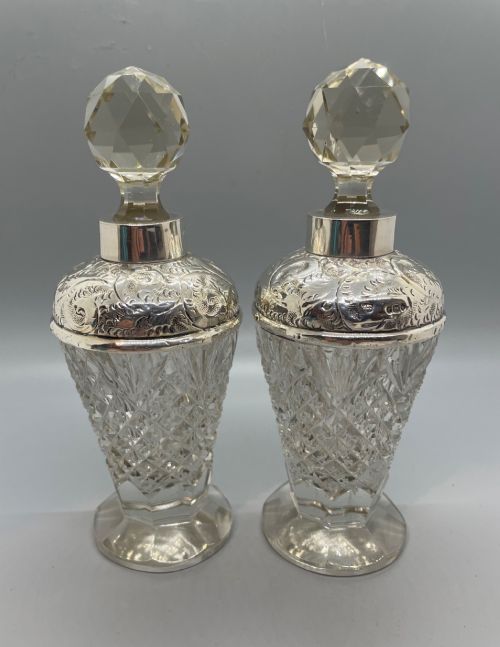
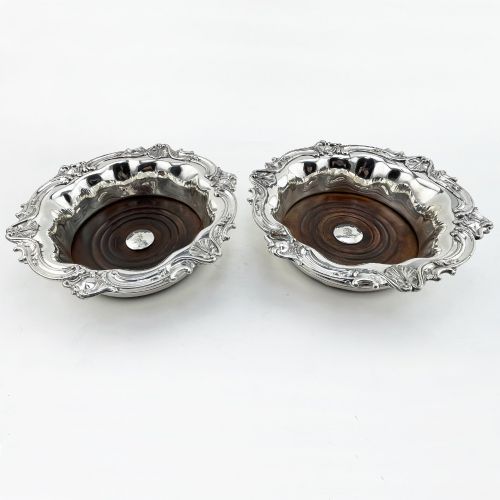
Metals form the core of many pieces, utilising sterling silver, silver plate, Old Sheffield plate, brass and silver gilt. Silversmiths shaped these through casting, piercing and engraving, often incorporating turned mahogany bases into coasters or mounting silver collars onto glass scent bottles.
Glasswork relies on cut glass and crystal, shaped by blowing and wheel-cutting. Treen items use turned woods like oak and mahogany, sometimes paired with papier-mâché or leather inserts.
Antique Decanter Accessories Retail Price Guide 2026
Typical asking prices for decanter accessories among the pieces listed under this phrase on Sellingantiques today, from the lower quarter to the upper quarter. They describe what is for sale here now, not the wider market.
Judging Quality
The standard of a piece rests on the crispness of its chasing, the weight of the metal gauge and the depth of cut glass facets. Heavy sterling silver funnels and coasters demonstrate substance, whereas lighter plated items rely entirely on surface coating.
Maker marks and hallmarks provide clear evidence of origin and date, elevating pieces produced by notable silversmiths. Construction details, such as tight joints in wood and secure bezels on labels, distinguish finer workshops from mass production.
Walsh & Walsh·James Powell·Solomon Hougham·Brook & Son·Hester Bateman·Wade Wingfield Wilkins
The Antique Decanter Accessories Glossary
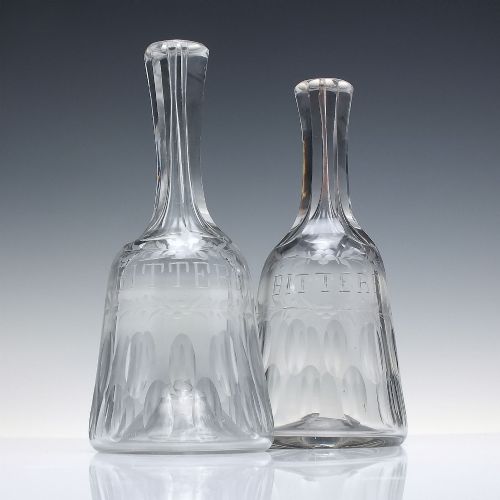
- Decanter label
- A small tag hung by a chain around the neck of a bottle to identify its contents, often shaped as a vine leaf or banner.
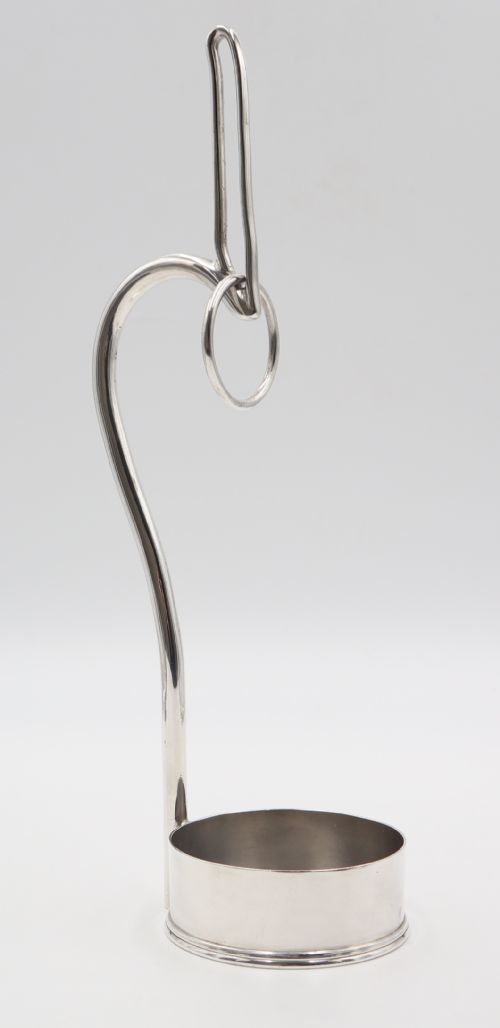
- Wine funnel
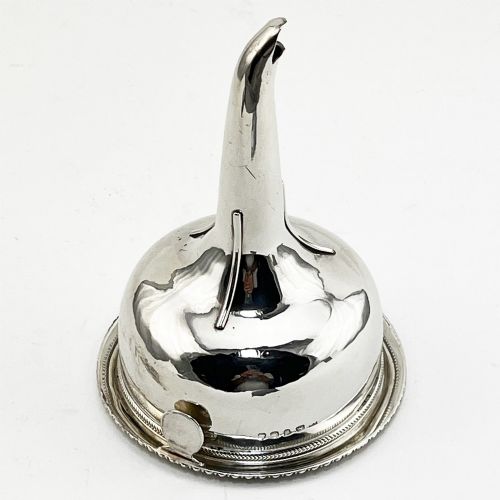
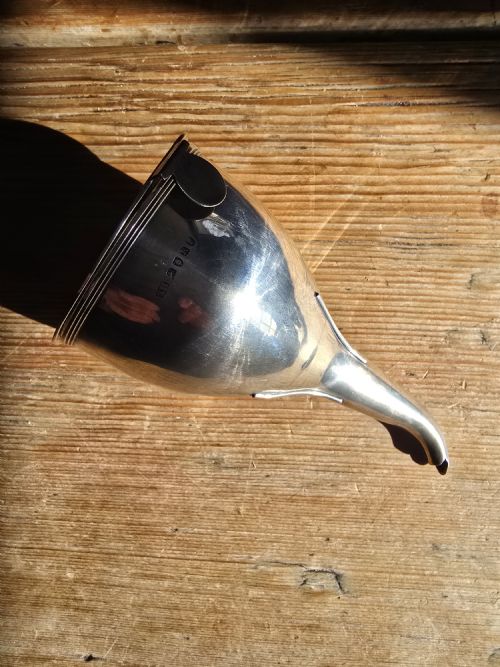
- A two-part device used for pouring wine into a decanter without sediment, frequently featuring a removable straining pierce.
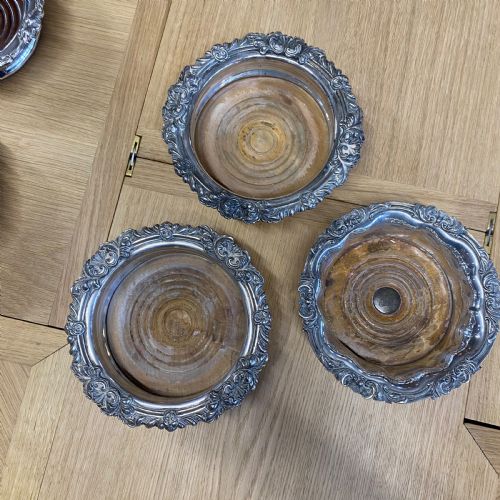
- Coaster
- A small stand or tray placed under a wine bottle or decanter to protect the dining table from moisture and rings.
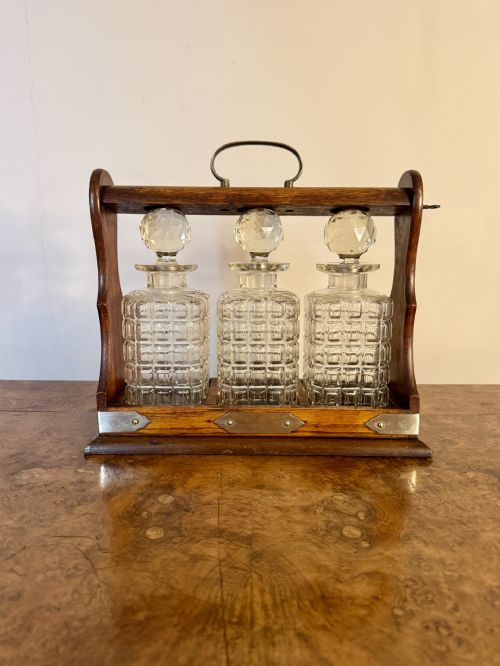
- Tantulus
- A wooden frame holding decanters with a locking bar across the stoppers to prevent access to the contents.
- Old Sheffield plate
- A method of fusing a thin sheet of silver to a thicker copper base before rolling and forming into objects.
Antique Decanter Accessories: Frequently Asked Questions
What is a wine funnel used for?
A wine funnel transfers wine from the bottle into a decanter while filtering out sediment and tartrate crystals. The removable strainer insert catches solid particles during the pour.
These funnels often include a curved spout that directs the liquid down the inside of the decanter to reduce foaming and aeration.
How do I identify a decanter label's period?
Hallmarks stamped on the metal provide the clearest indication of date and maker for silver labels. Style also guides identification, as Georgian examples often feature simple crescent or vine leaf outlines with hand-engraved lettering.
Victorian pieces introduce heavier cast borders and chased decoration, while Edwardian versions lean towards lighter neoclassical motifs.
Can I use antique coasters on wooden tables?
Antique coasters function effectively on wooden tables, as their original purpose was to protect polished mahogany from moisture and condensation rings. Many retain felt, baize or turned wooden bases that safeguard the table surface.
Checking the underside of silver plate or treen coasters ensures the protective lining remains intact before placing them on fine furniture.
What is the difference between Old Sheffield plate and later silver plate?
Old Sheffield plate involves fusing a layer of silver to a copper core through heat and pressure before shaping the metal. This technique creates a distinctive edge where the underlying copper shows subtly through wear.
Later nineteenth-century silver plate uses electroplating, depositing a uniform layer of silver onto a base metal without the physical fusion sandwich characteristic of Sheffield plate.