



Spirit Decanter Stand
A spirit decanter stand holds glass vessels securely for entertaining, bringing Victorian and Edwardian craftsmanship directly into the dining room.
Spirit Decanter Stand
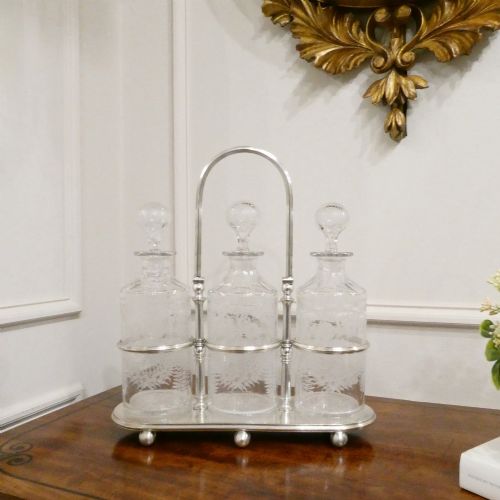
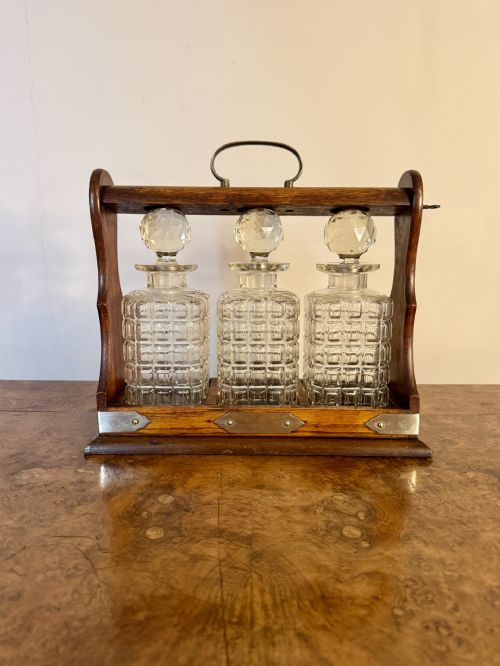
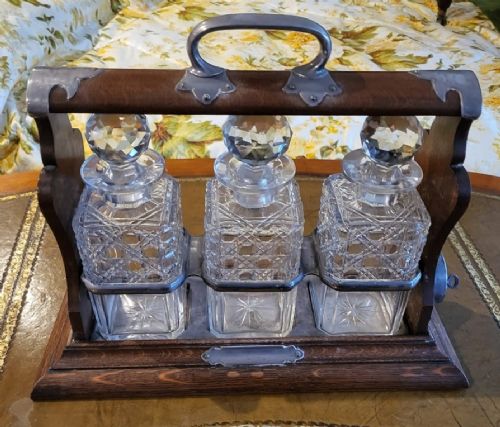
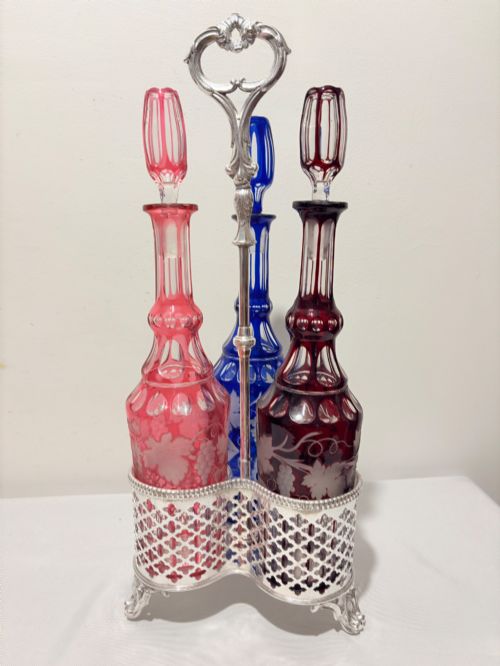
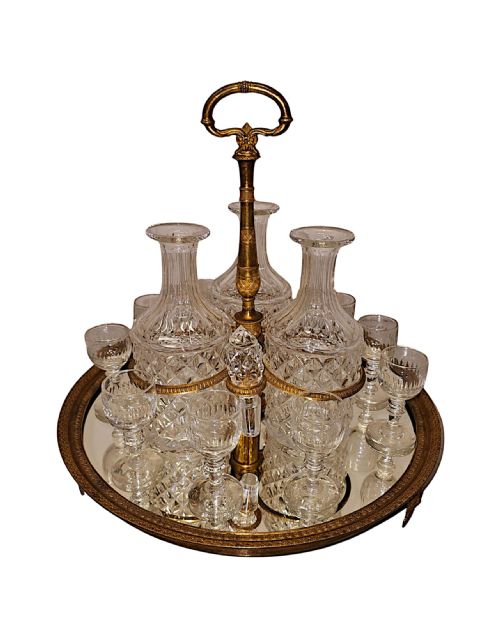
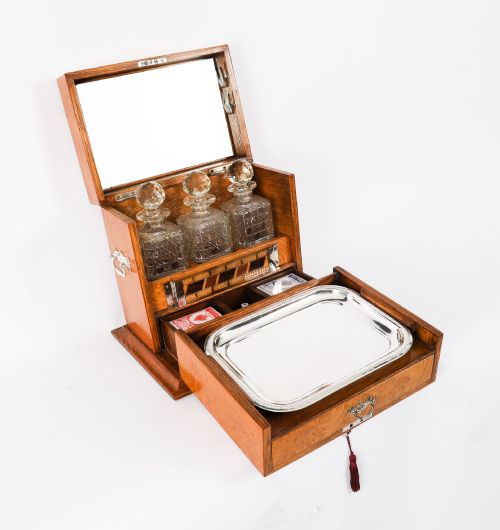
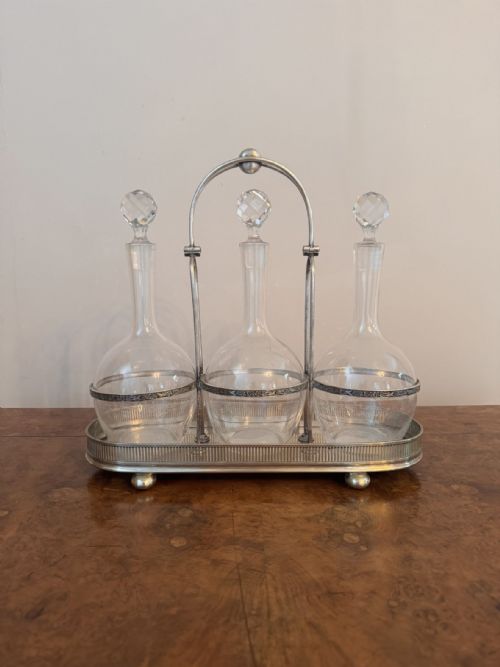
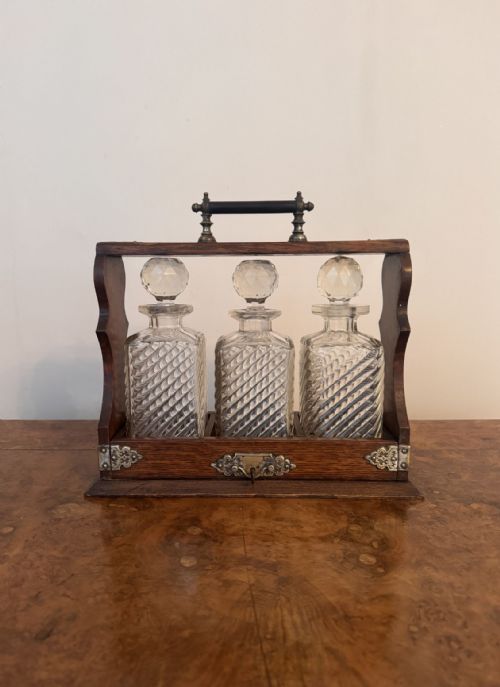
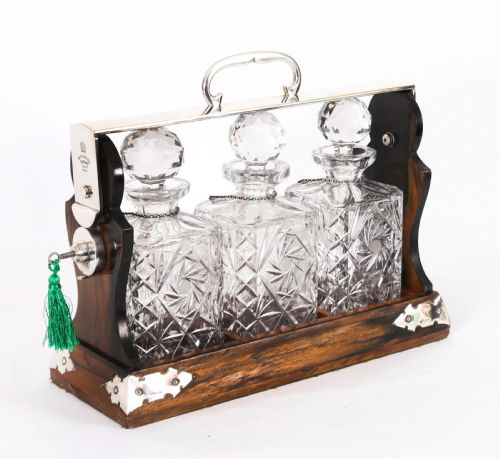
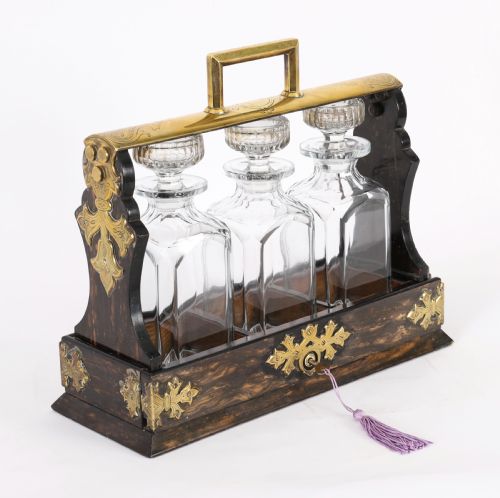
A spirit decanter stand encompasses various serving containers, frames, and locking tantalus sets designed to secure bottles during the Victorian and Edwardian eras. Buyers encounter numerous oak frames fitted with silver-plated mounts alongside French or novelty barrel designs from the nineteenth century.
The selection ranges from simple two-bottle silver-plated carriers to elaborate coromandel wood tantalus units equipped with cut crystal decanters. Many examples incorporate compartments for games or employ brass mountings to secure the glass vessels against movement.
Materials and Construction
Maker workshops utilised solid timbers such as oak, walnut, and coromandel to build sturdy chassis frames, often incorporating marquetry stringing and brass fittings. These wooden structures hold heavy cut glass and crystal decanters paired with silver-plated or ormolu metal frameworks.
Techniques relied on precise metal casting for the locking mechanisms and handles, alongside glass blowing and deep cutting for the decanters. Silver plating and Old Sheffield plate methods provided durable metallic finishes for the protective stands and frames.
Spirit Decanter Stand Retail Price Guide 2026
Typical asking prices for spirit decanter stand among the pieces listed under this phrase on Sellingantiques today, from the lower quarter to the upper quarter. They describe what is for sale here now, not the wider market.
The inventory includes innovative novelty barrels mounted on Black Forest wooden stands alongside traditional tabletop tantalus sets.
Judging the Workmanship
Superior examples display crisp casting on the metal mounts, perfectly fitted locking bars, and high-grade cut crystal decanters that match the original frame. Lower tiers often feature simpler timber construction with plain glass and standard silver plate.
The integration of secondary functions, such as incorporated games compendiums or coromandel veneers, elevates the execution. The presence of maker marks from established silversmiths indicates higher workshop standards.
Lee & Wigfull·Betjemann·Hukin and Heath·Elkington·Philip Ashberry·Mappin Brothers
The Spirit Decanter Stand Glossary
- Tantalus
- A locking drink container frame that prevents access to the decanters without a key. This device secured expensive spirits from unauthorised servants in Victorian households.
- Silver Plate
- A thin layer of silver fused to a base metal like copper or nickel silver. This technique gave households the appearance of solid silver at a lower manufacturing cost.
- Coromandel
- A dense, dark exotic timber with contrasting light streaks imported from Asia. Cabinet makers used this decorative wood for luxury nineteenth-century boxes and tantalus sets.
- Ormolu
- Gilded bronze mounts applied to furniture and decorative objects. French makers utilised this technique extensively during the nineteenth century.
- Cut Crystal
- Glass containing lead oxide that is hand-cut with decorative facets. This material produces greater brilliance and weight than standard blown glass.
Spirit Decanter Stand: Frequently Asked Questions
What is a spirit decanter stand?
A spirit decanter stand is a protective frame or locking cabinet designed to hold glass bottles securely during storage or transport.
These pieces range from open silver-plated cruet frames to secure wooden tantalus units with locking mechanisms.
How did a tantalus work?
A tantalus locks the stoppers of the decanters in place with a metal bar, preventing the bottles from being removed.
Only the owner with the key could release the bar to pour a drink from the container.
What woods were used?
Cabinet makers predominantly utilised oak and walnut for standard frames, while luxury models featured exotic coromandel timber.
Marquetry stringing and brass mounts frequently decorated these wooden housings.
How do I date these stands?
Dating relies on identifying the prevailing Victorian or Edwardian style, alongside any silver hallmarks or registration numbers.
Materials like coromandel and Old Sheffield plate also point to specific periods of manufacture during the nineteenth century.