

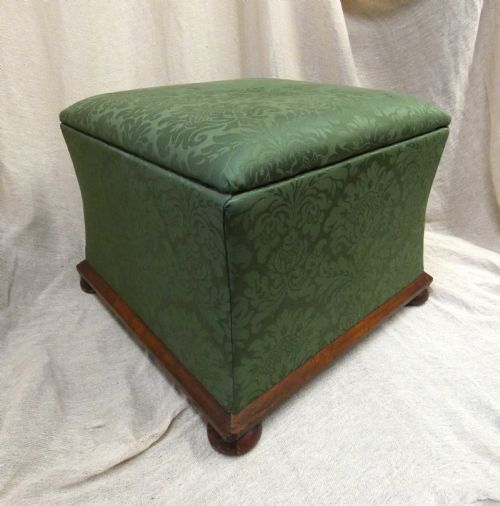


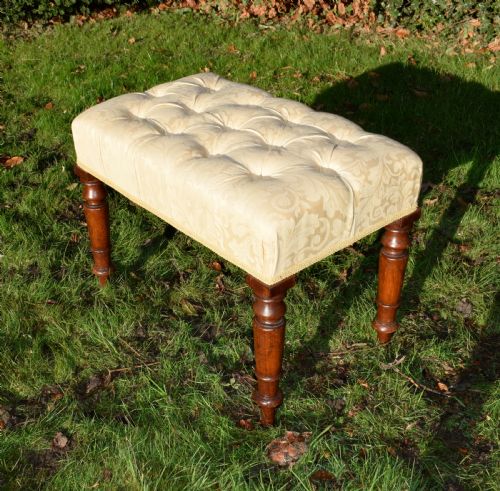
Antique Damask Stool
An antique damask stool brings patterned textile warmth to a room, uniting period woodwork with tactile seating.
Antique Damask Stool
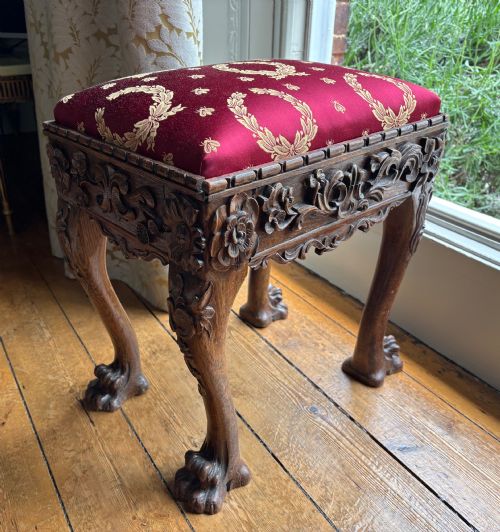
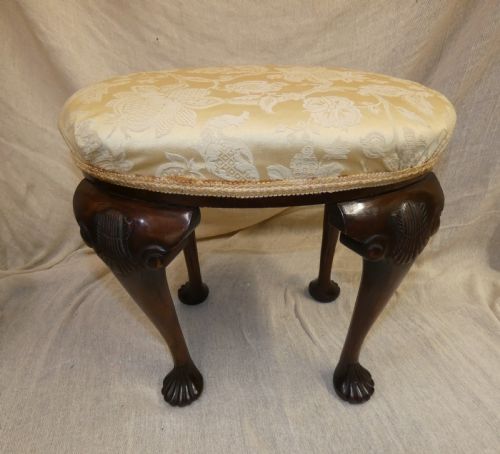
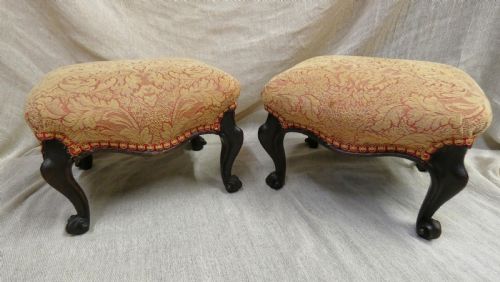
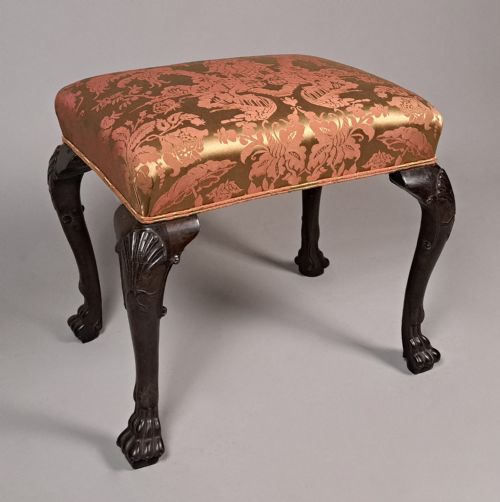
When you search for an antique damask stool, you encounter low seating forms designed for dressing rooms, drawing rooms and parlours across several centuries. The selection spans compact Victorian footstools, Georgian walnut frames and larger Regency ottomans, frequently upholstered in patterned fabric.
You are most likely to meet nineteenth-century mahogany or walnut frames, alongside revival styles drawing on Chippendale, Queen Anne and Louis XVI aesthetics. These pieces serve practical resting purposes while introducing rich texture through patterned textile coverings.
How they were made
Carpenters shaped structural frames from hardwoods including mahogany, walnut, rosewood, oak and teak, often employing carved cabriole legs, turned supports or giltwood ornamentation. Workshops applied distinct stylistic details such as X-frames, scroll ends and elaborate pierced or carved rails.
Upholsterers secured webbed bases and stuffed interiors before finishing the surfaces with fabric, specifically damask cloth, frequently complemented by buttoning or decorative trim.
Listings feature woods such as mahogany, walnut, rosewood, oak, teak and giltwood, paired with damask fabric upholstery.
What varies in quality
The distinction between ordinary and exceptional examples rests upon the crispness of the timber carving and the architectural balance of the frame. Superior pieces demonstrate confident joinery, well-proportioned legs and timber selections with strong natural grain.
Quality also resides in the integrity of the upholstery execution, where the integration of appropriate textile patterns and supportive internal stuffing elevates the finished presence of the seating.
The Antique Damask Stool Glossary
- Damask
- A reversible figured fabric woven on a jacquard loom, traditionally featuring patterns created through contrasting warp and weft satin weaves. It provides the characteristic patterned upholstery seen on period stools.
- Cabriole leg
- A furniture leg that curves outward at the knee and inward at the ankle, ending in a pad, claw or scroll foot. This form originates from classical antiquity and appears frequently on Georgian and revival frames.
- Ottoman
- A low, upholstered seat or footstool without arms or back, designed for domestic lounging. Regency and Victorian examples often feature generous proportions for extended comfort.
- Giltwood
- Timber coated with a thin layer of gold leaf or metallic gilt gesso. This decorative finish appears on French style and baroque revival stools.
- X-frame
- A structural furniture base formed by intersecting diagonal members creating an X shape. Neoclassical and Renaissance revival stools frequently utilise this geometric support.
Antique Damask Stool: Frequently Asked Questions
Where were antique stools used?
These low seats functioned across domestic interiors, serving in bedrooms as dressing furniture, in parlours for resting feet and in drawing rooms for supplementary guest accommodation.
Their compact scale allowed easy movement between firesides and windows according to daily social requirements.
How do I identify a Victorian stool?
Victorian pieces frequently utilise dense mahogany or walnut timbers, often displaying deep buttoned upholstery or heavy turned and carved supports.
Proportions tend to be robust, reflecting the period's preference for solid domestic comfort and decorative revival styles.
What is a window seat?
A window seat is an elongated stool or low bench designed specifically to fit within a bay or recess, offering a view outward while maintaining a low profile.
These forms often incorporate scroll ends or carved rails matching surrounding interior woodwork.
How should I clean damask upholstery?
Textile surfaces benefit from gentle vacuuming with a soft brush attachment to remove dust settled within the woven pattern.
Professional textile cleaning is recommended for addressing deeper marks to protect the historic fibres.