




Antique Damask Salon Chair
An antique damask salon chair brings patterned silk and woven textiles to Victorian sitting rooms and French revival parlours.
Antique Damask Salon Chair
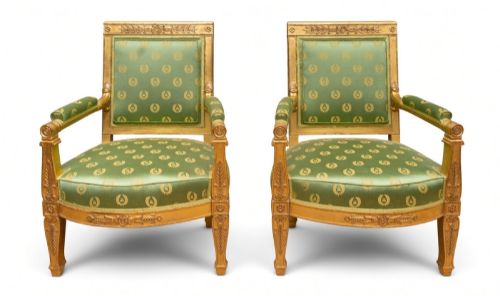
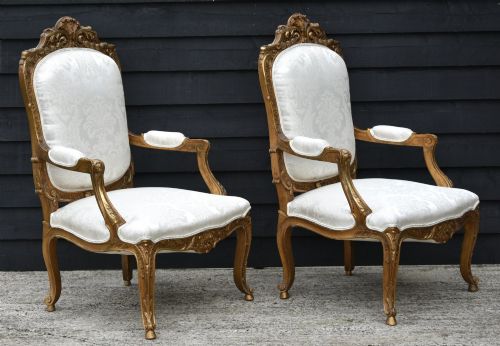
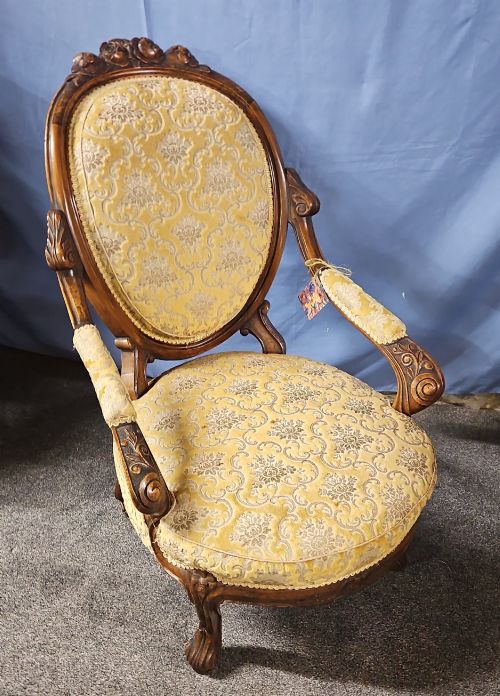
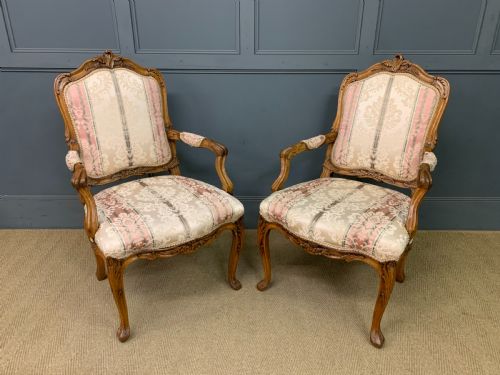
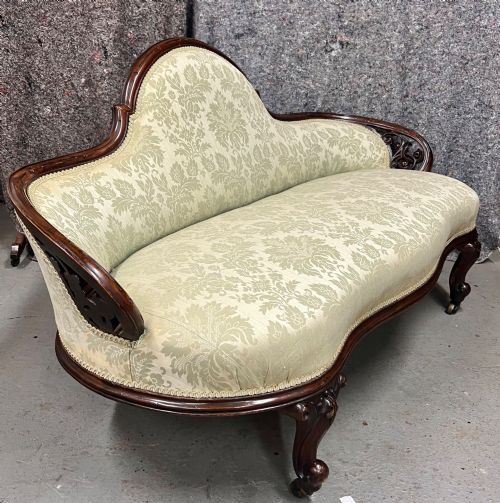
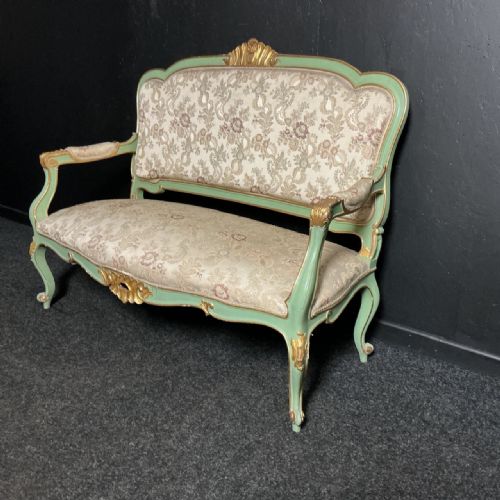
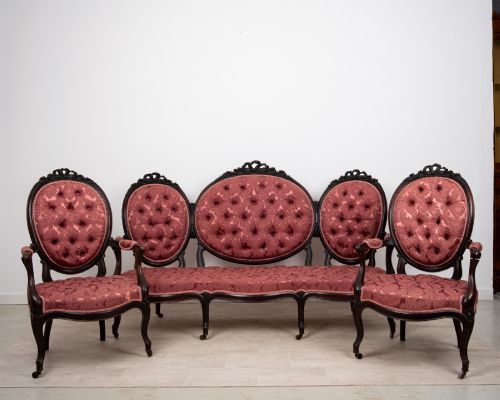
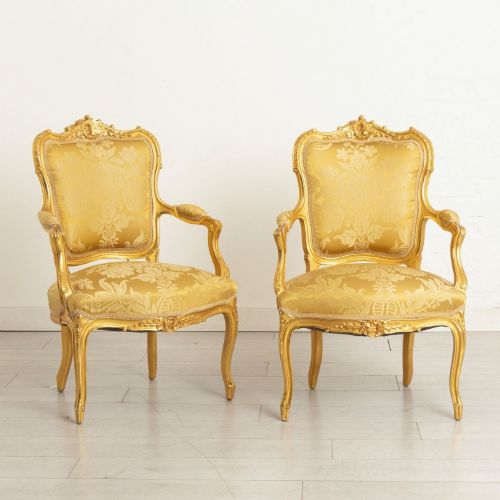
An antique damask salon chair encompasses a range of seating built for formal entertaining, from single open armchairs to complete three-piece suites comprising a settee and matching chairs. These pieces emerge predominantly from Victorian workshops and French revival periods, reflecting nineteenth-century tastes for reception room display.
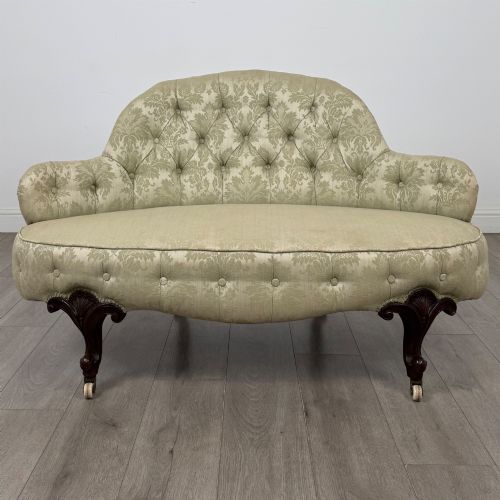
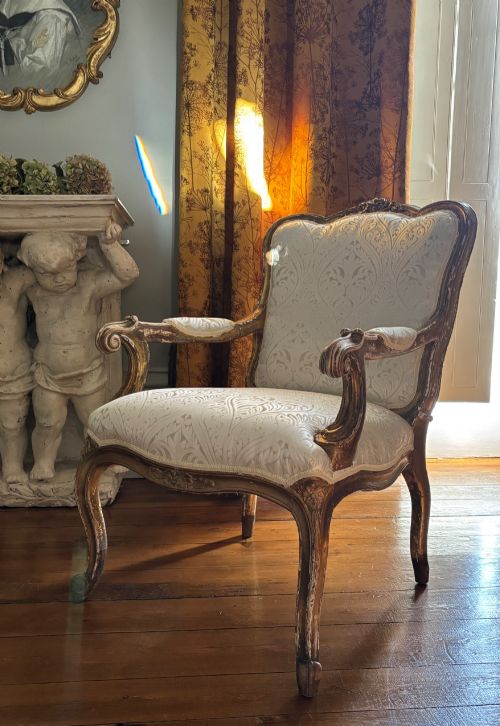
Buyers commonly encounter walnut, mahogany, and giltwood frames upholstered in patterned damask fabric, silk damask, or deep buttoned textiles. The selection spans English drawing room seats and French styled fauteuils, offering varied proportions suited to period interiors.
Materials and Construction
Cabinetmakers utilised hardwoods such as walnut, mahogany, rosewood, and giltwood to build sturdy chair frames, often employing hand-carved details along the crest rails, arms, and cabriole legs. These timber structures support padded upholstery systems covered in woven silk damask and patterned fabric.
Joinery methods rely on traditional pegged and dowelled joints within the wooden frames, whilst upholstery techniques incorporate deep buttoning and tight tensioning over sprung or webbed bases to maintain structured seating profiles.
Some chairs escaped the parlour entirely to spend a century tucked quietly into French boudoirs and palace corners.
Distinctions in Execution
The degree of hand-carved detail on the timber frame separates standard production seating from finer workshop outputs, particularly where acanthus leaves, scrollwork, or gilt finishes are applied with precision. Crispness in the wood carving indicates the skill of the artisan.
The choice and execution of the textile upholstery significantly alter the visual weight of the piece, with genuine silk damask and careful pattern alignment demonstrating superior historical fidelity compared to standard modern replacements.
Jacob-Desmalter·Blaise Maucuy·John Linnell
The Antique Damask Salon Chair Glossary
- Damask
- A reversible figured fabric woven on a jacquard loom, featuring patterns formed by contrasting warp-faced and weft-faced sateen weaves. It provides the characteristic lustrous surface seen on formal nineteenth-century upholstery.
- Giltwood
- Timber coated with a thin layer of gold leaf over a prepared gesso ground. This finish appears frequently on French revival salon frames.
- Fauteuil
- An open-framed upholstered armchair originating in France, characterised by exposed wooden arms and a padded back. The style influenced nineteenth-century revival seating across Europe.
- Bergère
- An enclosed upholstered armchair with wooden sides filled with upholstery or canework. It offers a deeper and wider seat than standard salon chairs.
- Salon Suite
- A matched set of seating furniture comprising a settee and accompanying armchairs or side chairs designed for a formal drawing room.
Antique Damask Salon Chair: Frequently Asked Questions
Where were salon chairs placed?
These chairs stood in formal reception rooms, drawing rooms, and parlours where hosts received guests and conversed. Their lighter construction allowed servants to rearrange them easily for music recitals or card games.
Today, they function well as accent seating in living spaces or bedrooms, bringing nineteenth-century textile patterns into contemporary interiors.
How do I identify a French revival chair?
French revival pieces often display giltwood finishes, carved cabriole legs, and open arms characteristic of Louis styles. Look for carved floral motifs and shaped crest rails that emulate eighteenth-century models.
English counterparts typically utilise walnut or mahogany with simpler carved frames, reflecting Victorian cabinetmaking preferences.
What is deep buttoned upholstery?
Deep buttoning involves pulling upholstery tacks or buttons through the padding at regular intervals to create a diamond-shaped tufted pattern. This technique secures internal stuffing and adds architectural texture to the chair back.
It appears frequently on Victorian walnut frames and matching salon suites from the mid to late nineteenth century.
How do I care for silk damask?
Silk damask requires protection from direct sunlight to prevent fading and fibre degradation over time. Gentle vacuuming with a soft brush attachment removes surface dust without catching the woven threads.
Professional textile cleaning preserves the historic sheen of the fabric whilst maintaining the structural integrity of the upholstered panels.