


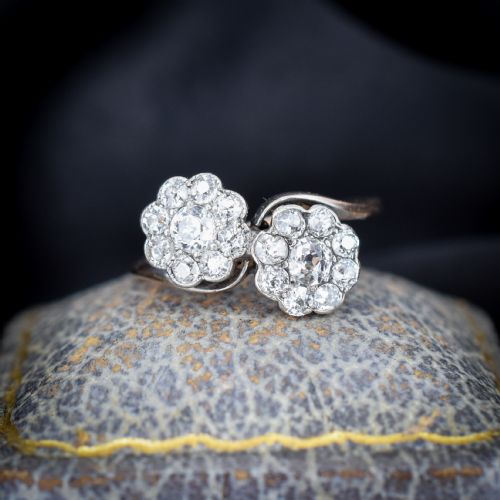

Antique Daisy Ring
Discover an antique daisy ring, a timeless cluster jewel capturing floral charm in diamonds and precious metals.
Antique Daisy Ring
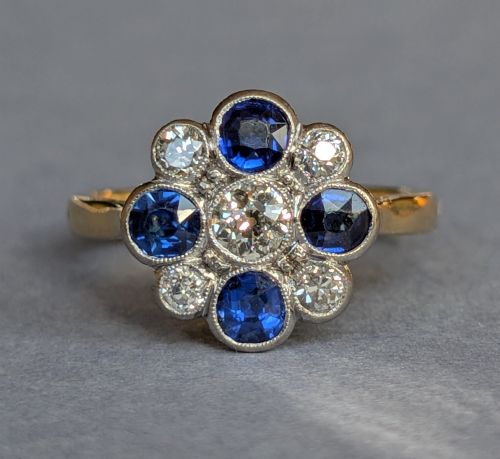
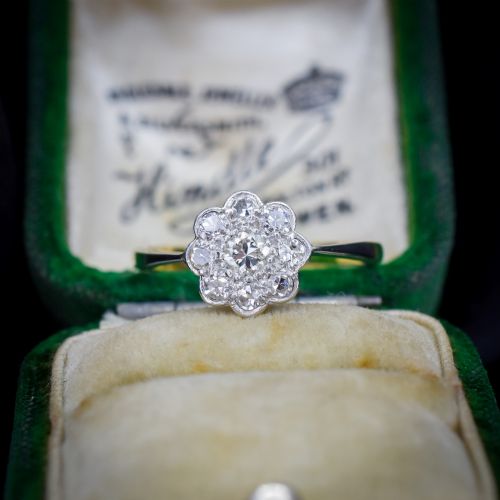
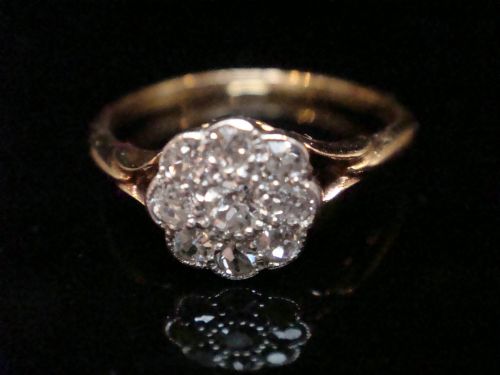
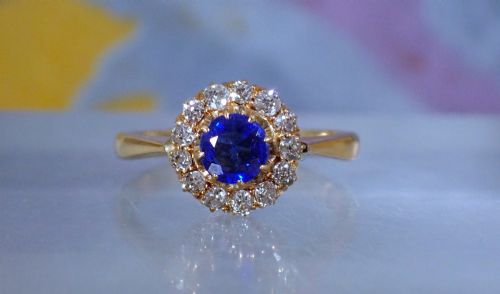
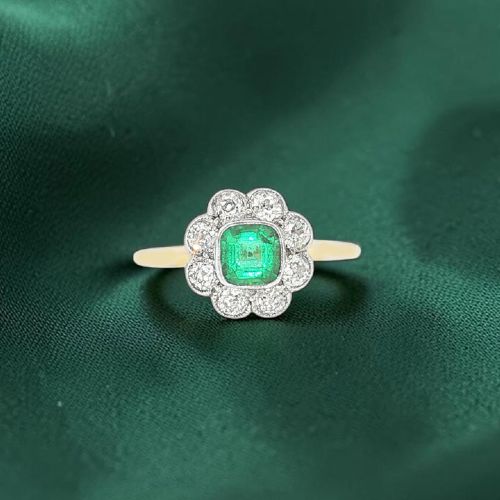
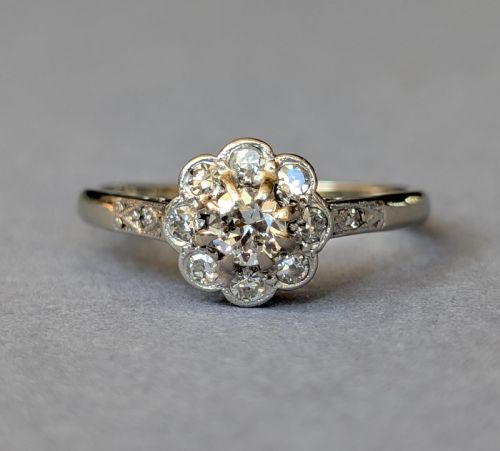
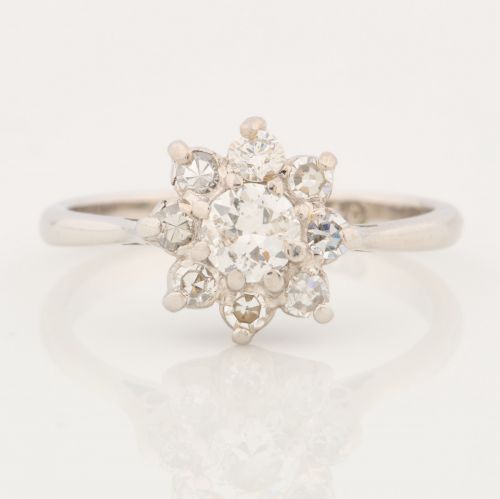
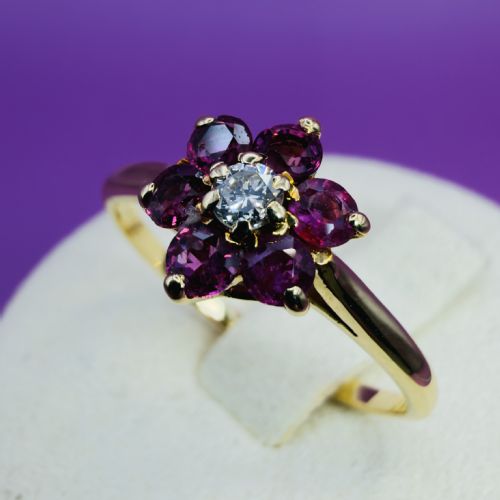
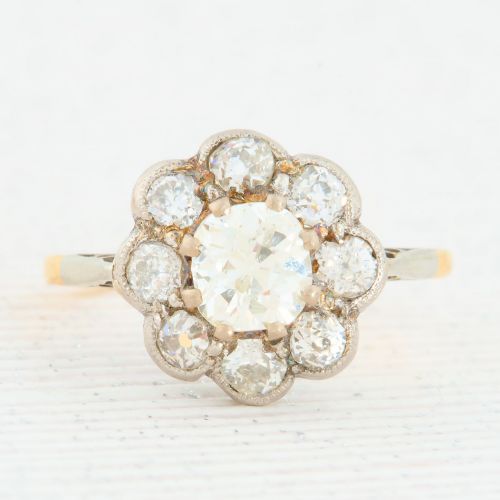
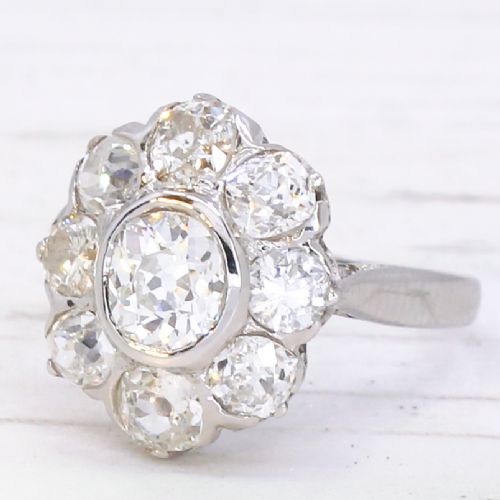
An antique daisy ring presents a central gemstone encircled by a halo of smaller stones, forming a distinct floral cluster motif. These rings appear frequently from the Edwardian and Art Deco periods, alongside Victorian and mid-century examples.
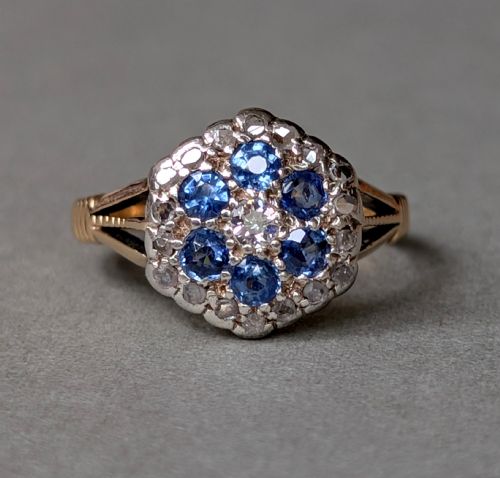
The central stone typically consists of a diamond, though sapphire, ruby, emerald, opal, and pearl variations occur within the available selection. Platinum, yellow gold, and white gold serve as the primary mountings for these floral configurations.
Materials and Construction
Goldsmiths utilised 18-carat yellow and white gold alongside platinum to secure the stones in close-set cluster arrangements. Platinum top settings became particularly common during the Edwardian era to enhance the brilliance of old-cut diamonds.
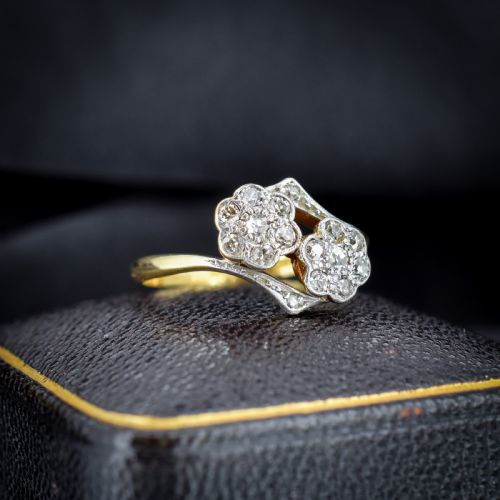
Stones are hand-set using claw or bezel techniques, often incorporating delicate millegrain edging on platinum mounts. Double twist and floral motifs demonstrate the intricate hand-tooling characteristic of early twentieth-century jewellery workshops.
Several rings arrange their diamonds into double twists, ensuring the floral motif blooms alongside a companion stone.
Quality Variations
The overall proportion and symmetry of the floral cluster dictate visual harmony, with uniform stone spacing distinguishing finer examples. The cut and clarity of the central diamond relative to the surrounding halo stones also influence the piece.
The integrity of the metalwork, including the crispness of millegrain detail and the robustness of the shank, separates standard production from superior craftsmanship. Original settings that retain their structural depth without excessive thinning indicate higher survival quality.
The Antique Daisy Ring Glossary
- Cluster ring
- A ring set with a group of stones, usually featuring a larger central gem surrounded by a halo of smaller stones to resemble a flower.
- Old cut
- A diamond cutting style prevalent before the modern brilliant cut, characterised by a smaller table, higher crown, and open culet.
- Millegrain
- A decorative technique featuring a row of tiny metal beads along the edges of a setting, common in Edwardian jewellery.
- Toi et moi
- French for you and me, describing a ring style with two main stones placed side by side or in a close twist motif.
Antique Daisy Ring: Frequently Asked Questions
What is an antique daisy ring?
An antique daisy ring is a cluster ring featuring a central diamond or coloured gemstone encircled by a halo of smaller stones to form a floral shape.
These pieces date predominantly from the Victorian, Edwardian, and Art Deco periods, utilising yellow gold, white gold, and platinum.
How do I wear an antique daisy ring?
These rings suit daily wear provided they receive proper care, often serving as distinctive engagement rings or cocktail jewellery.
Due to their raised floral clusters, pairing them with straight wedding bands may require a bespoke curved band to sit flush.
How can I tell an Edwardian daisy ring apart?
Edwardian examples frequently combine yellow gold shanks with platinum top settings to maximise the white sparkle of old-cut diamonds.
Look for delicate openwork gallery wire and fine millegrain decoration around the stone edges.
What stones are found in daisy rings?
Diamonds form the centre of most designs, frequently accompanied by sapphires, rubies, emeralds, pearls, or opals in the halo or central position.
Old-cut diamonds and natural sapphires dominate the configurations seen across Victorian and Art Deco eras.