



Antique Cutlery Accessories
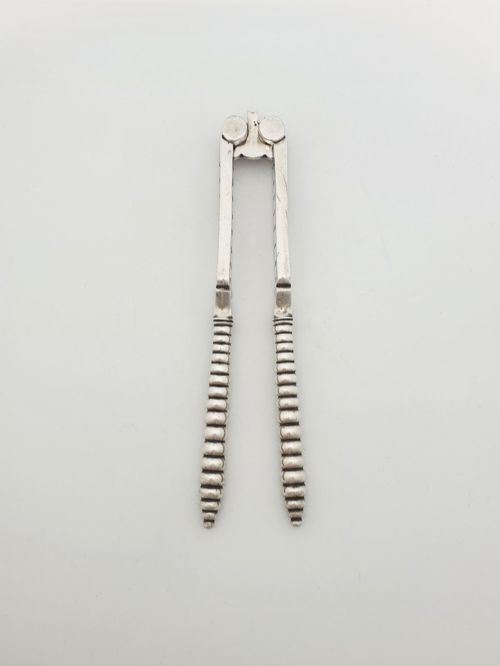
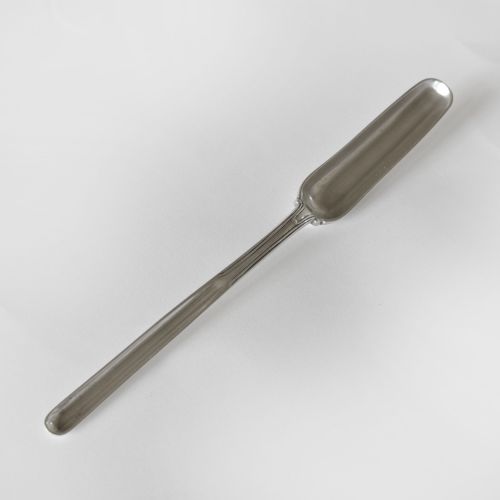
Antique cutlery accessories bring distinct character to the dining table through specialised forms like knife rests, grape shears, and marrow scoops.
Antique Cutlery Accessories
When you search for antique cutlery accessories, you encounter a diverse range of specialised table implements and storage pieces spanning the Georgian, Victorian, and Edwardian periods.
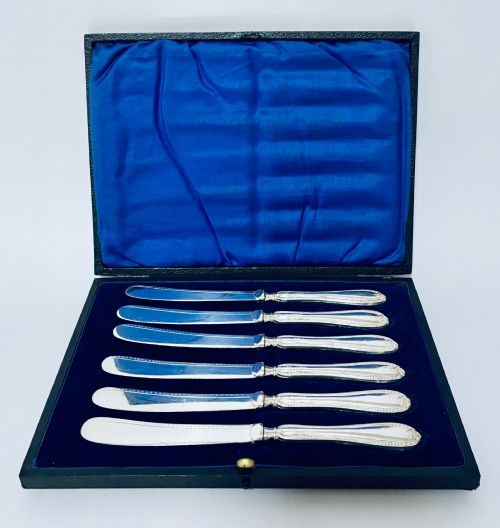
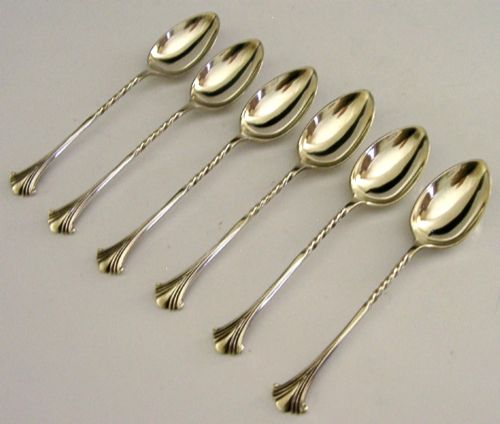
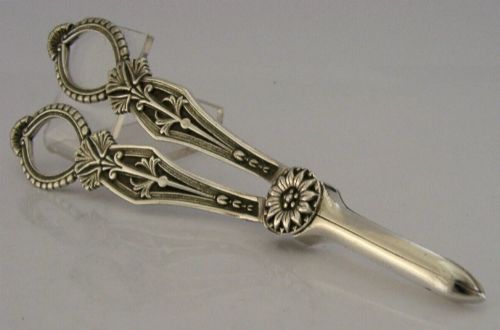
The selections on this page commonly include knife rests, grape shears, butter knives, and teaspoons, alongside larger items like mahogany cutlery boxes.
Pieces from the nineteenth and early twentieth centuries dominate the selection, offering functional items designed for specific dining rituals of their respective eras.
Materials and construction methods
Makers utilised sterling silver and silver plate for metal tableware, shaping them through casting and detailed smithing techniques to create items such as knife rests and grape scissors.
Storage pieces like knife boxes rely on mahogany timber, frequently accented with silver mounts, silk linings, or leatherette interiors.
Secondary materials such as mother-of-pearl, cut glass, bakelite, and steel appear across specific implements like butter knives and handled utensils.
Antique Cutlery Accessories Retail Price Guide 2026
Typical asking prices for cutlery accessories among the pieces listed under this phrase on Sellingantiques today, from the lower quarter to the upper quarter. They describe what is for sale here now, not the wider market.
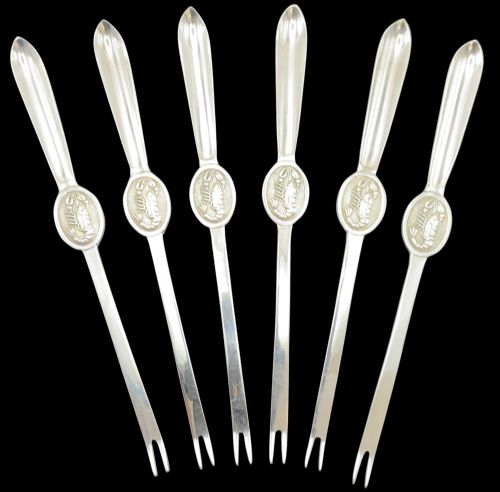
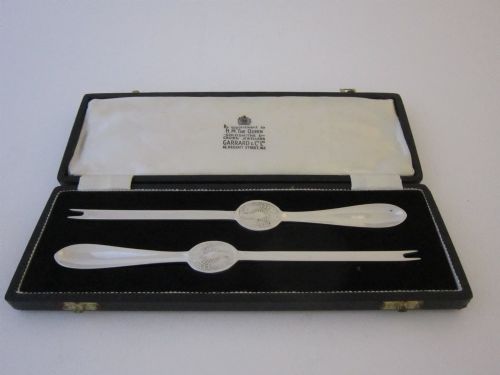
Several items on this page are designed entirely for eating lobster or cutting grapes, proving that past generations invented specialised tools for almost every food.
Distinctions in craftsmanship
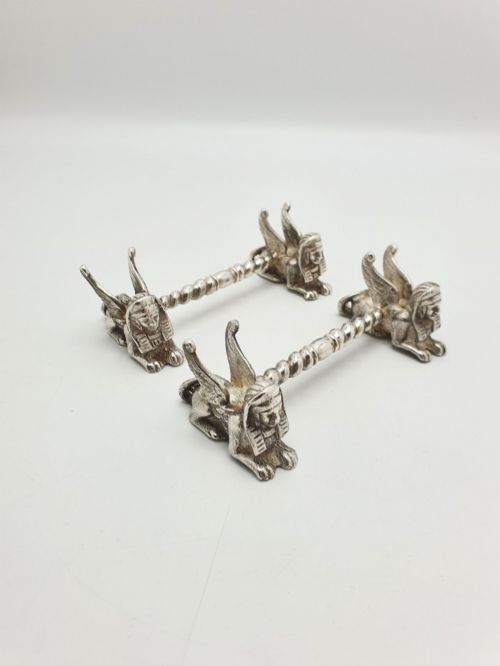
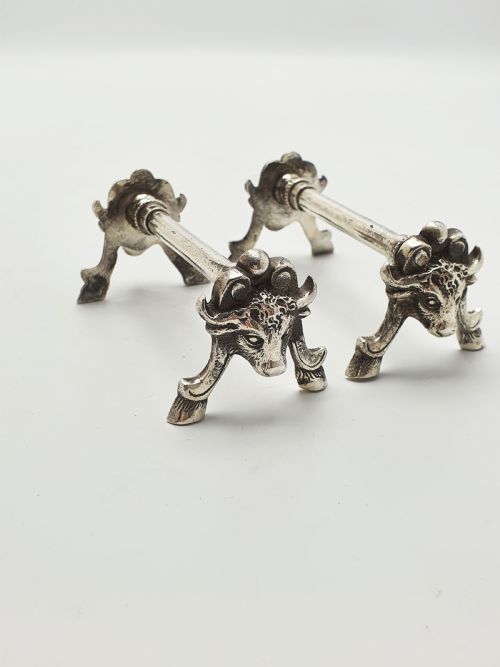
The standard of an antique cutlery accessory rests on the weight of the silver or metal used and the crispness of any cast ornamentation, such as figurative knife rests or grape shear handles.
Storage pieces demonstrate quality through the choice of mahogany grain, the integrity of the original mounts, and the preservation of fitted interiors lined in velvet or silk.
Implements bearing clear hallmarks or attributed to notable makers maintain a stronger documentary record than unmarked or plated alternatives.
Thomas Tookey·P A W Bateman·George Unite·Reilly & Storer·Creswick·Garrard & Co.·Asprey & Co.
The Antique Cutlery Accessories Glossary
- Knife rest
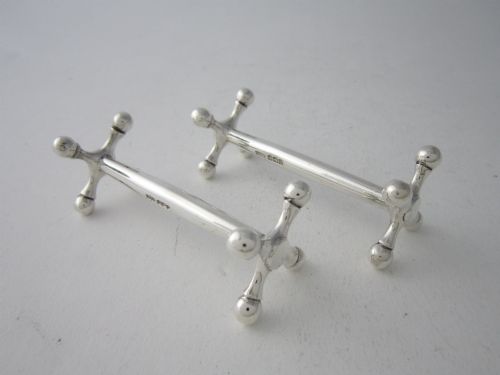
- A small support placed on the table to keep the blade off the cloth between courses. These often take cast forms such as animals or architectural motifs.
- Grape shears
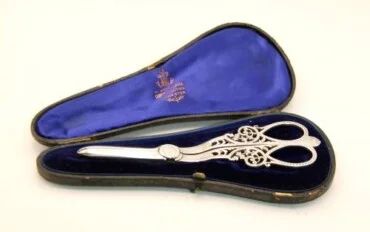
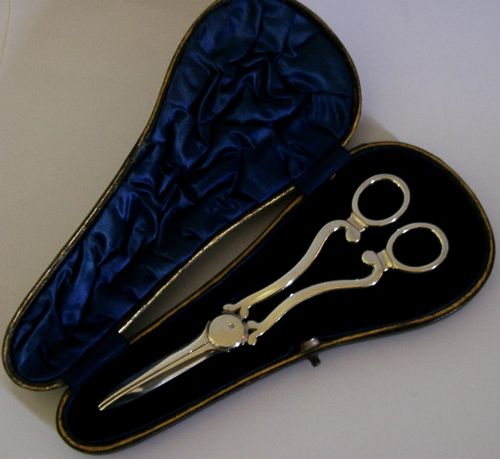
- Specialised scissors designed for cutting clusters of fruit at the table. They frequently feature vine-leaf or naturalistic ornamentation on the handles.
- Marrow scoop
- A long, narrow implement with a small trough at each end designed for extracting bone marrow. Georgian examples are particularly notable.
- Cutlery box
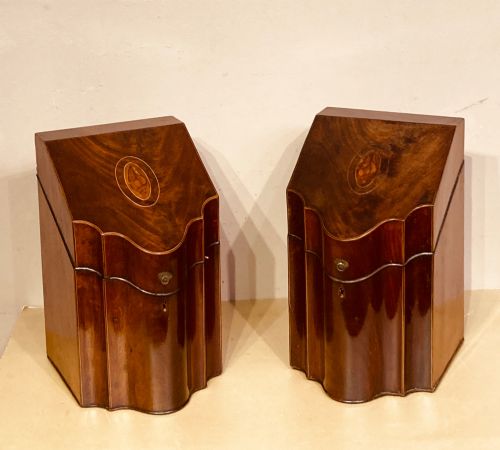
- A fitted wooden container, often in mahogany with a slope front, designed to hold flatware. Eighteenth-century versions often display bow-front proportions.
- Silver plate
- A layer of silver fused to a base metal such as copper or Britannia metal. Old Sheffield Plate is an early form of this technique.
Antique Cutlery Accessories: Frequently Asked Questions
What are antique knife rests used for?
Knife rests hold carving or table knives above the tablecloth between courses, protecting linens from grease and sauces. They became particularly popular during the Victorian period in various cast metal designs.
Pairs of rests sit at each place setting or serve a larger carving set at the centre of the table.
How do I date an antique silver spoon?
Dating silver spoons involves checking the hallmarks stamped into the metal, which indicate the assay office, the year letter, and the maker's mark. British silver incorporates these marks as a standard regulatory practice.
Additional clues come from the shape of the bowl and the profile of the handle, which changed across the Georgian, Victorian, and Edwardian eras.
What is the difference between grape shears and scissors?
Grape shears are specifically shaped with curved, short blades designed to reach between closely packed fruit without bruising the grapes. They often feature naturalistic vine or leaf decoration along the handles.
Standard scissors lack the specialised blade geometry and reach required for serving fruit neatly at the table.
How were mahogany knife boxes used?
Mahogany knife boxes sat on sideboards to store flatware vertically or horizontally in fitted interior slots. Eighteenth-century examples often featured sloping lids and fine silver mounts.
Over time, some of these boxes were adapted to serve as stationery holders or general storage containers on desks.