




Antique Curio Shelf
An antique curio shelf is a compact display stage for small treasures, combining glazed timber frames and open ledges to show off cabinet pieces.
Antique Curio Shelf
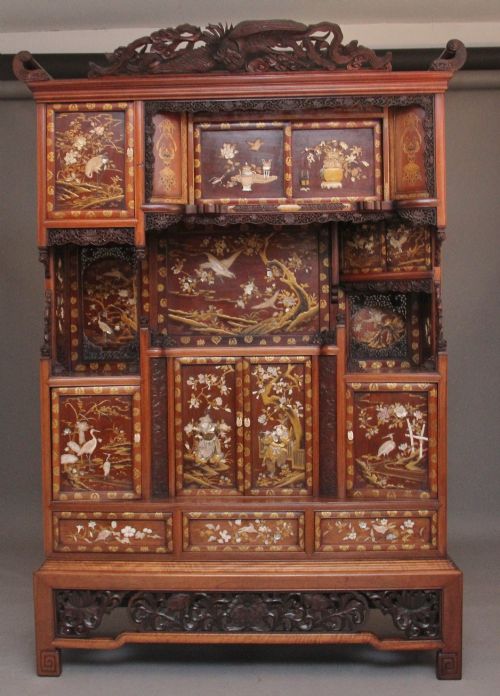
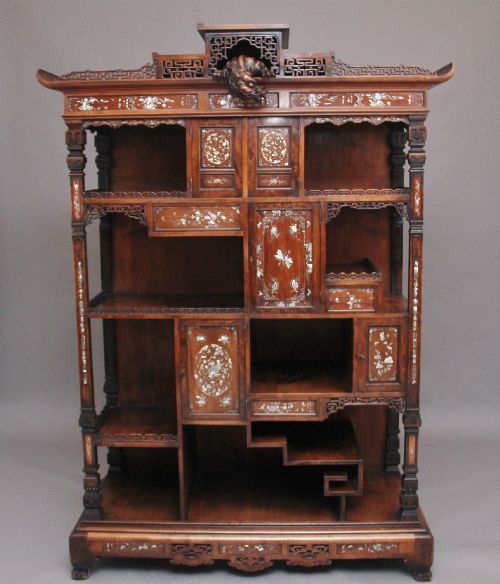
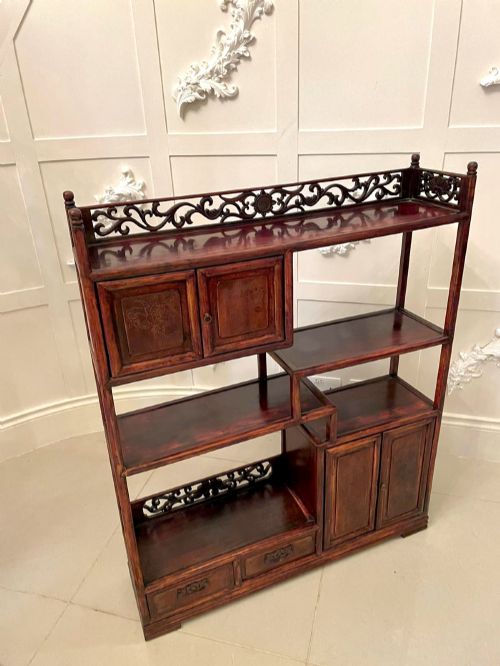
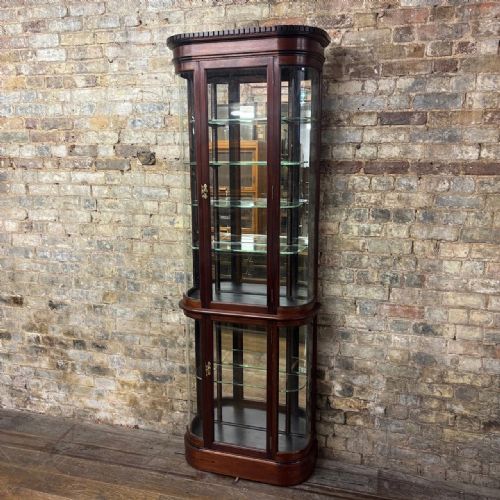
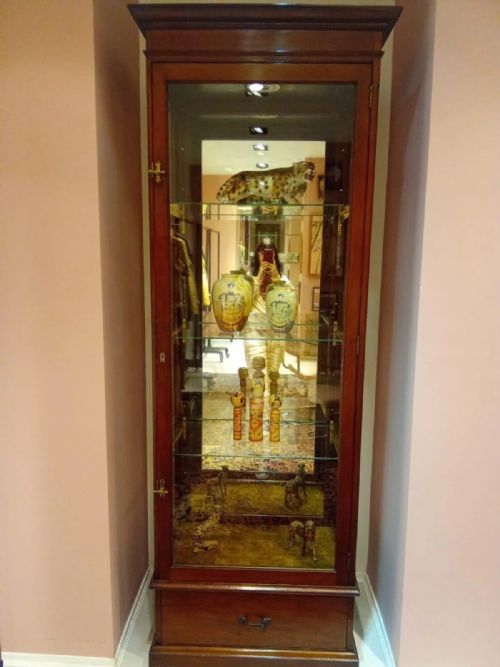
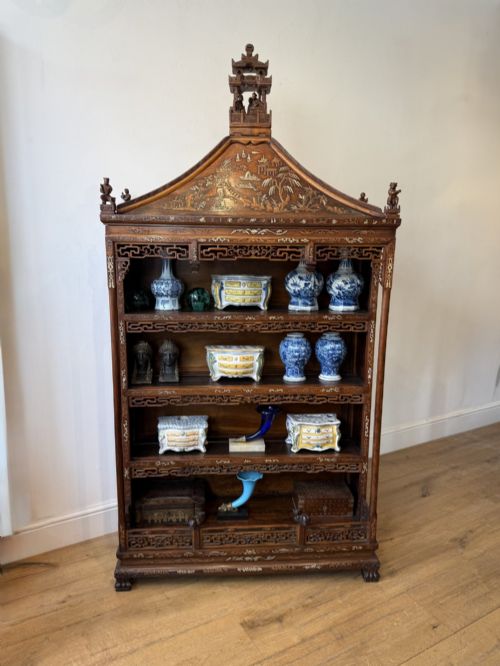
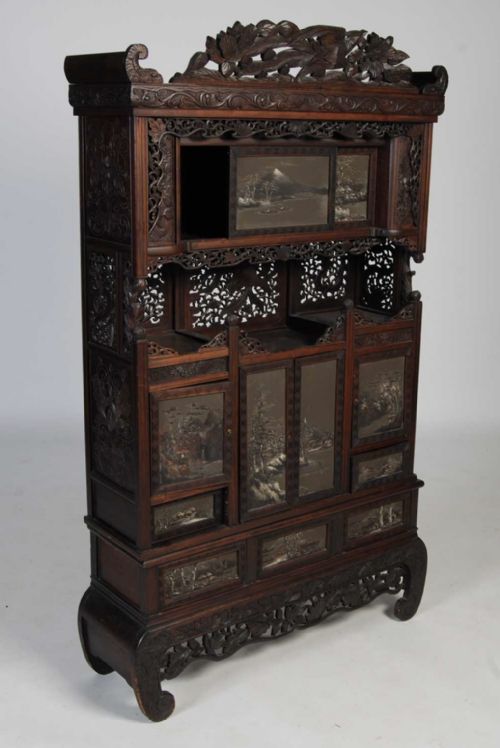
An antique curio shelf serves as a dedicated stage for small collections, bringing together tabletop cabinets, hanging wall shelves, and floor-standing vitrines. When you search for an antique curio shelf, you meet pieces ranging from intimate Edwardian mahogany wall brackets to large Japanese Shodona cabinets on stands.
The material vocabulary spans traditional British cabinet timbers like mahogany and rosewood alongside exotic hardwoods such as hongmu and kingwood. Glazed doors, open bracket ledges, and mirrored backs recur across the Victorian and Edwardian examples to catch the light.
Origins stretch from English workshops to French ateliers and East Asian centres, taking in Chinese pagoda cabinets and Japanese Meiji period display stands. These variations reflect how different eras and regions valued the presentation of curiosities and small precious objects.
Materials and construction
Makers built these cabinets and shelves using dense timbers including mahogany, rosewood, and hongmu, often framing the structure with glazed panels or open fretwork. Joinery relied on precise framing to support glass shelves and mirrored backs without warping.
Surface finish involved careful polishing of the hardwood grain, complemented in French and English pieces by ormolu mounts or gilt mirrors. Asian pieces incorporated intricate carving and lacquer work to define the structure of the display space.
Listings feature Edwardian, Victorian, and 19th-century periods alongside materials like glass, brass, mahogany, and hongmu.
Assessing quality and construction
Quality rests on the selection of timber and the precision of the joinery, particularly in the framing of glass doors and the stability of hanging brackets. Finer pieces demonstrate careful attention to wood grain alignment and the crispness of any carved ornament.
The integration of secondary materials, such as heavy brass hardware, fine ormolu mounts, or intact mirrored glass, distinguishes standard production from more ambitious workshop pieces. Structural integrity in slender wall units and complex multi-tiered stands remains essential.
Thomas Justice & Sons
The Antique Curio Shelf Glossary
- Shodona
- A Japanese cabinet featuring asymmetrical shelving and compartment doors, typical of the Meiji period. These pieces were designed specifically for the display of small decorative objects.
- Vitrine
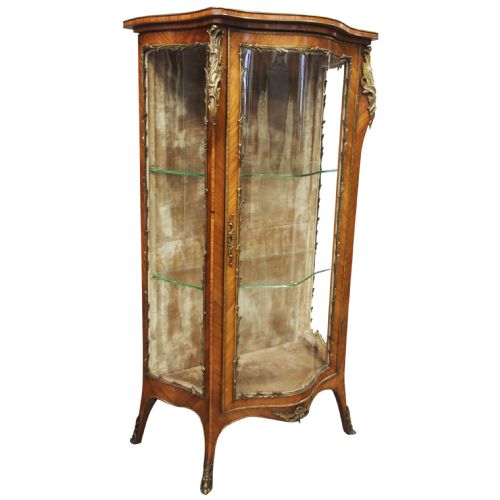
- A glass-fronted cabinet or display case intended for the protection and viewing of porcelain, miniatures, and curiosities. French examples often incorporate rosewood and ormolu mounts.
- Bijouterie cabinet
- A low-profile glazed table or cabinet designed to hold jewellery, medals, and small precious items. They frequently feature hinged glass tops for overhead inspection.
- Hongmu
- A dense, heavy Chinese hardwood prized for its deep colour and ability to hold crisp carved detail. It appears frequently in open cabinets and display stands.
- Whatnot
- A piece of furniture consisting of several open shelves for displaying ornaments, popular throughout the Victorian period. They range from floor-standing étagères to wall-mounted brackets.
Antique Curio Shelf: Frequently Asked Questions
How do I hang a wall cabinet safely?
Wall-mounted display cabinets require secure fixings into wall studs or appropriate masonry anchors to support the combined weight of the timber and glass.
Check the hanging brackets at the back of the cabinet to ensure they are firmly attached to the main structure before installation.
What is the difference between a vitrine and a shodona?
A vitrine is typically a European glass-fronted cabinet designed to showcase porcelain and curiosities with minimal internal division.
A shodona is an East Asian cabinet featuring asymmetrical shelving and small cupboards, rooted in Japanese Meiji period design.
How should I clean hardwood display furniture?
Dust timber surfaces regularly with a soft, dry cloth to prevent grit accumulation in carved details and joints. Avoid silicone-based polishes that build up a residue on antique finishes over time.
Condition the wood occasionally with a appropriate wax if the surface appears dry, following the direction of the grain.
Can glass shelves hold heavy items?
Most antique display cabinets feature glass shelves intended for light decorative objects, porcelain figures, and small collectibles. Heavy items should be placed on solid timber bases or supported lower down in the cabinet.
Inspect the shelf supports and thickness of the glass before arranging heavier pieces inside.