
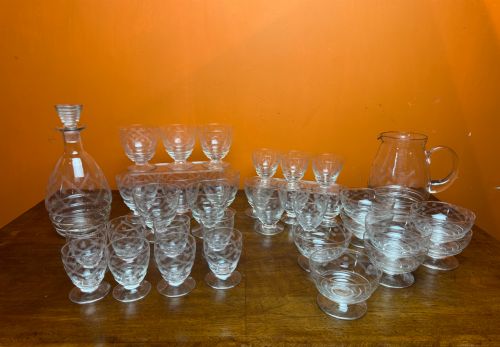

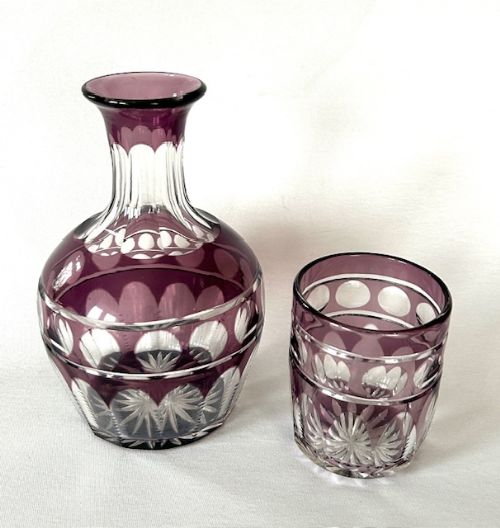


Antique Crystal Water Pitcher
An antique crystal water pitcher brings brilliant refraction and tactile weight to the table, uniting practicality with period craftsmanship.
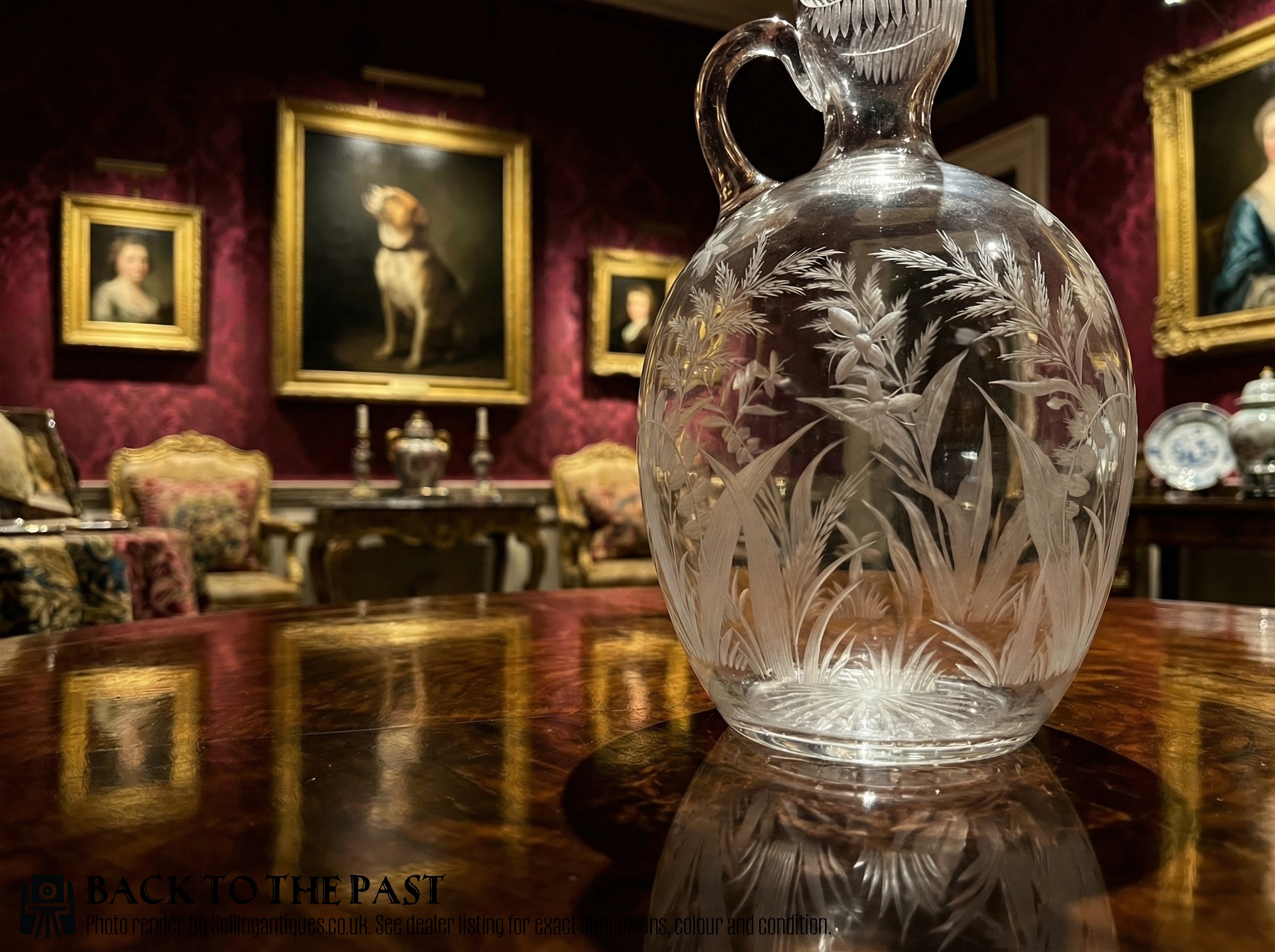
Antique Crystal Water Pitcher
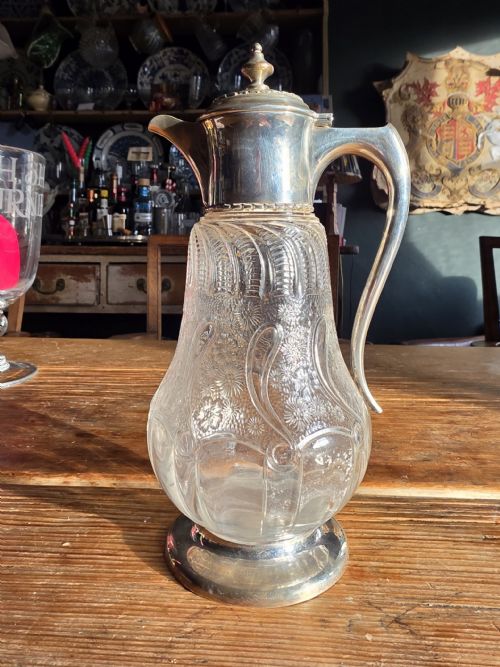
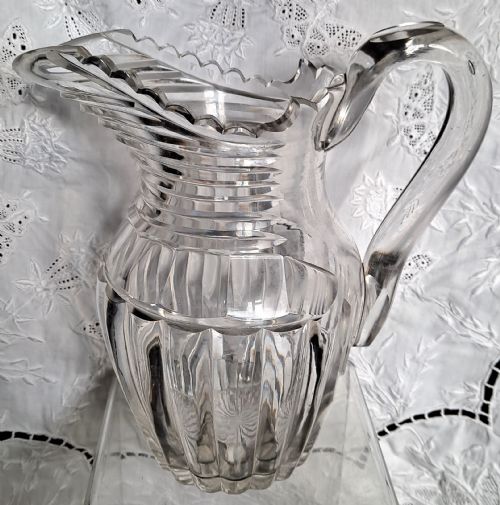
An antique crystal water pitcher represents a functional serving vessel designed for the dining table or sideboard, appearing in forms such as jugs, ewers, and claret jugs. These pieces span the nineteenth century through the early twentieth century, encompassing Victorian, Edwardian, Regency, and Art Deco styles.
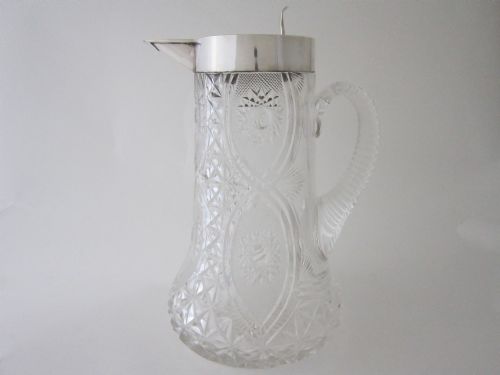
The version most commonly encountered on this page is the heavy cut glass jug, frequently mounted with sterling silver or silver plate around the rim and handle. Origins range across English, French, and Austrian workshops, taking shapes suited to pouring water, wine, or cordials.
How they were made
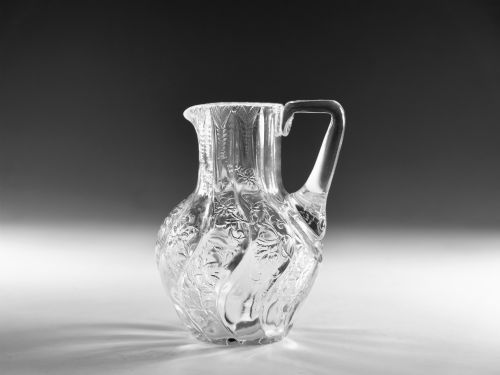
Maker's workshops utilised high-lead glass and clear glass blanks, shaping them through blowing and moulding before applying deep geometric or floral cutting. Artisans employed hand wheel engraving and intaglio techniques to create intricate surface decorations such as grapes, vines, stars, and dolphins.
Mounts in sterling silver and silver plate were cast and secured to the glass bodies, occasionally incorporating hinged lids and thumbpieces. Coloured glass variants, including teal and amethyst examples, relied on specific metallic oxide additives during the melting process.
Materials recorded across the inventory include lead crystal, sterling silver, silver plate, and hand-engraved glass.
What varies in quality
The distinction between standard production and the top of the range lies in the crispness and depth of the glass cutting, alongside the weight of the lead crystal. Superior pieces display precisely aligned facets that refract light sharply without distortion or surface waviness.
Design complexity and maker attribution further separate the tiers, with signed works or pieces featuring finely chased silver mounts commanding greater attention. The clarity of the glass and the delicacy of hand-engraved motifs indicate the level of artisan skill involved in the creation.
William Comyns·Stevens and Williams·Webb Corbett·Richardsons·Tiffany·Lobmeyr
The Antique Crystal Water Pitcher Glossary
- Cut Glass
- Glass decorated by holding the vessel against a rotating abrasive wheel to carve geometric patterns into the surface. This technique produces sharp edges and deep facets.
- Ewer
- A large jug with a wide spout and curved handle, historically used for pouring water. Victorian and Edwardian examples often feature silver mounts.
- Intaglio
- A technique where designs are sunk below the surface of the glass rather than carved in relief. It requires meticulous hand engraving with small wheels.
- Latticinio
- A type of glasswork incorporating opaque white or coloured threads embedded within the clear glass wall. This creates delicate linear or net-like patterns.
- Claret Jug
- A specialised pouring vessel designed specifically for serving red wine at the table. They frequently combine cut crystal bodies with elaborate metal handle and lid assemblies.
Antique Crystal Water Pitcher: Frequently Asked Questions
How do I clean an antique crystal pitcher?
Wash the vessel by hand using warm water and a mild detergent, avoiding sudden temperature changes that can stress the glass.
Dry immediately with a lint-free cloth to maintain the brilliance of the cut facets.
Can I use these pitchers for daily dining?
These pitchers serve beverages effectively on the table, provided they are handled with care due to their heavy lead crystal construction.
Avoid placing them in dishwashers or using abrasive scrubbers on the silver mounts.
How do I distinguish Victorian from Edwardian jugs?
Victorian pieces often display dense, deep cutting and naturalistic motifs like grapes and vines, reflecting ornate nineteenth-century tastes.
Edwardian examples tend towards lighter, more refined geometric cuts and sleeker silver mounts influenced by neoclassical revivals.
What is the difference between crystal and glass?
Crystal contains lead oxide, which increases the weight, refractive index, and ringing sound of the material compared to standard soda-lime glass.
This lead content allows artisans to cut deeper, sharper patterns without fracturing the vessel.