


Antique Crystal Pitcher
An antique crystal pitcher brings weight and brilliance to the table, combining heavy cut glass with precious mounts for serving wine and water.
Antique Crystal Pitcher
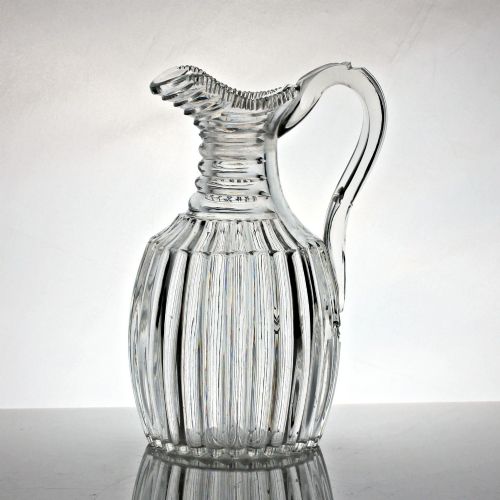
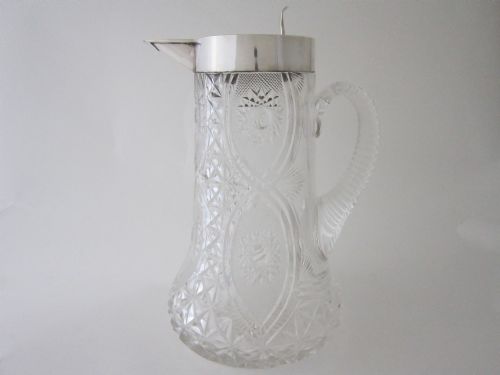
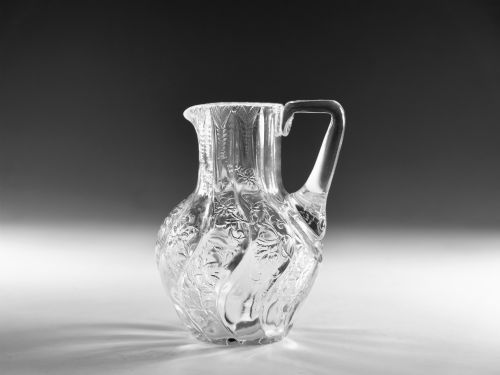
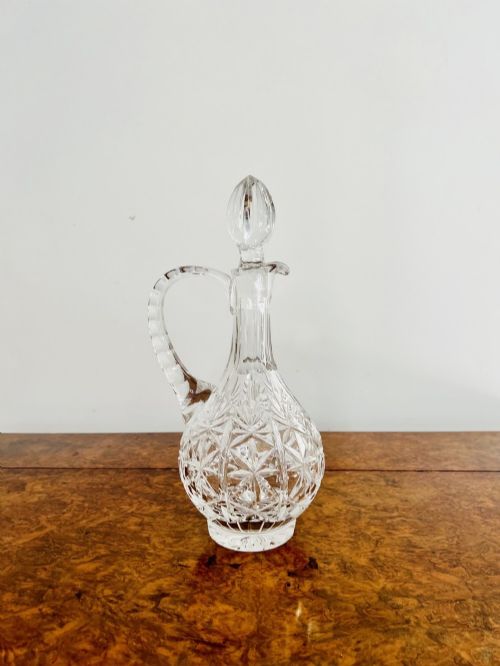
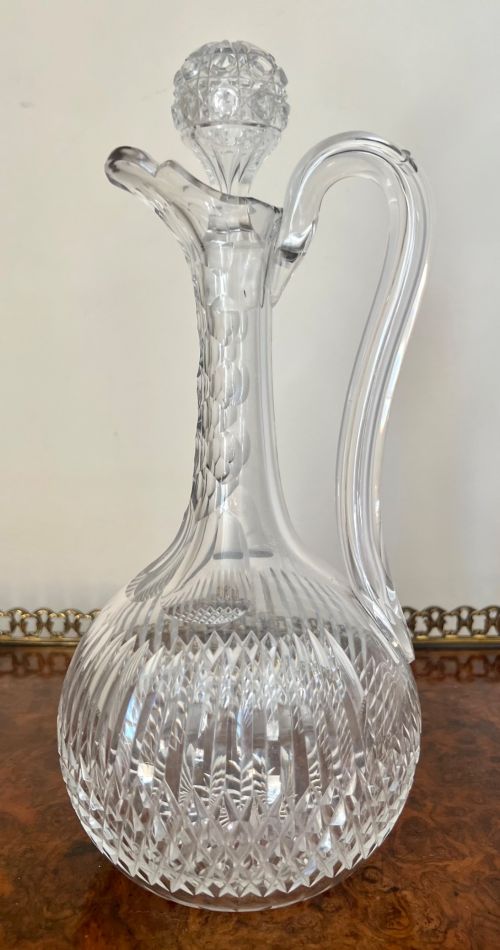
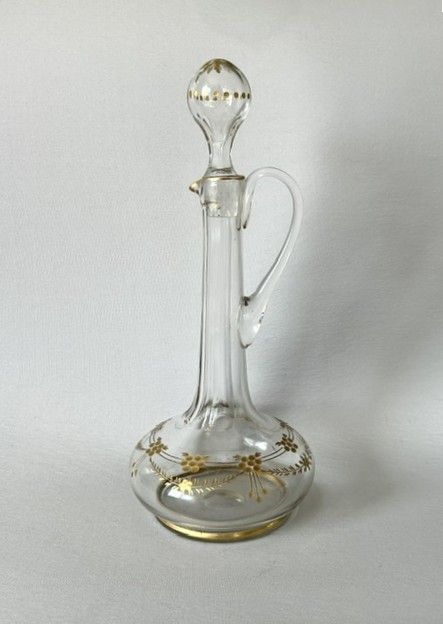
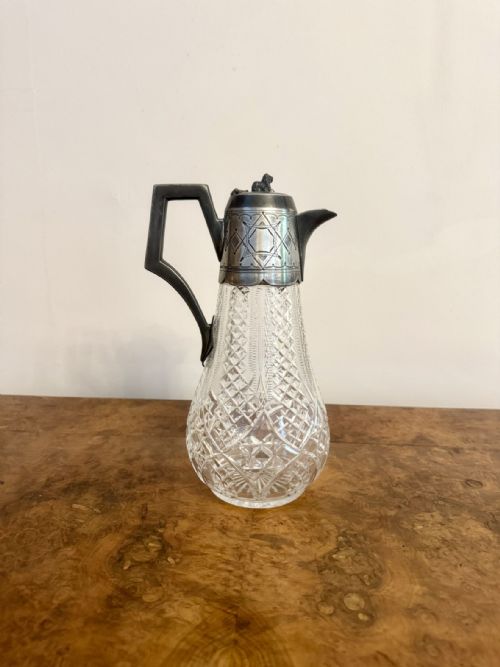
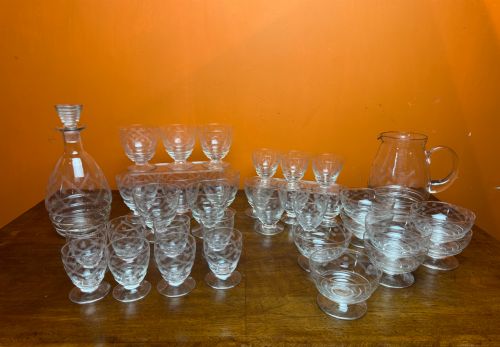
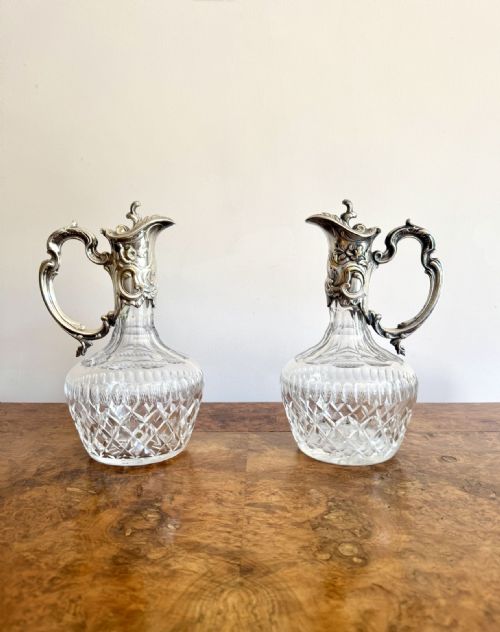
An antique crystal pitcher encompasses vessels designed for serving wine, claret, water, and champagne, frequently encountered in forms such as claret jugs, ewers, and decanters. The pieces on this page span several decades, reaching from the Georgian and Regency eras through the Victorian and Edwardian periods up to Art Deco designs of the twentieth century.
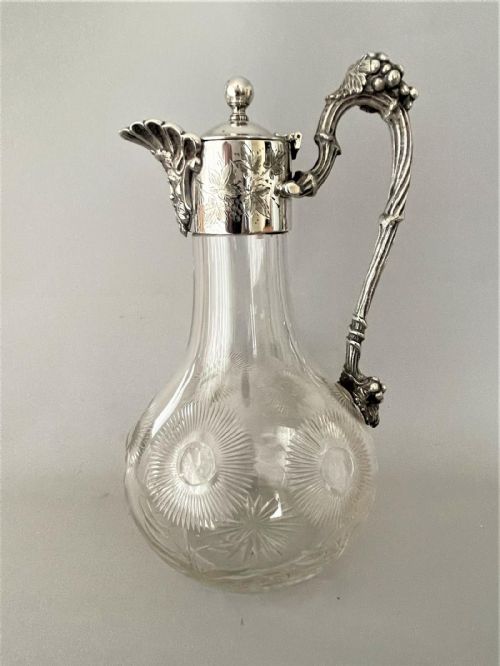
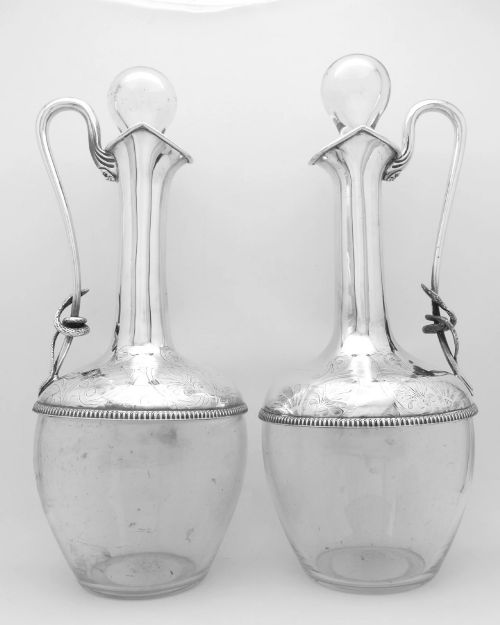
Makers and makers' marks appear alongside unmarked vessels, with silver-mounted iterations frequently combining clear or coloured glass bodies with sterling silver, silver plate, or Bacchus mask details.
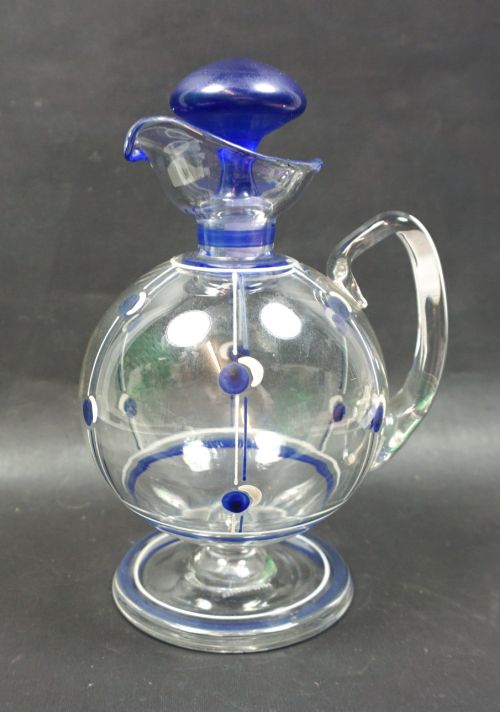
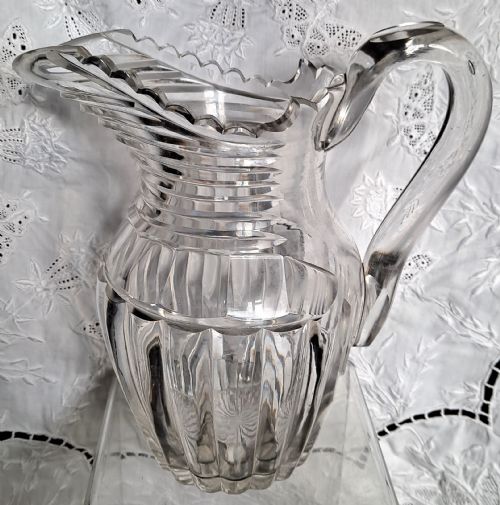
The varieties span heavy pillar and prism cut water jugs, etched glass wine pitchers with grape and vine motifs, and Bohemian cut glass or Czechoslovakian vessels featuring enamel decoration.
Materials and manufacture
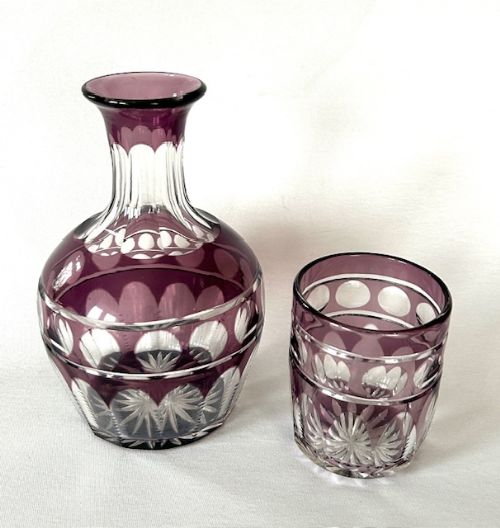
Makers utilised lead crystal, cut glass, clear glass, and occasionally amethyst or red crystal, shaping vessels through blowing and hand wheel engraving.
Surface decoration relies on deep cutting, intaglio engraving, etching, and blue enamel, combined with cast and chased silver or silver-plated mounts fitted to handles, lips, and covers.
Several Victorian and Edwardian pitchers feature writhing serpent handles designed to look as though they are guarding the wine.
Judging quality in glass and mounts
Quality rests on the crispness of the glass cutting and the weight of the lead crystal, where sharp, clean facets catch the light differently than soft, rounded moulding.
The synergy between the glass body and the metal mount dictates the standard, noting the thickness of the silver plate or sterling silver, the security of the mount, and the detail in chased motifs like serpents or Bacchus masks.
Asprey and Co. Ltd·Stevens and Williams·Webb Corbett·Richardsons·Tiffany
The Antique Crystal Pitcher Glossary
- Claret jug
- A vessel specifically formed for serving claret or red wine, typically fitted with a hinged metal cover and handle.
- Ewer
- A large jug with a wide spout and ornate handle, historically used for water or wine at formal dining settings.
- Intaglio
- A method of glass decoration where the design is sunk beneath the surface by grinding and polishing wheels.
- Latticinio
- A glassblowing technique incorporating fine opaque white or coloured glass threads twisted within the clear metal.
- Pillar and prism cut
- A heavy geometric surface cutting style that creates long vertical facets refracting light through thick glass.
Antique Crystal Pitcher: Frequently Asked Questions
What is an antique crystal pitcher used for?
These vessels served water, wine, claret, and cocktails at formal dining tables and sideboards during the nineteenth and twentieth centuries.
Today, they function both as decorative dining accessories and practical serving pieces for gatherings.
How do I clean an antique crystal pitcher?
Wash the glass by hand using warm water and mild detergent, avoiding sudden temperature changes that can crack old crystal.
Polish silver or silver-plated mounts gently with a soft cloth to preserve the original metal finish without abrading the glass.
How do I date an antique crystal pitcher?
Examine the style of the cutting, the shape of the vessel, and any hallmarks stamped on the silver or silver-plate mounts.
Victorian and Edwardian pieces often display registration marks or maker signatures that narrow the production period to a specific decade.
What is the difference between glass and crystal?
Crystal contains lead oxide, which adds weight, brilliance, and a resonant sound when the rim is struck lightly.
Standard glass lacks this lead content, resulting in a lighter vessel with less light dispersion and refractive power.