




Antique Crystal Appliques
Antique crystal appliques bring sparkle and illumination to interiors through wall-mounted lights fashioned from brass, bronze and cut glass.
Antique Crystal Appliques
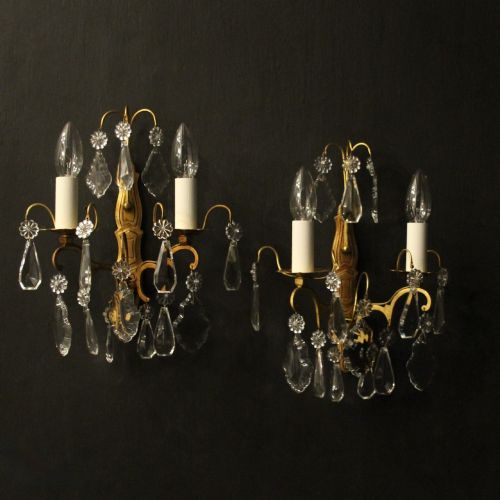
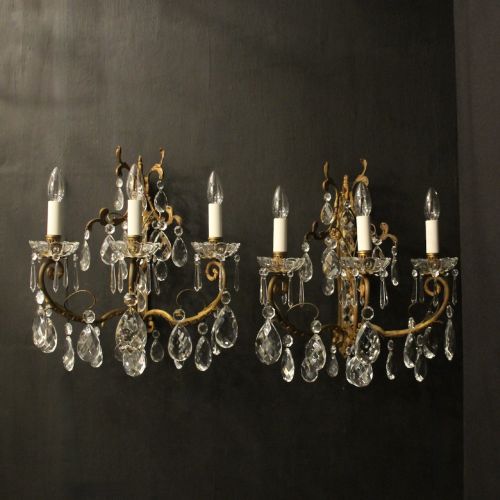
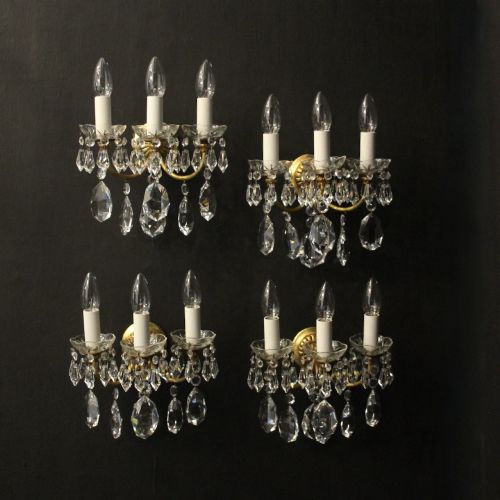
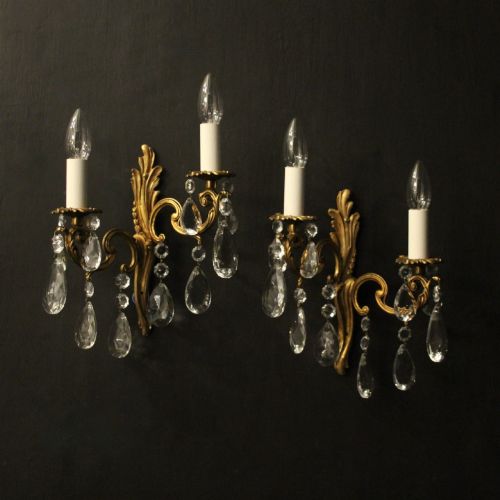
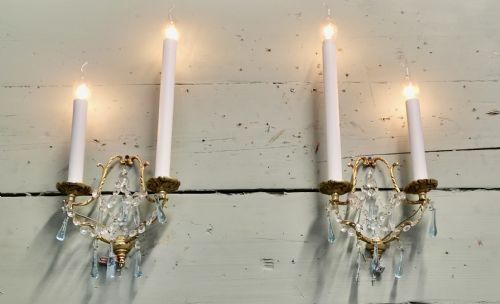
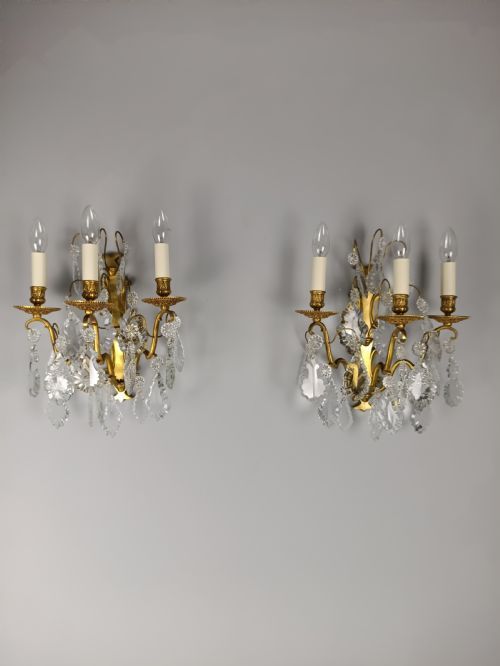
When searching for antique crystal appliques, buyers find wall-mounted light fixtures designed to hold candles or electricity. The most common examples on this page are French and Italian pairs featuring multiple arms and hanging glass drops.
Originating from periods spanning the nineteenth century through the early twentieth century, these wall lights reflect regional styles including French Rococo, Gustavian and Florentine. Makers such as Maison Bagues and F. and C. Osler appear among the listed pieces.
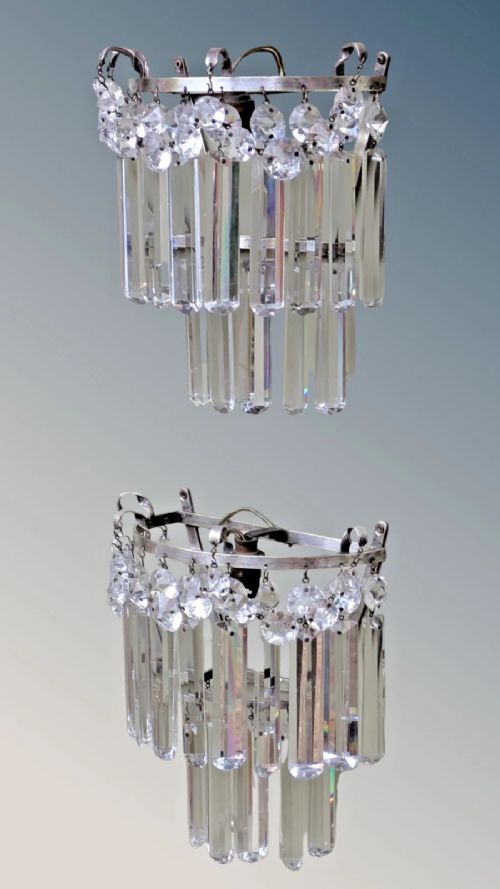
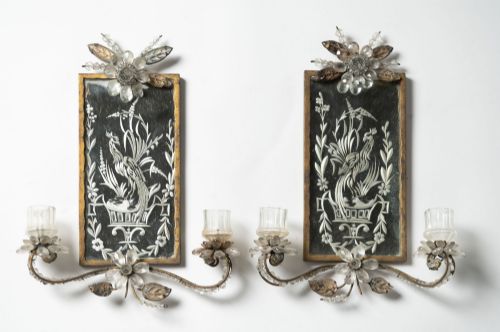
The selection ranges from twin-arm gilt brass sconces to tall wall chandeliers and mirrored ormolu designs. Wall sconces and wall lights dominate the forms, usually mounted as balanced pairs for symmetry on either side of a mirror or mantelpiece.
Materials and construction
Metal frames form the structural spine of these fixtures, utilising brass, gilt bronze, ormolu, giltwood and gilt toleware. Smiths and founders cast and gilded these metals to create ornate arms, backplates and candle nozzles.
Cut crystal and glass pendants, beads and lustres are wired or pinned onto the metal armatures by hand. The refraction of light through these cut glass elements defines the visual impact of each fixture.
Listings feature wall lights from the nineteenth century and the early decades of the twentieth century, including Edwardian and 1920s examples.
Assessing quality
Quality rests upon the crispness of the metal casting and the depth of the gilding on the bronze or brass frames. Superior examples display sharply chased acanthus leaves, cherubs or scrolling foliage rather than soft, mass-produced contours.
The density and cutting of the crystal drops also dictate excellence. Hand-cut glass and lead crystal scatter light with greater brilliance and carry more substantial weight than pressed glass alternatives.
Maison Bagues·F. & C. Osler
The Antique Crystal Appliques Glossary
- Ormolu
- A technique of applying finely ground high-carat gold to an object of bronze. This gilded bronze finish prevents tarnish and yields a rich, warm gleam on nineteenth-century frames.
- Lustre
- A glass pendant or hanging prism suspended from a light fixture to catch and refract light. These drops hang in varying lengths from the arms and bobeches.
- Toleware
- Painted sheet metal fashioned into decorative forms and backplates. It offers coloured accents distinct from polished brass or gilt bronze.
- Bobeche
- A small collar or drip pan positioned beneath the candle nozzle to catch melting wax. In crystal fixtures, these often feature a ring of hanging glass prisms.
Antique Crystal Appliques: Frequently Asked Questions
How do I install antique wall sconces?
Installation typically involves securing the backplate directly to wall studs or using appropriate wall anchors to support the weight of the metal and glass. Because many antique fixtures are heavy and may feature older internal wiring, professional installation by an electrician ensures safe mounting.
Positioning them at eye level or slightly above creates balanced illumination, particularly when hung in pairs on either side of a fireplace or doorway.
How do I clean crystal wall lights?
Maintenance involves gently dusting the metal arms with a soft, dry cloth and cleaning the crystal drops with a mild solution of warm water and gentle soap. Removing the glass pendants individually allows for thorough cleaning without risking damage to the antique frame.
Harsh chemical cleaners should be avoided to protect the integrity of the gilt bronze, brass, or ormolu surfaces surrounding the glass.
How do I date antique crystal appliques?
Dating relies on stylistic clues, casting techniques, and the type of glass used in the construction. Pieces from the nineteenth century often exhibit heavier cast bronze frames and hand-cut lead glass, while early twentieth-century examples incorporate specific revival styles.
Examining the screw threads, backplate construction and wiring channels also provides context for the era of manufacture, distinguishing nineteenth-century work from Edwardian or 1920s pieces.