
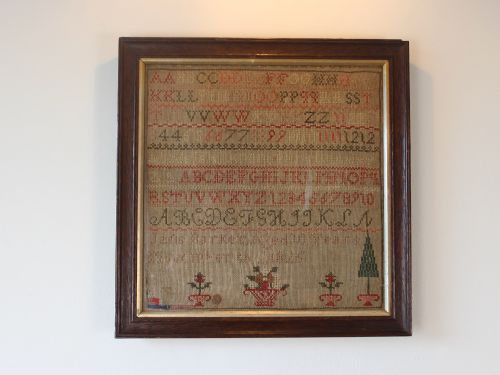
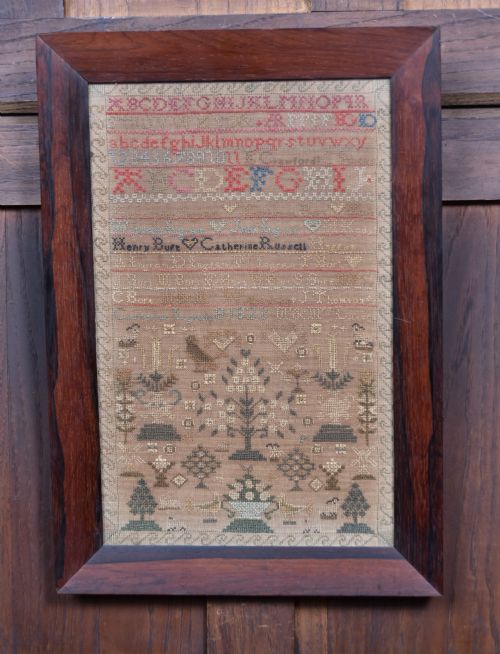


Antique Cross Stitch Sampler
An antique cross stitch sampler brings domestic history onto the wall through needlework worked by young hands centuries ago.
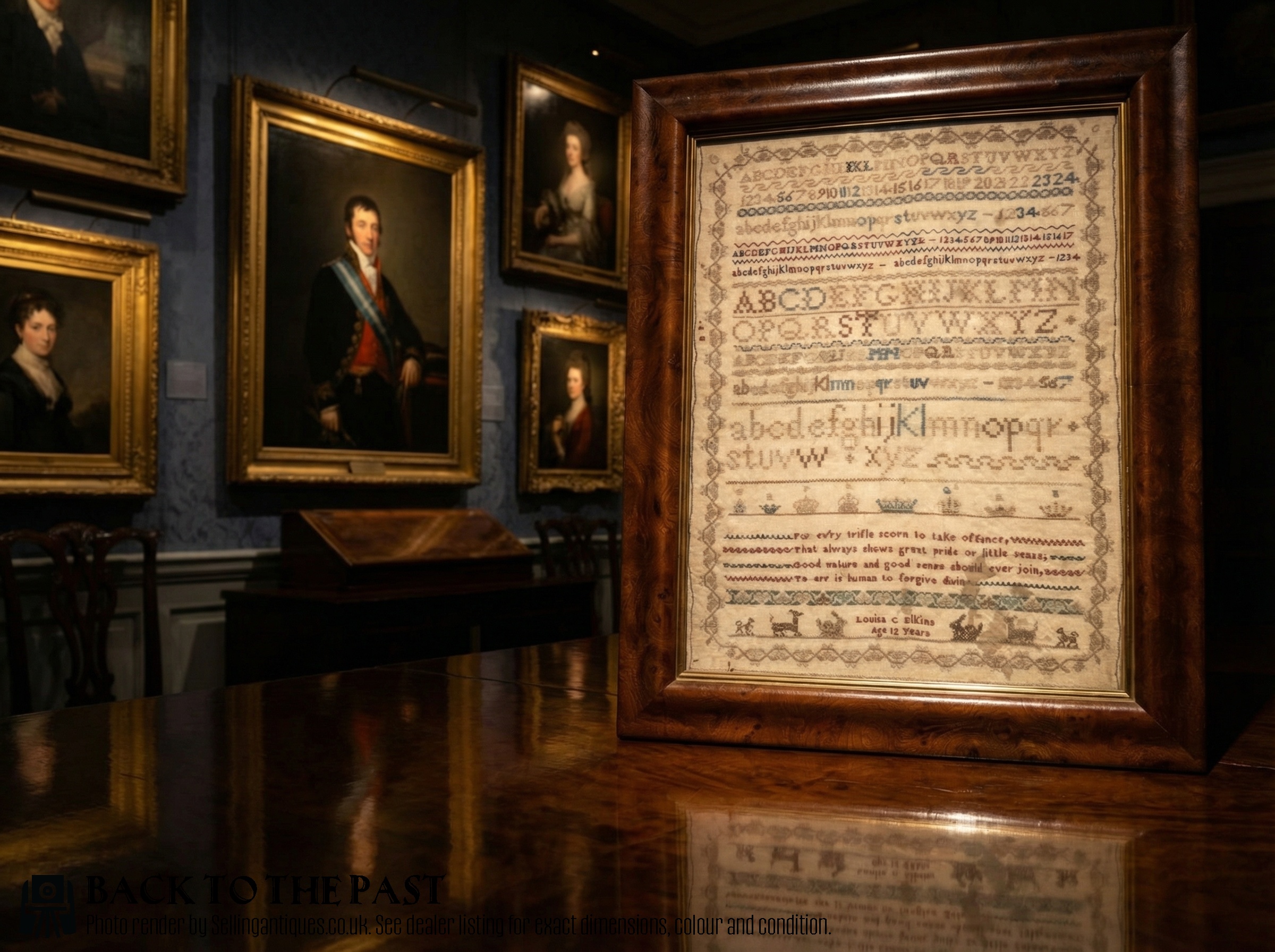
Antique Cross Stitch Sampler
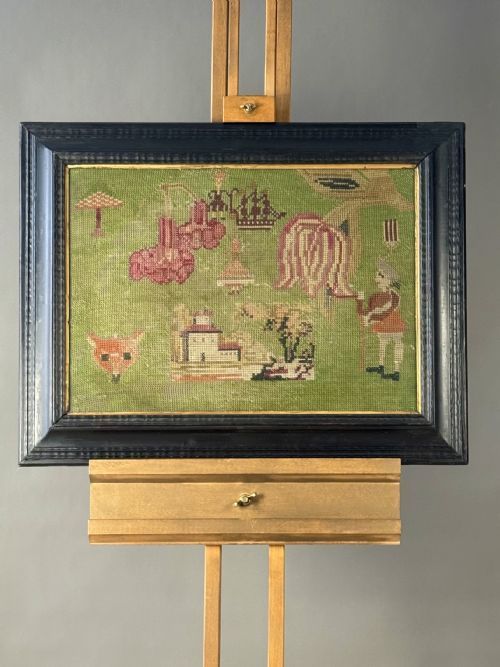
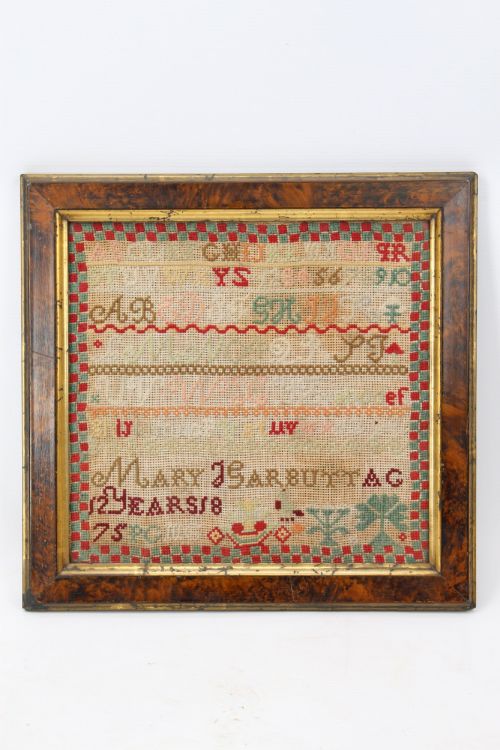
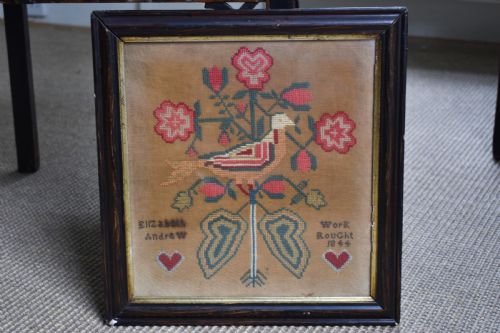
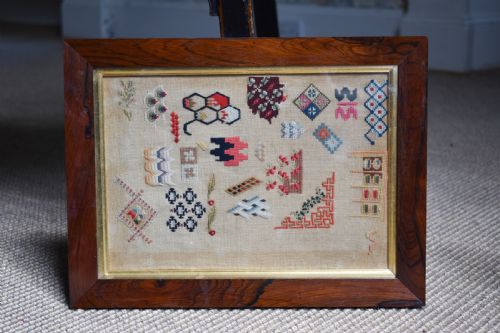
When you search for an antique cross stitch sampler, you are looking at needlework panels created by girls and women to practice stitches and display literacy, piety, or domestic skill. The pieces span from the eighteenth century through the Victorian period, including Georgian and Regency examples.
You are most likely to meet nineteenth-century and Victorian pieces on this page, often framed behind glass in wood surrounds. These frequently record names, ages, and dates, ranging from simple alphabet exercises to detailed pictorial panels.
The materials generally consist of linen grounds worked in silk thread, wool, or standard thread. Some examples incorporate specific texts such as the Lords Prayer, the Commandments, or educational verses.
How they were made
Makers stitched onto woven linen grounds using coloured threads of silk and wool. These textiles required patience and steady light, as every letter and motif relied on precise counting of the fabric threads.
Finished panels were mounted in wood frames, frequently protected by glass to shield the delicate fibres from dust and damp. Many surviving pieces retain their original framing materials, showing the age of the wood and the mounting techniques of the period.
Antique Cross Stitch Sampler Retail Price Guide 2026
Typical asking prices for cross stitch sampler among the pieces listed under this phrase on Sellingantiques today, from the lower quarter to the upper quarter. They describe what is for sale here now, not the wider market.
Listings feature linen grounds worked in wool, silk, and standard thread across the eighteenth and nineteenth centuries.
What varies in quality
Quality rests on the neatness of the stitching and the ambition of the design. Dense, even lettering and complex pictorial elements show greater skill than basic practice alphabets.
The inclusion of specific details like names, ages, schools, and dates elevates an example. Pieces that record local history or family records carry more character than unsigned practice pieces.
The Antique Cross Stitch Sampler Glossary
- Sampler
- A piece of needlework produced as a demonstration or test of skill in various stitches. These typically feature alphabets, numbers, and decorative motifs.
- Alphabet sampler
- A specific type focusing primarily on rows of letters and numerals. These served as both writing practice and stitch instruction.
- Linen
- A textile made from the fibres of the flax plant, used as the primary ground fabric for stitching. Its even weave made counting threads straightforward.
- Needlework
- General term for decorative sewing and textile arts executed by hand. It encompasses embroidery, tapestries, and samplers.
- Tapestry
- A form of textile art traditionally woven on a loom, though the term also applies historically to dense needlepoint wall panels. These often depict pictorial scenes rather than text.
Antique Cross Stitch Sampler: Frequently Asked Questions
How do I date a sampler?
Many pieces include explicit dates stitched directly into the fabric alongside the maker's name and age. When a date is missing, style cues, lettering fonts, and framing materials help narrow down the decade.
Comparing the layout and chosen verses to dated examples from the same region provides a reliable guide for attribution.
Where were these made?
Young girls worked these panels at home or within institutional settings such as dame schools and national schools. School registers and location names stitched into the fabric sometimes point directly to specific towns.
Regional styles often reveal whether a piece originated in English domestic settings or Scottish academies.
How should I hang mine?
Keep textile art out of direct sunlight to prevent the silk and wool threads from fading. Display them on interior walls away from damp sources and extreme temperature fluctuations.
Ensure the frame protects the fabric without placing undue mechanical stress on the fragile linen ground.
What do the different texts mean?
Religious texts like the Lords Prayer or the Commandments reflect the moral education of children during the Georgian and Victorian eras. Educational verses and alphabets served as fundamental building blocks of literacy.
Family trees and dedication lines mark milestones in the maker's youth.