


Antique Crest Wall Decor
These antique crest wall decor pieces bring heraldic history and carved detail straight to your walls.
Antique Crest Wall Decor
Antique crest wall decor encompasses armorial shields, cast iron plaques, and carved wooden panels bearing coats of arms. You will frequently encounter Victorian examples alongside early twentieth-century metal and wood pieces.
The selection ranges from heavy cast iron Royal coats of arms and bronze ships badges to carved hardwood armorial shields and decorative plates. These objects function primarily as wall plaques, architectural salvage, and decorative panels.
Origins span British, Irish, Spanish, and Swiss workshops, touching upon Victorian heraldic, Neoclassical, Baroque, and Celtic Revival styles. Collectors seek these items for their strong sculptural presence and historical lineage.
Materials and construction methods
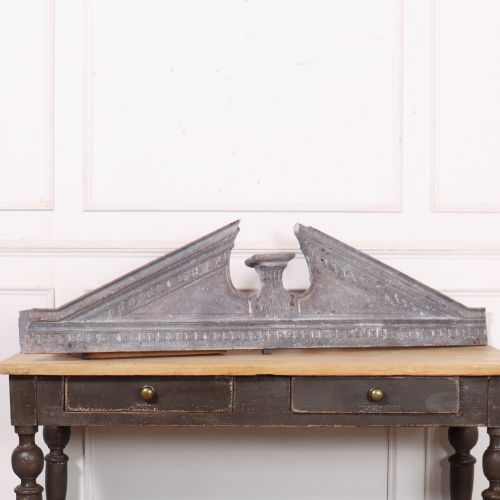
Makers utilised carved wood, solid oak, and hardwood for sculptural shields and architectural pediments, often applying paint or gesso for surface finish. Carving required precise hand tools to articulate intricate heraldic details.
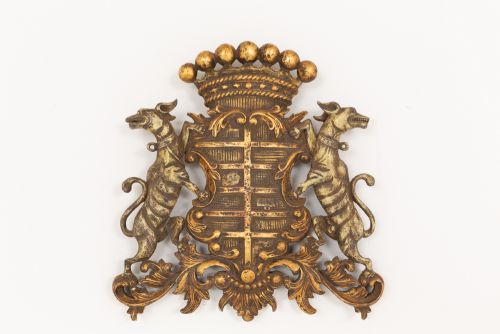
Metalwork forms a substantial portion of the objects, utilising cast iron, bronze, and brass for durable plaques, badges, and armorial plates. Foundry casting captured sharp relief in heavy metal items intended for institutional or maritime use.
Listings feature items spanning the nineteenth and twentieth centuries, constructed from oak, cast iron, bronze, and hand-painted wood.
Assessing quality and craftsmanship
The depth and crispness of the carving or casting dictate the visual strength of the piece, separating standard production items from superior workshop output. Sharply defined heraldic charges and well-preserved surface patination indicate careful execution.
Material density and structural integrity matter greatly, particularly in heavy cast iron coats of arms, bronze plaques, and solid oak shields. Superior examples retain their original painted or metallic finishes without compromising the underlying material.
The Antique Crest Wall Decor Glossary
- Armorial shield
- A decorated shield displaying a coat of arms or family crest in carved wood, metal, or painted surfaces.
- Cast iron
- An iron-carbon alloy poured into moulds to create heavy plaques and architectural coats of arms with high relief.
- Gesso
- A plaster-like mixture applied to wood surfaces as a smooth base for subsequent painting and gilding.
- Pediment
- An architectural gable feature placed above doors or panels, frequently carved with decorative motifs.
- Tompion
- A wooden bung or metal plaque used in naval contexts, often adapted to display a ship crest badge.
Antique Crest Wall Decor: Frequently Asked Questions
Where were these crests originally displayed?
Many of these pieces hung in municipal buildings, officers' messes, or private libraries to signify allegiance, lineage, or institutional identity.
Others originated as architectural salvage from overdoors, fairground panels, or maritime vessels before entering the decorative market.
Can I date a crest by its heraldic design?
Heraldic elements often correspond to specific Victorian, Neoclassical, or Baroque revivals rather than the original medieval period of the coat of arms.
Examining the manufacturing materials, such as machine-cast iron or early twentieth-century brass, helps establish the actual production era.
How do I clean carved wooden shields?
Maintain wooden and painted surfaces by gently dusting with a dry, soft cloth to prevent the accumulation of dirt within the carved recesses.
Avoid liquid cleaners, waxes, or abrasive substances that might strip original historic paint or damage delicate gesso layers.