


Antique Credenza with Marble Top
An antique credenza with marble top brings heavy stone and rich timbers together for a commanding display piece.
Antique Credenza with Marble Top
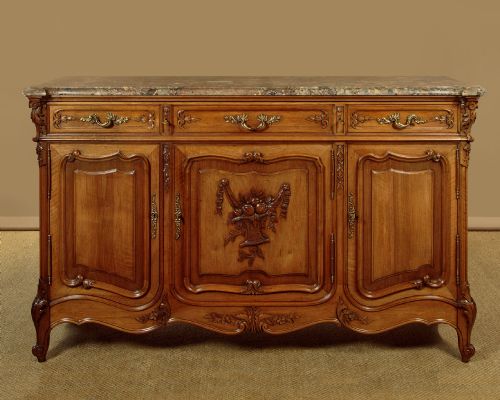
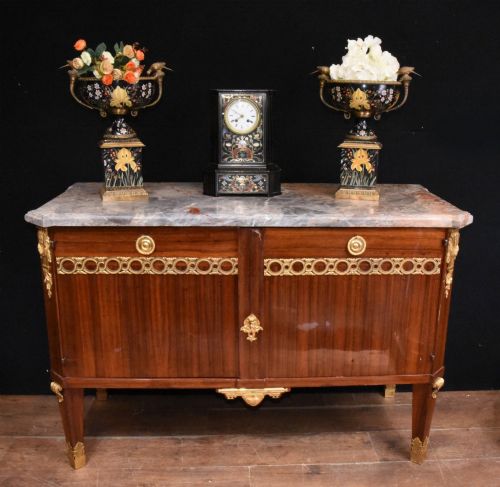
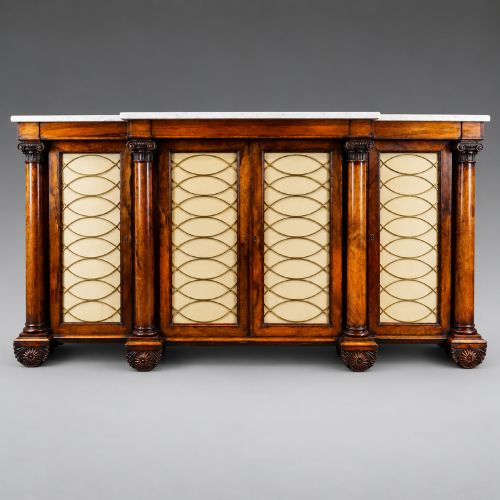
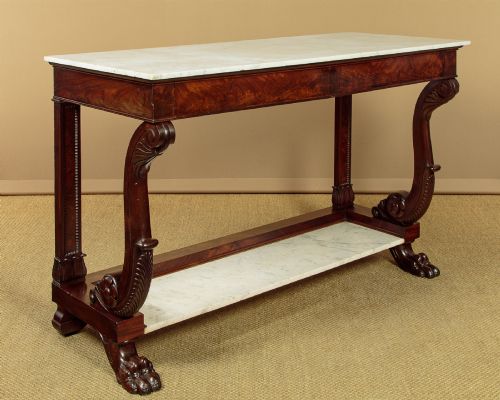
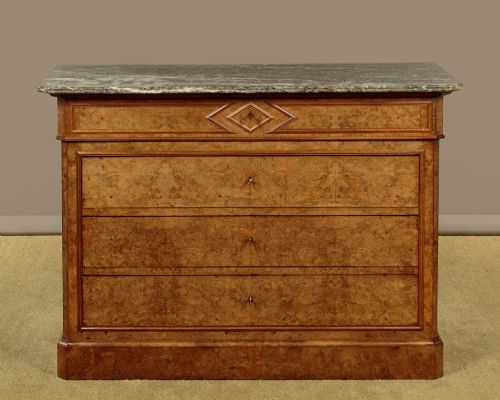
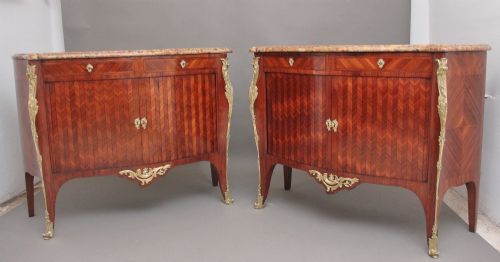
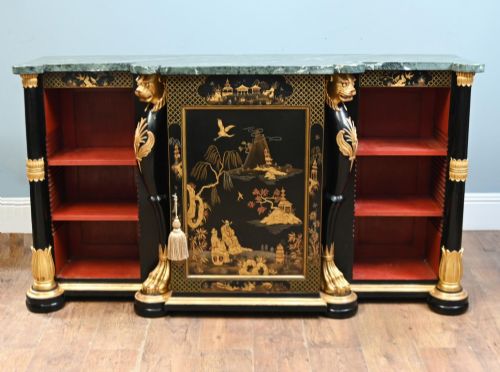
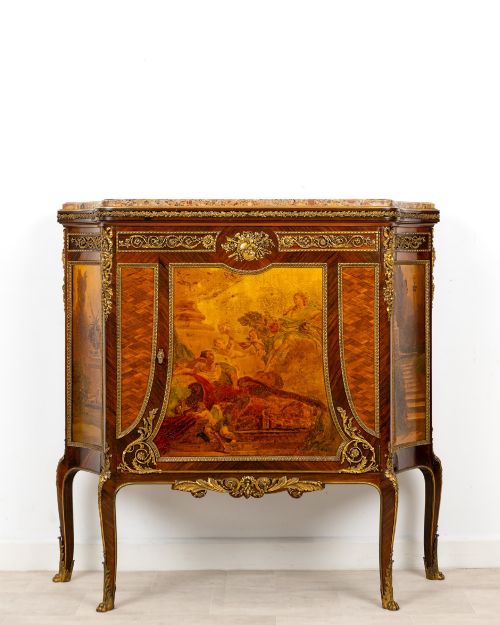
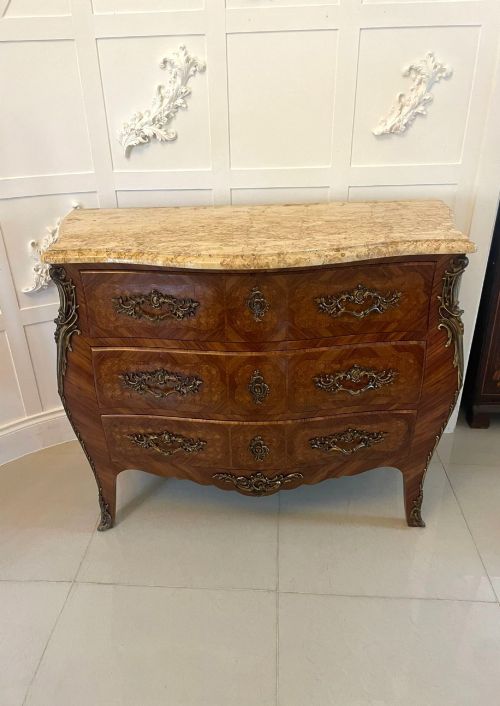
An antique credenza with marble top spans the nineteenth century, taking forms from English chiffoniers to French commodes and pier cabinets. These pieces combine fitted timber cabinetry with heavy stone slabs, often paired with mirrored backs or gilded mounts.
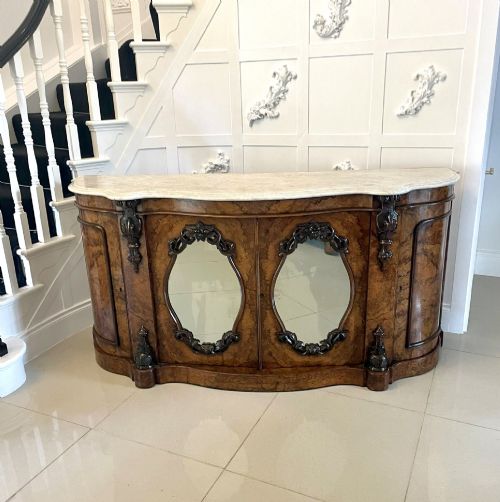
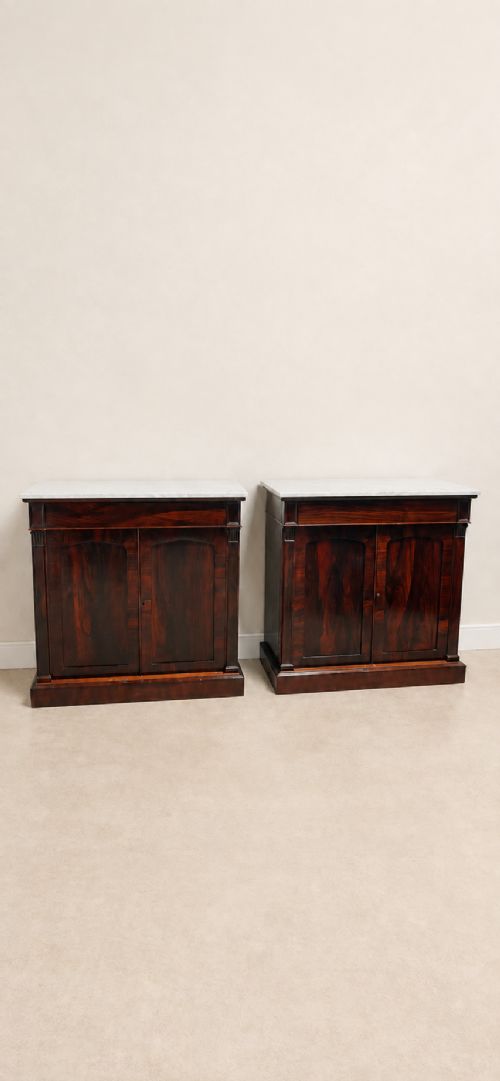
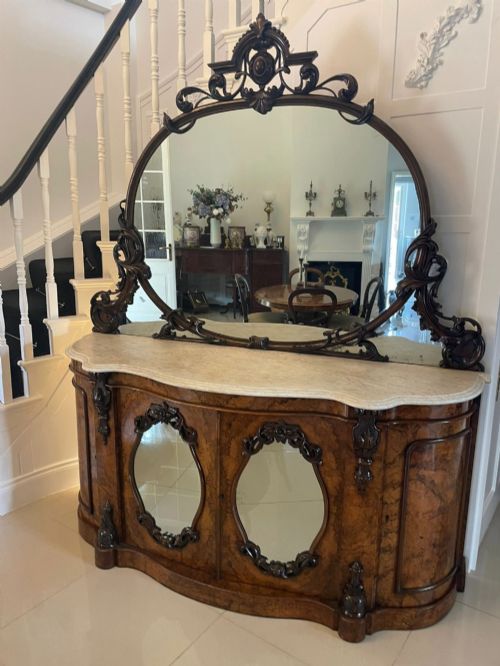
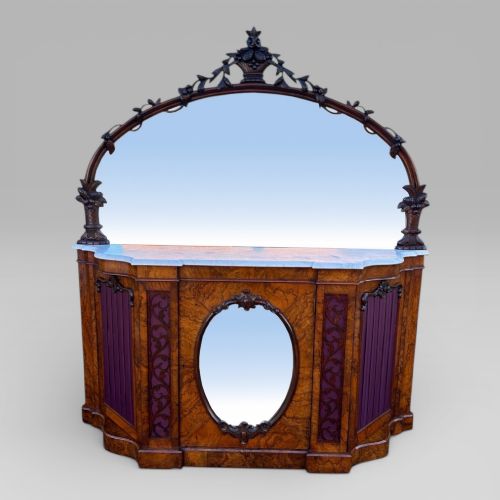
The version most commonly met on this page is the Victorian walnut or burr walnut sideboard, frequently featuring carved details and enclosed cupboard doors. Alongside these, French revival and Regency examples appear, using rosewood, mahogany, and ebonised finishes.
Makers and cabinet makers of the nineteenth century utilised these heavy stones to create durable serving surfaces in grand reception rooms. Today, these items function primarily as statement storage and display units in domestic interiors.
How they were made
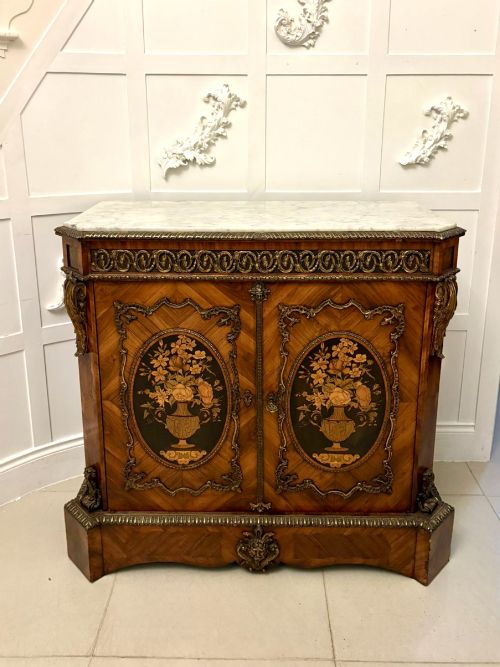
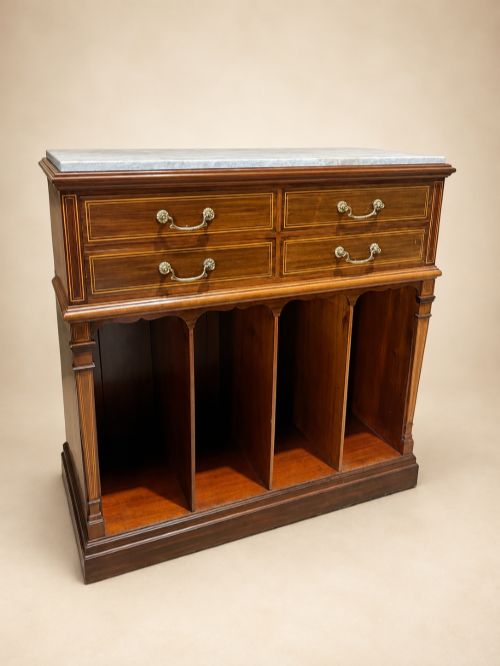
Cabinet makers constructed carcass frames from timbers such as walnut, mahogany, rosewood, and birds eye maple, often applying fine veneers and marquetry in floral or geometric patterns. Ebonised finishes and parcel gilt details provided contrast, while brass or ormolu mounts highlighted corners and doors.
Heavy marble slabs, including Carrera varieties, were fitted directly to the upper surface of the timber frames to provide a cool, durable finish. Glass doors, mirrored backs, and detailed carvings completed the construction of these substantial items.
Antique Credenza with Marble Top Retail Price Guide 2026
Typical asking prices for credenza with marble top among the pieces listed under this phrase on Sellingantiques today, from the lower quarter to the upper quarter. They describe what is for sale here now, not the wider market.
Secret compartments sometimes hide behind dummy book spines on Regency rosewood side cabinets.
What varies in quality
The distinction between ordinary and exceptional pieces lies in the choice of timber figure, such as highly figured burr walnut or rich rosewood, matched with precise marquetry inlay. Superior examples feature crisp, deep hand-carving and finely cast ormolu mounts rather than plain or mass-produced brass fittings.
Construction methods also separate the ranges, visible in the snug fit of panelled doors, the weight and thickness of the fitted marble top, and the integration of architectural mirrors or inlaid details.
Edward Holmes Baldock
The Antique Credenza with Marble Top Glossary
- Ormolu
- Gilded bronze mounts applied to furniture. This technique was widely utilised on nineteenth-century French cabinets and commodes for decorative contrast.
- Marquetry
- Fitted pieces of wood veneer forming decorative patterns on a cabinet surface. Floral designs frequently appear on nineteenth-century French and English pieces.
- Chiffonier
- A low cabinet with doors, often topped with a shelf or marble slab. This form developed during the Regency and Victorian periods.
- Burr walnut
- Timber taken from the wart or growth on a walnut tree, yielding highly patterned grain. Cabinet makers prized this wood for high-status Victorian credenzas.
- Pier cabinet
- A narrow cabinet designed to stand against a wall pier between windows. These pieces often incorporated glass doors and marble tops.
Antique Credenza with Marble Top: Frequently Asked Questions
What is an antique credenza with marble top?
An antique credenza with marble top is a nineteenth-century storage cabinet featuring a solid stone surface. These items served as serving boards or display units in formal rooms.
They combine timber carcasses in walnut, rosewood, or mahogany with fitted marble slabs, and often include mirrored backs or glass doors.
How were these marble-topped cabinets used?
Original owners used these sturdy cabinets to serve food and display silver or porcelain in dining rooms and drawing rooms. The marble surface provided a practical, heat-resistant table top.
Today, they function as decorative sideboards and storage units in living spaces and hallways.
How do I care for the marble top?
Marble requires gentle cleaning with warm water and a soft cloth to avoid scratching the polished surface. Acidic liquids can etch the stone and should be wiped away immediately.
Using coasters and mats helps protect the historical finish from stains and marks.
How do I identify Victorian periods from Regency?
Regency pieces often display classical restraint, using rosewood, brass inlay, and parcel gilt details. They date from the early part of the nineteenth century.
Victorian examples tend to feature heavier carving, burr walnut veneers, and more exuberant shapes, particularly around eighteen-fifty onwards.