


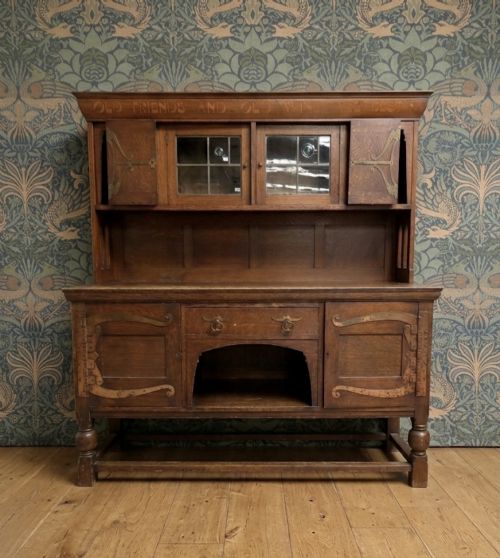
Antique Credenza with Glass
An antique credenza with glass brings refined Victorian presence into a room, offering display space and enclosed storage through glazed doors.
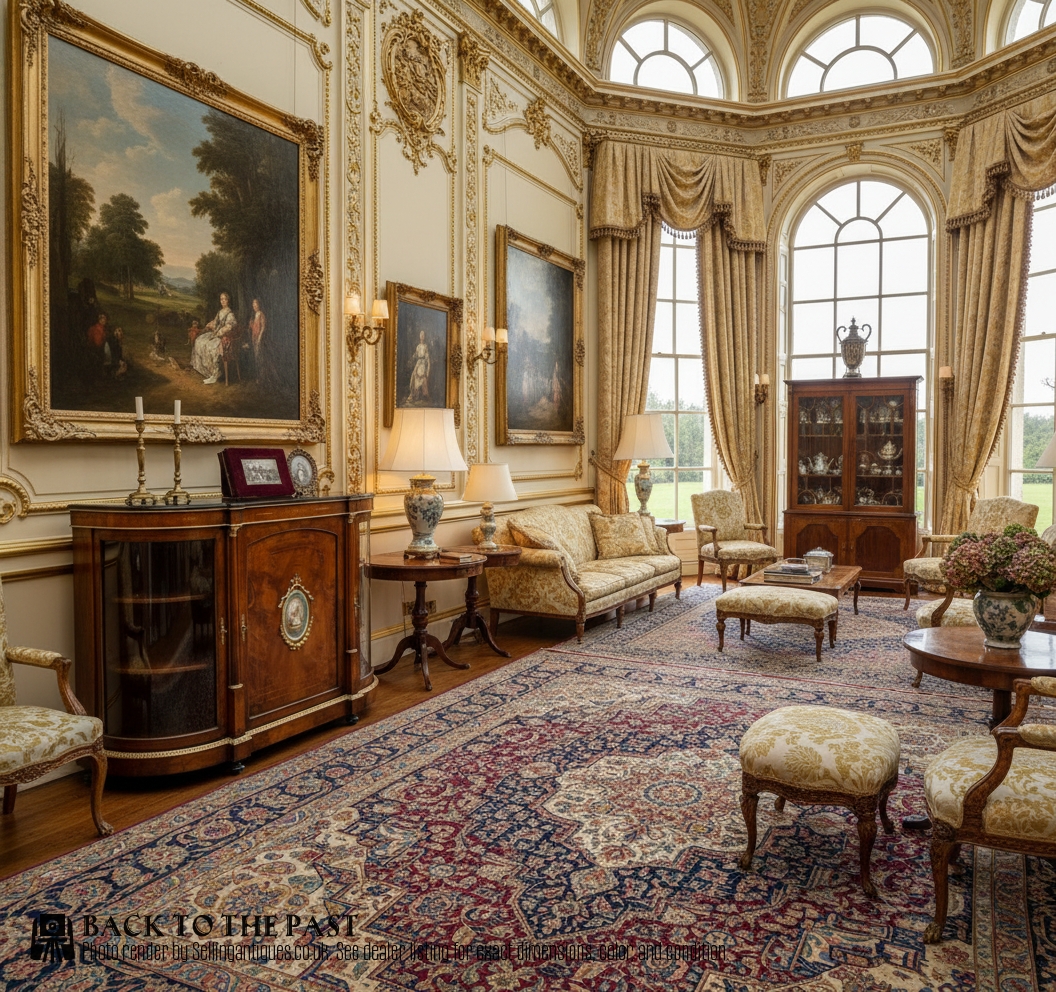
Antique Credenza with Glass
When you search for an antique credenza with glass, you find low-profile furniture designed for display and storage, predominantly originating from the Victorian and Edwardian periods.
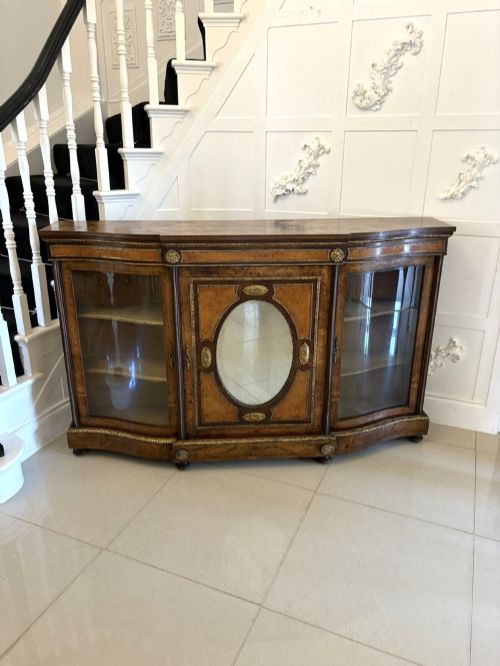
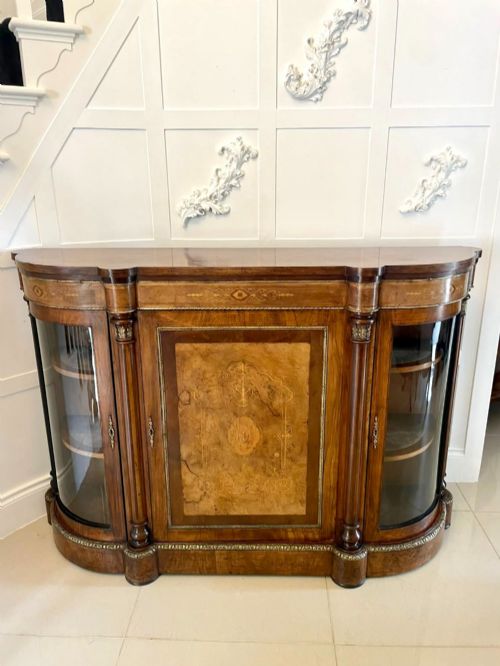
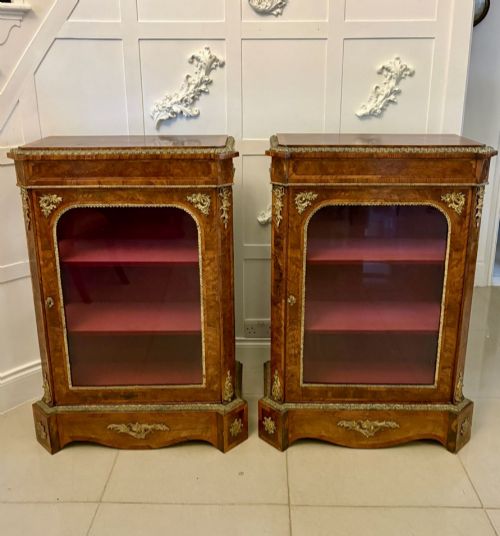
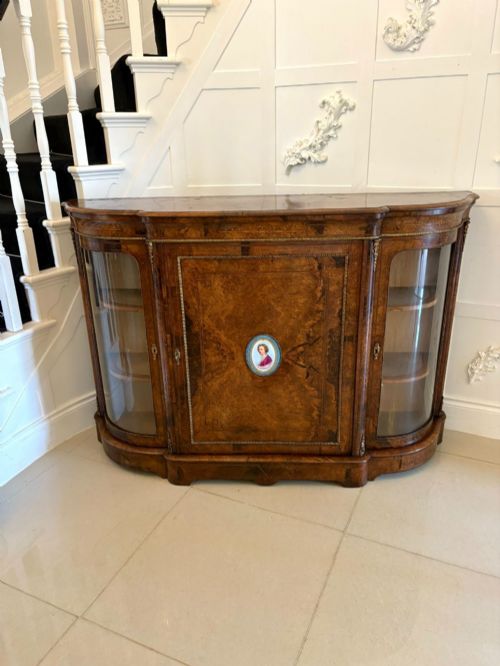
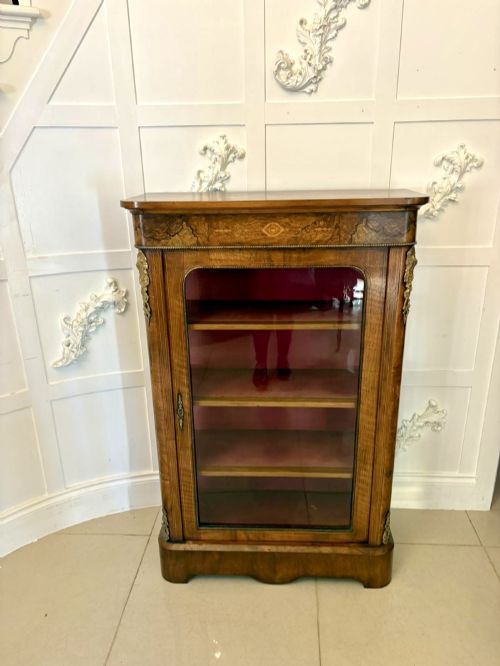
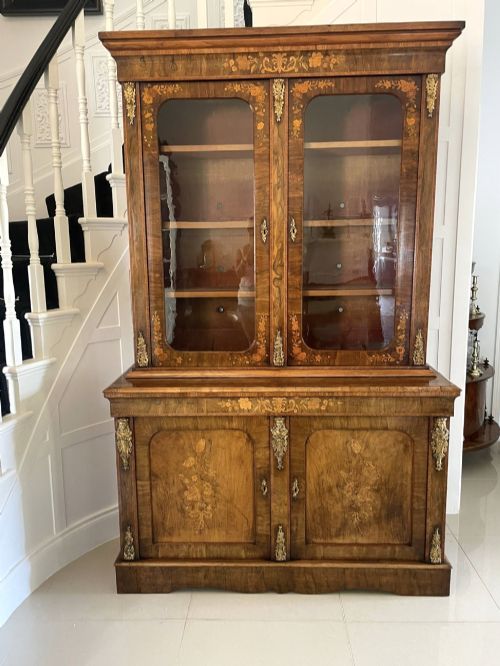
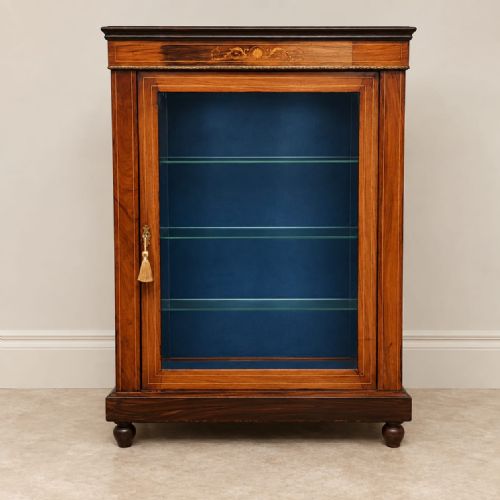
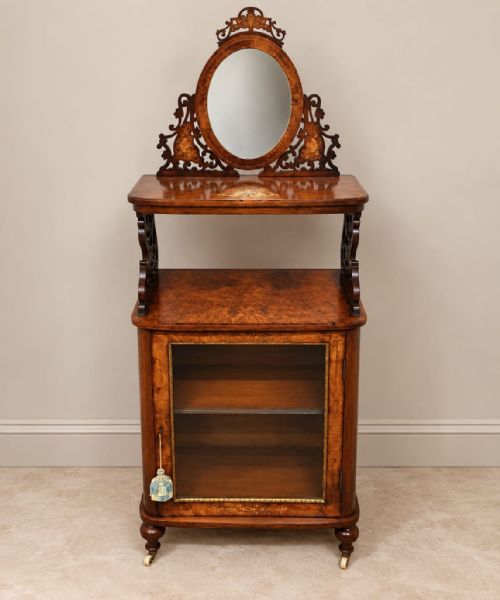
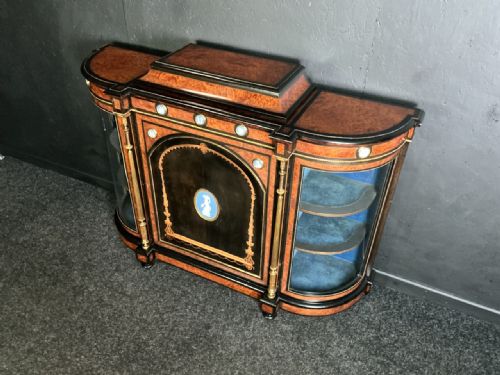
The most common iterations on this page are burr walnut credenzas and pier cabinets featuring glazed doors, often enriched with marquetry, ormolu mounts, and ceramic plaques.
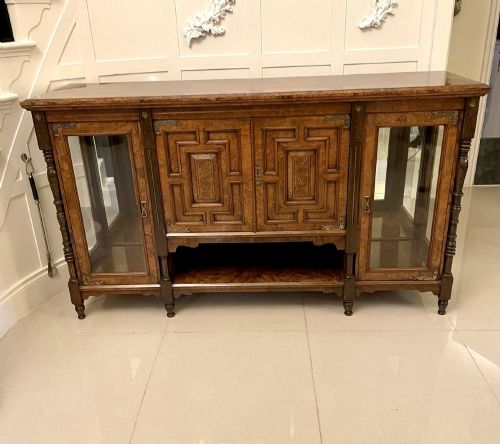
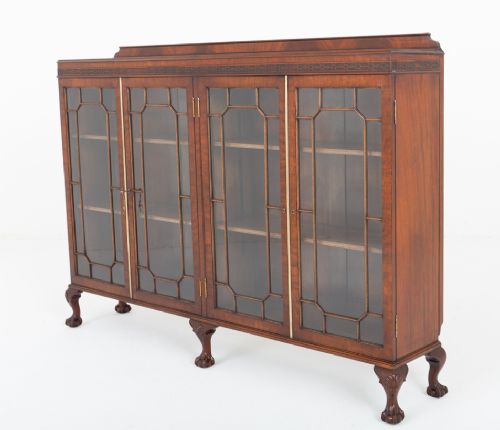
Forms extend beyond traditional credenzas to include side cabinets, breakfront bookcases, and vitrine-topped pieces spanning from the mid nineteenth century into the Edwardian era.
Materials and construction
Cabinet makers utilised dense timber foundations of walnut, rosewood, oak, and mahogany, frequently applying burr walnut or amboyna veneers to create highly figured decorative surfaces.
Gilded bronze ormolu mounts, brass details, and intricate wood inlays provide structural accenting, while glazed panels allow for the secure display of porcelain and glassware.
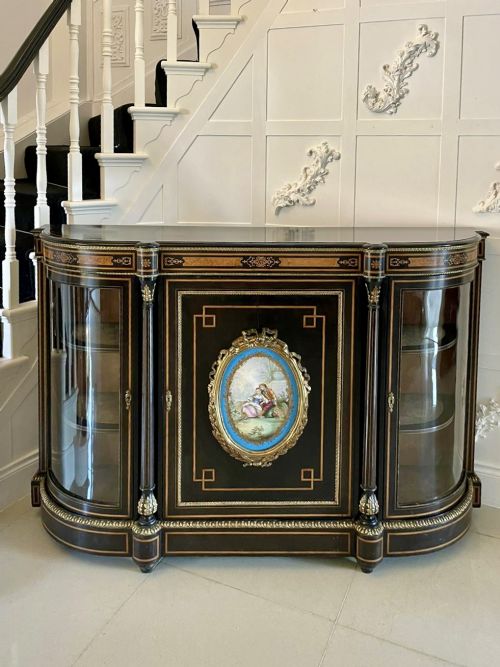
Ebonised wood finishes and barley twist columns appear across specific pieces, demonstrating the variety of revival styles favoured by nineteenth-century makers.
Listings span the nineteenth century through the Edwardian era, showing materials from burr walnut and ormolu to ebonised wood and fabric.
What sets finer examples apart
The distinction between standard and exceptional pieces rests upon the precision of the marquetry, the depth of figuring in the walnut veneer, and the crispness of the cast ormolu mounts.
Finer credenzas incorporate superior individual elements such as hand-painted Sevres porcelain plaques or intricate multi-wood floral inlays that require significant skill to execute.
Ambrose Heal for Heal & Son·Maison Gagneau·Druce & Co
The Antique Credenza with Glass Glossary
- Ormolu
- Gilded bronze mounts cast in relief and applied to furniture for decorative contrast. This technique was widely employed on high-end Victorian pieces.
- Marquetry
- Inlaid wood veneers arranged to form pictorial or geometric patterns on the surface of the cabinet. It relies on contrasting tones of timber.
- Pier Cabinet
- A narrow display cabinet specifically designed to fit the wall space between windows. These frequently feature glass doors and velvet-lined interiors.
- Vitrine
- A glass-fronted cabinet or top section intended for the display of objects of vertu. They are common additions to late nineteenth-century bookcases.
Antique Credenza with Glass: Frequently Asked Questions
What is an antique credenza with glass used for?
These cabinets served primarily in formal nineteenth-century reception rooms to display valued ceramics, glassware, and decorative ornaments behind protective glass doors.
Lower enclosed cupboards provided practical storage for table linens, books, or writing materials out of sight.
How do I date a Victorian glass cabinet?
Dating relies on combining the overarching style, such as Jacobean Revival or Louis XV Revival, with specific material trends like mid-century burr walnut or later ebonised finishes.
Cabinet construction methods and retailer stamps or signatures, where present, further narrow the decade of production.
Where should I place a credenza in a modern room?
A credenza works well in a dining room or living space where its low profile allows artwork or mirrors to be hung comfortably above it.
The glazed compartments provide dust-free display space for collections while keeping the overall floor plan open.
What distinguishes a pier cabinet from a credenza?
A pier cabinet is typically narrower and taller, built to occupy specific architectural wall spaces between windows or doors.
A credenza is traditionally broader and lower, often featuring central cupboards flanked by curved glass-fronted display ends.