



Antique Couple Ceramic Figurine
An antique couple ceramic figurine brings domestic romance and pastoral charm to a room, captured in porcelain, earthenware and Staffordshire pottery.
Antique Couple Ceramic Figurine
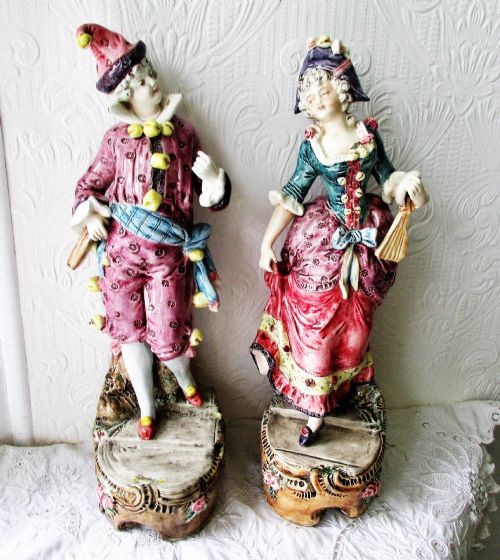
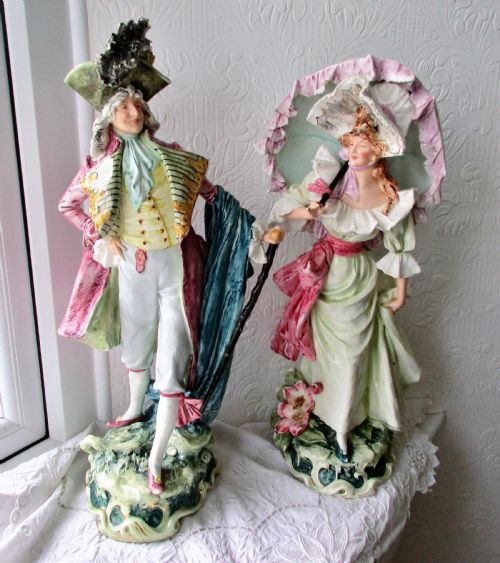
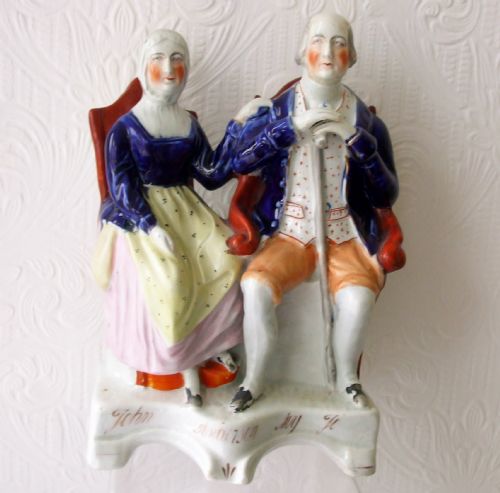
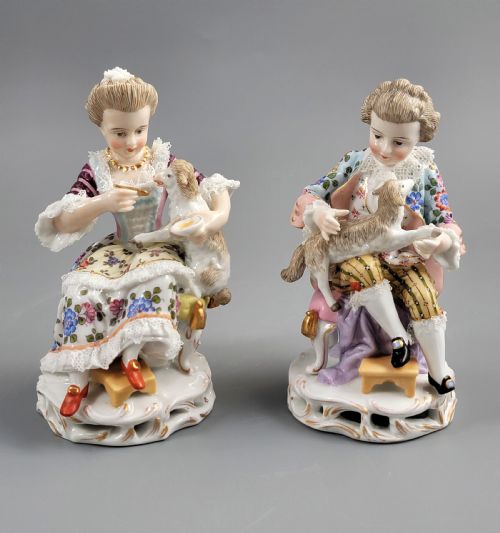
When you search for an antique couple ceramic figurine, you encounter pairs of figures modelled as gallant ladies, harvesters, musicians and Scottish lairds from the nineteenth century.
The most common versions on this page are Staffordshire flatbacks and continental porcelain pairs from German factories such as Sitzendorf and Volkstedt.
These pieces range from English earthenware spill vases to large French biscuit porcelain groups and intricate Dresden figures depicting romantic companions.
Materials and Technique
Makers shaped these pieces from hard-paste porcelain, earthenware, faience and unglazed bisque porcelain, often adding enamel pigments and gold leaf highlights.
English potters utilised earthenware and pottery for robust Staffordshire figures, whilst continental manufacturers favoured delicate porcelain and biscuit bodies moulded with fine detail.
Listings feature Victorian earthenware, French faience and German hard-paste porcelain created across the nineteenth century.
Standards of Execution
Skilled hand-painting and careful kiln firing elevate a pair of figures, whereas softer moulding and heavy glaze obscure the finer expressions of the subjects.
Bourdois and Bloch·Letu and Mauger·Volkstedt·C G Schierholz·Sitzendorf·Samson·Meissen·Royal Capodimonte Factory·Carl Thieme·Triebner Ens and Co·Rozenburg·Minton
The Antique Couple Ceramic Figurine Glossary
- Bisque porcelain
- Unglaved porcelain that has been fired once, offering a matte surface resembling marble. It became popular for detailed nineteenth-century figures.
- Staffordshire flatback
- An earthenware figure designed to stand against a wall, with decoration primarily on the front and an unglazed or plain flat rear.
- Spill vase
- A hollow vertical tube incorporated into a figure or group, designed to hold taper spills for lighting fires and candles.
- Faience
- Tin-glazed earthenware produced in France and other European regions, providing an opaque white ground for hand-painted enamel decoration.
- Hard-paste porcelain
- A durable ceramic composition fired at high temperatures using kaolin and petuntse, yielding a dense and vitrified body.
Antique Couple Ceramic Figurine: Frequently Asked Questions
What do these figures depict?
These pieces represent romantic pairs, agricultural harvesters, musicians and theatrical characters. They capture historical, pastoral and domestic scenes popular in the nineteenth century.
Many depict specific literary figures, Scottish lairds or gallant ladies and gentlemen in traditional attire. Their subjects reflect the Victorian appetite for narrative ornamentation.
How were they displayed?
Victorian households placed these ceramic pairs on mantelpieces, sideboards and occasional tables. Their decorative presence added colour and narrative interest to the parlour.
Staffordshire flatbacks were specifically designed for display against drawing-room walls, whilst porcelain groups often occupied central spots on living-room shelves.
How do I date a piece?
Dating relies on examining the ceramic body, glaze characteristics, factory marks and stylistic details. Nineteenth-century pieces often display specific factory stamps or incised numbers.
Comparing the modelling style with documented periods helps narrow down the decade of production. English earthenware differs noticeably from continental hard-paste porcelain.
Are pairs always sold together?
Many listings offer matched pairs designed to sit symmetrically on a mantelpiece. These companions were modelled and fired together in the pottery.
Collectors prize intact pairs because separation over time is common. Surviving matching groups retain their original decorative balance.