
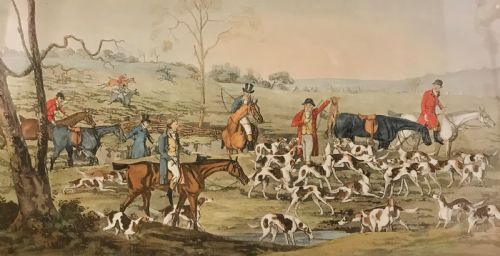
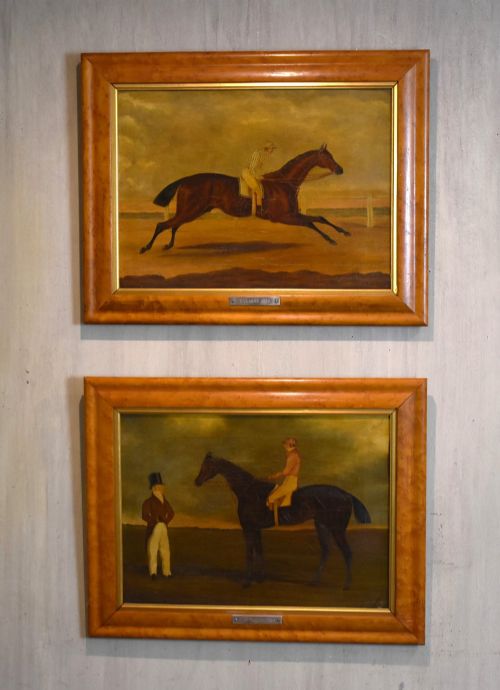
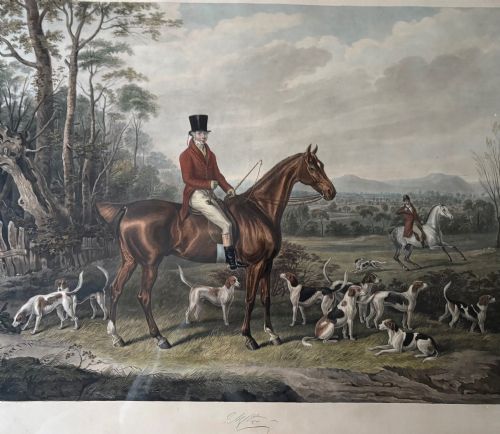


Antique Country Sports Print
An antique country sports print brings the energy of the field and the stable directly onto your wall.
Antique Country Sports Print
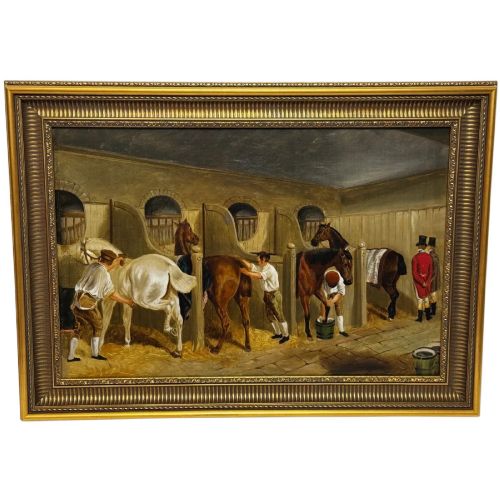
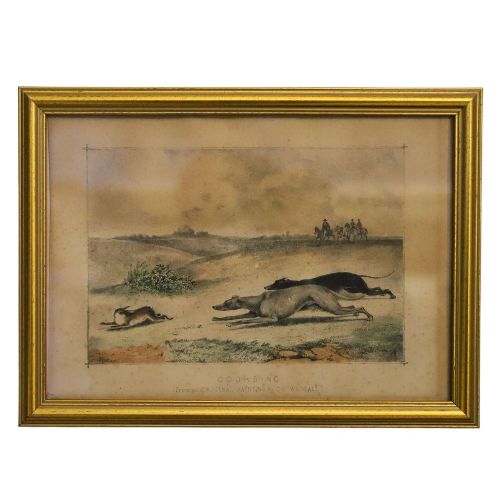
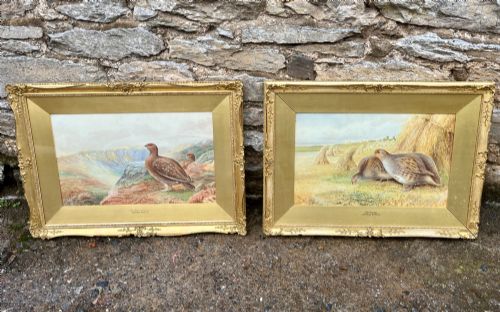
When you search for an antique country sports print, you are looking at framed works capturing equestrian pursuits, hunting, shooting, and game on paper or canvas. These pieces span from the Georgian era through the Victorian period and into the twentieth century, originating mostly from British workshops and publishers.
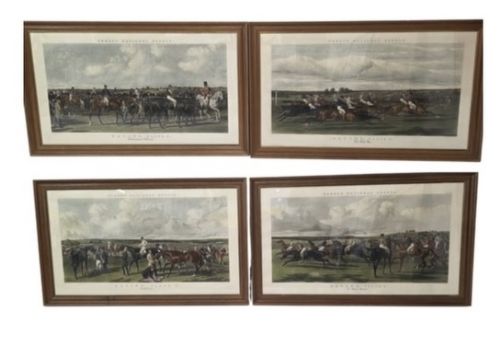
You will frequently meet hand-coloured engravings, lithographs, and aquatints mounted behind glass in wood or giltwood frames. Alongside printed works, the selection includes original watercolours and oil paintings depicting hounds, horses, and field sports.
The subjects range from solitary game birds and pointers to large hunting meets and horse racing scenes. Sets of four are common, particularly when depicting seasonal changes in the English countryside or successive stages of a hunt.
How they were made
Makers produced these works on paper using engraving, lithography, and aquatint techniques, often applying hand-colouring in watercolour over the printed lines. Publishers issued plates individually or in sets, which later owners housed behind glass in wooden or giltwood frames.
Original compositions relied on oil paint or watercolour applied directly to canvas or paper by artists before reproduction. Framing typically utilised carved or moulded wood finished with gilt, protecting the delicate paper surfaces from moisture and handling.
Several listings capture moments of rural chaos, including jumping in sacks and bears in combat with hounds.
What varies in quality
The distinction between tiers rests upon the crispness of the original impression and the skill of the hand-colouring applied to the paper. Early strikes from copper plates preserve fine lines and subtle shading that later printings lose as the metal wears down.
The strength of the provenance and the presence of signatures from recognised sporting artists elevate individual pieces. Additionally, the harmony of matching sets and the originality of the period frames contribute to the overall standing of the work.
C H Weigall·George Rankin·John Frederick Herring Snr·Charles Faulkner·John Atkinson·Francis Calcroft Turner·Archibald Thorburn
The Antique Country Sports Print Glossary
- Engraving
- A printmaking method where an artist cuts lines directly into a metal plate with a sharp tool. This technique produces fine, precise details that hold up well under hand-colouring.
- Lithography
- A planographic printing process based on the repulsion of oil and water on a limestone slab or metal plate. It allows for softer tonal gradations than direct engraving.
- Aquatint
- An intaglio printmaking technique that creates areas of tone resembling watercolour washes. Makers used it extensively to render atmospheric skies and landscapes in sporting scenes.
- Giltwood
- Wood that has been coated with a thin layer of gold leaf or gilt paint. Antique frames finished in this manner frequently accompany nineteenth-century works.
Antique Country Sports Print: Frequently Asked Questions
How do I date an old sporting print?
Examine the paper type, the publishing details printed in the margins, and the style of the wooden frame. Publishers often inscribed publication dates directly beneath the image.
Changes in fashion and costume depicted in the scene also provide reliable clues for narrowing down the decade of production.
Are sets of four prints common?
Publishers frequently issued sporting subjects in sequences representing the four seasons or successive stages of a hunt, such as the meet, the chase, and the kill.
Keeping a complete set together was customary, though individual plates frequently became separated over generations.
How should I frame and hang these works?
Keep works on paper away from direct sunlight to prevent the hand-colouring and ink from fading over time. Ensure the glass does not touch the surface of the print directly.
Pairing nineteenth-century engravings with period giltwood frames maintains the historic character of the piece.
What is the difference between an engraving and a painting?
An engraving is a replicated image pulled from a worked metal plate, often produced in numbered series or published sets. Paintings are unique, one-off creations executed directly in oil or watercolour.
Paintings carry the immediate brushwork of the artist, whereas prints offer fine linear detail through mechanical reproduction.