

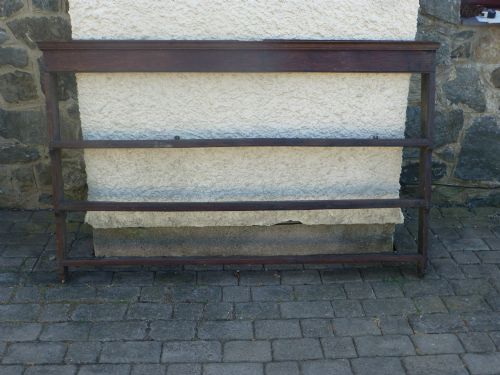
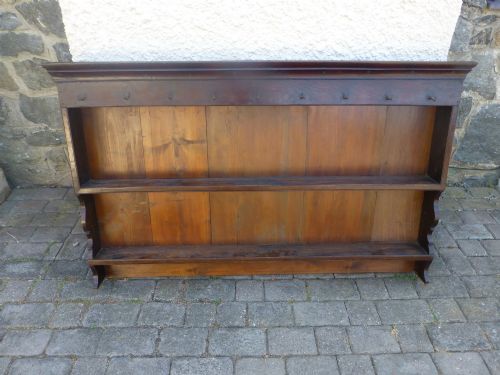
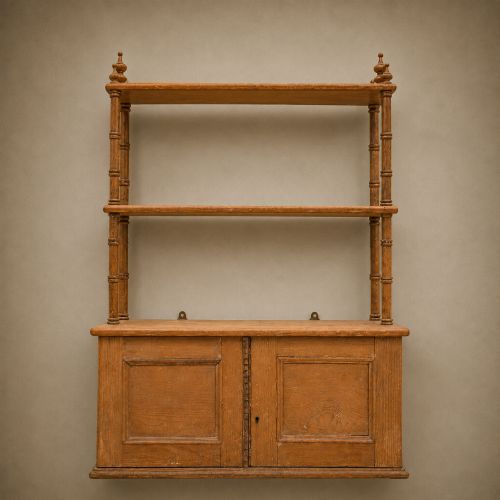
Antique Country Plate Rack
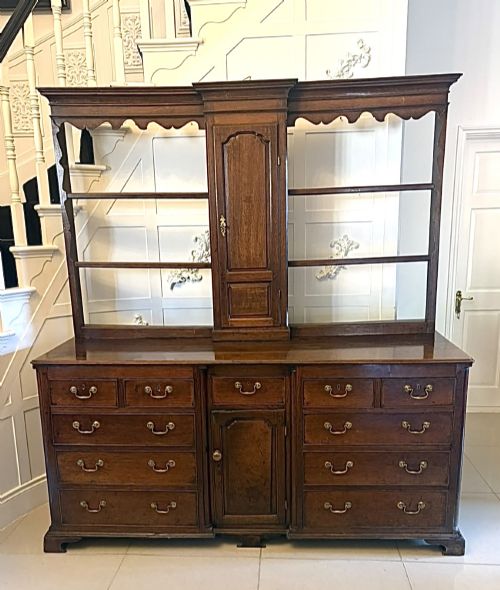
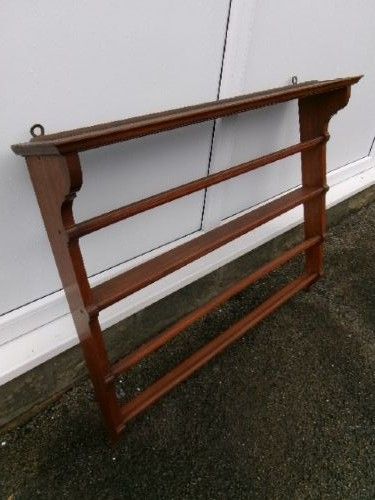
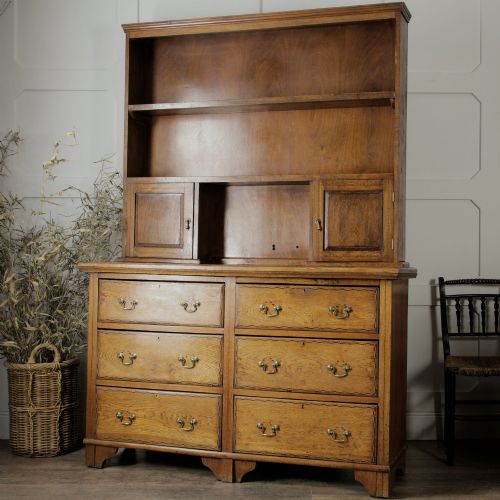
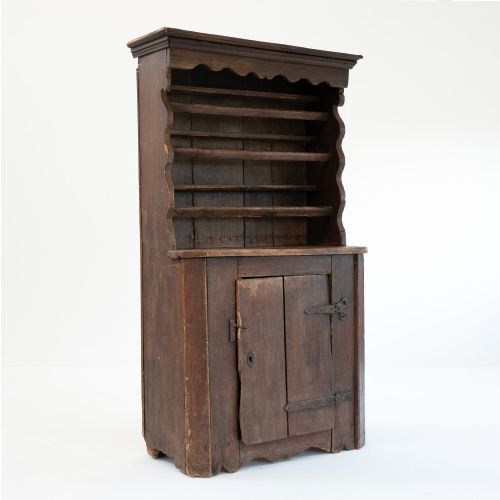
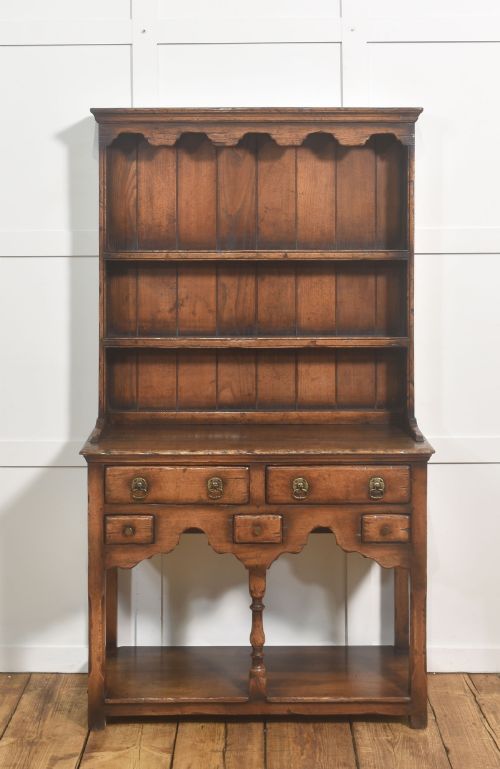
An antique country plate rack organises domestic kitchen pottery with timber shelving built to hold plates upright against a cottage wall.
Antique Country Plate Rack
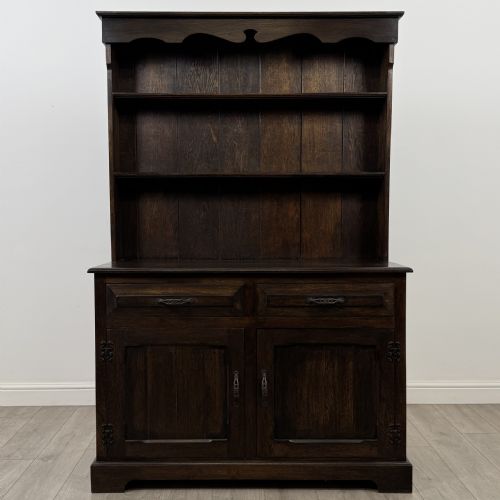
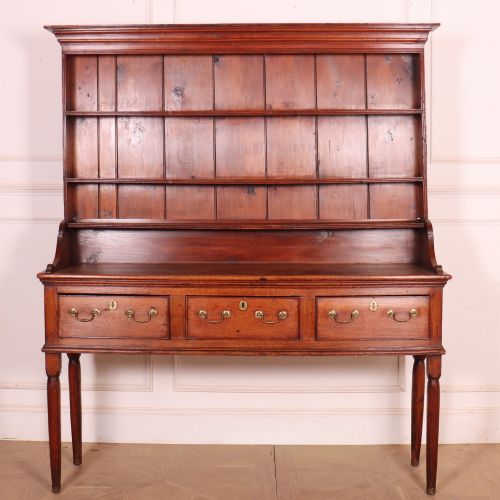
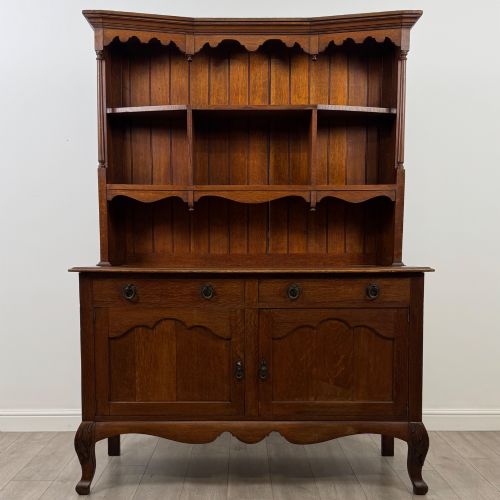
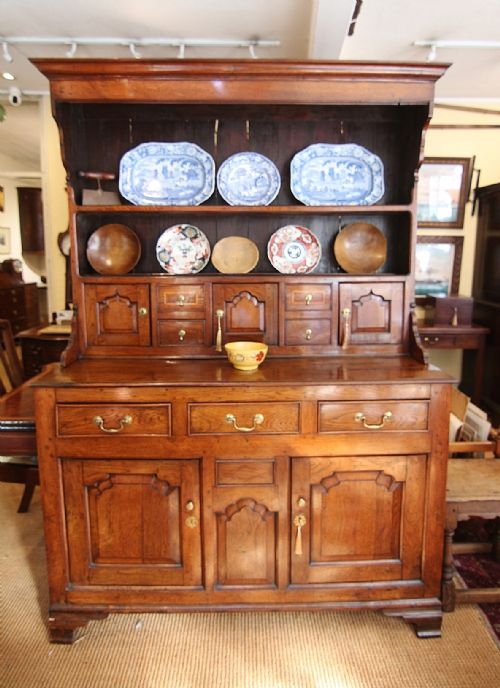
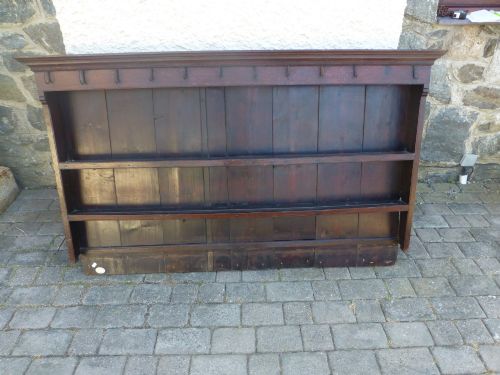
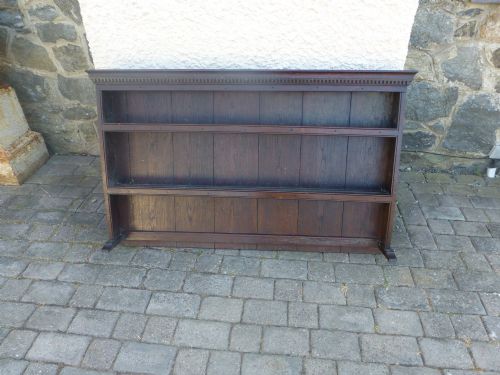
When you search for an antique country plate rack, you encounter open wall-mounted shelves and the upper tiers of kitchen dressers designed to store delftware and ceramic plates. These pieces emerge predominantly from the eighteenth and nineteenth centuries, spanning Georgian, Victorian, and Edwardian periods.
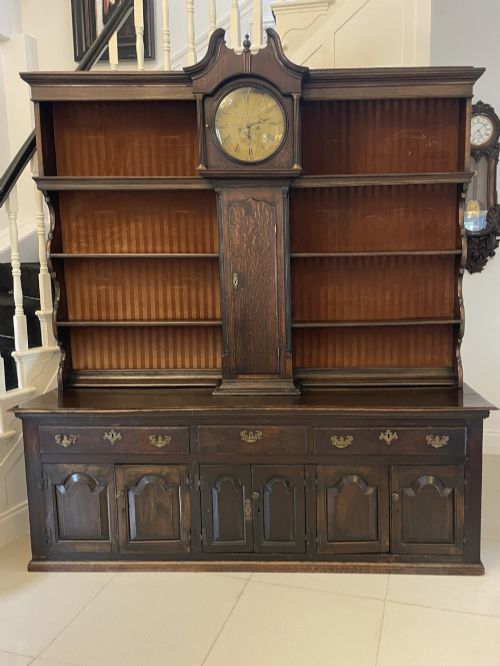
The regional forms range from Welsh vernacular and Irish country styles to English country houses and West Country workshops. You meet them as standalone wall shelves or integrated into large potboard dressers and cottage dressers.
Most examples combine practical kitchen storage with display space for earthenware and porcelain. They serve as functional architectural woodwork built for everyday domestic life in farmhouses and rural cottages.
How they were made
Cabinetmakers and rural joiners constructed these racks predominantly using solid oak and pine, supplemented by mahogany and painted wood surfaces. Wrought iron and brass fixings provided structural support and hanging hardware.
Joinery techniques relied on pegged mortise and tenon joints to secure the heavy timber frames against warping under the weight of earthenware. Backboards were typically tongue and groove planking, while display ledges incorporated deep grooves to prevent plates from sliding forward.
One historic dresser carries a provenance linking it directly to cafe dogs from Cafe Snowdon.
What varies in quality
Proportional harmony and regional construction details dictate distinction, such as shaped friezes, thumbnail mouldings, and intact plate retaining rails. Altered shelving heights or replaced backing timber diminish the historical authenticity of the piece.
The Antique Country Plate Rack Glossary
- Delft
- Tin-glazed earthenware popular for domestic display on country kitchen shelves. Eighteenth-century vessels provided the primary colour contrast against dark oak backboards.
- Potboard
- The lower open shelf situated near the floor on traditional dressers. This sturdy board stored heavy pots and pans beneath the main work surface.
- Vernacular
- Architecture and furniture built by local craftsmen using regional traditions and readily available native timbers. These utilitarian pieces avoided metropolitan academic design rules.
- Breakfront
- A piece of furniture featuring a central section that projects forward from the flanking sides. This layout added architectural depth to larger dresser bases and upper racks.
- Inlay
- Decorative wood ornament inserted into recessed spaces on the surface of the primary timber. Snowdonia and other regional workshops utilised contrasting woods for geometric patterns.
Antique Country Plate Rack: Frequently Asked Questions
How do I hang a heavy plate rack securely?
These timber racks carry substantial weight from solid wood and ceramic displays, requiring direct fixing into wall studs or masonry.
Utilise robust steel brackets or concealed screw fixings through the internal frame to distribute the load evenly across the wall.
Were plate racks attached to dressers or hung separately?
Historical examples exist in both formats, appearing either as standalone wall-mounted open shelves or as the upper removable tier of a two-part dresser.
Many surviving pieces functioned independently in cottage kitchens before later being reunited with matching bases.
What is the difference between oak and pine country racks?
Oak furniture represents the earlier Georgian and regional Welsh vernacular traditions, offering dense grain and deep natural patination over centuries of use.
Pine racks emerged more commonly in Victorian and Edwardian kitchens, frequently receiving painted finishes or soft wax treatments.
How should I clean and wax a waxed pine rack?
Maintain the dry waxed surface by dusting with a soft, lint-free cloth rather than applying modern liquid polishes or silicone sprays.
Feed the dry timber occasionally with a traditional beeswax paste applied sparingly and buffed thoroughly to preserve the historic finish.