


Antique Country High Chair
An antique country high chair brings tactile domestic history into a room through honest vernacular carpentry.
Antique Country High Chair
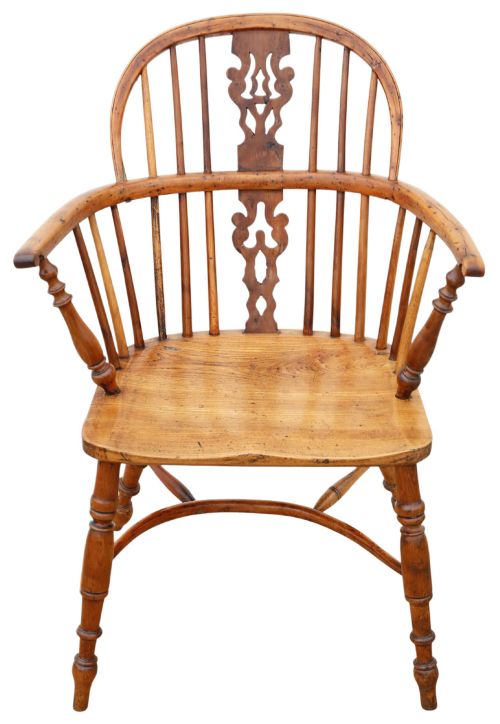
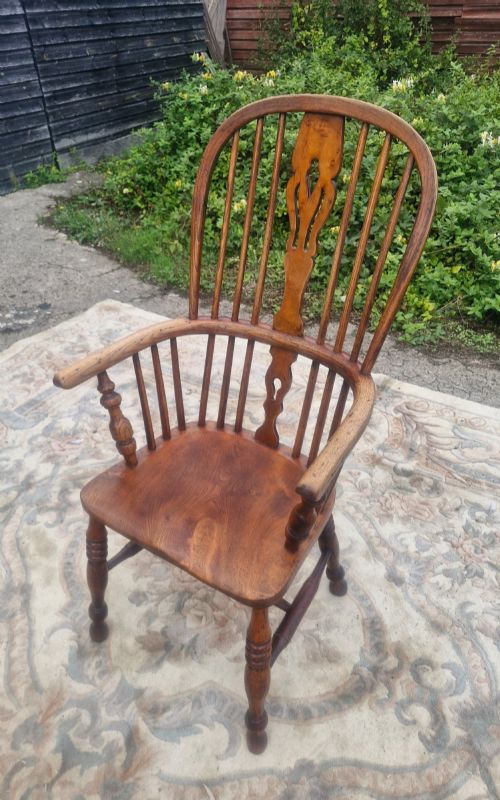
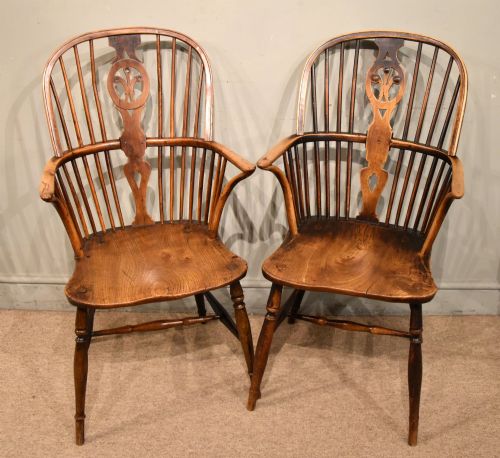
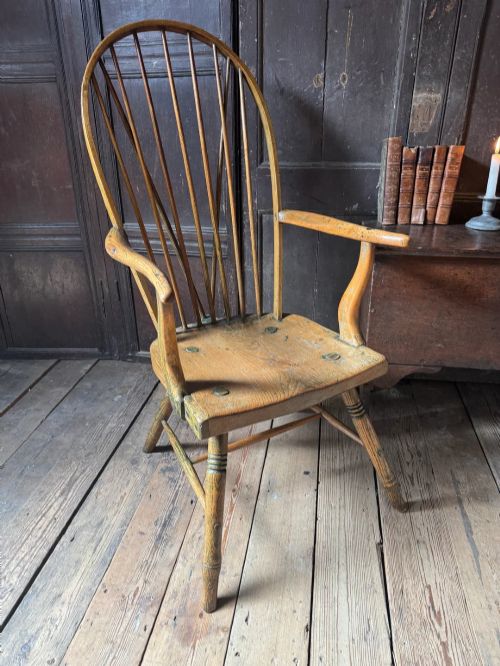
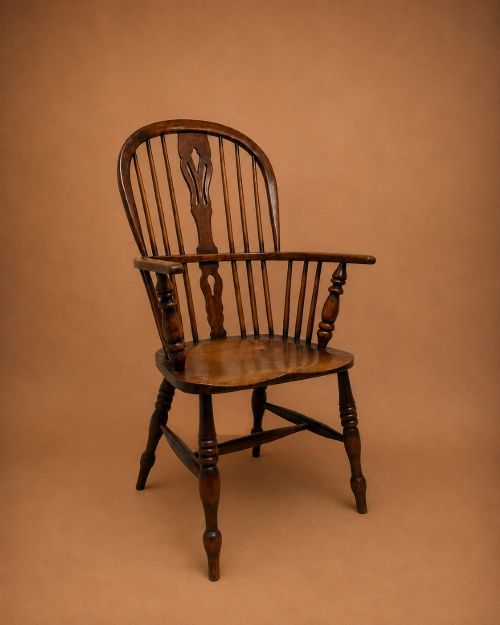
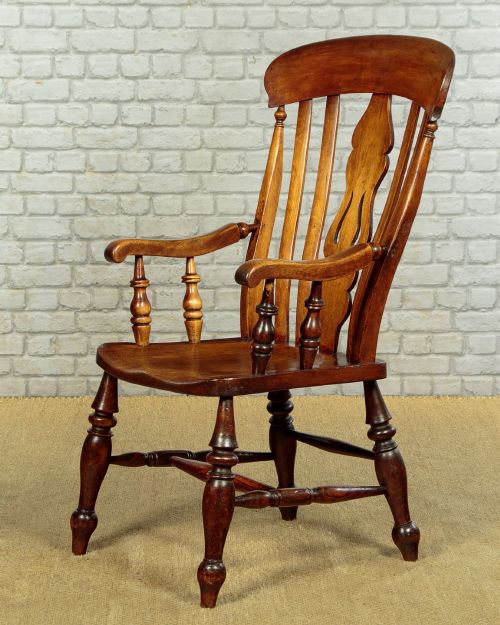
When you search for an antique country high chair, you are looking at domestic seating designed to elevate children to table height, constructed by regional makers rather than urban cabinet shops. These pieces frequently appear as child-scale Windsor designs, incorporating sturdy stick-back frames and elevated leg assemblies.
The materials reflect immediate local resources, predominantly pairing solid elm seats with ash or beech spindles and framework. Such seating served practical rural households, prioritising utilitarian strength and comfort over formal decorative display.
How they were made
Makers utilised green woodworking techniques, turning unseasoned timber for spindles and legs while shaping solid plank seats with adzes and scorps. Elm provided a tough, splitting-resistant base for the saddle seat, while ash and beech offered flexible strength for steam-bent hoops and slender sticks.
Joinery relied on simple wedged tenons and through-joints, allowing wood components to tighten as timber dried and aged over generations. Surfaces were finished simply, developing rich patinas through decades of daily domestic use and cleaning.
Many miniature country chairs retain tiny boot scuffs on their footrests, left by generations of restless small legs.
What varies in quality
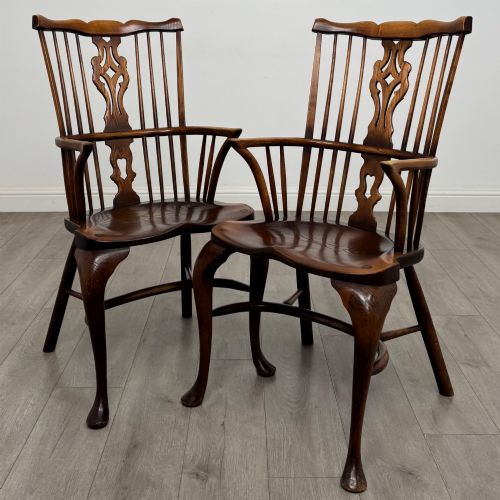
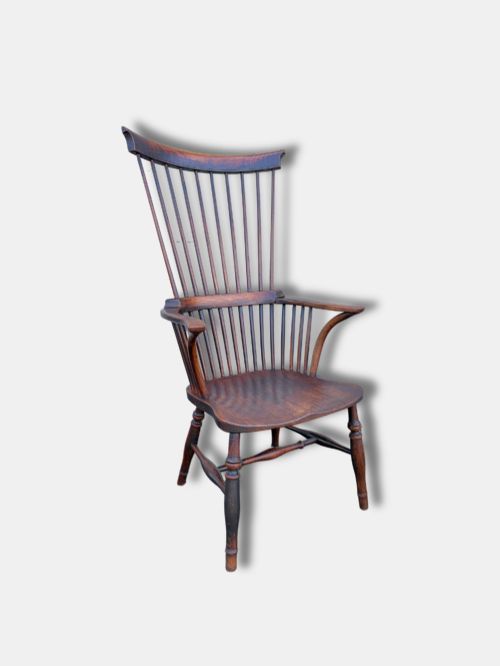
The distinction between ordinary vernacular pieces and finer examples rests on the balance of proportions and the grace of the turnery. A lighter, more refined hoop or comb back paired with expressive leg splay elevates a piece above a purely utilitarian workshop effort.
Originality of surface and structural integrity dictate the standing of surviving examples, as many endured heavy daily nursery use that led to replacement legs or repaired spindles. Minimal past intervention and an untouched, warm patina separate the superior items from heavily restored or altered survivors.
The Antique Country High Chair Glossary
- Windsor chair
- A chair built with a solid wooden seat into which the legs and back spindles are bored directly, characteristic of rural English production.
- Comb back
- A Windsor chair back design where vertical spindles extend up to a horizontal top rail, resembling the teeth of a dressing comb.
- Hoop back
- A continuous curved wooden member steam-bent to form the backrest and arm support of a Windsor chair.
- Saddle seat
- A wooden chair seat sculpted with hollows and contours for the sitter's comfort, typically carved from a thick elm slab.
- Vernacular furniture
- Domestic objects made by local tradesmen and country joiners without reference to formal academic design styles.
Antique Country High Chair: Frequently Asked Questions
How were high chairs used originally?
Families placed these elevated seats at dining tables or near hearths to keep young children secure and level with adults during meals. The sturdy leg bracing and deep seats prevented active infants from tipping the furniture.
They stood in busy kitchens where durability mattered more than decoration. The raised height also brought children within reach for feeding and domestic supervision.
How do I live with one?
An antique country high chair functions well as a decorative corner accent or a display stand for textiles and toys. Its sculptural wooden frame adds warmth and historic texture to modern or traditional interiors.
Keep the piece away from direct heat sources and sudden humidity shifts to protect the dry, aged timbers. Periodic waxing helps maintain the historic surface without altering the natural patina.
How do I tell periods apart?
Earlier examples from the eighteenth century often feature finer comb-back profiles and slender turned components fashioned from fruitwood or ash. Nineteenth-century versions tend toward heavier dimensions, broader hoops, and simpler factory-assisted turnery in beech and elm.
Tool marks on the underside of the seat and the method of wedging leg tenons offer clues to age. Hand-adzed saddle seats generally point to earlier vernacular production before mechanical duplication became common.