





Turned Wood Counter Stool
A turned wood counter stool brings honest utilitarian character and sturdy seating to a modern kitchen.
Turned Wood Counter Stool
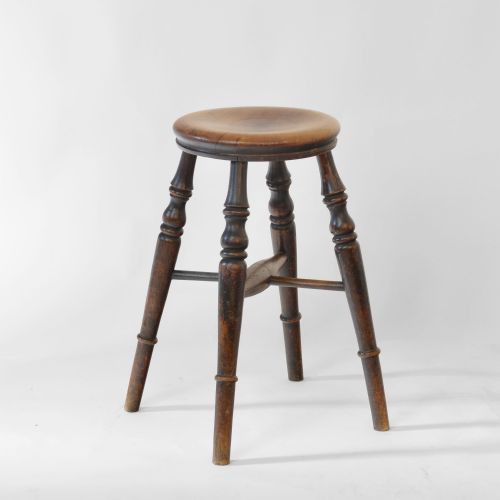
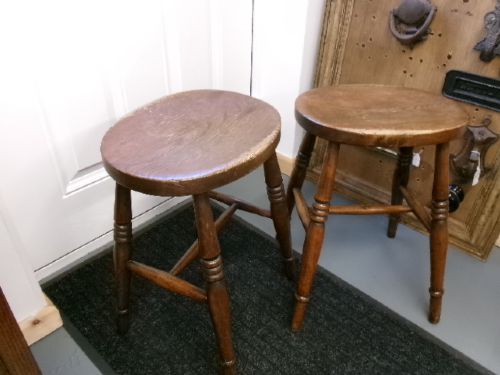
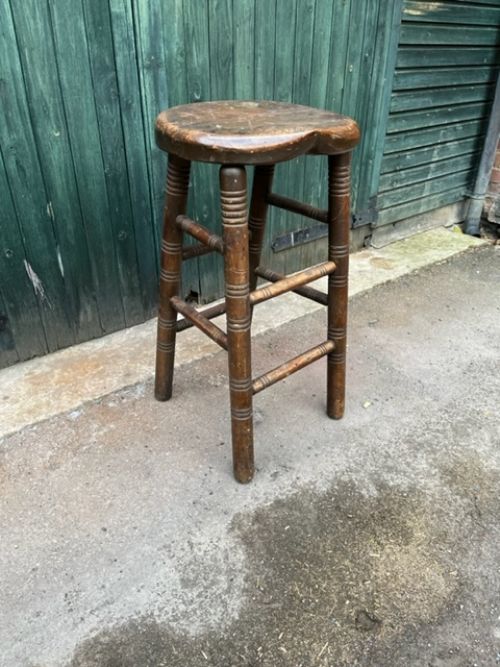
A turned wood counter stool represents practical seating developed for commercial and domestic utility across the nineteenth century. These pieces include tall bar stools, pub or tavern stools, and clerk's stools designed for elevated work or social spaces.
The versions most commonly met on this page span the Regency period through to late Victorian country vernacular styles. Makers built these tall forms with functional footrests and sturdy turned legs to withstand heavy daily use in commercial or rural settings.
How they were made
Cabinet makers and turners utilised native timbers including oak, elm, beech, sycamore, birchwood, and mahogany for structural integrity. Hardwood frames provided the necessary strength for elevated seating platforms without excessive bulk.
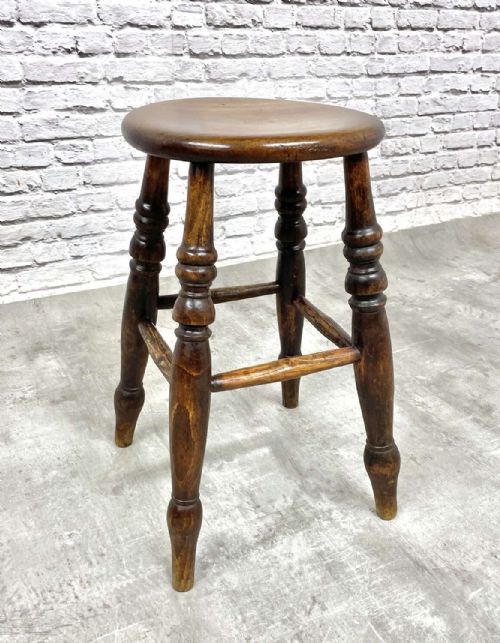
Individual examples feature turned spindles, oval dished tops for comfort, or woven rush seats supported by sturdy underframing. Joinery relied on traditional turning and pegged construction to ensure stability at height.
Turned Wood Counter Stool Retail Price Guide 2026
Typical asking prices for turned wood counter stool among the pieces listed under this phrase on Sellingantiques today, from the lower quarter to the upper quarter. They describe what is for sale here now, not the wider market.
Nineteenth-century clerks perched on these tall turned stools for hours, balancing ledgers while their feet rested safely on sturdy stretchers.
What varies in quality
Quality rests on the selection of timber and the sophistication of the spindle turning on the legs and stretchers. Plain utility pieces contrast with refined Regency or country house examples showing more sculptural shaping.
The integrity of the seat construction, whether solid carved timber like elm and sycamore or traditional rush work, determines the enduring standard of the piece.
The Turned Wood Counter Stool Glossary
- Vernacular
- Everyday objects made by regional craftsmen for local use without grand stylistic pretensions. These pieces reflect practical needs rather than high-style metropolitan fashion.
- Dished top
- A seat surface hollowed out into a shallow concave bowl for comfort. This traditional technique matches the contours of the body.
- Spindle
- A slender, shaped piece of wood turned on a lathe to form the legs or stretchers of a stool. Turned components provide both structural bracing and visual rhythm.
- Rush seat
- Seating material woven from dried marsh plants around a wooden frame. This method creates a resilient and slightly flexible surface.
Turned Wood Counter Stool: Frequently Asked Questions
Are these stools suitable for modern kitchen islands?
These historical tall stools function well at contemporary kitchen counters and breakfast bars. Their compact footprint and sturdy proportions fit standard domestic layouts.
Buyers should check exact seat heights against their counter measurements before purchase to ensure comfortable clearance.
How do I care for nineteenth-century wooden seats?
Routine maintenance requires only occasional dusting with a dry cloth and sparing application of traditional wax to nourish the timber. Direct sunlight and sudden temperature changes should be avoided to protect the aged wood.
Protecting rush seats from excessive moisture preserves the natural fibres for daily domestic use.
What is the difference between a pub stool and a clerk's stool?
Pub or tavern stools typically feature solid wooden tops, often dished for comfort during long periods of sitting. Clerk's stools were originally designed for elevated desks in offices and counting houses.
Both forms share tall turned legs and robust bracing suitable for commercial environments.
Can I mix different wood types around one counter?
Mixing woods such as beech, elm, and mahogany creates an authentic vernacular look rather than a rigid matched set. Nineteenth-century country houses and commercial taverns naturally accumulated varied seating over time.
Similar heights and turning styles unify disparate timbers into a cohesive seating arrangement.