










Antique Counter Case
An antique counter case offers shopkeepers and collectors a glass-fronted stage for small goods, combining timber frames with clear visibility.
Antique Counter Case
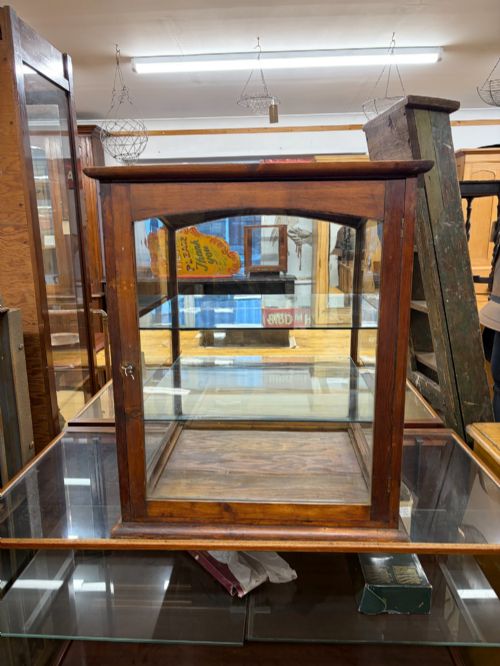
An antique counter case is a glazed display piece designed to sit upon shop counters or serve as freestanding retail furniture. These pieces stem primarily from the Victorian, Edwardian, and 1920s commercial eras, built originally to showcase confectionary, pharmaceuticals, and haberdashery. Buyers meet countertop models in mahogany and oak most frequently, alongside larger shop counters and specialised advertising cabinets.
The selection here encompasses glazed table top display cabinets, pentagonal counters, and mechanical dispensing units. Makers produced these forms to protect stock while keeping items visible to customers across the retail floor. Materials range from traditional timber frames to aluminium framing and mirrored interiors.
How they were made
Joiners built these commercial fixtures using durable hardwoods such as mahogany and oak, often mounting glass panels within timber, brass, or ebonised frames. Interiors occasionally incorporated mirrored glass to reflect light through the display space, while velvet linings cushioned delicate wares inside.
Construction methods prioritized sturdy joints to withstand daily retail use, incorporating hinged doors, sliding panels, and specialised mechanical dispensing elements. Metal framework emerged in later 1930s pieces, pairing aluminium or brass with clear glazing for commercial strength.
Antique Counter Case Retail Price Guide 2026
Typical asking prices for counter case among the pieces listed under this phrase on Sellingantiques today, from the lower quarter to the upper quarter. They describe what is for sale here now, not the wider market.
Chocolate and soap advertising cabinets turned everyday pantry purchases into high-status countertop treasures.
What varies in quality
The distinction between standard commercial units and superior examples rests on timber selection, original maker provenance, and surviving structural integrity. Cabinets bearing maker inscriptions or specialised branding hold greater documentary interest for collectors than generic workshop pieces.
Joinery detail and the survival of original glass panels dictate the caliber of a counter case. Finer examples retain intact mirrored backs, original velvet linings, and working hardware without heavy replacement parts.
F. Sage & Co.·John Stow Ltd of Bradford·Saml. Elliott & Sons
The Antique Counter Case Glossary
- Countertop display cabinet
- A glazed enclosure designed to sit upon a retail shop counter for customer viewing. These units protected small goods while maintaining high visibility.
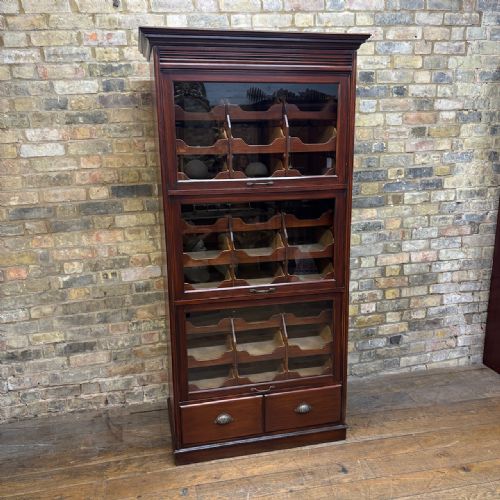
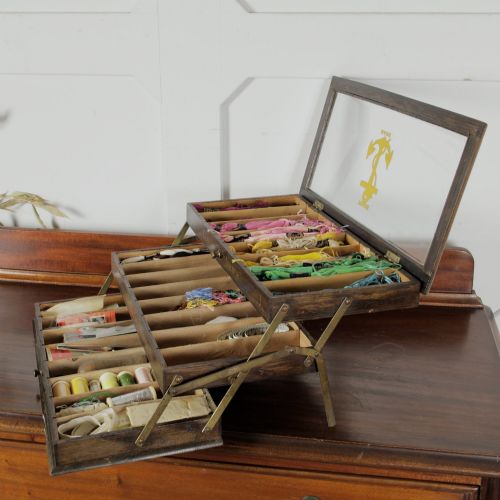
- Haberdashery cabinet
- A specialised storage and display fixture featuring multiple drawers or compartments for sewing cottons and small textiles. Retailers used them to organise stock efficiently.
- Vitrine
- A glass-sided display case used primarily for decorative objects or fine wares. The term describes freestanding or tabletop cabinets with extensive glazing.
- Ebonised
- Timber treated with a dark finish to resemble ebony. Cabinetmakers applied this technique to create a formal contrast against lighter display items.
- Vinaigrette
- A small ornamental box containing a perforated grille over a sponge soaked in aromatic vinegar. These portable silver items date to the Georgian and Victorian periods.
Antique Counter Case: Frequently Asked Questions
What were antique counter cases used for?
Shopkeepers utilised these glazed cases on retail counters to display confectionary, tobacco, pharmaceuticals, and sewing cottons to customers.
The glass protection kept merchandise clean and secure while allowing shoppers to inspect goods before making a purchase.
How do I date an antique counter case?
Dating relies on timber choices, construction techniques, and stylistic markers such as Edwardian Edwardian mouldings or Art Deco geometry.
Maker plaques and branded advertising lettering also provide specific chronological reference points for commercial furniture.
Where did these display cases originate?
Commercial workshops and cabinet makers produced these fixtures for late nineteenth and early twentieth-century retail shops, pharmacies, and department stores.
Many bear stamps or labels from prominent shopfitters operating in London and regional industrial centres.
How do I clean and maintain the glass?
Maintenance involves gentle cleaning of glass panels with standard solutions while protecting aged timber frames from excess moisture.
Preserving original painted or polished surfaces maintains the historical character of the commercial woodwork.