



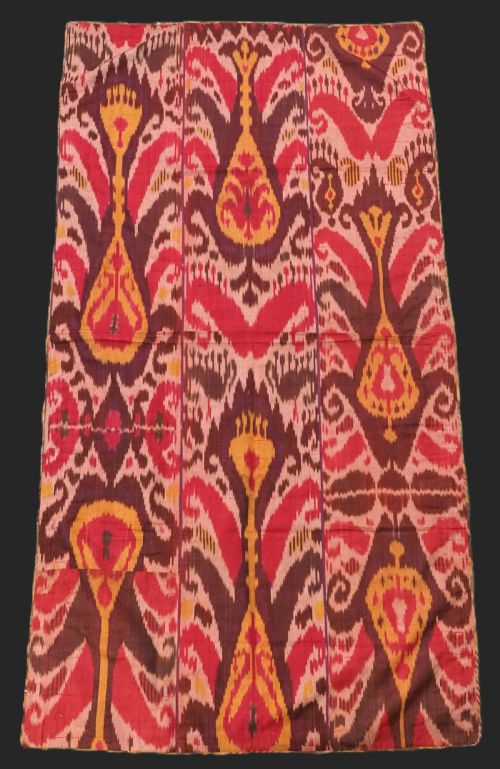

Antique Cotton Textile
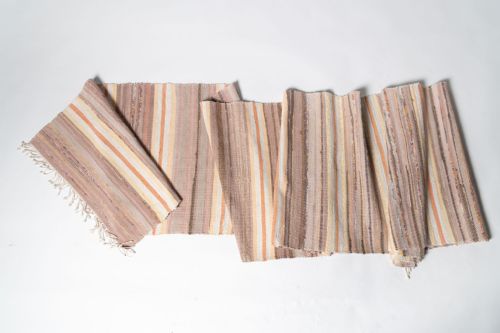
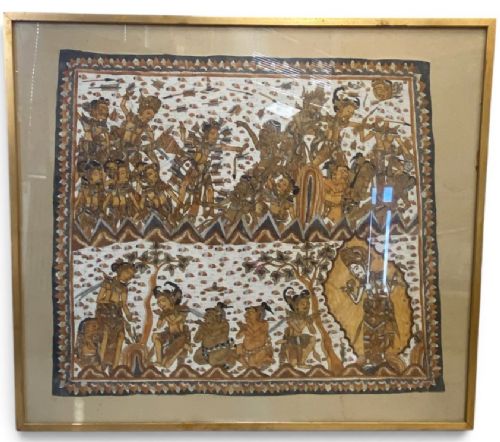
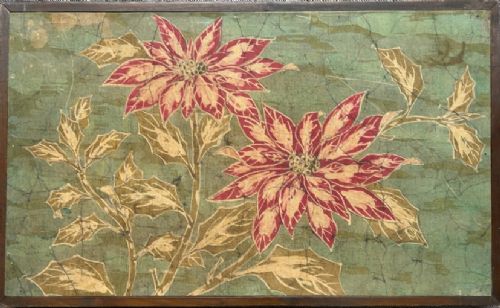
When buying an antique cotton textile, collectors encounter embroidered wall hangings, Indian temple paintings, and Central Asian suzanis crafted across the nineteenth and twentieth centuries.
Antique Cotton Textile
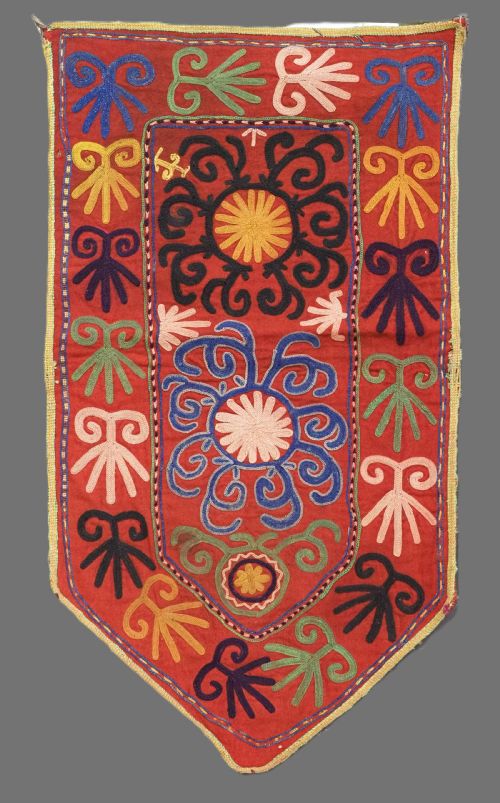
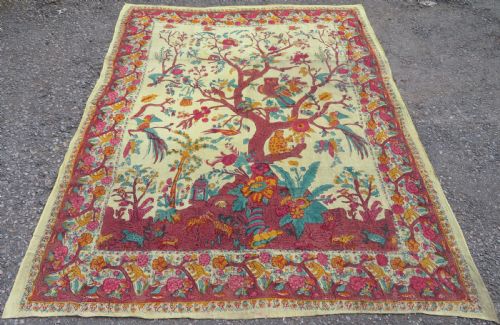
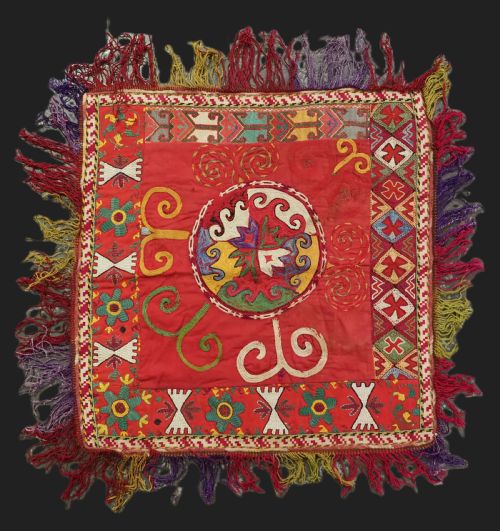
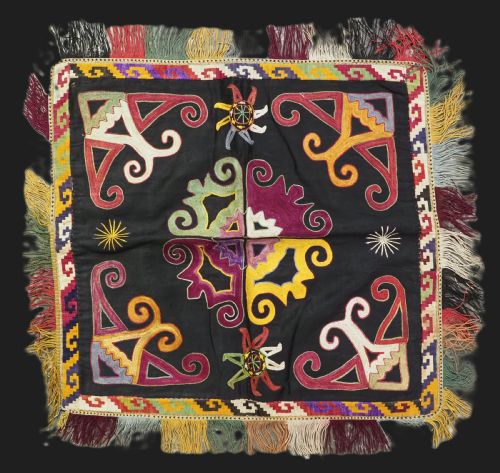
An antique cotton textile encompasses a broad array of decorative and utilitarian pieces, most frequently represented here by Central Asian suzanis, dowry embroideries, and European wall hangings. These items range from small tribal ilgich panels to large medallion suzanis and framed nineteenth-century flags. Buyers searching for an antique cotton textile typically discover works originating from Uzbekistan, India, Indonesia, and Britain, spanning the Victorian era to the early twentieth century.
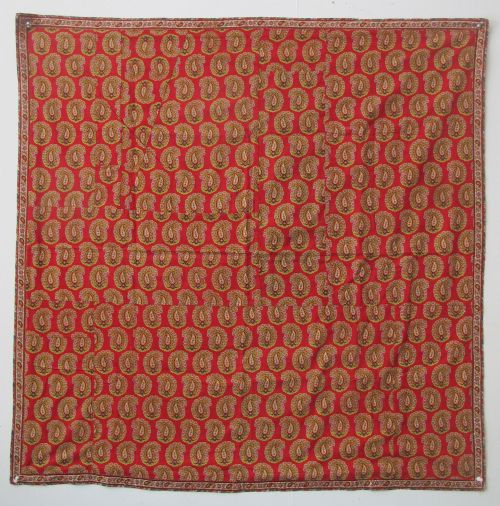
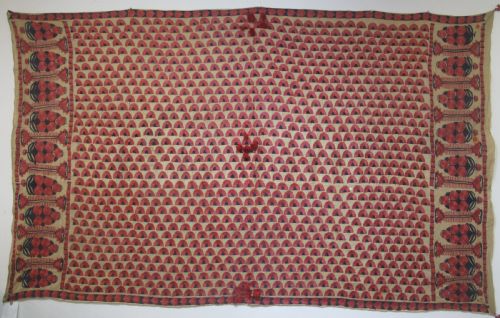
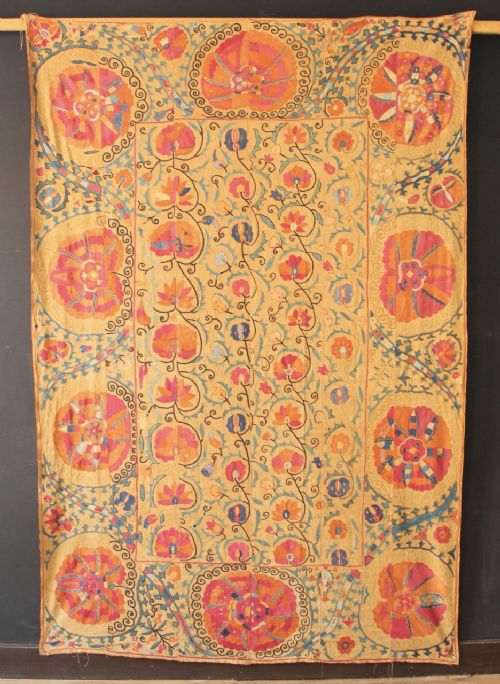
Suzanis dominate the selection, featuring dense silk embroidery laid over cotton or adras grounds in red, yellow, and black hues. Alongside these regional embroideries appear blockprinted panels, Indian kalamkari temple paintings, and Balinese textile art. Each form serves a distinct domestic or ceremonial purpose, moving from nomadic dowry items to framed interior decorative panels.
How they were made
Makers utilised natural dyes and silk thread, working by hand to stitch intricate botanical and geometric motifs onto woven cotton foundations. Ground fabrics frequently combine cotton with silk, creating hybrid structures such as adras, whilst blockprinted examples rely on carved wooden blocks pressed directly onto the cotton surface.
Traditional workshops across Central Asia and India employed specialised regional stitches, from tambour work to flat stitch variations. Natural pigments derived from plants and minerals provided the rich colour palettes seen on red, yellow, and black cotton grounds.
Antique Cotton Textile Retail Price Guide 2026
Typical asking prices for cotton textile among the pieces listed under this phrase on Sellingantiques today, from the lower quarter to the upper quarter. They describe what is for sale here now, not the wider market.
Listings feature cotton textiles from the nineteenth century alongside early twentieth-century examples, incorporating regional styles from Central Asia, India, and Britain.
What varies in quality
Quality rests upon the density of the embroidery work and the vibrancy of the original dyes. Full work suzanis, where the needlework covers almost the entire cotton ground, command greater attention than lighter nim suzanis.
The precision of the design layout, the complexity of regional motifs, and the overall integrity of the cotton or adras foundation determine the standing of each piece. Surviving examples with well-preserved natural colour tones display the highest tier of craftsmanship.
The Antique Cotton Textile Glossary
- Suzani
- A large, embroidered Central Asian wall hanging traditionally made as part of a bride's dowry. These pieces feature silk needlework on a cotton or silk-cotton foundation.
- Adras
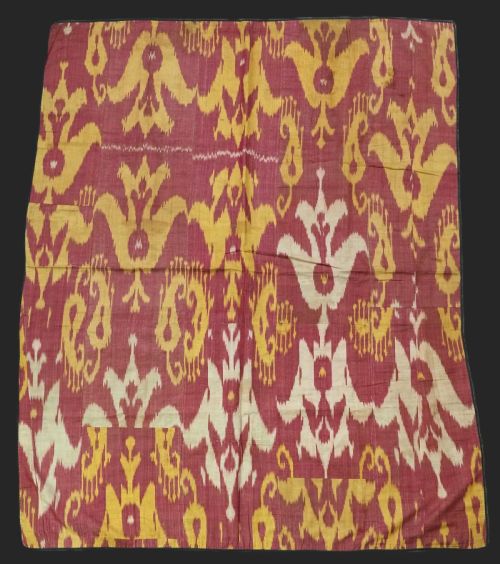
- A traditional Central Asian fabric woven with a silk warp and a cotton weft. It provides a stable yet lustrous ground for embroidery.
- Ilgich
- A small embroidered dowry piece originating from Central Asian tribal groups such as the Lakai. They were typically used for hanging domestic items.
- Kalamkari
- An Indian technique of hand-painted or blockprinted textile production. These textiles often depict narrative scenes from Hindu epics.
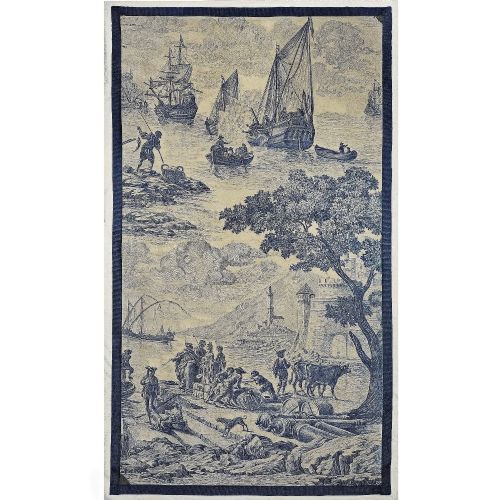
- Toile
- A type of fabric featuring a monochromatic printed pastoral or historical scene. Eighteenth and nineteenth-century examples often depict allegorical themes.
Antique Cotton Textile: Frequently Asked Questions
How do I hang a textile?
Wall hangings require careful mounting to distribute weight evenly across the cotton fabric without causing strain or tearing. Conservators often recommend stitching a cotton sleeve to the reverse and sliding a padded rod through.
Displaying pieces away from direct sunlight protects natural dyes from fading over time. Rotating textiles periodically prevents uneven environmental exposure.
What is a suzani?
A suzani is a decorative embroidered panel created in Central Asian regions such as Bukhara, Samarkand, and Tashkent. Women stitched floral and medallion patterns using silk thread on cotton or adras grounds.
These textiles functioned traditionally as dowry items, wall decorations, or coverlets. Their scale ranges from small nim versions to large full-work panels.
How do I clean an antique textile?
Surface dust should be removed gently using a soft brush with a protective mesh screen in place. Professional textile conservators handle deeper cleaning, as historic natural dyes can bleed when exposed to water.
Household washing machines and standard detergents cause irreversible damage to aged cotton fibres and silk embroidery threads. Dry cleaning is generally unsuitable for fragile antique fabrics.
How do I date an embroidered textile?
Dating relies on examining the type of cotton ground, the chemical composition of the natural dyes, and the style of the embroidery. Nineteenth-century pieces often display distinct regional palettes and stitching density compared to later twentieth-century examples.
Documentation of tribal origins, such as Lakai or Shahrisabz attribution, helps place items within specific generational periods. Structural analysis of the weave provides further context for age.