
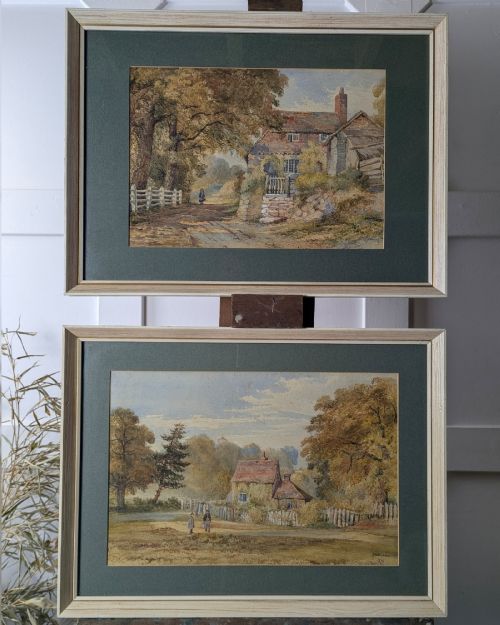
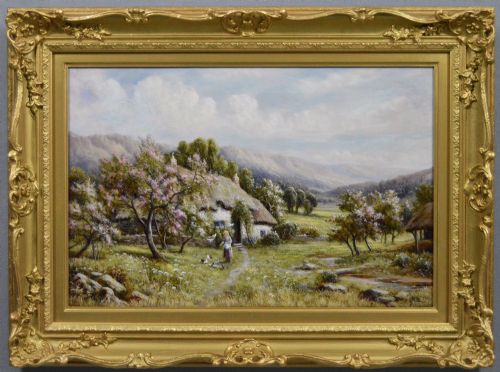
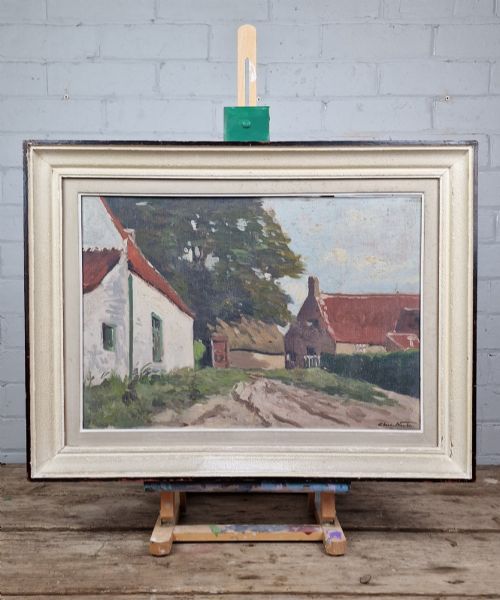
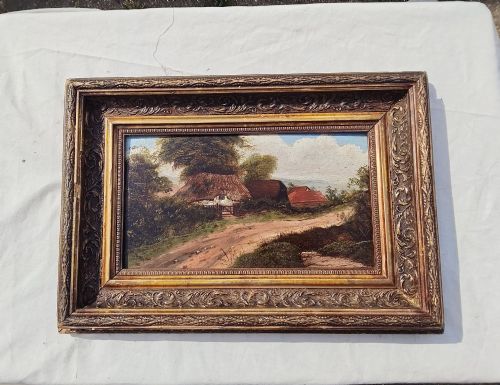

Antique Cottage Landscape
These antique cottage landscape works capture rural dwellings and country scenes through nineteenth- and early-twentieth-century painting and watercolour.
Antique Cottage Landscape
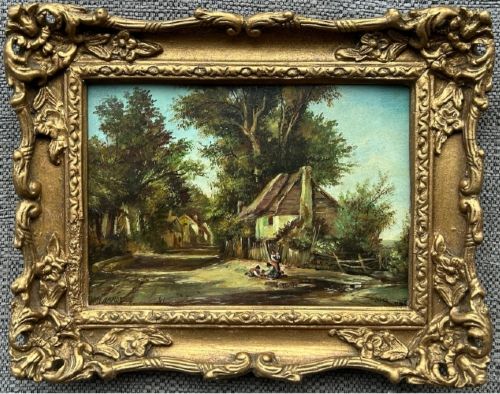
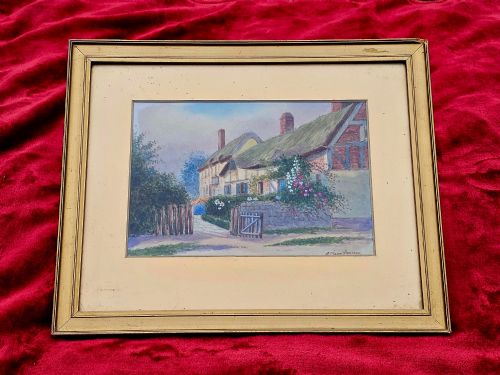
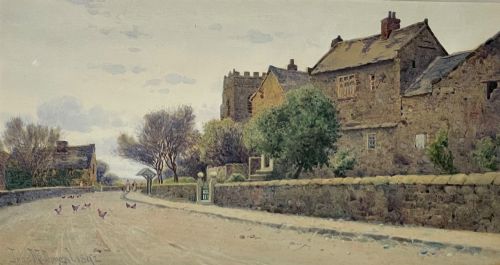
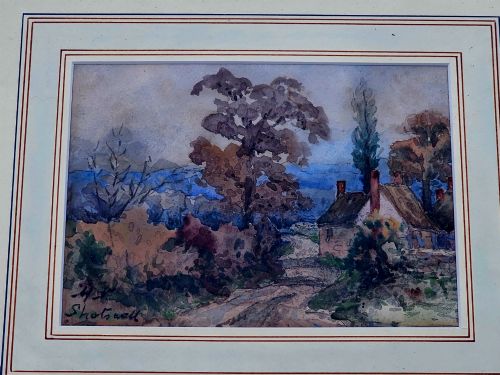
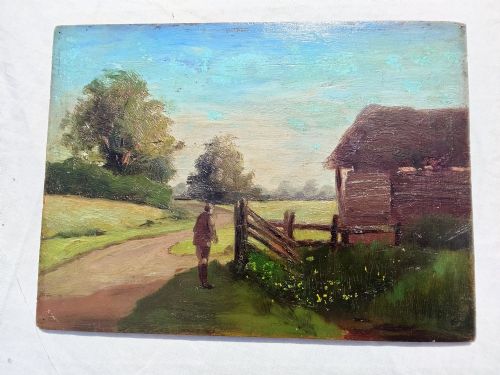
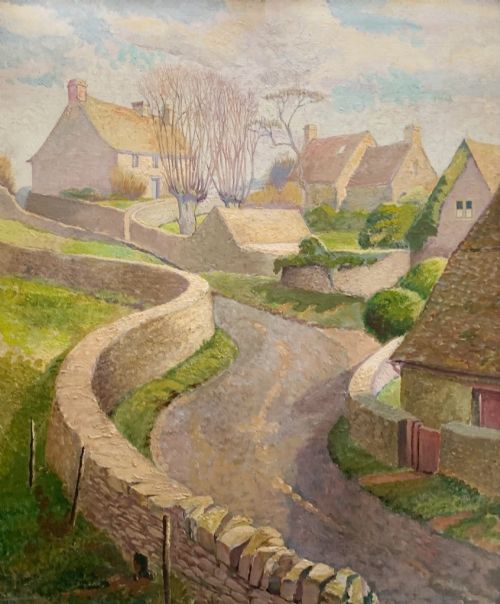
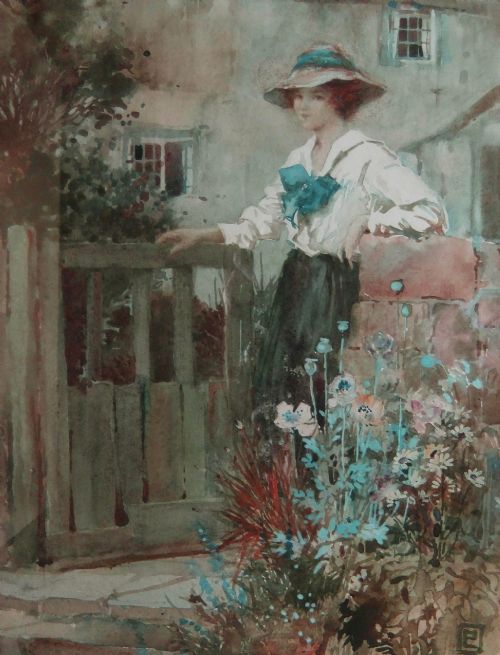
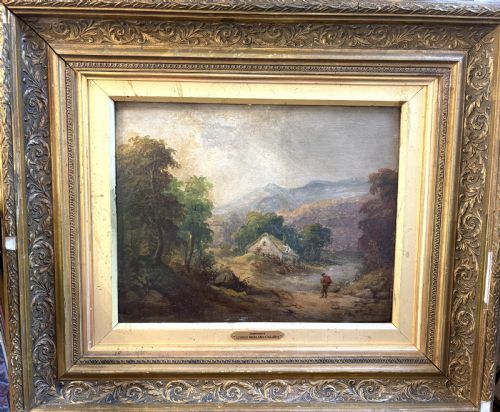
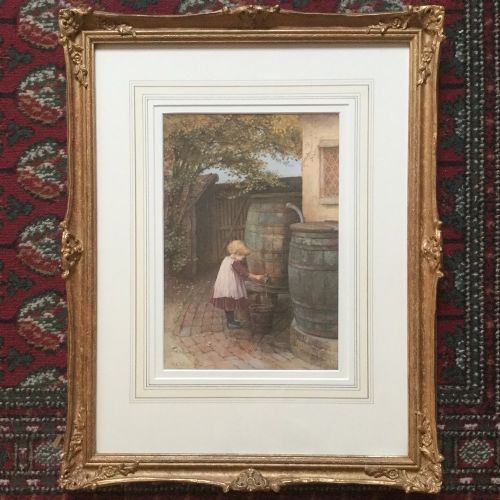
An antique cottage landscape presents rural domestic architecture set within pastoral, river, or coastal surroundings. These works typically feature single or clustered rustic dwellings, often accompanied by figures, livestock, or gardens.
The selections span the nineteenth century, the Victorian era, and the early twentieth century. Common formats include framed watercolours on paper and oil paintings executed on canvas, wood panel, or card.
Works originate primarily from British and European schools, capturing regional vernacular architecture from Yorkshire, the Lake District, and southern counties. Buyers encounter both signed compositions by named professional artists and atmospheric pieces by anonymous regional hands.
How They Were Made
Painters utilised oil paint on canvas, wood panels, or millboard to build rich, textured surfaces with deep tonal variation. Watercolours on paper relied on transparent washes combined with gum arabic or bodycolour highlights to achieve atmospheric light.
Supports frequently reflect traditional studio preparation, featuring hand-stretched canvases, wooden panels, and heavy artist papers. Works are typically housed in period wooden or ornate gilt frames that complement the pastoral subject matter.
Listings feature works spanning the nineteenth century up through the nineteen-forties, executed in watercolour, oil, and mixed media.
What Varies in Quality
Compositional balance and spatial depth distinguish accomplished works from routine topographical sketches. Stronger pieces employ confident brushwork and considered management of natural light to establish atmosphere.
The handling of surrounding elements, such as foliage, water, and human figures, reveals the artist's training and observation. Superior examples display subtle pigment layering and harmonious palettes rather than rigid, formulaic rendering.
William Howard Hardy·A. Marie Parsons·John McDougal·Robert A. Nottingham·Robert John Hammond·Charles Houben·Percy Lancaster·George Morland·Charles Edward Wilson·John Horace Hooper·Reginald Grange Brundrit·Fred Lawson·Arthur Tucker·J S Ainley·William Hoggatt·James Hardy Junior·Frederick James Knowles·William Greaves·Charles Vickers·Theresa Stannard·Robert Finley McIntyre·Helena Maguire·Linnie Watt·Owen Bowen·Ernest Higgins Rigg
The Antique Cottage Landscape Glossary
- Watercolour
- A painting method where fine pigment is suspended in a water-soluble binder. These works are executed on absorbent paper substrates and mounted behind glass.
- Oil on panel
- A traditional technique using oil-based paints applied directly to a prepared wooden board. This support provides a rigid surface that preserves fine brushwork.
- Impressionism
- An art movement characterised by relatively small, thin yet visible brush strokes and open composition. It prioritises the accurate depiction of light and its shifting qualities.
- Gilt wood
- Wood surfaces decorated with a thin leaf of gold or metal alloy. Period frames often utilise this finish to enhance the presentation of landscape paintings.
- Mixed media
- An artwork combining two or more distinct artistic materials or mediums. These pieces incorporate elements such as watercolour, gouache, or ink on paper.
Antique Cottage Landscape: Frequently Asked Questions
What subjects appear in these cottage landscapes?
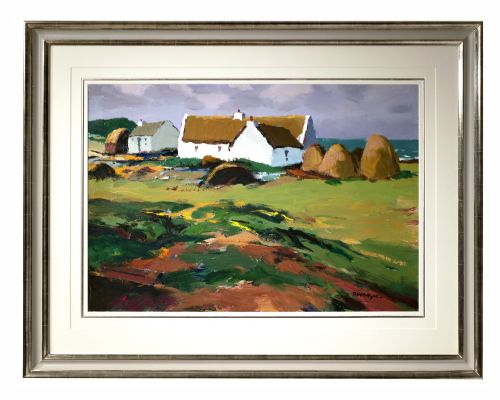
Compositions typically feature rural dwellings, thatched cottages, and farmsteads integrated into countryside or coastal views. Figures, livestock, and domestic animals frequently populate the foregrounds.
Scenes frequently document specific regional architecture across Britain and Europe, ranging from northern river valleys to southern coastal villages.
How should I display a watercolour safely?
Watercolours on paper require protection from direct sunlight to prevent fading of pigments and discolouration of the paper support. Framing behind conservation-grade glass helps shield the delicate medium from ultraviolet light and ambient moisture.
Positioning works away from direct heat sources ensures the paper and framing materials remain stable over time.
Are these paintings signed by the artist?
Many examples bear the original signature or monogram of the painter, while others remain attributed to specific artistic schools. Signatures often appear discreetly in the lower corners of the canvas or paper support.
Unsigned works are typically classified by their period and regional style, such as nineteenth-century English school.
What framing is typical for these works?
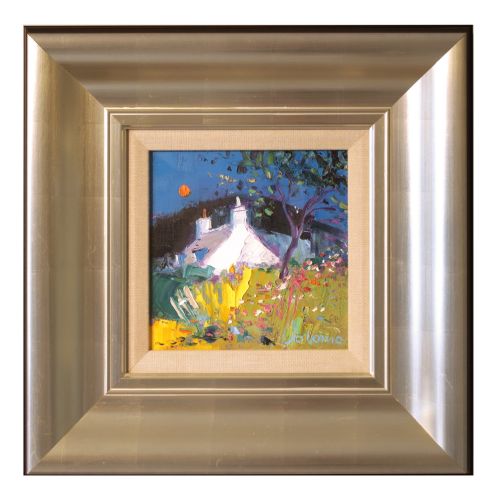
Surviving works frequently retain their period frames, which include moulded wood constructions and ornate gilt mouldings. These frames often show historical wear that corresponds to the age of the artwork.
Such enclosures complement the aesthetic of nineteenth- and early-twentieth-century pastoral compositions.