

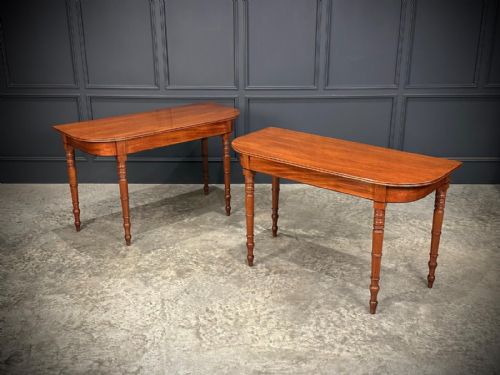

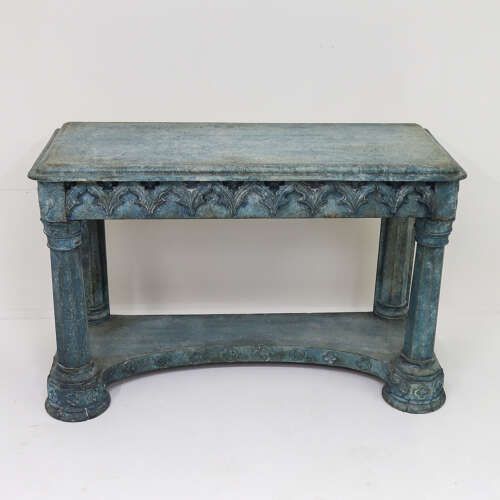
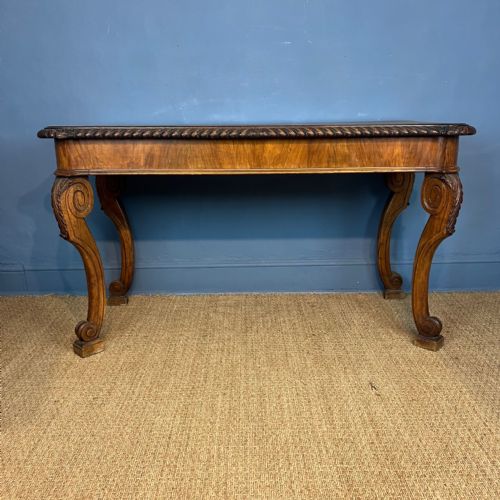
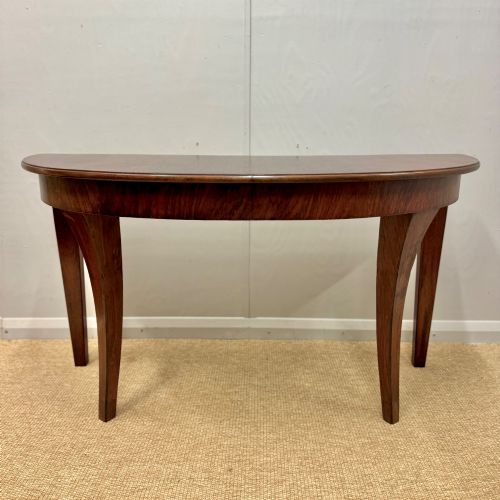


Antique Corridor Console
An antique corridor console is a narrow table built to sit flush against a hallway wall, offering a surface for display without blocking narrow thoroughfares.
Antique Corridor Console
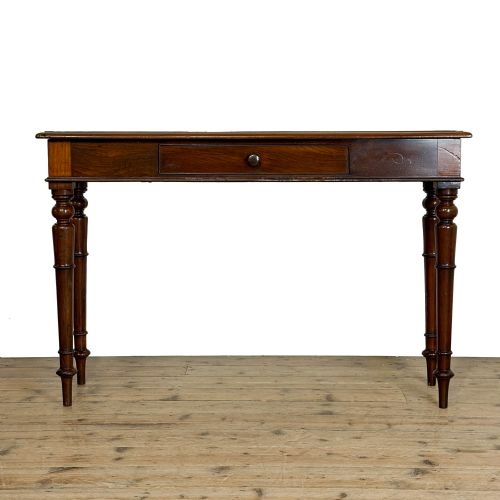
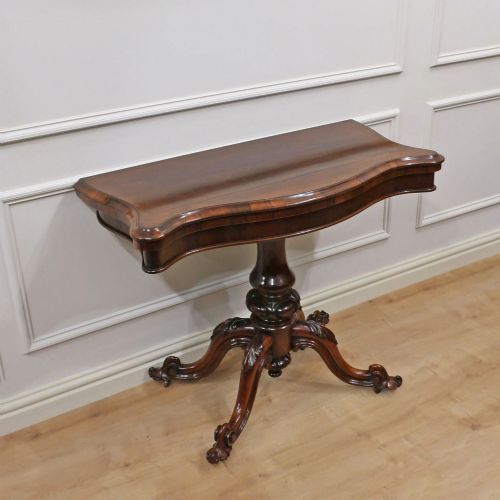
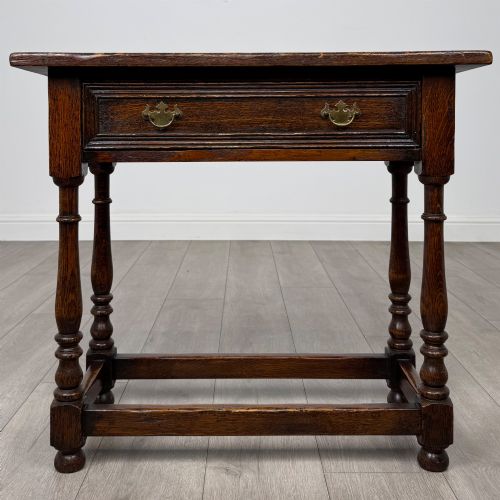
An antique corridor console primarily takes the form of console tables and side tables designed for narrow spaces. These pieces span periods from the Georgian era through the Victorian and Edwardian periods, including 19th-century examples.
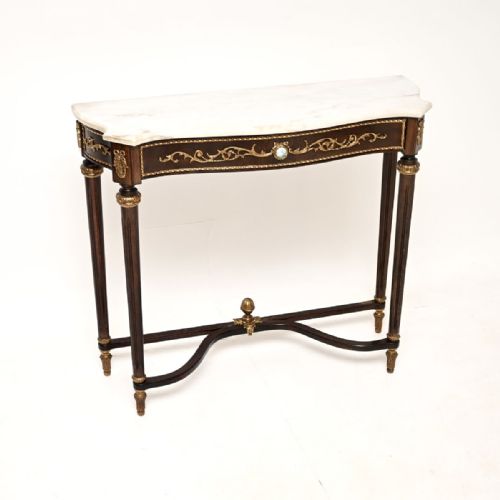
Buyers will most frequently encounter mahogany, rosewood, and oak constructions, often featuring marble tops or inlaid details. Stylistically, the selection encompasses Regency, Neoclassical, and English Country designs.
Materials and construction
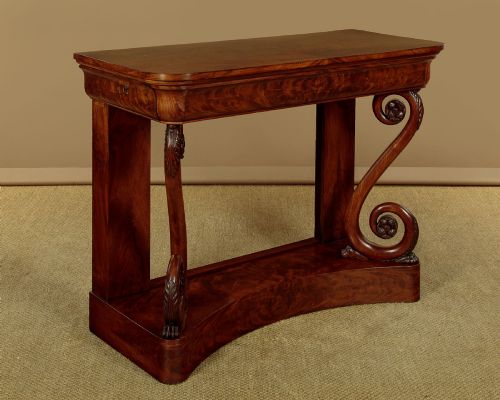
Cabinetmakers utilised dense timbers like mahogany, walnut, and rosewood, frequently applying flame mahogany veneer to visible surfaces. Oak served structural roles or formed the basis of Arts and Crafts pieces.
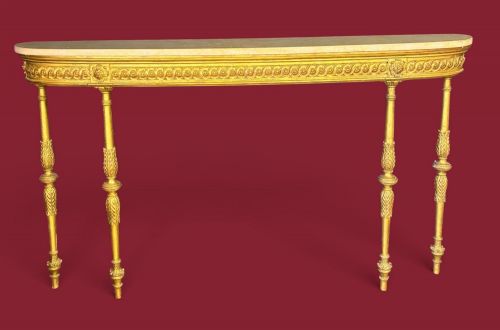
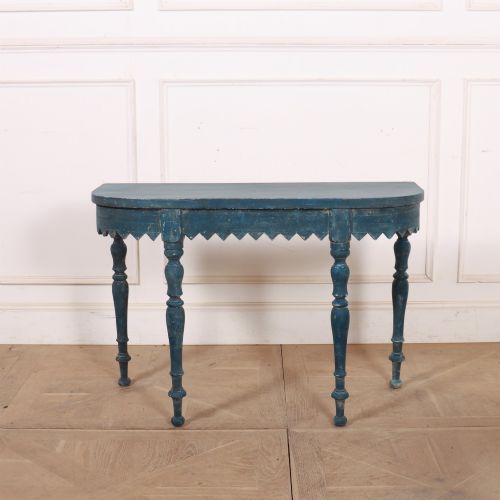
Surface treatments included traditional paint finishes, giltwood applications, and fine inlay work. Marble tops added weight and durability to Neoclassical and Regency forms.
Antique Corridor Console Retail Price Guide 2026
Typical asking prices for corridor console among the pieces listed under this phrase on Sellingantiques today, from the lower quarter to the upper quarter. They describe what is for sale here now, not the wider market.
Listings feature woods spanning mahogany, oak, walnut, and rosewood, alongside marble tops and painted beech.
Distinguishing quality
The standard of timber selection and veneer matching defines the upper tier of these tables. Grain movement and the precision of inlaid details reveal the maker's hand.
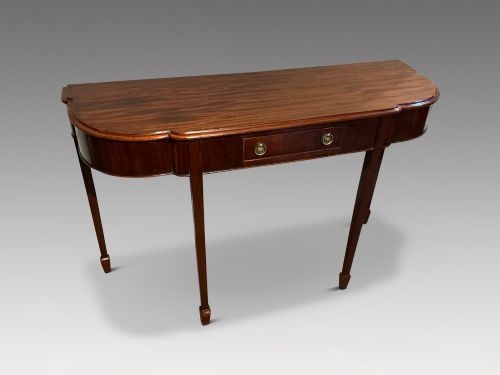
Structural integrity, particularly in slender supports like concave legs or bow ends, separates utilitarian pieces from finer decorative examples.
The Antique Corridor Console Glossary
- Console table
- A table designed to be fixed against a wall, often supported by ornate legs or brackets. They provide surface space in narrow areas like hallways.
- Bow end
- A convex, outwardly curved front edge on a table top. This shape softens the profile of narrow furniture.
- Flame mahogany veneer
- A thin slice of mahogany timber displaying a distinctive, flamy grain pattern. It was applied to primary surfaces for decorative effect.
- Giltwood
- Wood that has been covered with a thin layer of gold leaf or gilt. This finish is common on Neoclassical and decorative console tables.
- Concave legs
- Table supports that curve inward towards the centre before flaring out. They appear frequently on Regency period console designs.
Antique Corridor Console: Frequently Asked Questions
Where should I place a corridor console?
These tables are ideally suited for narrow entryways, hallways, and reception spaces where floor space is limited. Their shallow depth allows them to sit flat against a wall without obstructing movement.
They also function well in living rooms or dining spaces as supplemental display surfaces beneath mirrors or artwork.
How do I care for a mahogany console?
Dust the timber regularly with a soft, dry cloth to prevent particulate buildup on the polished surface. Avoid placing wooden tables in direct sunlight or near heat sources to protect the veneer.
Apply a quality beeswax periodically to nourish the wood and maintain the natural sheen of the finish.
What is the difference between a side table and a console?
Console tables are traditionally designed to stand against a wall, sometimes relying on wall brackets for additional stability. Side tables are generally freestanding pieces with four independent legs.
In practice, many antique examples serve similar functions in narrow spaces, leading to an overlap in how these terms are applied.
How can I date my console table?
Examine the secondary woods, construction methods, and hardware to establish a baseline period. Stylistic markers such as Neoclassical giltwood or Arts and Crafts oak also point to specific eras.
Comparing the proportions and decorative motifs against documented pieces from the Georgian, Regency, or Victorian periods helps narrow down the decade.