




Antique Corridor Chairs
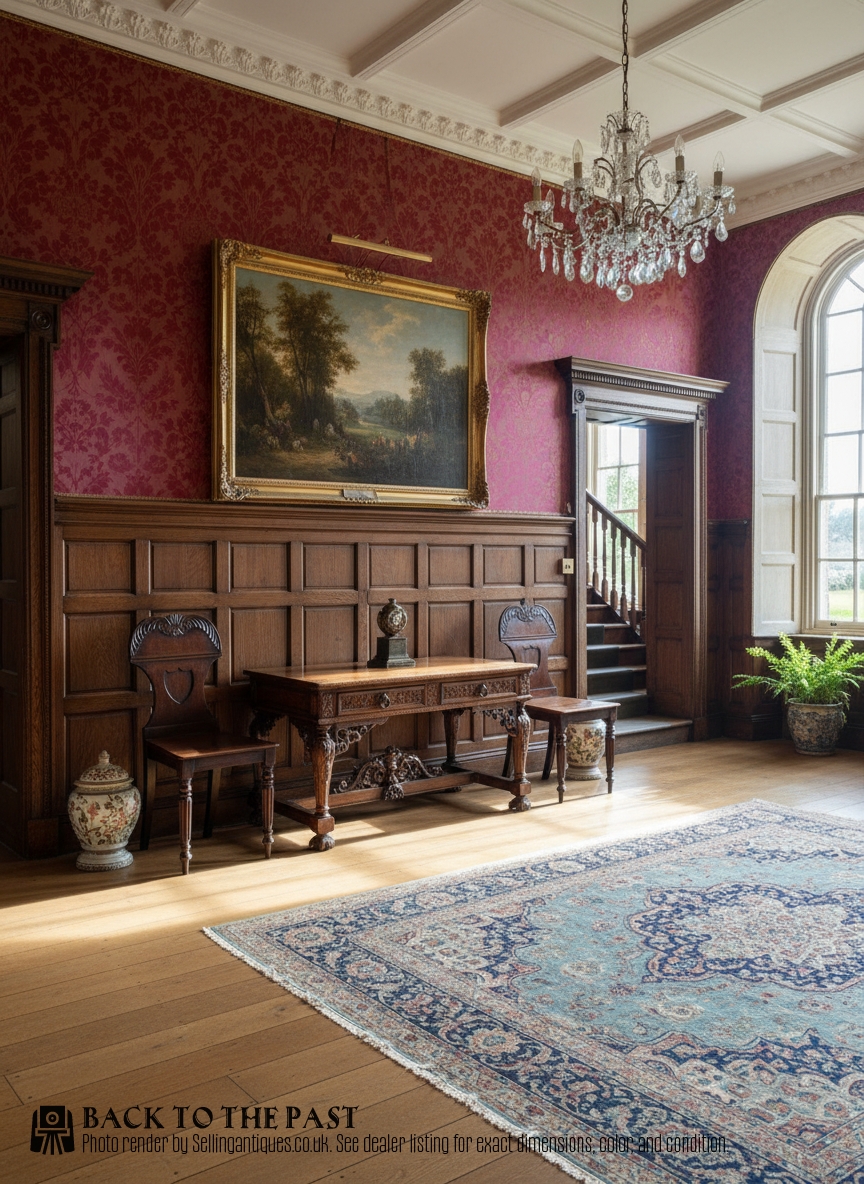
Antique corridor chairs, appearing here as sturdy mahogany hall chairs from the Georgian to Victorian periods, offer narrow seating designed for passageways and grand entrances.
Understanding antique corridor chairs
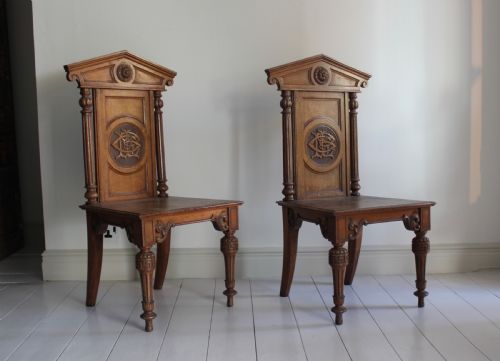
The dominant forms on this page span Georgian proportions up to mid-Victorian revivals, including specific variants like Victorian Gothic Revival and grand Regency pieces. These seats were originally positioned in large entryways for visitors waiting briefly, meaning their construction prioritises upright posture and visual impact over deep cushioning.
Materials and construction
Makers utilised solid wood and rich mahogany almost exclusively across these listings, often incorporating decorative inlay to enhance the primary timber. Structural strength relies on dense hardwoods capable of withstanding the rigours of high-traffic hallways and entrance spaces.
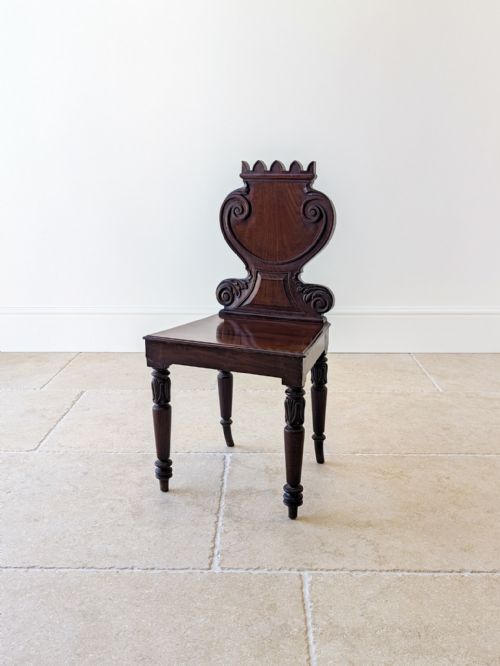
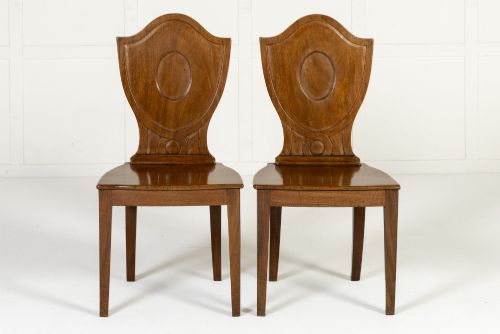
Carpenters shaped these woods into distinct silhouettes, such as shield backs adorned with carved details like Prince of Wales feathers. The joinery combines traditional framing techniques with carved ornamentation directly into the solid mahogany structure.
Retail Price Guide 2026
Typical UK retail prices for corridor chairs, calculated from the Sellingantiques database of over a million retail prices indexed since 2003. This retail price guide relies exclusively on Sellingantiques data; no external sources or auction records are used, so the figures do not describe the wider market.
Listings span the 18th century, Regency, and Victorian periods, with mahogany and solid wood dominating the available inventory.
Judging the quality
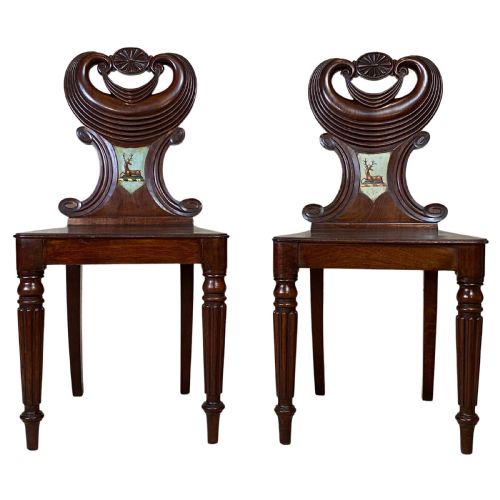
The distinction between standard examples and the finest pieces rests upon the crispness of the carved details, such as shield backs and applied feathers. Superior specimens demonstrate deeper relief carving in the solid mahogany and more harmonious proportions across matched pairs.
Material selection also dictates standing, with dense, well-figured timber and precise inlay separating ordinary workshop output from masterworks associated with documented makers like Gillows. The integrity of the original wood grain and the sharpness of the structural turnings reveal the true calibre of the work.
Gillows
The Antique Corridor Chairs Glossary
- Hall chair
- A rigid, wooden seat placed in an entrance hall or corridor, typically backless or with a solid wooden back rather than upholstery. These pieces were built for brief seating and visual display.
- Shield back
- A chair back shaped in the outline of a heraldic shield, popular during the Georgian and Regency periods. This design often incorporates carved motifs like Prince of Wales feathers.
- Regency
- A British design period spanning the early nineteenth century, known for classical restraint and revival styles inspired by ancient Greece and Rome. Furniture from this era often utilises dark mahogany and clean lines.
- Victorian Gothic Revival
- A nineteenth-century architectural and decorative movement that reintroduced medieval pointed arches, heavy carvings, and ecclesiastical motifs into domestic furniture. Pieces in this style display dramatic vertical emphasis.
Frequently Asked Questions
Where were corridor chairs placed?
These chairs stood along the walls of grand entryways, vestibules, and narrow passageways in large homes. They served as temporary seating for guests waiting to be announced.
Because hallways required clear movement, the furniture remained shallow and flat against the plaster, prioritising profile over comfort.
How do I date a corridor chair?
Dating relies on observing the stylistic markers of periods such as the Georgian, Regency, and Victorian eras found in the wood and silhouette. Earlier 18th century and Regency examples often feature delicate shield backs, while later Victorian pieces show heavier proportions.
Construction methods and timber selection further clarify the manufacturing decade, moving from classical restraint to Gothic revival motifs.
Are these chairs sold as pairs?
Many corridor and hall chairs survive and are listed as matching pairs rather than single items, reflecting their original placement flanking a hallway wall or doorway. Pairs offer symmetry for architectural spaces.
Collectors prize matched sets for their balanced appearance in modern corridors and entrance spaces.