


Antique Corner Wash Basin
An antique corner wash basin saves precious room while bringing refined Georgian and Victorian timber into the home.
Antique Corner Wash Basin
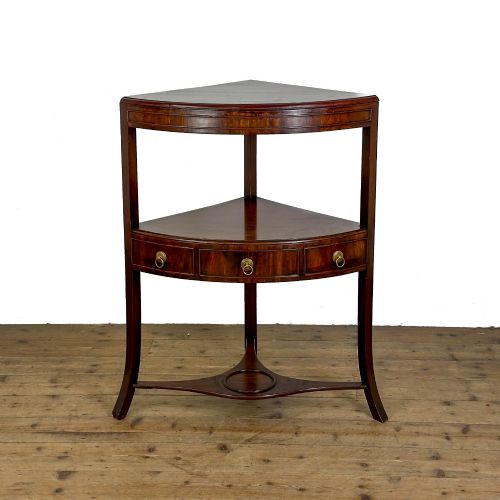
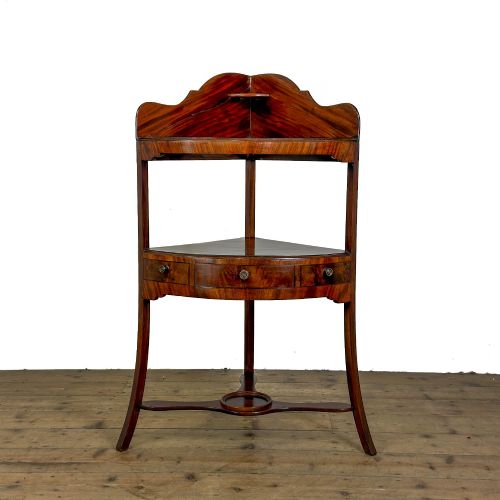
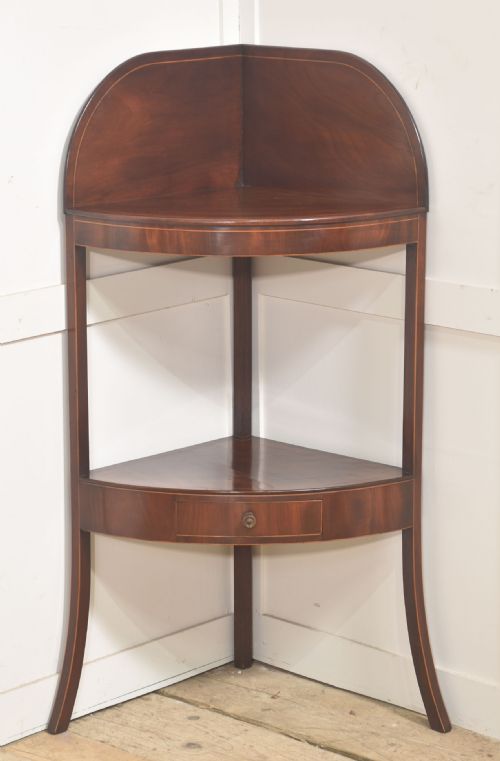
An antique corner wash basin is a purpose-built piece of furniture designed to fit snugly into the angle of a room. These pieces span from the eighteenth century into the twentieth, appearing in Georgian, Regency, and Victorian guises.
How they were made
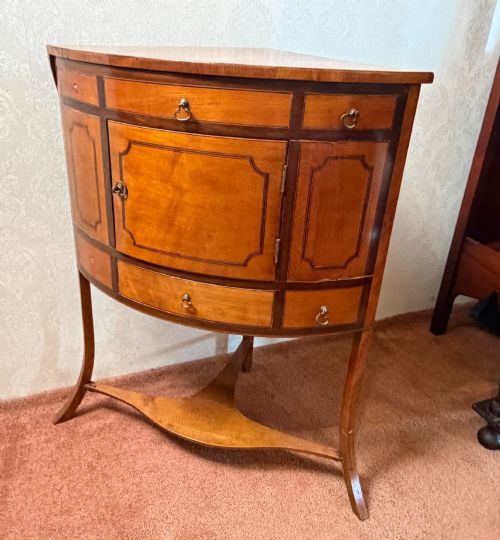
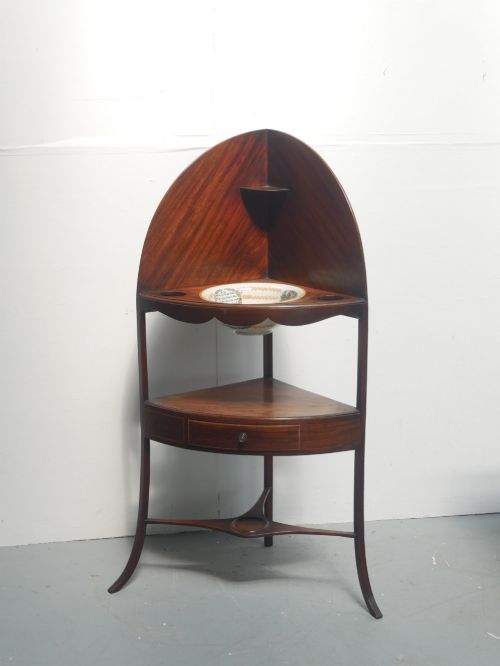
Cabinetmakers utilised solid mahogany, walnut, and satinwood, frequently enhancing the surfaces with delicate boxwood inlay. Timber selection drove the structure, ensuring sturdy three-legged or tier-supported frames capable of bearing heavy ceramic basins.
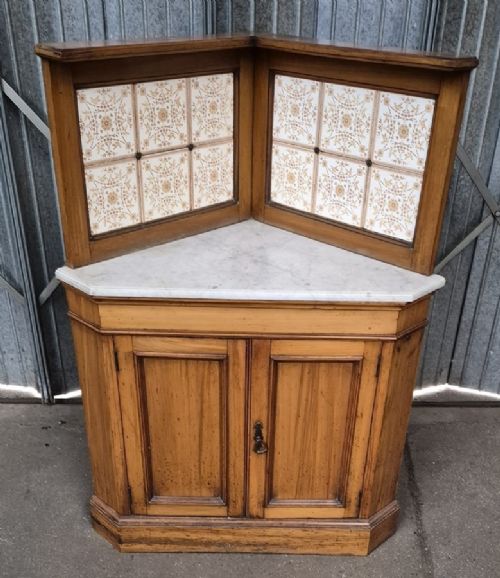
Finishing touches involved brass hardware and, in later Victorian instances, fitted marble tops designed to withstand water splashes during daily ablutions.
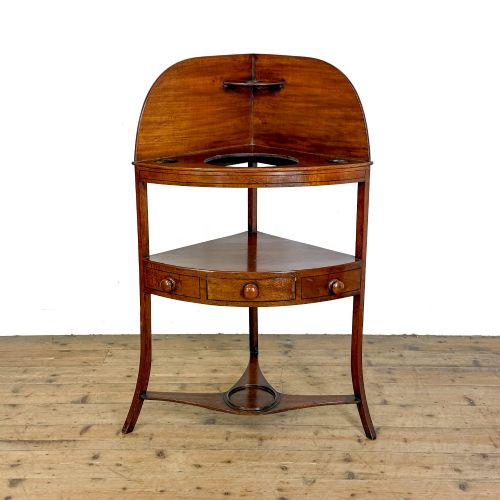
The listings span Georgian, Regency, and Victorian periods, showcasing cabinetwork in mahogany, walnut, satinwood, and marble.
What varies in quality
Distinction lies in the crispness of the cabinetwork and the cleverness of the configuration, such as fold-down tops or integrated lower drawer tiers. Finer pieces demonstrate superior timber figure and precise inlay work.
Maker attribution elevates a piece significantly, particularly when workshops such as Gillows left their stamp upon the mahogany frame.
Walker And Sons·Gillows Lancaster
The Antique Corner Wash Basin Glossary
- Washstand
- A piece of furniture designed to hold a basin, jug, and washing accessories before plumbed bathrooms became common. They often feature shaped splashbacks and apertures for soap and water.
- Bow front
- A convex curved cabinet front that projects outward, frequently seen on late eighteenth-century examples to soften the angles of the room.
- Satinwood
- A lustrous, fine-grained timber with a golden sheen, utilised for high-status eighteenth-century furniture pieces.
- Boxwood inlay
- Contrasting pale wood inserted into dark timber veneers or solids to create geometric or linear decorative borders.
Antique Corner Wash Basin: Frequently Asked Questions
Where did these go in a room?
These washstands were specifically proportioned to slot neatly into empty room corners, making efficient use of awkward domestic spaces.
In period bedchambers, this placement kept washing facilities out of the main pathway while remaining easily accessible.
How do I spot a Georgian piece?
Georgian examples typically display clean lines in solid mahogany, sometimes featuring shaped tiers for ewers and basins.
Look for period construction details, such as hand-cut dovetails in the small drawers and traditional timber shrinkage.
What are folding tops for?
Clever hinged lids allowed owners to conceal the washbasin aperture entirely when the stand was not in active use.
This transformation turned a utilitarian washing station into a tidy occasional table or lamp stand during the rest of the day.
Can I use one as a modern basin?
Original pieces were built before modern plumbing, meaning surviving timber washstands require careful adaptation for contemporary bathroom fixtures.
Many buyers prefer to retain them as decorative hall tables or plant stands rather than plumbing them in.