




Antique Coral Beads
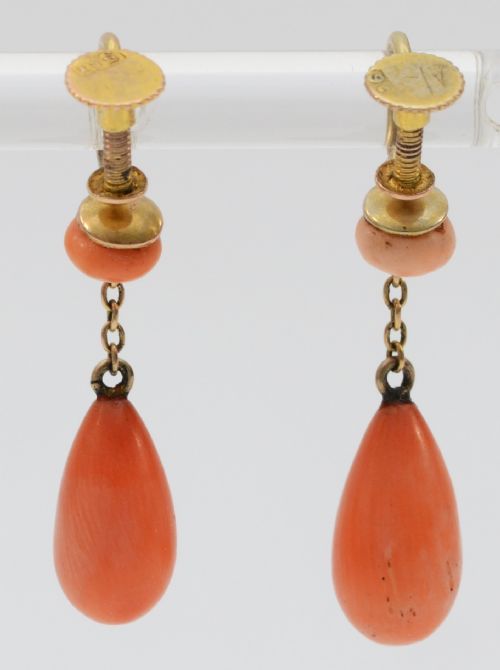
Antique coral beads bring rich organic warmth to the skin, offering distinct natural character across Victorian and Georgian designs.
Antique Coral Beads
When you search for antique coral beads, you encounter a variety of forms including long single strands, triple strands, and graduated necklaces alongside bracelets, earrings, and pendants.
The selections on this page span several eras from the Georgian and Regency periods through to the Victorian era and into the early twentieth century.
You are most likely to meet single and multi-strand necklaces featuring salmon or red coral, often paired with gold, silver, or gilt metal clasps.
What varies in quality
The distinction between tiers of quality rests on the natural state of the material, specifically whether the coral is un-dyed and uniform in colour.
Finishing touches such as the presence of gold or silver clasps and the inclusion of complementary seed pearls or enamel work elevate the distinction of individual pieces.
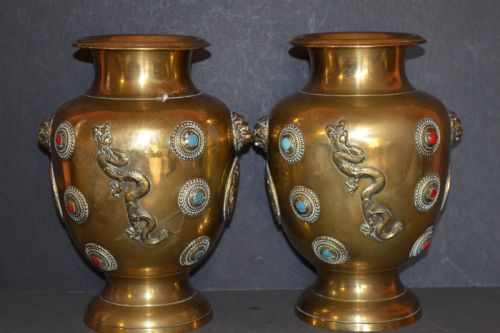
A pair of substantial bronze vases slips quietly among the delicate necklaces, proving that coral and metalwork share equally solid historical roots.
Henry Jacob Burch
The Antique Coral Beads Glossary
- Graduated
- A bead arrangement where pieces decrease in size progressively from the centre to the ends. This layout requires careful matching of tone and scale.
- Seed pearl
- A very small, naturally occurring pearl often used alongside coral in Georgian and Victorian jewellery. These tiny elements accent clasps and pendants.
- Gilt metal
- A base metal treated with a thin layer of gold to give the appearance of solid precious metal. It appears frequently in period clasps and mounts.
- Cameo
- A gemstone or shell carved in relief to portray a figure or floral motif. In coral jewellery, these carvings often form the central decorative element of a bracelet or clasp.
Antique Coral Beads: Frequently Asked Questions
How do I wear antique coral necklaces?
Long strands allow for versatile styling, including doubling the length or wearing them loose as single continuous ropes against simple fabrics.
Shorter graduated necklaces sit closer to the collarbone, pairing well with period pendants or Victorian gold earrings.
Are these coral beads dyed?
Many items feature natural un-dyed red or pink coral, preserving the organic variation found in Mediterranean and other marine environments.
Examining the tone and surface helps determine whether the material retains its original colouration without artificial enhancement.
What metal is used in the clasps?
Clasps and mounts vary widely across different eras, utilising nine-carat gold, silver, gilt metal, and occasionally fourteen-carat gold.
These fastenings frequently incorporate secondary materials like seed pearls, enamel, or turquoise to match the style of the period.
How do I date antique coral jewellery?
Dating relies on stylistic clues, mounting techniques, and the structure of the clasp, ranging from Georgian cross pendants to Victorian twin bangles.
Periods such as the Regency and early twentieth century each brought distinct preferences for bead sizing and stringing materials like silk thread.