
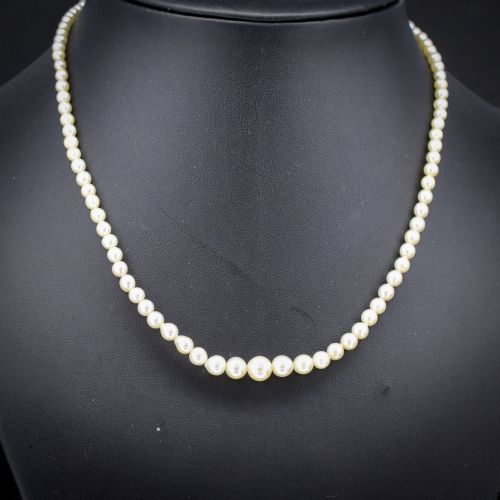
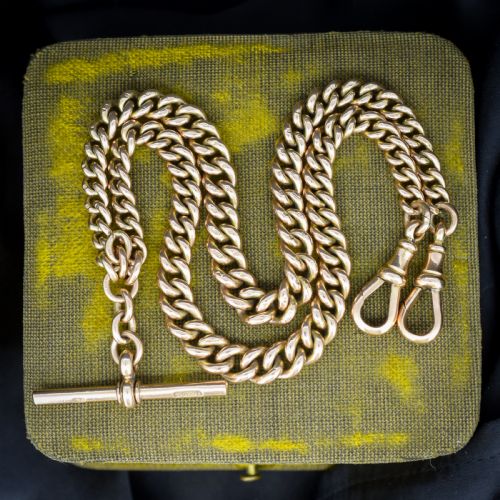
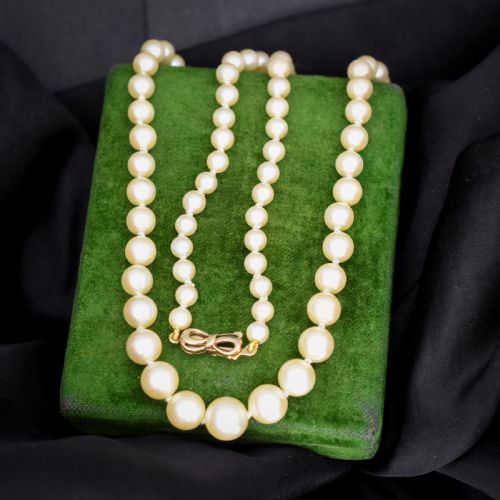
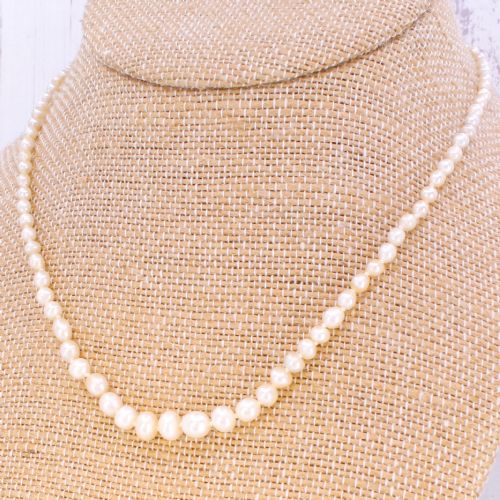


Vintage Graduated Necklace
A vintage graduated necklace offers a steady taper of beads or links from centre to clasp, bringing period character to the neckline.
Vintage Graduated Necklace
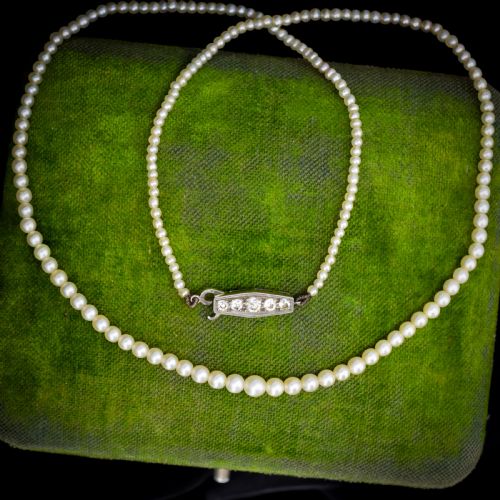
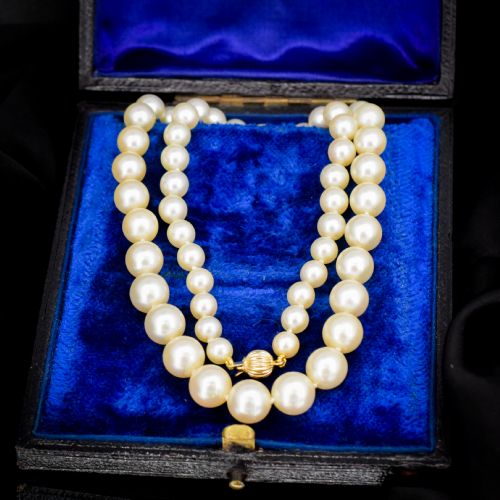
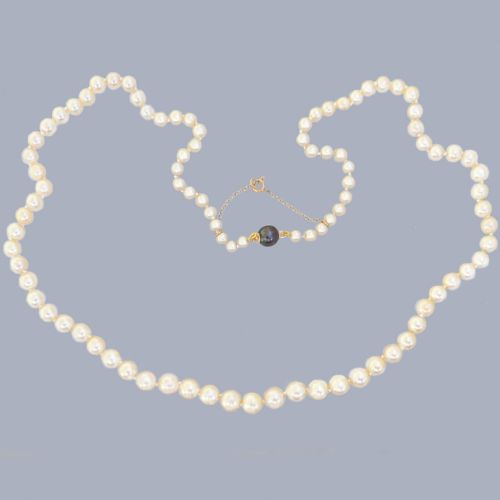
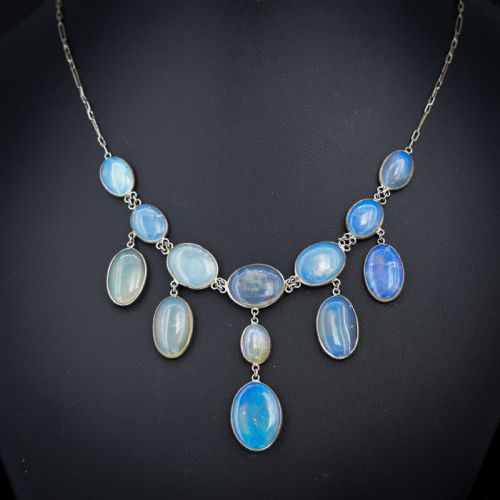
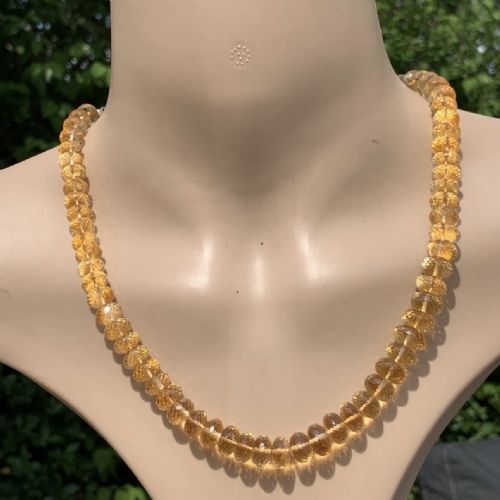
A vintage graduated necklace displays a systematic reduction in size from the largest central elements to the smallest components near the fastening. This category spans multiple eras, with mid-century cultured pearl strands and 1930s amber beads appearing alongside Edwardian gemstone festoons and Victorian coral pieces.
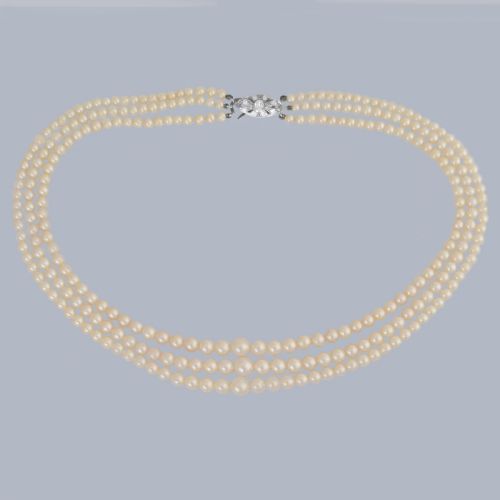
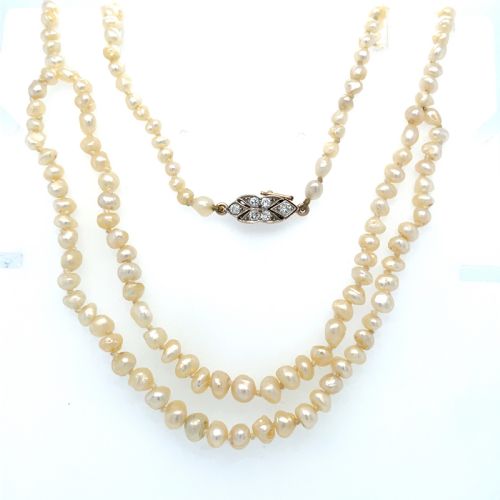
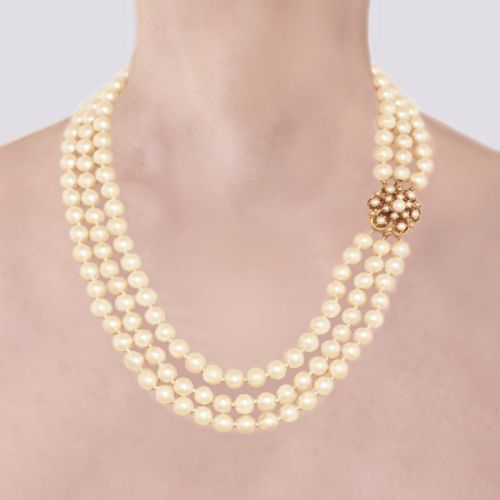
Buyers will encounter single, double, and triple strands of pearls fitted with diamond or gold clasps, alongside chunky bakelite beads and solid 9ct gold watch chains. Origins range from traditional British workshop pieces to Italian gold fringe designs and imported cultured pearl strands.
Materials and construction
Pearls and beads are traditionally strung on silk thread, frequently featuring individual knotting between each element to protect against loss and maintain even spacing along the taper. Metal components utilise 9ct and 18ct gold or silver, housing old-cut diamonds, sapphires, rubies, and citrines within clasps and pendant drops.
Organic materials such as amber and coral undergo hand-carving and polishing to achieve the smooth, graduated proportions seen across 1930s and Victorian examples. Watch chain links and metal fringes rely on interlocking metalwork and secure barrel or bolt-ring fastenings.
Some amber necklaces carry the quiet warmth of millions of years of fossilised tree resin right against your collar.
Distinctions in standard
The uniformity and lustre of the pearls or beads dictate the primary tier of quality, with saltwater natural pearls and un-dyed coral commanding greater regard than lesser cultured varieties. The complexity and gemstone content of the clasp - such as platinum or white gold set with old-cut diamonds - elevates the standing of a piece.
Structural integrity matters significantly, visible in the condition of the silk thread, the precision of the graduation taper, and the original pairing of the clasp to the strand. Pieces retaining fitted presentation boxes or documented gemstone reports represent higher tiers of preservation.
The Vintage Graduated Necklace Glossary
- Graduation
- The deliberate reduction in size of beads, pearls, or links from the centre front towards the fastening at the back. This tapering creates visual balance and sits comfortably against the collarbone.
- Festoon
- A necklace style featuring draped chains, swags of beads, or suspended drops that create a garland effect across the chest. Edwardian versions frequently incorporate delicate gemstone settings.
- Rivière
- A necklace composed of a continuous line of cut gemstones, usually matched in graduation and individually bezel-set in silver or gold. Georgian and Victorian examples are characteristic of this form.
- Albert chain
- A heavy watch chain originally designed to secure a pocket watch through a waistcoat buttonhole, now frequently worn as a short necklace. These typically feature graduated curb links in solid gold.
- Cultured pearl
- An oyster-produced pearl formed by the introduction of an irritant by human intervention, distinct from natural saltwater formations. They form the core of mid-century multi-strand necklaces.
Vintage Graduated Necklace: Frequently Asked Questions
How do I care for amber beads?
Amber is a relatively soft organic resin that requires gentle cleaning with a soft, damp cloth without chemical detergents. Store amber pieces away from direct sunlight and extreme heat to prevent surface crazing.
Keep amber separate from harder gemstone jewellery in your collection to avoid scratching the polished exterior of the graduated beads.
Are these pearls natural or cultured?
The inventory includes both natural saltwater pearls and cultured varieties originating primarily from the mid-twentieth century. Natural pearls form organically without human intervention, whilst cultured pearls rely on a nucleus inserted into the oyster.
Examination under magnification or professional laboratory testing helps determine the specific origin and formation method of the pearls.
How are multi-strand necklaces fastened?
Multi-strand necklaces utilise specialised box clasps, tongue fasteners, or decorative gold clusters designed to distribute tension evenly across all threads. These clasps often incorporate precious stones such as diamonds, sapphires, or garnets as a decorative feature.
Secure locking mechanisms ensure the multiple strands remain aligned and do not twist during wear.
What length is typical for these pieces?
Lengths vary from sixteen inches for close-fitting Edwardian and 1930s pearl strands up to thirty-three inches for long amber or coral bead necklaces. Shorter lengths sit neatly at the collarbone, whilst longer versions allow for doubling or loose draping.
Checking the stated measurement helps determine whether the necklace sits as a choker or drapes lower down the chest.