





Antique Copper Log Container
An antique copper log container brings warmth and industrial texture to a hearth, combining robust metalwork with practical fireside storage.
Antique Copper Log Container
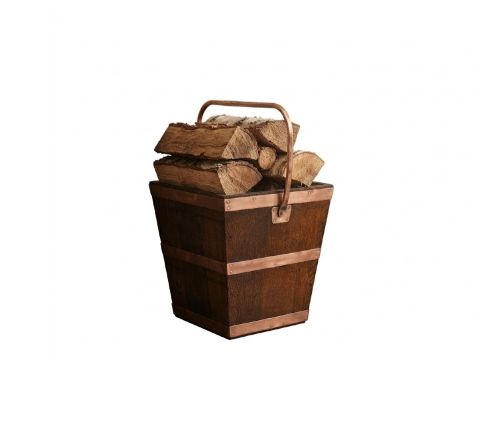
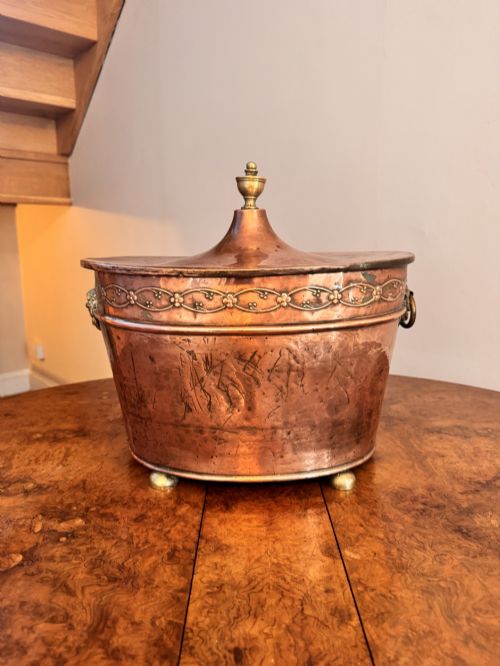
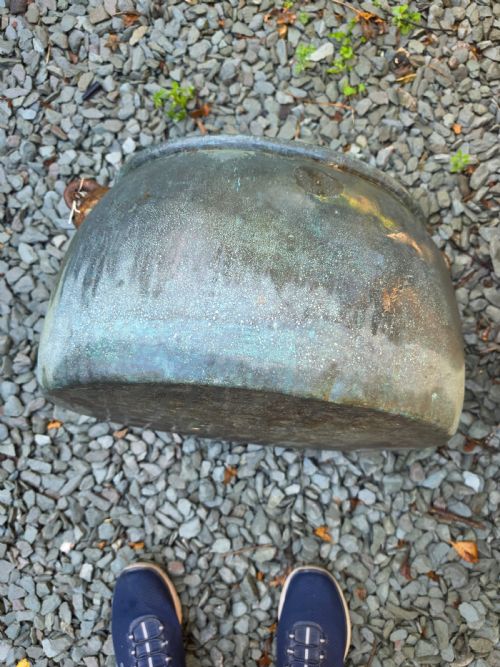
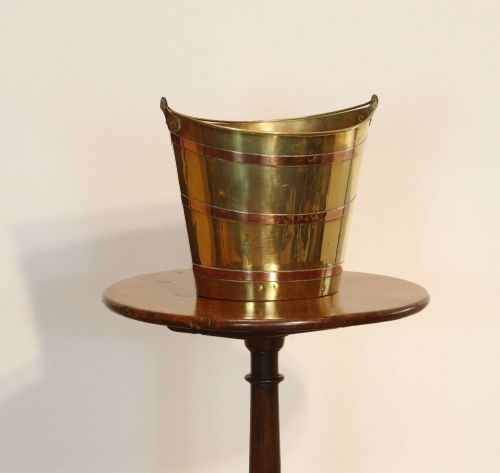
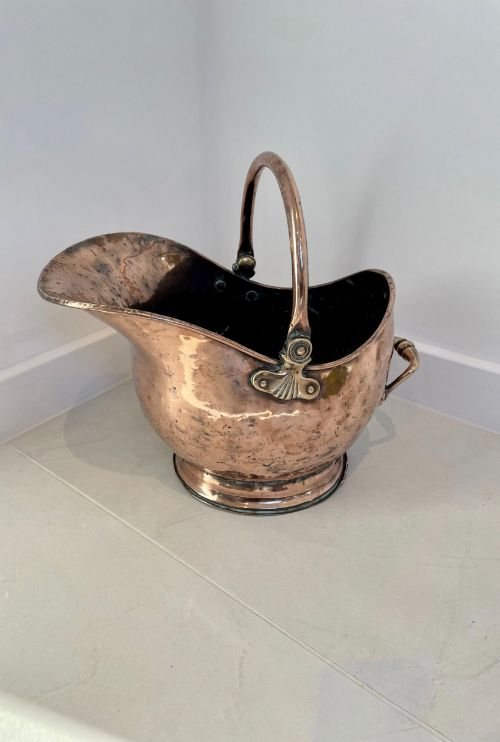
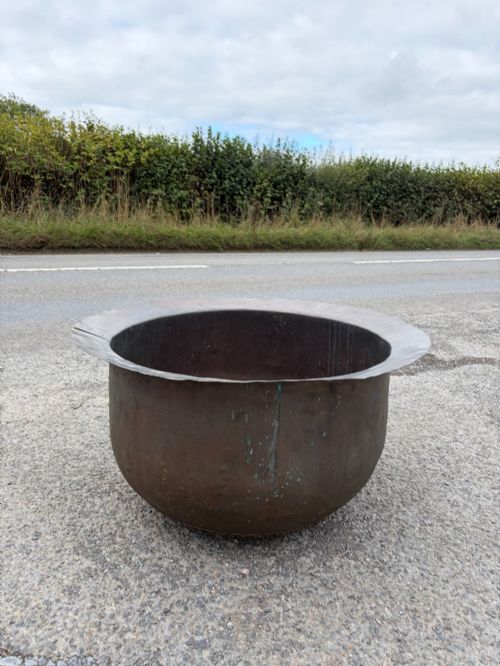
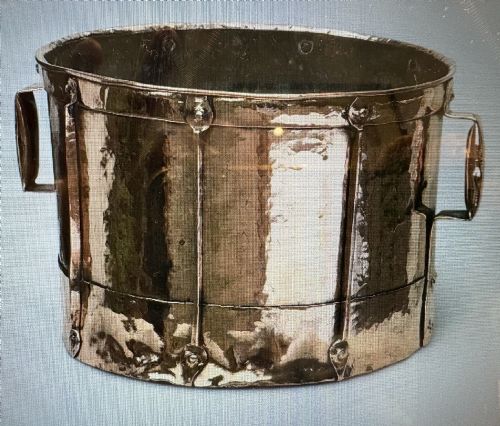
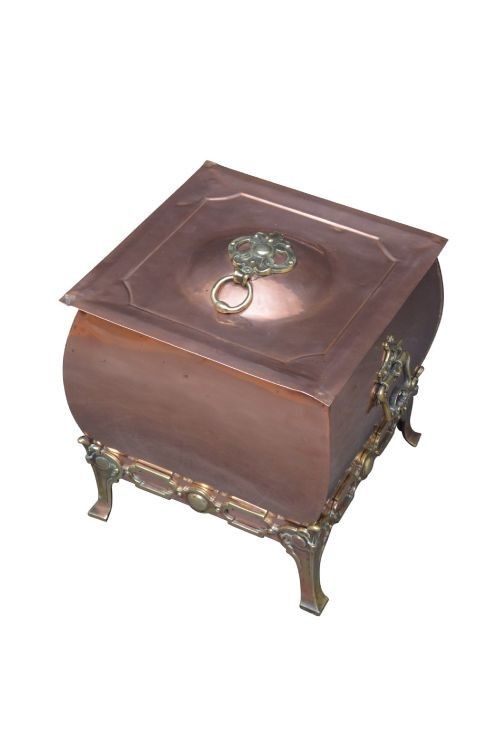
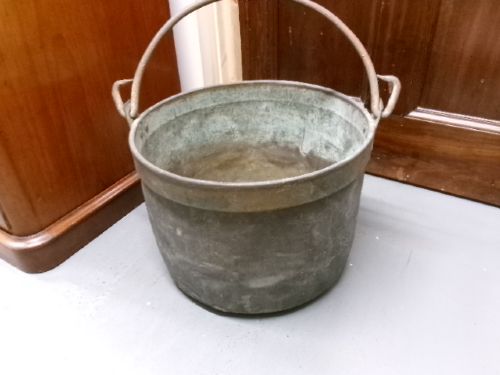
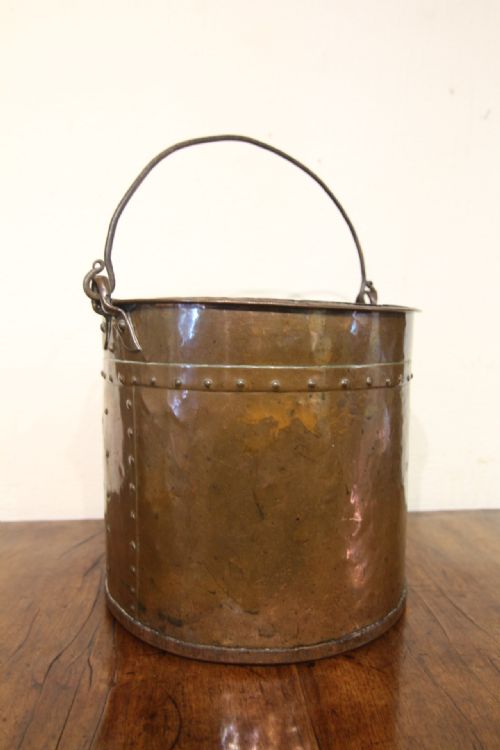
An antique copper log container serves as a functional receptacle for hearth fuel while adding metallic warmth to a room. Buyers searching for an antique copper log container will encounter various forms, including riveted buckets, lidded bins, swing-handled cauldrons, and helmet-shaped scuttles.
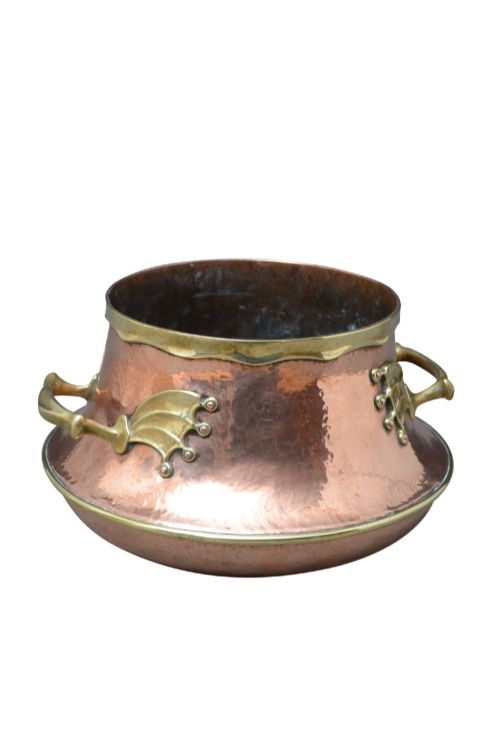
The pieces available span the nineteenth century into the early twentieth century, incorporating Victorian, Arts and Crafts, and Art Nouveau stylistic influences. Many examples double as planters or jardinières, reflecting domestic repurposing over time.
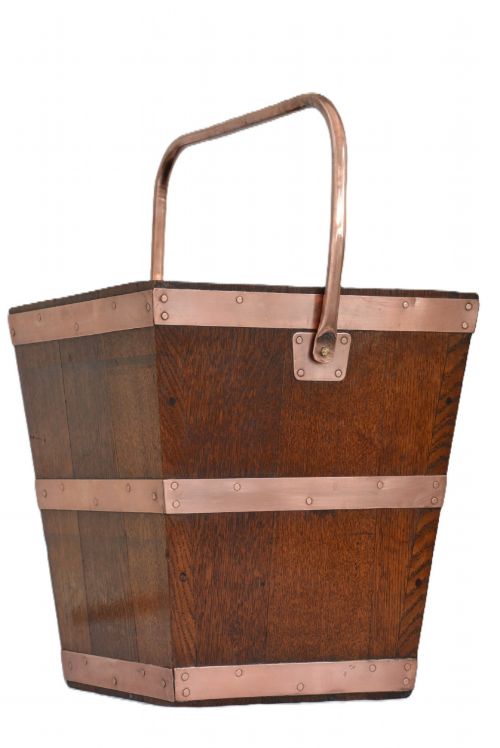
Origins range from English domestic workshops to French provincial makers and Scandinavian water barrels adapted for fireside use. Buyers frequently find pieces paired with brass bands, iron frames, or wrought iron handles.
Materials and construction methods
Construction relies heavily on sheet copper shaped into cylindrical, oval, or helmet forms, often joined with visible hand-beaten rivets that impart structural strength and visual character. Workshops combined copper bodies with contrasting brass feet, rims, and swing handles, alongside robust iron frames and wrought iron mountings.
Surface treatments range from plain polished finishes to embossed decoration and hand-hammered panels associated with the Arts and Crafts movement. Wood components, such as oak staves and interior linings, appear in specific bucket and peat bin variants.
Antique Copper Log Container Retail Price Guide 2026
Typical asking prices for copper log container among the pieces listed under this phrase on Sellingantiques today, from the lower quarter to the upper quarter. They describe what is for sale here now, not the wider market.
Listings feature items spanning the nineteenth century through to the Edwardian era, incorporating materials like copper, brass, wrought iron, and oak.
Assessing quality and distinction
Quality rests upon the weight of the metal gauge, the integrity of the riveted seams, and the retention of original mounting hardware such as wrought iron handles and brass feet. Substantial wall thickness prevents denting and ensures the container bears the heavy weight of logs without distortion.
Design articulation separates standard utilitarian vessels from finer decorative works, particularly where embossed detailing, integrated iron frames, or refined Art Nouveau and Arts and Crafts styling show deliberate artistic intent. The balance between the copper body and contrasting brass or iron accents dictates the visual success of the piece.
The Antique Copper Log Container Glossary
- Jardiniere
- An ornamental pot or stand for holding plants or flowers. These vessels often share identical forms with fireside log holders.
- Coal Scuttle
- A metal bucket or box designed for carrying coal to a fireplace. Many antique examples feature helmet shapes or hinged lids.
- Cauldron
- A large metal pot with a swing handle, traditionally used over an open fire. In domestic interiors, they were adapted to store fuel.
- Riveted
- Joined together using metal bolts hammered flat at the ends. This technique provides both structural rigidity and industrial decoration.
- Arts and Crafts
- A design movement valuing handcraftsmanship and simple forms. Objects from this tradition display visible hammering and honest construction.
Antique Copper Log Container: Frequently Asked Questions
How do I clean an antique copper log container?
Dust the surface regularly with a soft cloth to prevent grime buildup. Avoid harsh chemical cleaners that strip the natural aged patina.
Apply a mild metal cleaner only if you prefer a brighter shine, though most collectors value the darker oxidized tones accumulated over decades.
What is the difference between a log bin and a coal scuttle?
Log bins are typically wider, straighter cylinders designed to hold bulky pieces of firewood. They often feature open tops or simple lidded structures.
Coal scuttles are shaped for scooping and pouring smaller fuel, frequently utilising a helmet profile with a tilted opening and dual handles for tipping.
How do I date an antique copper container?
Examine the method of construction, noting whether seams are joined by hand-hammered rivets or machine welding. Hand-riveted joints and wrought iron mounts generally point to nineteenth-century production.
Stylistic cues such as embossed floral motifs indicate Victorian taste, while clean geometric hammering points toward the later Arts and Crafts period.