


Antique Copper Fire Tub
These heavy metal vessels, known as an antique copper fire tub, bring practical warmth and character to a hearth.
Antique Copper Fire Tub
When you search for an antique copper fire tub, you are looking at robust metal vessels traditionally used for holding fuel and logs by the fireplace. Most examples you will encounter on this page date from the nineteenth century, reflecting both utilitarian origins and decorative Victorian domestic tastes.
The forms vary from simple riveted boilers and ferrats to large log bins, planters, and buckets with brass fittings. Many pieces bridge the gap between indoor hearth storage and garden use, often doubling as planters or decorative bowls on stands.
Origins span Georgian and Victorian periods, alongside Arts and Crafts designs that emphasise hand-worked metal surfaces. You will find pieces shaped for specific domestic duties, retaining the marks of active service in period homes.
Materials and construction
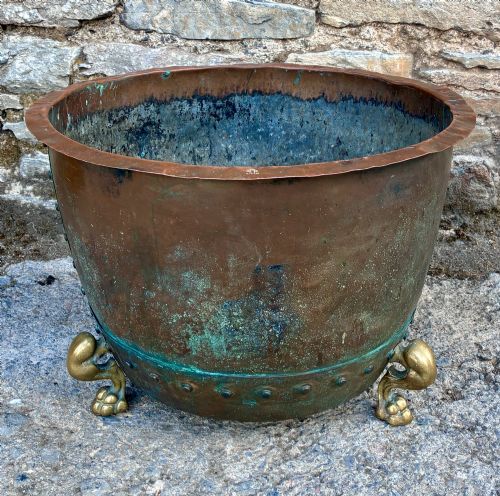
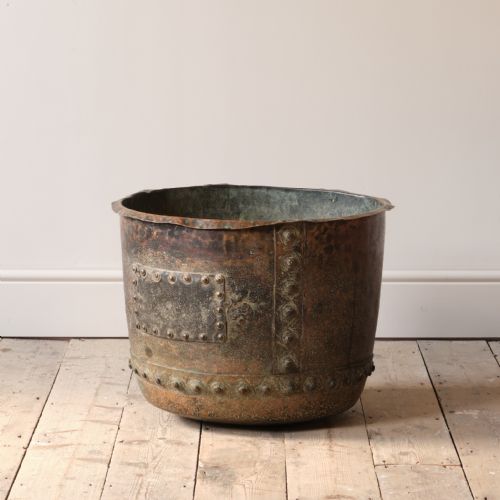
Construction relies heavily on sheet copper shaped into sturdy bodies, frequently reinforced with iron or wrought iron handles and fittings. Makers joined the metal seams using visible rivets, ensuring the vessels could hold heavy loads of wood and coal without failing.
Surface details often include cast brass elements, such as lion paw feet or swing handles, adding contrast to the warm reddish tones of the beaten copper. Over decades, the metal develops a natural verdigris and patination from exposure to ash, moisture, and air.
Object forms recorded on this page include log bins, planters, ferrats, and bowls on stands, often showing riveted construction.
Judging quality and character
Quality in these metal vessels rests on the weight of the copper sheet and the integrity of the riveted joints. Heavier gauge metal resists denting and holds its structural form better under the weight of logs.
The visual appeal depends heavily on the depth of the patination and whether original brass mounts or iron handles remain intact. Pieces with hand-hammered surfaces and clean, uncompromised seams stand apart from heavily restored or overly polished examples.
The Antique Copper Fire Tub Glossary
- Ferrat
- A traditional metal vessel used for carrying or storing fuel, often associated with French country or rustic domestic use. These pieces typically feature sturdy swing handles for easy transport.
- Riveted
- A method of fastening overlapping sheets of metal by inserting a metal pin and hammering the end flat. This technique provides both structural strength and a distinct industrial aesthetic.
- Verdigris
- A green patina that forms naturally on copper and brass surfaces through atmospheric oxidation over long periods. Collectors often prize this weathering for the visual depth it brings to the metal.
- Log bin
- A large container designed specifically to hold firewood near an open hearth. They appear in various cylindrical and oval forms across the nineteenth century.
- Patina
- The surface sheen and colour acquired by copper through age, handling, and use. It serves as an indicator of genuine age and history.
Antique Copper Fire Tub: Frequently Asked Questions
What were copper fire tubs used for?
These vessels served primarily to store and transport coal, peat, or logs beside domestic hearths. Their robust construction allowed them to handle heavy fuel loads safely.
Over time, many of these containers transitioned from utilitarian duties to decorative roles, often repurposed as plant holders or umbrella stands in period hallways.
How do I clean an antique copper tub?
Most collectors prefer to leave the natural patination and verdigris undisturbed, as it reflects the age and history of the piece. Washing with warm water and mild soap is usually sufficient for routine care.
Avoid harsh chemical metal polishes that strip away the surface character and historical darkening which gives nineteenth-century copper its visual depth.
Can I use an antique copper tub outside?
Many of these sturdy metal vessels function well outdoors as garden planters or patio log holders. Copper and iron withstand exposure to the elements remarkably well.
If placed outside, the metal will continue to weather, gradually developing further verdigris and blending naturally into garden surroundings.
How can I tell the period of a copper tub?
Dating relies on observing construction methods, such as the style of the rivets, the weight of the metal, and any associated brass or iron mounts. Georgian and early nineteenth-century pieces often display hand-beaten surfaces and heavy iron handles.
Later Victorian and Arts and Crafts examples frequently introduce more refined decorative stamping or specific stylistic motifs like those seen in early twentieth-century designs.