




Antique Copper Box
Solid metal and hinged lids define an antique copper box, prized for holding small treasures or standing by the hearth.
Antique Copper Box
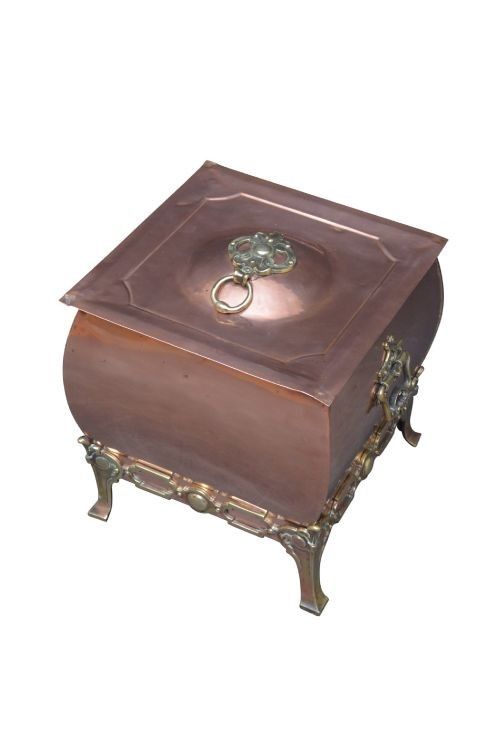
An antique copper box encompasses domestic items ranging from small personal trinket holders to large fireside log bins. The selection spans compact receptacles for snuff and tobacco alongside substantial vessels shaped for coal and wood.
Examples frequently emerge from the Victorian, Edwardian, and Arts and Crafts periods, reflecting changing household demands across the nineteenth and early twentieth centuries. Makers applied the metal to functional objects, creating durable containers that often incorporated brass fittings or iron handles.
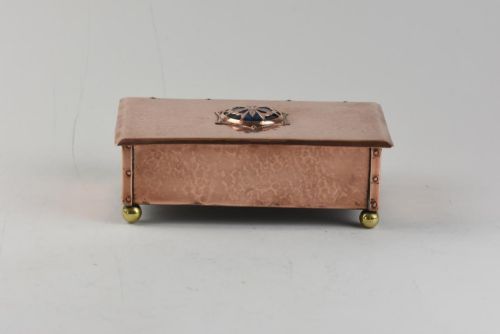
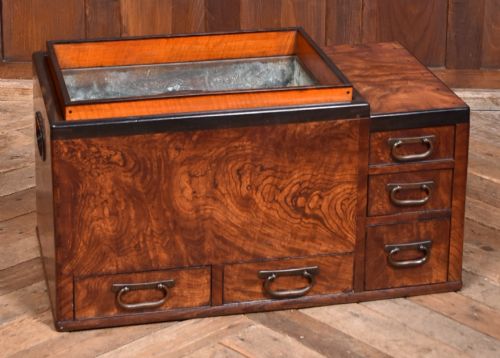
The material also appears paired with enamel panels or mounted on wooden frames, shifting the form from utilitarian storage to decorative tabletop accessories. Buyers encounter both plain sheet metal constructions and heavily ornamented surfaces bearing hand-beaten decoration.
How they were made
Sheet copper provided the primary body for these containers, shaped through hammering, folding, or joining at seams with rivets and solder. Artisans worked the malleable metal while cold or heated, utilising simple hand tools to achieve rigid forms.
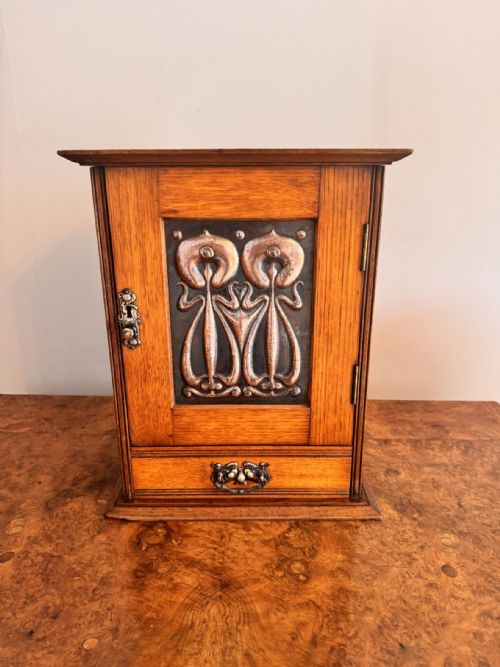
Surface ornamentation relied on repoussé and chasing techniques, where metalworkers pushed and punched the copper from both sides to raise relief patterns. Workshops often combined copper with brass mounts, iron hinges, or oak cores to strengthen the structure.
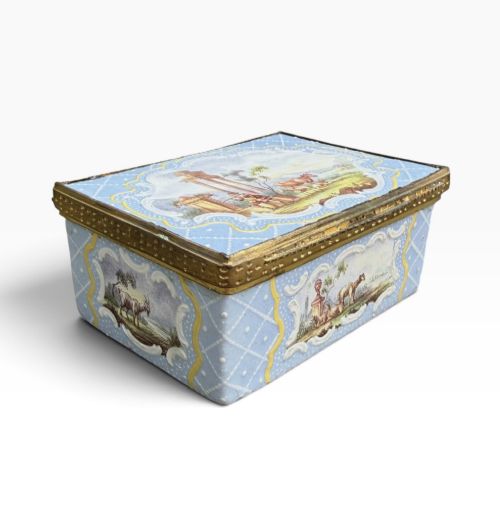
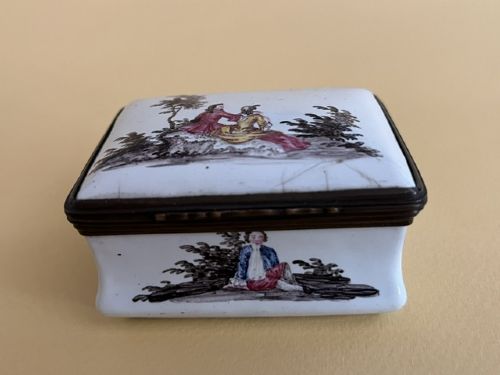
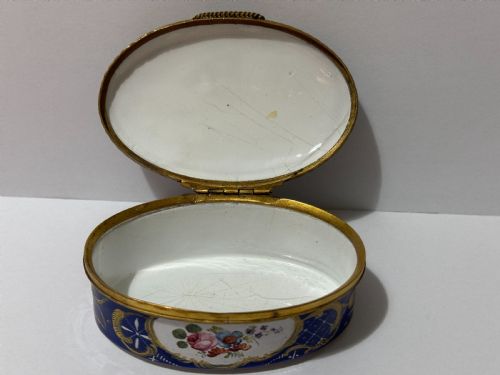
Enamel work frequently supplemented the metal, fusing coloured glass powder onto small copper plaques designed for snuff and patch boxes. Craftsmen also applied surface engraving to record dates, names, or pictorial scenes directly into the metal.
A beetle-shaped enamel snuff box waits patiently to startle anyone reaching for a pinch.
What varies in quality
The depth and definition of hand-worked repoussé decoration separate standard production items from superior workshop pieces. Crisp lines and purposeful hammering indicate a skilled hand, whereas shallow or blurred surface patterns suggest mass production.
Structural integrity depends upon the gauge of the metal and the original method of assembly. Heavier sheet metal resists denting and keeps hinges aligned, whereas thin foils warp easily under regular handling.
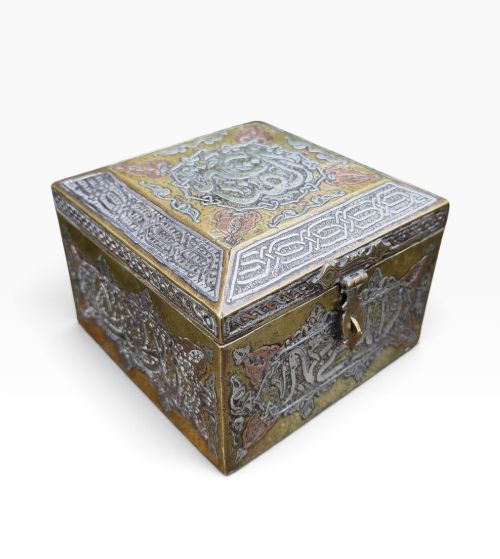
Tahan of Paris
The Antique Copper Box Glossary
- Repoussé
- A metalworking technique where a design is hammered into relief from the reverse side of the sheet. This method creates tactile, three-dimensional surface patterns on copper vessels.
- Enamel
- A glassy substance fused to metal through high-temperature firing. It provides smooth, colourful panels on small boxes and trinket holders.
- Purdonium
- A specific type of household coal box featuring a downward-tilting front door and an internal metal liner. These items served coal fires in Victorian and Edwardian parlours.
- Cabochon
- A gemstone or piece of glass shaped and polished into a convex form rather than faceted. These elements frequently appear as central ornaments on Arts and Crafts metalwork.
- Bonbonniere
- A small, decorative container originally intended for holding sweets or confections. Eighteenth-century examples often feature hinged enamel lids.
Antique Copper Box: Frequently Asked Questions
How are copper boxes cleaned?
Dust accumulates in the recessed details of hand-beaten metal over decades of display. Gentle brushing with a soft-bristled tool removes dry particles without disturbing the underlying surface.
Harsh chemical polishes strip away aged patination that collectors value. Most pieces require only an occasional wipe with a dry microfibre cloth to maintain their stability.
Were these used for coal?
Larger copper boxes served as fireside receptacles for fuel in nineteenth-century homes. These vessels stored coal or logs near the hearth for convenient refuelling.
Many incorporated internal metal liners and sturdy drop-down doors to handle heavy fuel loads safely. Their decorative metal surfaces allowed utility items to blend with formal parlour furnishings.
How do I date Arts and Crafts pieces?
Arts and Crafts metalwork relies on visible hand-hammered surfaces and stylised natural motifs such as leaves or abstract insects. These design characteristics emerged strongly around eighteen-nineteen-hundred.
Makers working in this tradition emphasised honest construction methods, often exposing riveted joints and hinge mechanisms. Comparing the decorative motifs against documented period examples helps confirm the timeline.