


Antique Cookware
Antique cookware brings heavy copper saucepans, brass preserving pans and iron kettles straight from old kitchens into modern homes for daily use or display.
Antique Cookware
Antique cookware encompasses heavy kitchen vessels made to handle daily food preparation across centuries of domestic life. When you browse for antique cookware, you encounter practical items built for utility, ranging from robust saucepans to specialised baking equipment.
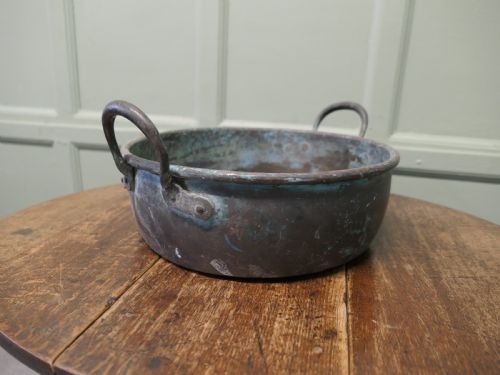
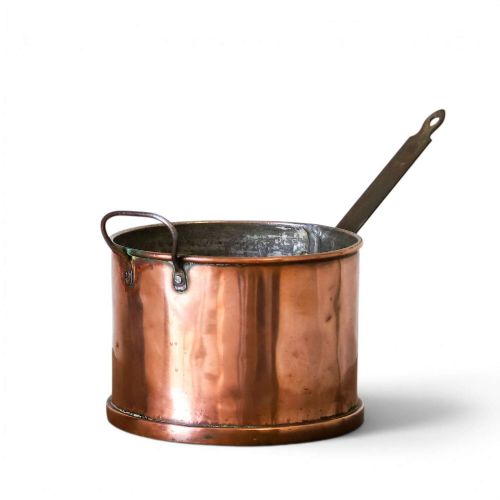
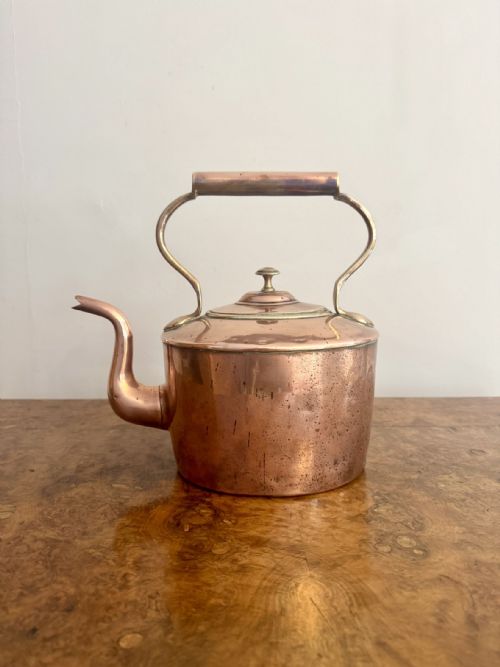
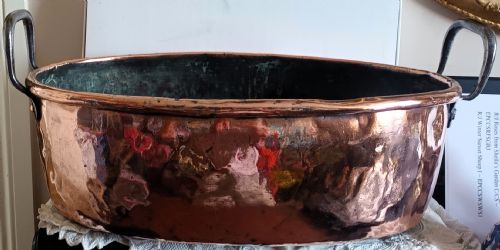
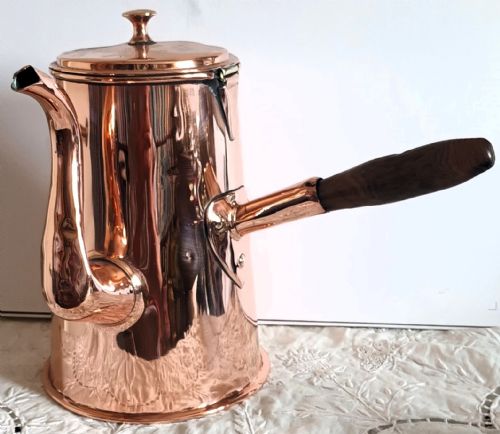
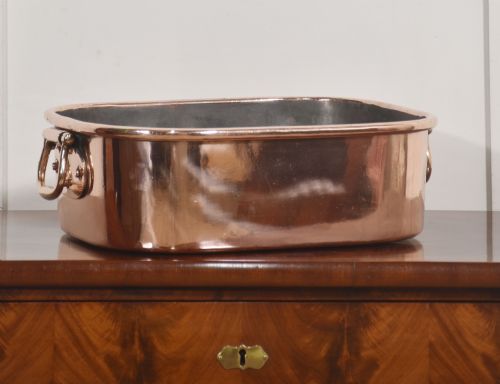
The pieces appearing most frequently on this page date from the Georgian and Victorian eras, alongside 19th-century French items. You will find preserves pans, kettles, jelly moulds and coffee pots designed for heavy hearth or stove use.
These kitchen implements reflect the transition from open hearth cooking to enclosed ranges. Their varied forms show how domestic spaces evolved while retaining a reliance on durable metal kitchenware.
How they were made
Makers shaped these pots and pans using sheet copper, cast iron, brass and bronze, often hammering the metal by hand to achieve a heavy gauge. Hand-beaten surfaces and visible joins reveal the manual labour involved in forming vessels capable of withstanding intense fire.
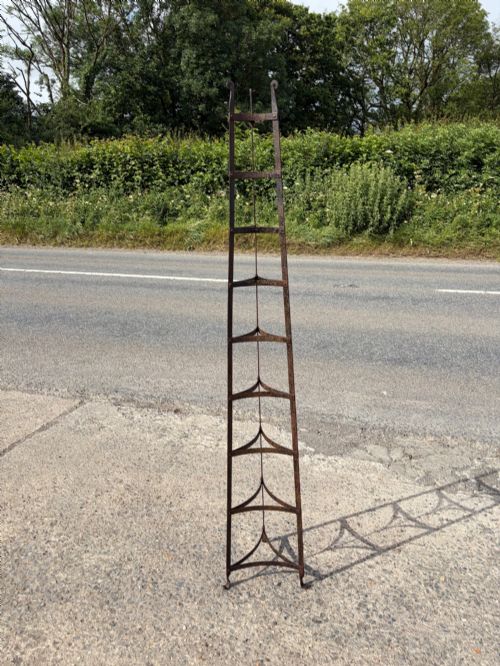
Many copper and brass items feature tin linings inside to prevent food reacting with the metal during cooking. Wrought iron stands and pot racks complement these metal vessels, providing sturdy storage for heavy kitchen items.
Antique Cookware Retail Price Guide 2026
Typical asking prices for cookware among the pieces listed under this phrase on Sellingantiques today, from the lower quarter to the upper quarter. They describe what is for sale here now, not the wider market.
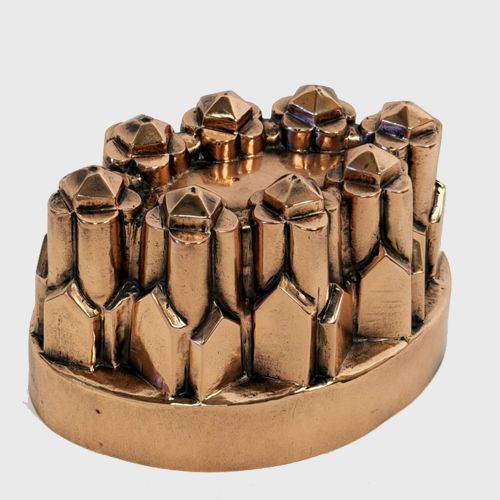
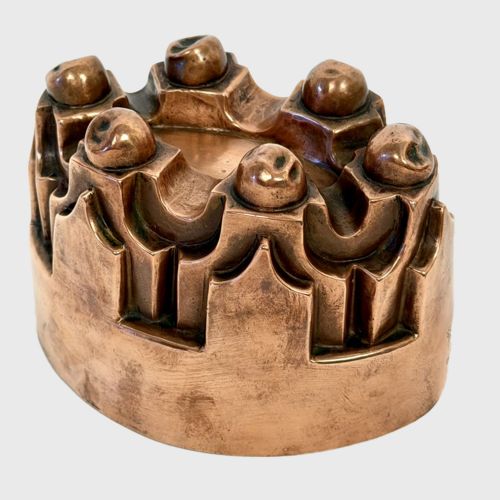
Castle-topped jelly moulds let Victorian cooks turn out desserts resembling miniature fortresses.
What varies in quality
Quality rests primarily on the thickness of the metal gauge and the integrity of the original construction. Heavy-gauge copper vessels retain structural stability and heat distribution far better than thinner stamped alternatives.
The refinement of hand-beating, the symmetry of handles and the survival of makers' marks or tin linings elevate certain pieces above standard utilitarian wares. Matching sets and unusual specialised forms also command greater interest.
William Soutter & Sons·Hodges & Sons
The Antique Cookware Glossary
- Tin lining
- A protective interior coating applied to copper and brass pans to stop metallic taste or toxicity in food. This layer required periodic renewal through the life of the vessel.
- Preserving pan
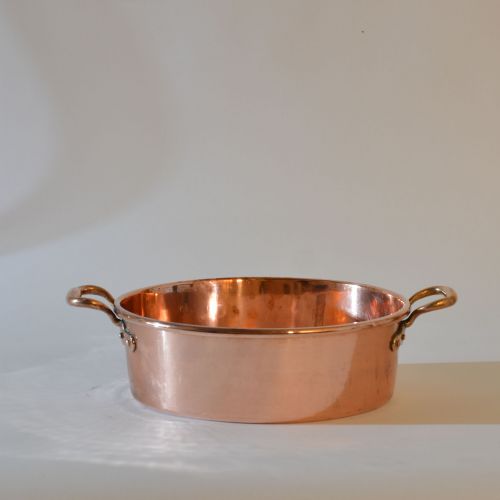
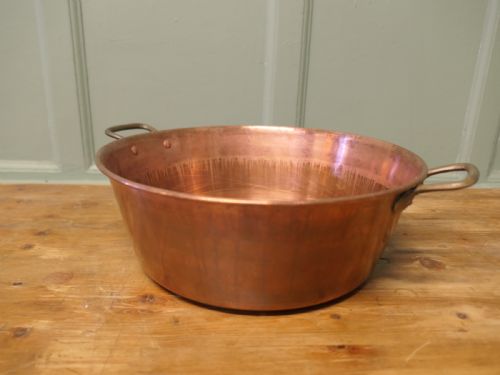
- A wide, shallow sloping pan designed for boiling fruit and sugar jams. These vessels maximise evaporation while allowing easy stirring.
- Daubiere
- A specialised deep cooking pot with a tight lid, traditionally used for braising meats slowly. French country examples often feature heavy brass or copper construction.
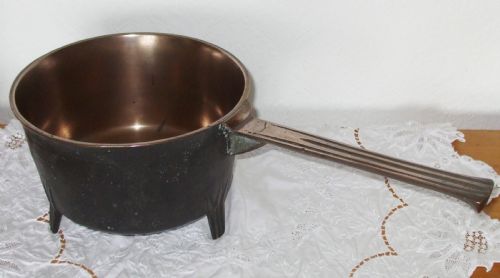
- Posnet
- An early three-legged metal cooking pot with a single handle, intended for standing directly in hot embers. Bronze and iron versions date back to earlier centuries.
- Hand-beaten
- A manufacturing method where metal sheets are shaped using a hammer, leaving subtle facets across the surface. This technique hardens the metal and increases its durability.
Antique Cookware: Frequently Asked Questions
Can I still cook with antique copper pans?
Many antique copper pans remain structurally sound enough for modern hobs if the base sits flat. You must ensure the interior tin lining is intact before preparing food.
Thin or unlined pans work best for display rather than active cooking. Gentle cleaning preserves the metal without stripping its historical character.
How do I clean old copper cookware?
A mild paste of salt and vinegar or lemon juice removes tarnish from copper without scratching the surface. Avoid harsh abrasive pads that wear away the hand-beaten texture.
Polish the exterior lightly while leaving the interior tin lining alone. Over-polishing destroys the natural patina accumulated over centuries.
What is a jelly mould used for?
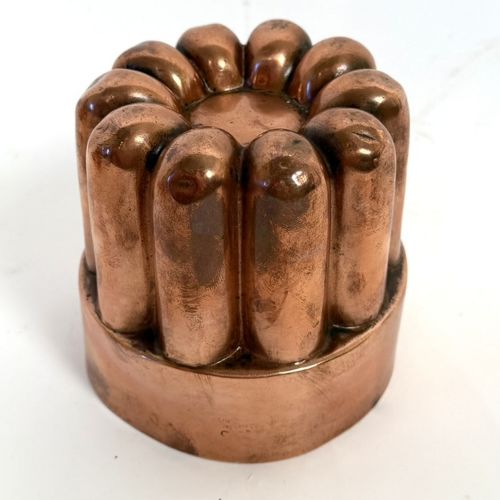
Victorian kitchenalia includes copper jelly moulds designed to shape cold desserts and aspics for formal dining tables. The intricate interior designs transferred patterns onto the set jelly.
Displaying these moulds on walls or shelves was common in 19th-century country kitchens. Miniature versions served decorative purposes or smaller household portions.
How do I date a copper preserving pan?
Georgian and Victorian pans generally show hand-beaten marks, dovetailed or riveted handles, and heavier metal gauges than later factory-made items. Makers' stamps near the rim or handle also help pinpoint the origin.
Earlier pieces often feature iron handles attached with heavy copper rivets. Later 19th-century items shifted towards brass handles and standardised sizes.