


Antique Cookie Barrel
An antique cookie barrel is a handsome table container for dry sweets, combining practical Victorian storage with ornate metalwork and glass.
Antique Cookie Barrel
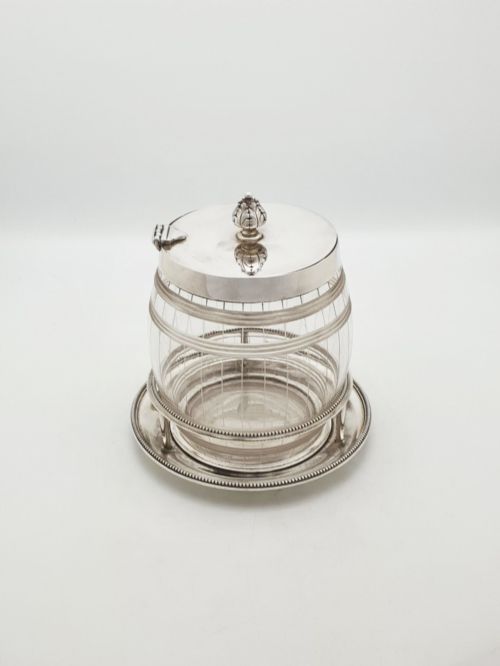
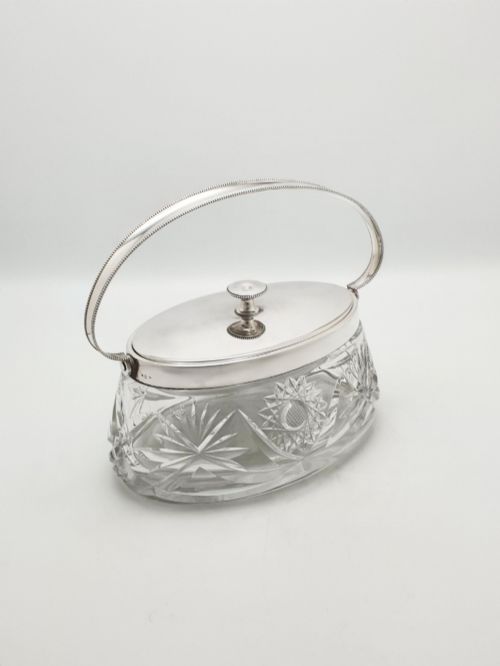
An antique cookie barrel, frequently termed a biscuit barrel or biscuit box in historical listings, is a covered storage vessel designed for the dining table or drawing room. The pieces recorded here span the Victorian, Edwardian, and George V periods, extending from the mid-nineteenth century into the early twentieth century.
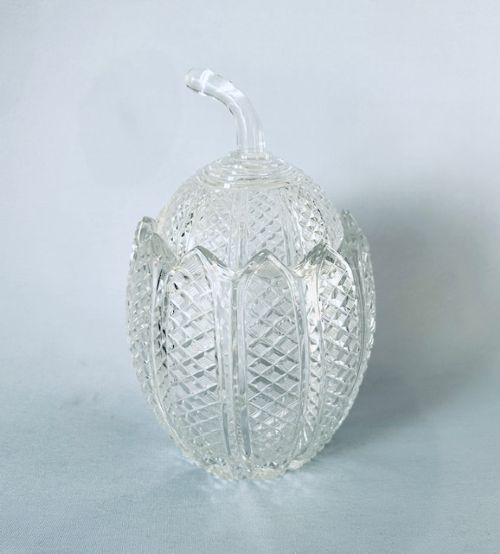
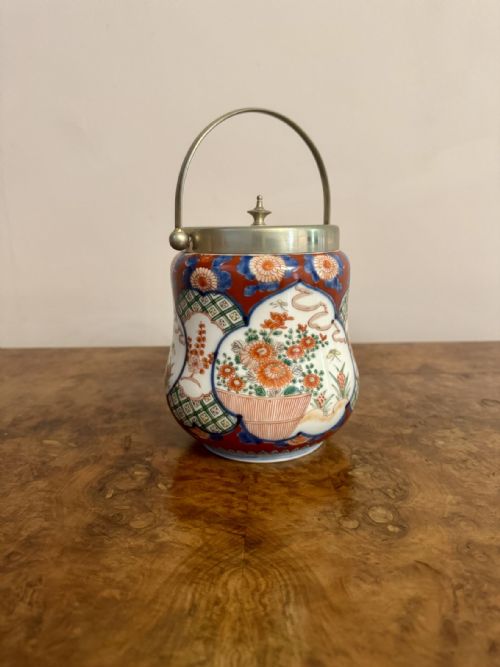
Makers utilised various object types including cylindrical jars, novelty containers shaped like melons, drums, or weights, and lidded boxes fitted with stands and handles. English craftsmanship predominates, with ceramic bodies, glass vessels, and wooden containers appearing alongside continental pieces in Jugendstil and Japanese Imari styles.
Materials and Technique
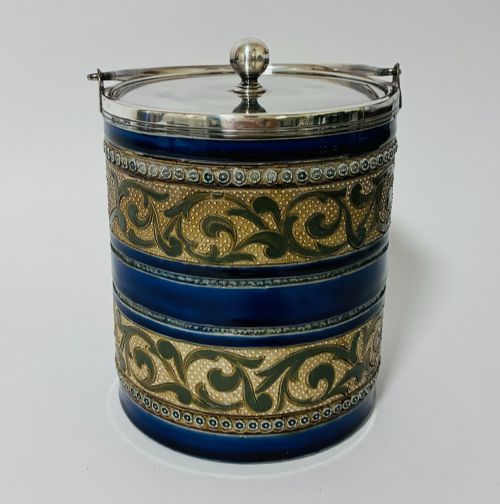
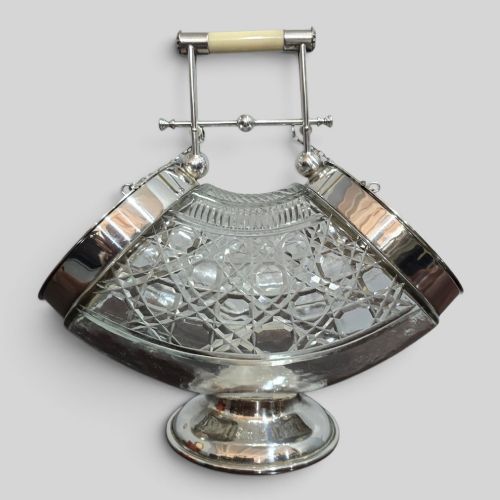
Manufacturers combined ceramic bodies or heavy cut glass with silver-plated mounts, hinged lids, and swing handles. Stoneware, Jasperware, and earthenware form the pottery vessels, often decorated with flow blue, enamel painting, or relief designs.
Glass production encompasses hobnail cut crystal, cranberry glass, and enamelled vessels, whilst oak provides the material for novelty wooden barrel forms. Metalwork components involve cast silver-plated mounts, pierced galleries, and solid sterling silver fittings.
The documented periods span from the 1860s through to the 1920s, showing a transition from ornate Victorian silver work to lighter Edwardian glass designs.
Design and Execution
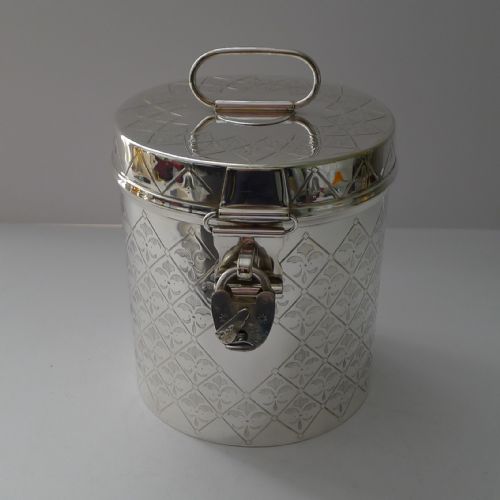
The distinction between standard examples and exceptional pieces rests upon the crispness of the glass cutting, the depth of ceramic relief work, and the complexity of the silver-plated mounts. Elaborate novelty forms, such as locking boxes with heraldic finials or automated mechanisms, demonstrate superior manufacturing ambition.
Recognised makers and potteries command attention through refined proportions, weightier metal plating, and high-grade materials like three-colour Jasperware or rich cranberry glass. The integration between the ceramic or glass body and the metal hardware dictates the overall success of the piece.
Mappin and Webb·Elkington·WMF·Robert and Belk·Walker and Hall·Crown Devon·Carlton Ware·Doulton Lambeth·Wedgwood
The Antique Cookie Barrel Glossary
- Jasperware
- A type of fine stoneware developed by Wedgwood, characterised by a matte unglazed surface and contrasting raised white ceramic reliefs.
- Cranberry glass
- A rich red-pink transparent glass coloured with gold chloride, widely utilised for decorative Victorian tableware and biscuit jars.
- Silver plate
- A base metal, typically copper or nickel silver, coated with a thin layer of pure silver through electroplating or older Sheffield plating techniques.
- Flow blue
- A cobalt blue transfer-printing technique on earthenware that intentionally blurred during the firing process to create a soft, hazy effect.
- Jugendstil
- The continental European manifestation of Art Nouveau, emphasising stylised organic lines and natural motifs in metalwork and glass.
Antique Cookie Barrel: Frequently Asked Questions
What was an antique cookie barrel used for?
These lidded vessels served to hold biscuits, dry cakes, and confections on the Victorian or Edwardian dining table, keeping them fresh and accessible for guests.
Servants filled them in the kitchen before placing them in the drawing room or parlour for afternoon tea or evening hospitality.
How do I date an antique biscuit barrel?
Dating relies upon stylistic markers, material combinations, and maker marks stamped on the ceramic bases or metal mounts. Victorian examples often feature heavy silver plate and ornate floral engraving, while Edwardian pieces lean towards clean cut glass and lighter mountings.
Later George V items from the 1910s and 1920s sometimes display solid sterling silver hallmarks or simpler geometric forms characteristic of the early twentieth century.
Can I still use an antique biscuit barrel today?
These covered jars remain practical for storing dry foodstuffs, tea bags, or sweets on a kitchen counter or dining sideboard. The glass liners and ceramic interiors can be washed gently by hand.
Care should be taken to protect antique silver plating from harsh abrasives and prolonged moisture exposure.
What is the difference between a biscuit barrel and a cookie jar?
In British terminology, the vessels are almost universally known as biscuit barrels, whilst American markets frequently use the term cookie jar. The forms are functionally identical, though British antique examples from the nineteenth century more commonly incorporate fitted silver-plated swing handles and locking mechanisms.