
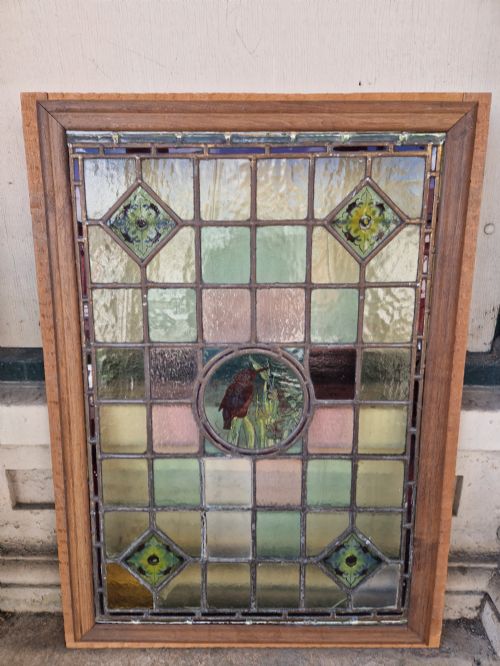


Antique Coloured Glass Panel
An antique coloured glass panel brings rich hues and historic light into a modern room, offering authentic period craftsmanship for your interior.
Antique Coloured Glass Panel
When you search for an antique coloured glass panel, you encounter architectural salvage, stained glass windows, and window panels spanning from the Victorian era through the 1930s. These pieces incorporate lead, timber frames such as pine, and vibrant glass to form decorative architectural elements.
The selections here feature diverse aesthetic styles including Edwardian, Arts and Crafts, Art Nouveau, Gothic Revival, and 1930s Dutch Folk Art. You will frequently find hand-painted pictorial scenes depicting countrysides, farmhouses, lakes, birds, and floral motifs.
Domestic windows and church panels make up the bulk of the surviving forms, alongside occasional pairs of windows and wine glasses. The construction typically relies on lead came to hold the individual coloured and painted glass segments together within a wooden surround.
How they were made
Maker workshops utilised traditional leaded techniques, cutting coloured glass to shape and holding the pieces securely within flexible lead cames. Artisans frequently applied hand-painted details onto the glass surface, depicting scenes of nature and figures before firing the pigment permanently.
Support frames were constructed from wood, utilising timber such as pine to house the heavy glass panels safely. Bullseyes and textured glass elements were incorporated into the designs to diffuse light and add visual depth.
What varies in quality
The artistic ambition of the painted design separates standard windows from exceptional examples, particularly where pictorial scenes of countryside landscapes or figurative work are involved. The complexity of the leadwork and the integration of specialised elements like amber bullseyes also elevate the standard of a piece.
The structural integrity of the surrounding timber frame and the stability of the lead matrix determine the durability and preservation state of the panel. Superior pieces maintain crisp painted details and securely seated glass segments that retain their original character.
The Antique Coloured Glass Panel Glossary
- Lead came
- The grooved lead strips used to join individual pieces of glass together in a window panel. This malleable metal forms the structural grid that holds the entire coloured design.
- Bullseye
- A round piece of glass featuring a central raised knob, formed at the centre of a spun glass disc. These are often incorporated into windows to catch and refract light.
- Architectural salvage
- Building components rescued from older structures slated for demolition or renovation. Salvage pieces include windows, panels, and timber frames preserved for reuse.
- Gothic Revival
- An architectural and design style inspired by medieval forms, appearing in ecclesiastical and domestic ironmongery and glass. This aesthetic favours pointed arches and vertical emphasis.
- Pre-Raphaelite
- An artistic movement associated with detailed naturalism, rich colours, and complex symbolic compositions. Windows from this tradition reflect the artistic ideals of mid-nineteenth-century painters.
Antique Coloured Glass Panel: Frequently Asked Questions
How are antique glass panels installed?
These panels are typically mounted within interior partitions, hung as decorative wall art against a light source, or fitted securely into existing window openings by a professional glazier.
Because leaded panels can be heavy and flexible, adequate internal framing is essential to support the weight and prevent sagging over time.
How do I clean an antique glass panel?
Dust the surface gently with a soft, dry cloth and avoid applying liquid cleaners directly onto the painted areas or aged lead cames.
Moisture can seep beneath unstable paint or corrode old lead, so any cleaning should be done sparingly with non-abrasive materials.
Were these panels meant for homes or churches?
The pieces found in this category span both domestic settings and ecclesiastical buildings, with church windows offering larger arched formats.
Domestic panels often feature pastoral scenes, floral patterns, or folk art designs suited for residential rooms and interior doors.
How do I identify the period of a panel?
Stylistic clues such as floral motifs point to Victorian or Edwardian origins, while geometric forms and folk characters often align with the 1930s.
Examining the type of glass, the style of hand-painted details, and the construction of the timber frame helps narrow down the era of manufacture.