



Antique Colonial Armchair
An antique colonial armchair brings distant trade routes and nineteenth-century craftsmanship into a modern interior.
Antique Colonial Armchair
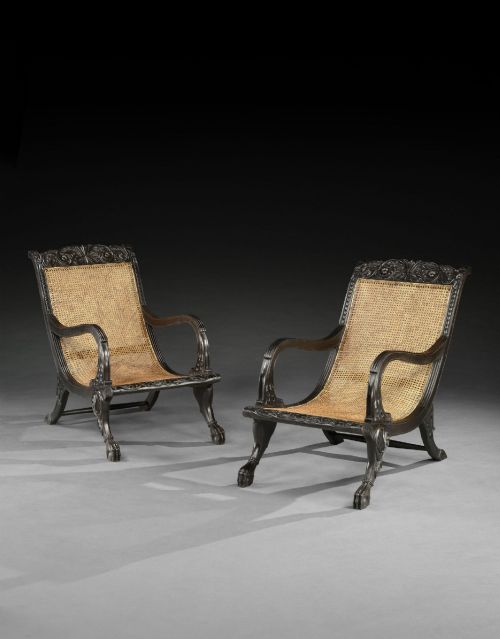
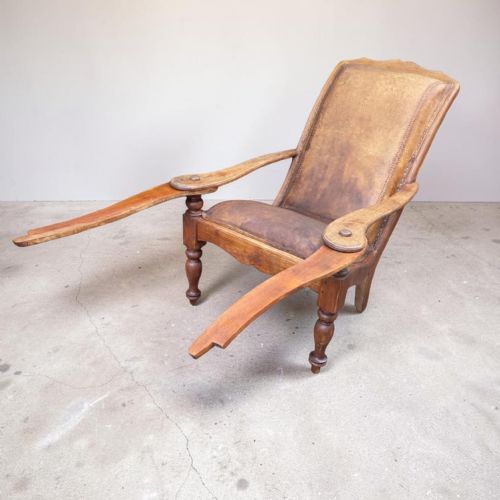
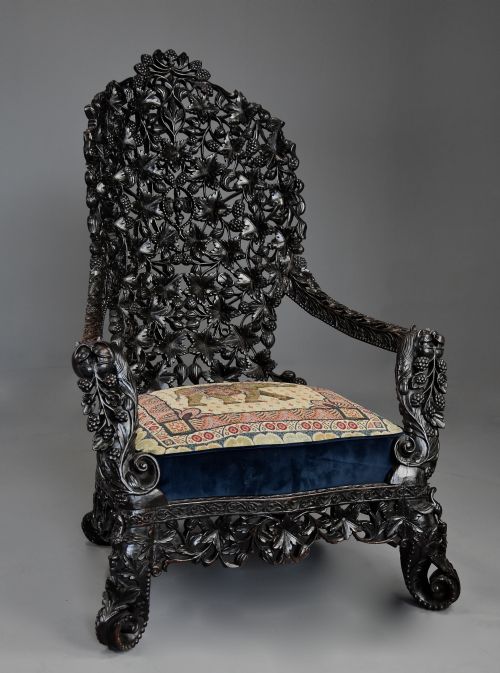
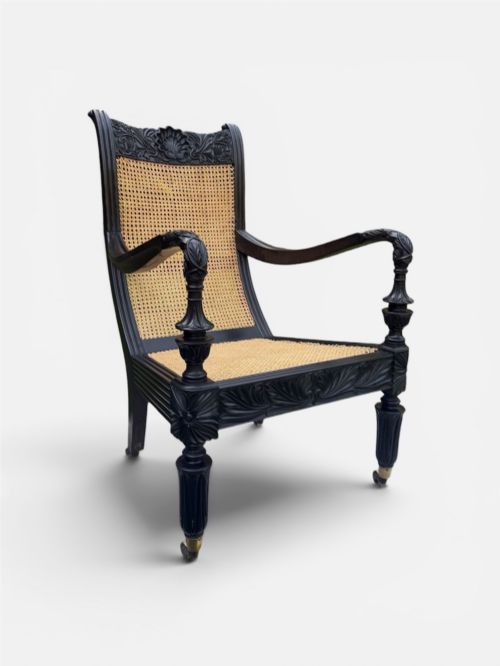
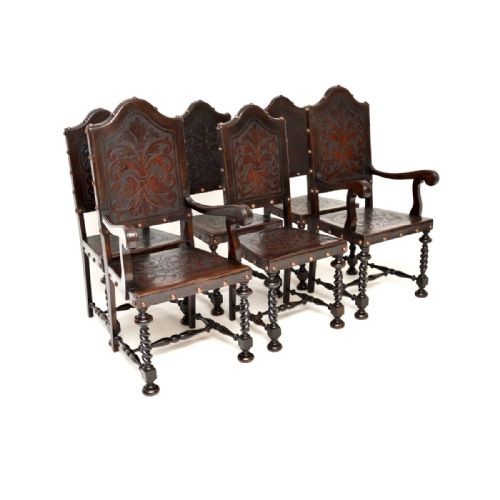
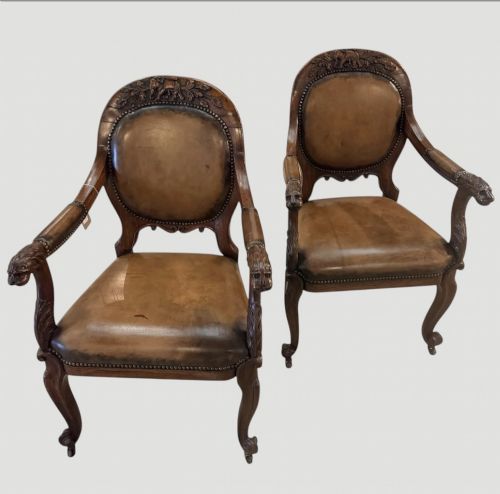
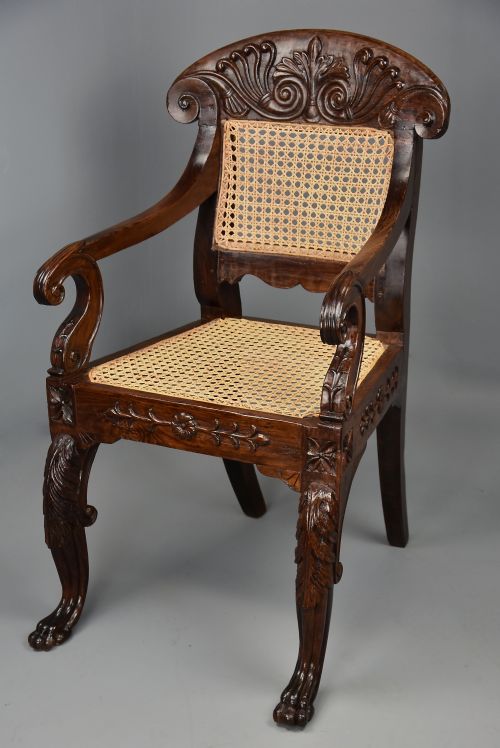
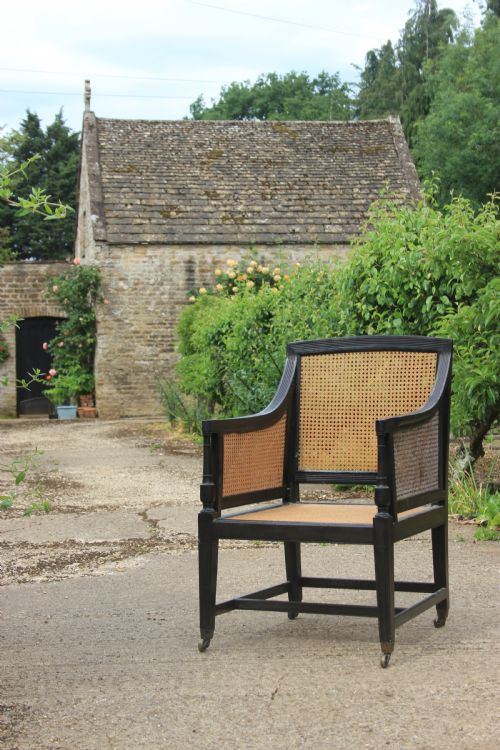
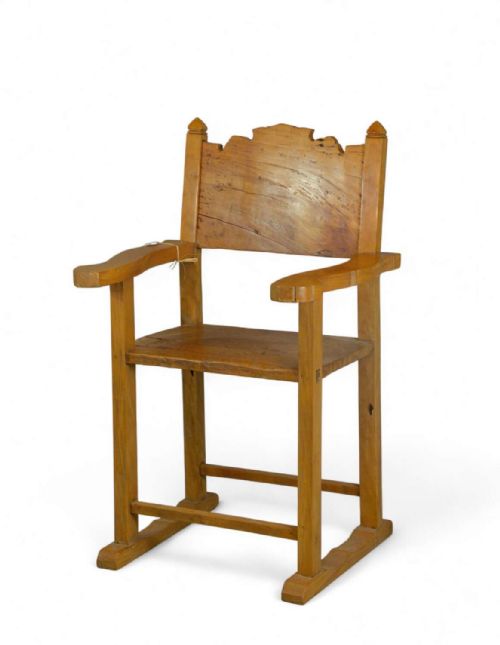
The forms span heavy planter's chairs with extending arms, library chairs, solid ebony bergères and grand carved throne chairs. Anglo-Indian designs dominate the selections, alongside Portuguese Baroque styles and campaign seating built for travel.
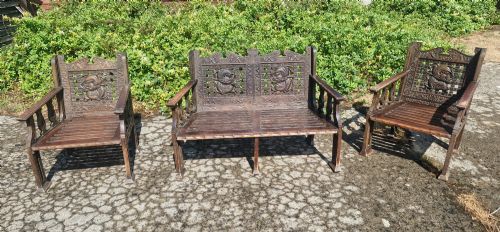
Buyers encounter robust seating suites, dining chairs and individual reclining models designed for tropical climates. The physical presence ranges from dark, dense hardwoods to cane-seated lounging chairs made for verandas and conservatories.
Materials and construction methods
Cabinetmakers utilised dense tropical timbers including teak, padouk, ebony, rosewood and walnut to withstand humid climates. These heavy woods support intricate hand-carved ornamentation, deep mouldings and structural elements like brass fittings and folding mechanisms.
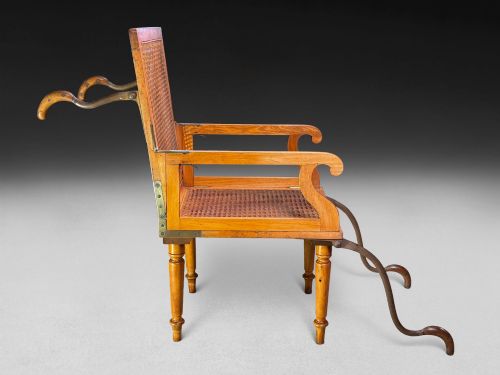
Seating surfaces incorporate woven cane, rush, embossed leather and velvet upholstery. Frames feature mortise and tenon joinery, often combined with reclining mechanisms and extending footrests tailored for colonial planter's chairs.
Extendable arms on nineteenth-century planter's chairs doubled as makeshift desks for tired colonial administrators balancing paperwork.
Understanding quality differences
The distinction between standard utility seating and high-end examples lies in the depth and sharpness of the hand-carving on the hardwood frames. Superior pieces display crisply executed foliage, figures or geometric motifs rather than shallow or mechanical incisions.
Material selection dictates the grade of the piece, with solid ebony, heavy rosewood and dense padouk commanding greater presence than secondary mixed timbers. The integrity of original cane work, brass hardware and integrated mechanical parts further separates ordinary workshop production from exceptional commissions.
The Antique Colonial Armchair Glossary
- Planter's chair
- A large lounging chair featuring wide, flat extending arms designed for resting legs during hot afternoons. These seats frequently include reclining backs and pull-out footrests.
- Bergère
- An enclosed upholstered armchair with a wooden frame where the sides are typically filled with cane work. This French style influenced colonial cabinetmakers working in tropical regions.
- Padouk
- A heavy, durable tropical hardwood with a reddish hue used extensively in Anglo-Indian furniture construction. It resists warping and takes a fine carved finish.
- Savonarola chair
- A folding armchair constructed from interlocking curved wooden slats, named after the fifteenth-century Florentine friar. Examples appear in nineteenth-century Indian variations.
- Cane
- Split rattan woven into patterned mesh panels used for seat backs and bases. This breathable material provides ventilation in warm colonial environments.
Antique Colonial Armchair: Frequently Asked Questions
How do I use a planter's chair at home?
A planter's chair suits a spacious living room, study or sunroom where its extended arms and reclining back serve as a place to read or rest. Positioning it away from direct heat sources helps preserve the nineteenth-century timber.
Pairing the chair with a simple side table allows the carved woodwork and cane panels to remain the focal point of the space.
What is the difference between a campaign chair and a planter's chair?
A campaign chair is designed to fold or dismantle easily for military transport and travel across colonies. It relies on functional brass hinges and collapsible frames.
A planter's chair is built for stationary veranda or domestic use, prioritising wide extending arms and deep reclining seats over portability.
How do I care for antique cane seating?
Cane seating requires gentle dusting with a soft brush and occasional light moisture applied to the underside to keep the rattan flexible. Avoiding direct sunlight prevents the natural material from drying out and snapping.
Weight should be distributed evenly across woven panels to prevent sagging over time.
How can I tell the region of origin?
Regional origins appear through specific wood choices, carving motifs and structural traits unique to local workshops. Ceylonese and South Indian pieces often showcase dense ebony with distinct floral carving, while Burmese models favour robust padouk and deep throne-like proportions.
European stylistic influences, such as Regency or Portuguese Baroque details, merge with local craftsmanship to indicate where the furniture was assembled.