



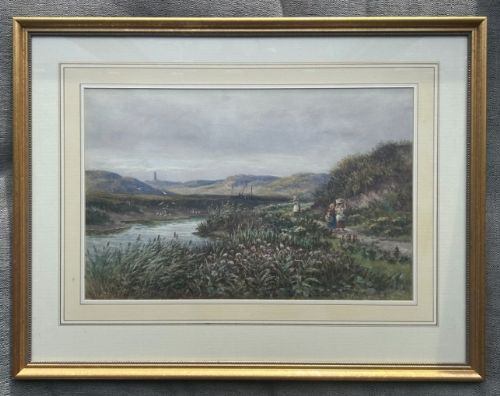


Antique Coastal River Painting
These antique coastal river painting works capture maritime and estuarine scenes through nineteenth-century oils and watercolours.
Antique Coastal River Painting
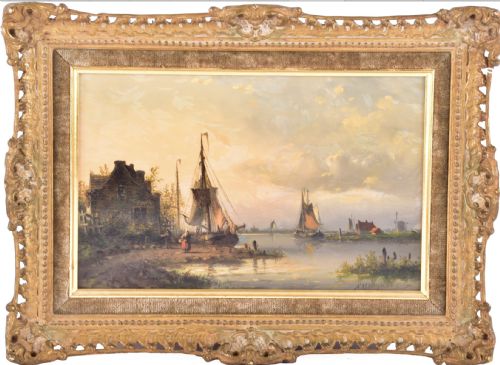
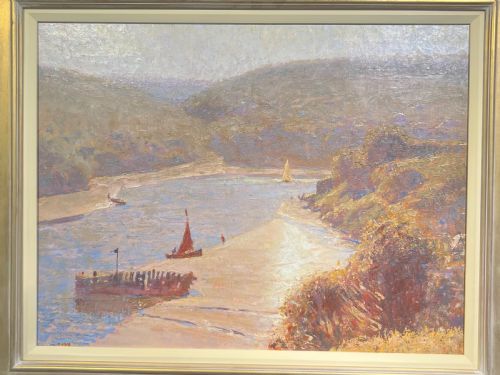
An antique coastal river painting records harbours, shipping channels, and tidal estuaries across Britain and beyond. The selection draws heavily on nineteenth-century and early twentieth-century depictions, spanning Victorian maritime views to later impressionist approaches.
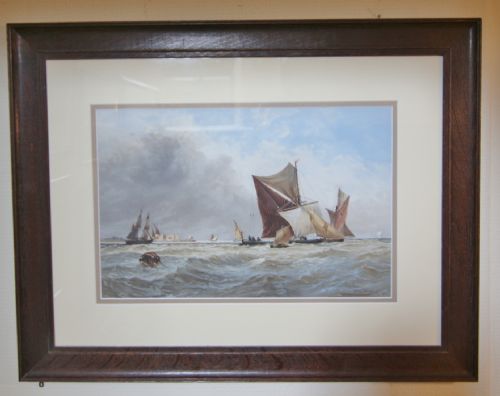
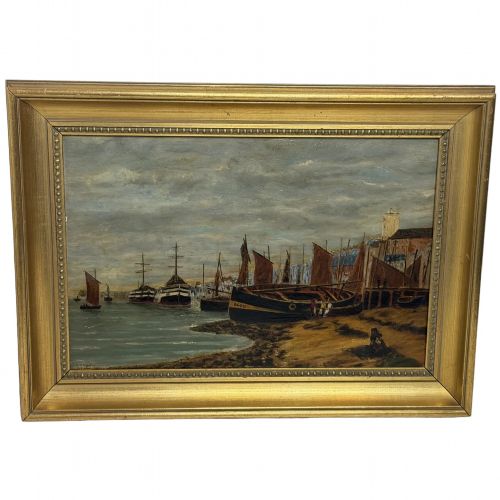
Subjects range from bustling northern ports like North Shields and Whitby to tranquil river landscapes and moonlit estuarine scenes. Works appear in both oil paint and watercolour, framed within period settings that often include giltwood.
The format varies from intimate watercolours on paper to large canvas oil paintings depicting shipping vessels, clippers, and local craft. Each piece reflects the topography and maritime trade of rivers such as the Medway, the Tyne, and the Humber.
Materials and methods
Artists relied primarily on oil paint applied to canvas or wood panels, alongside watercolour pigment worked onto paper. These traditional media allowed painters to capture shifting light on water and the atmospheric conditions of coastal weather.
Many works retain their original mounting under glass, paired with giltwood frames that complement the period aesthetic. Canvas supports often show stretcher marks consistent with nineteenth and early twentieth-century framing practices.
The listings feature works executed in oil paint, watercolour, and giltwood spanning the Victorian era through the mid-twentieth century.
Distinguishing quality across the range
Quality rests on the precision of the topographical detail and the artist's command of light and atmosphere upon the water. Finer examples display confident brushwork in rendering shipping vessels, architecture, and tidal movement.
Provenance and signature attribution elevate certain pieces, particularly those by named practitioners who exhibited at recognised institutions. The harmony between the painting and its period frame further distinguishes superior works.
Thomas Bush Hardy·Cecil Allan Mould·William Frederick Settle·Alfred George Morgan·Colin H Greenwood·William Pitt·Leslie Rackham·Frederick Williamson·William Tatton Winter·Hubert Thornley·Thomas Swift Hutton·Fred Lawson·Stanley Leader·R.E Richardson·Charles Eyres Simmons·Walter Meegan·Gudrun Sibbons
The Antique Coastal River Painting Glossary
- Watercolour
- A paint consisting of water-soluble pigment suspended in a gum medium, traditionally applied to paper sheets. This technique allows for translucent washes that simulate the movement of water and sky.
- Giltwood
- Wood carved and coated with a thin layer of gold leaf or metallic gilt powder. It is commonly found on traditional frames enclosing nineteenth-century canvases.
- Impressionism
- An art style characterised by relatively small, thin, yet visible brush strokes and an open composition. It prioritises the accurate depiction of light in its changing qualities.
- Seascape
- A work of art that depicts the sea, ships, and coastal views. These pieces frequently document maritime activity and historical vessels along major riverways.
- Canvas
- A heavy woven fabric used as a surface for oil painting, typically stretched across a wooden frame. It provides a durable support favoured by traditional landscape artists.
Antique Coastal River Painting: Frequently Asked Questions
What subjects do these paintings show?
The works depict harbours, shipping lanes, fishing boats, and estuarine landscapes along British rivers and coastal towns. Scenes often feature named locations such as Whitby Harbour, the River Medway, and North Shields.
Many pieces capture specific maritime vessels including clippers, hay barges, and sailing ships at work or moored near tidal banks.
How do I care for an antique watercolour?
Watercolours on paper require protection from direct sunlight to prevent the pigments and paper support from fading over time. Displaying them away from moisture-prone areas preserves the integrity of the paper.
Ensure the glazing remains intact and that the frame seals properly to keep out dust and atmospheric pollutants.
Are these paintings signed by the artists?
Several pieces feature original artist signatures or inscriptions detailing the specific river or harbour depicted. Documentation on the reverse or within the title often records exhibition histories and dates.
Unsigned works rely on stylistic evidence, period framing, and material composition to indicate their era of creation.
What is the difference between oil and watercolour works here?
Oil paintings use pigment bound in oil applied to canvas or wood, offering rich texture and deep colour saturation. They are generally heavier and housed in substantial frames.
Watercolours utilise water-soluble pigments on paper, presenting a lighter, more luminous quality that typically requires mounting beneath glass.