





Antique Coastal Beach Painting
An antique coastal beach painting captures the shore, harbours, and fishing boats through nineteenth- and twentieth-century observation.
Antique Coastal Beach Painting
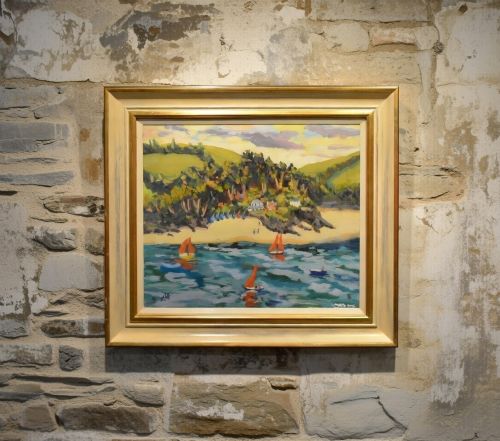
An antique coastal beach painting records maritime life, harbour scenes, and sandy shores from the nineteenth century onward. Buyers seeking these works encounter watercolours and oil paintings depicting locations from British fishing villages to continental seasides.
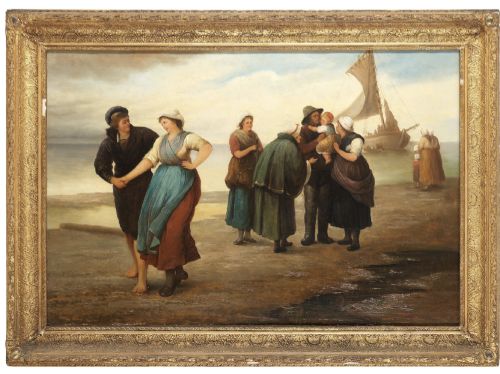
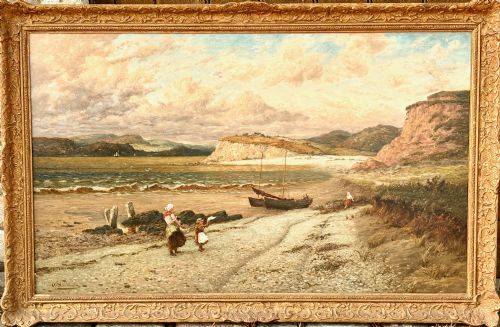
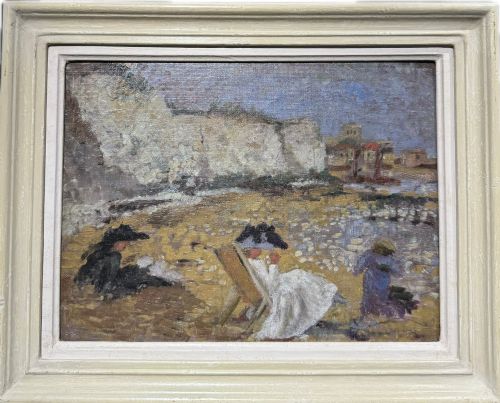
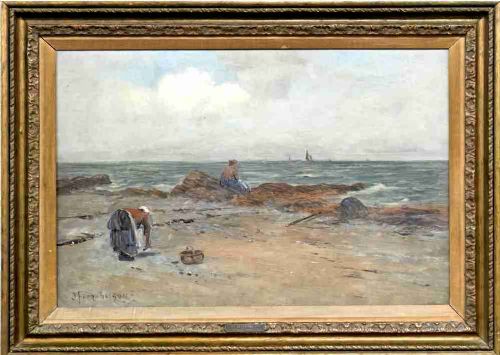
The selection ranges from Victorian marine art and British Impressionism to Post-Impressionism and early twentieth-century realism. Many pieces focus on local activity, such as gathering seaweed, hauling nets, or children playing by the tide.
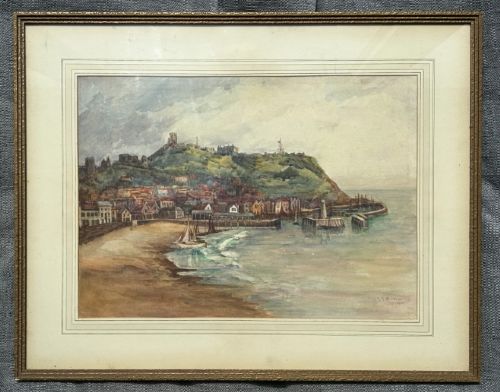
The most common formats on this page are framed watercolours on paper and oil paintings on canvas or board. Subjects frequently feature specific named locations including Yorkshire bays, Scottish coasts, and south-coast harbours.
Materials and methods
Artists painted primarily in oil on canvas or board, and in watercolour on paper, utilising traditional pigments applied with brushes. Watercolours often received protective glazing within wood, gesso, or ebonised frames.
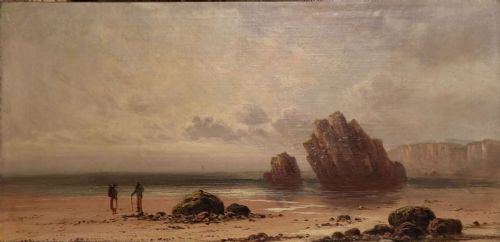
Oil paintings relied on heavier application, sometimes building texture with impasto to render rough seas, rocky beaches, and dramatic sea stacks. Canvases were stretched over wooden frames and secured within moulded giltwood or painted surrounds.
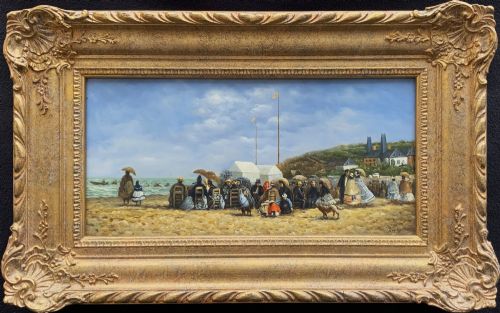
Several canvases record busy nineteenth-century beach life alongside wandering boxers, photographers, and ladies in pristine white dresses.
Distinctions in execution
Quality rests upon the artist's command of light, atmosphere, and human anatomy when figures populate the shore. Stronger works convey the specific moisture of sea air and the movement of breaking waves with confident brushwork.
The handling of secondary elements, such as fishing gear, boats, and distant headlands, separates routine topographical illustration from accomplished fine art. Original framing matching the period of the work further elevates the piece.
James Orrock·William Banks Fortescue·Joseph Farquharson·Robert Leslie Howey·James Webb·Sir William Russell Flint·Frederick William Hattersley·Kate E Booth·Sir David Murray·Owen Bowen·Robert Macaulay Stevenson·Vilhelm Arnesen·Gustav Vermehren
The Antique Coastal Beach Painting Glossary
- Coble
- A traditional type of open fishing boat native to the north-east coast of England, featuring a flat bottom and high bow. These vessels frequently appear in regional watercolours and oils.
- Impasto
- Paint applied thickly to a canvas or board, standing out in relief from the surface. Artists utilised this technique to render the churning foam of breakers and rugged coastal cliffs.
- Gesso
- A plaster-like mixture applied to wooden frame mouldings as a base for gilding or paint. Elaborate gesso frames provide a secure and decorative housing for nineteenth-century canvases.
- Sea stack
- A geological landform consisting of a steep and often vertical column or columns of rock in the sea. Painters selected these dramatic formations to anchor coastal compositions.
Antique Coastal Beach Painting: Frequently Asked Questions
How do I date an antique coastal painting?
Dating relies on stylistic evidence, artist signatures, framing materials, and the construction of the canvas support or paper backing. Victorian and early twentieth-century works often carry labels or inscriptions indicating specific coastal locations and exhibition dates.
Changes in maritime dress and the types of vessels depicted, such as traditional cobles or steam-assisted fishing boats, also help narrow the period of execution.
What is the difference between watercolour and oil coastal paintings?
Watercolours on paper offer a translucent quality that captures the pale light and misty atmospheres of British and European shores. They were typically framed behind glass to protect the delicate pigments from moisture and fading.
Oil paintings on canvas or board provide greater depth, texture, and saturation, allowing artists to build up heavy layers of pigment to render rough seas and stormy skies.
Where were most of these seaside scenes painted?
The majority of these works record locations around the British coastline, with particular concentrations in Yorkshire, Scotland, Cornwall, and the south coast of England. Specific harbours such as Whitby, Scarborough, and St Ives drew numerous artists throughout the nineteenth and early twentieth centuries.
Continental European coastal scenes, including French and Dutch ports, also appear among works from the same eras.
How should I display an antique painting at home?
Antique paintings require stable environmental conditions away from direct sunlight, high humidity, and extreme temperature fluctuations. Positioning watercolours out of harsh direct light prevents the fading of delicate pigments on paper.
Works should hang securely from appropriate picture rail hooks using durable cord, ensuring the weight is distributed evenly across the original frame.