


Antique Cloisonne Pair
When seeking an antique cloisonne pair, collectors find matched works of enamel and metal spanning the nineteenth and early twentieth centuries.
Antique Cloisonne Pair
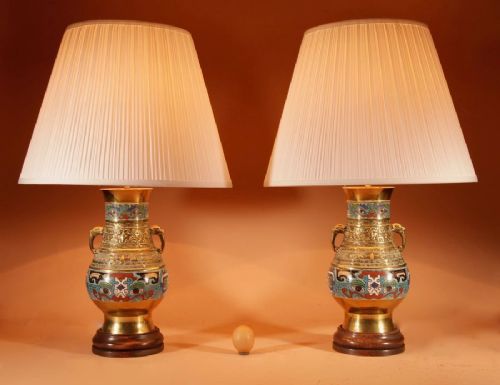
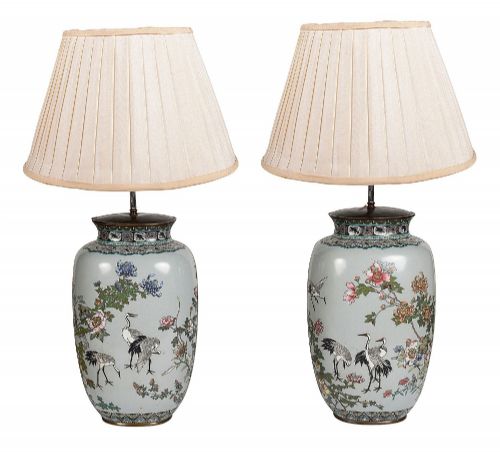
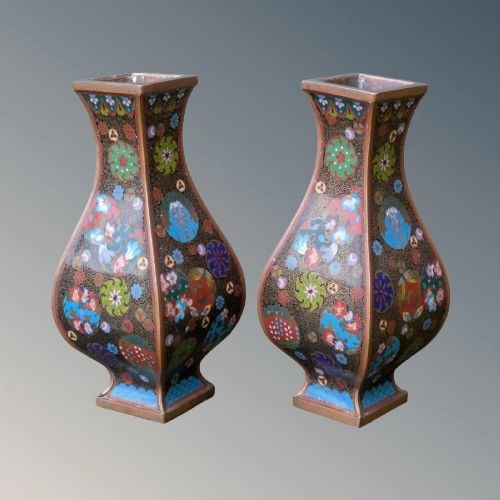
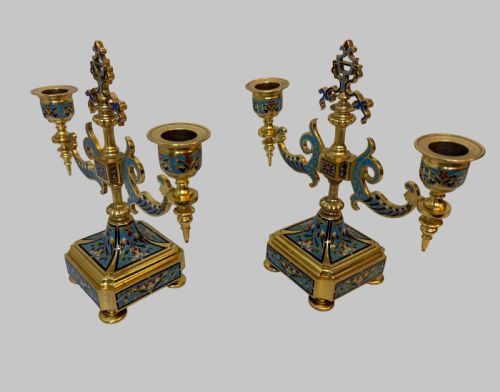
An antique cloisonne pair consists of matched decorative objects created in duplicate, frequently found as vases, lamps, plates, and jars. These matching pairs originate predominantly from Japanese Meiji workshops and Chinese export traditions, alongside nineteenth-century French and Russian examples.
The selections span the nineteenth century through the early twentieth century, including Edwardian iterations and specific periods such as the Edo and Qing dynasties. Forms range from large palace vessels and table lamps to lidded gourd pots, chargers, and solid silver spoons.
How They Were Made
Craftsmen built these pieces by soldering thin metal wires of brass, copper, or bronze onto a metal body to form raised compartments, known as cloisons. These individual cells were then filled with coloured enamel paste before firing.
Post-firing surfaces underwent polishing to expose the delicate metal wire outlines between the vitrified enamel areas. Additional mounting in gilt bronze, ormolu, wood, and fabric complemented the core enamel work.
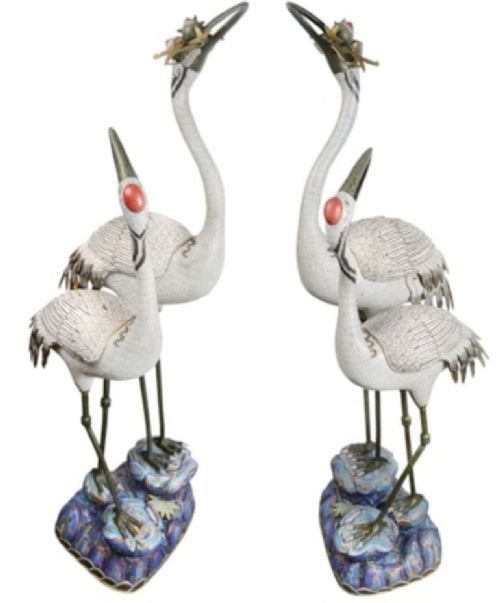
A pair of decorative quails stands ready to converse with any passing dragon.
What Varies in Quality
Quality rests upon the precision of the wirework and the depth of the enamel palette. Finer examples display intricate, symmetrical compartments with smooth, evenly fired surfaces free from pitting or discoloration.
The artistic ambition of the design dictates the upper tier of the range, evidenced by complex pictorial motifs such as dragons, phoenixes, and flora. Lesser tiers show simpler geometric patterning and less disciplined metalwork.
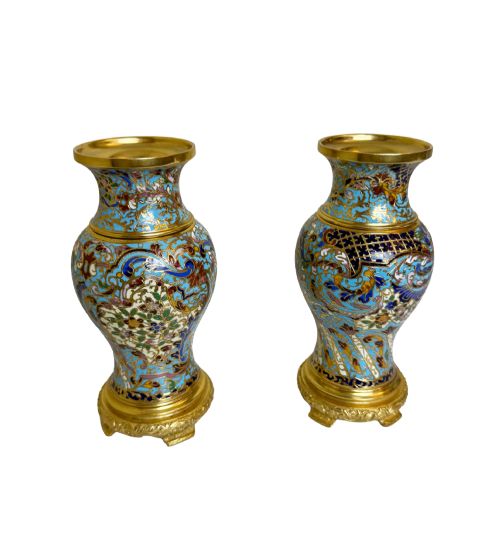
Vasily Agafonov·Jules Vieillard
The Antique Cloisonne Pair Glossary
- Cloisonne
- Enamelwork in which coloured pastes are contained within compartments formed by thin metal strips soldered to a metal foundation. This technique allows for intricate multi-colored designs across vases, plates, and decorative objects.
- Champleve
- An enamelling technique where troughs or cells are carved or etched directly into a thick metal surface to hold the enamel paste. This method contrasts with soldered wire methods by utilising excavated cavities.
- Meiji Period
- The era of Japanese history lasting from 1868 to 1912, characterised by extensive artistic output and export of metalwork and ceramics. Pieces from this time often exhibit remarkable technical refinement in enamel work.
- Totai Shippo
- A Japanese technique where porcelain serves as the body for cloisonne enamel decoration, sometimes mimicking organic textures like tree bark. It merges ceramic shaping with traditional metal-cell enamelling.
- Ginbari
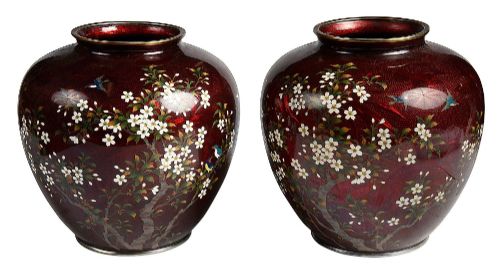
- A Japanese foil-backed enamelling method where textured metallic foil is applied beneath translucent enamel to create shimmering patterned depths. This technique creates a distinctive three-dimensional visual effect beneath the coloured glass surface.
Antique Cloisonne Pair: Frequently Asked Questions
What periods do these pairs come from?
The available pieces originate primarily across the nineteenth century and extend into the early twentieth century, encompassing the Victorian and Edwardian eras. Asian examples frequently align with the Japanese Meiji period and Chinese Qing dynasty.
Specific dates within the listings stretch from the mid-nineteenth century through the 1930s. This chronology captures the height of international demand for decorative export wares.
How were these decorative items used?
Original domestic deployment included display upon mantelpieces, tables, and pedestals as ornamental art objects. Many vessels served practical functions as ginger jars, lidded urns, or tableware.
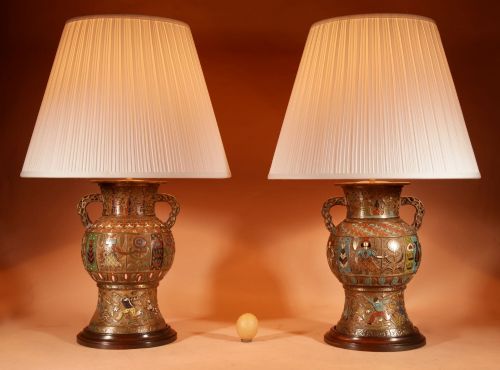
Later adaptations frequently converted vases into table lamps by wiring them for electricity. Candelabra and inkwells likewise served functional roles in period interiors.
How do I distinguish Chinese from Japanese pieces?
Chinese works often rely on heavier bronze or brass foundations with robust, opaque enamel palettes and traditional motifs. Qing dynasty examples frequently feature deep blues and formal symmetrical arrangements.
Japanese Meiji items tend toward meticulous detail, thinner wire lines, and naturalistic flora or fauna such as Ho-o birds and dragons. Specialised techniques like ginbari and totai shippo also point toward Japanese manufacture.
What metals support the enamel?
Makers utilised copper, brass, and bronze as the primary structural foundations for shaping vases, plates, and jars. Gilt bronze and ormolu mounts frequently provided structural framing or decorative bases.
Certain specialised items, such as Russian spoons, employed solid silver as the base metal for intricate enamel work. Wood and fabric also appear as secondary materials in tables and lamp fittings.