


Antique Clock with Painted Dial
An antique clock with painted dial brings movement and painted artistry together, offering mechanical heritage alongside hand-applied decoration.
Antique Clock with Painted Dial
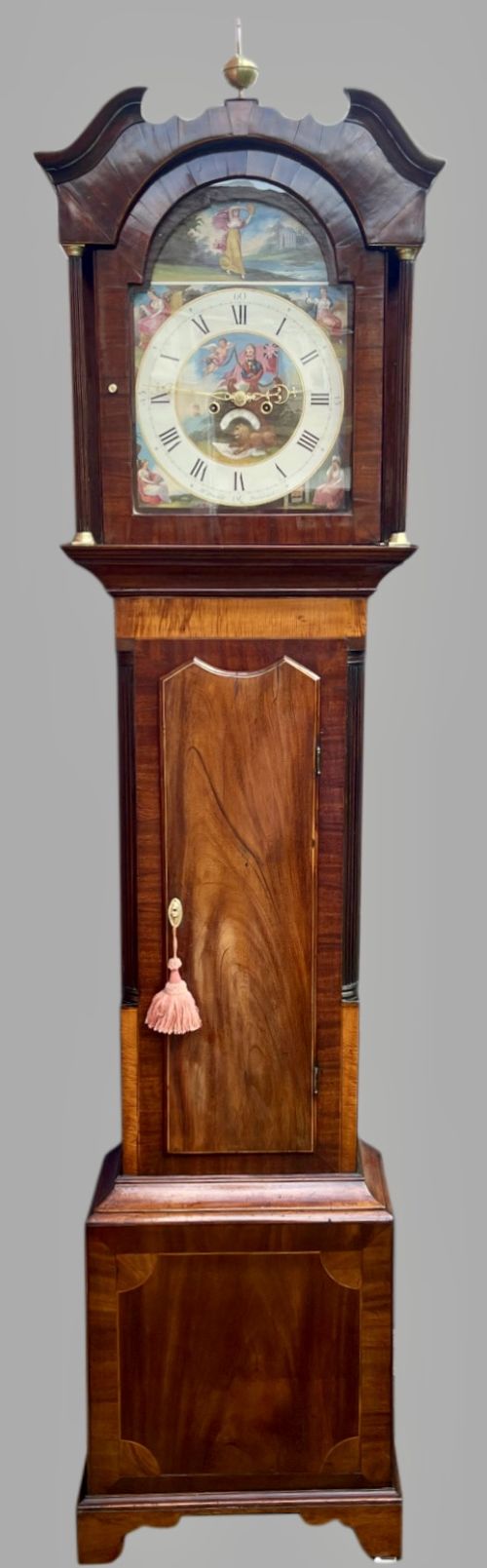
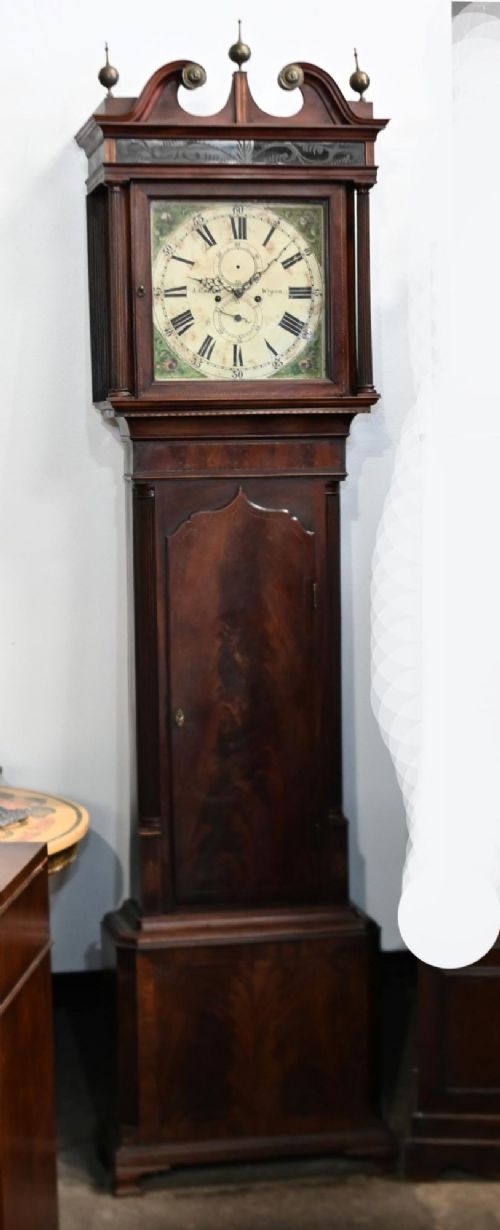
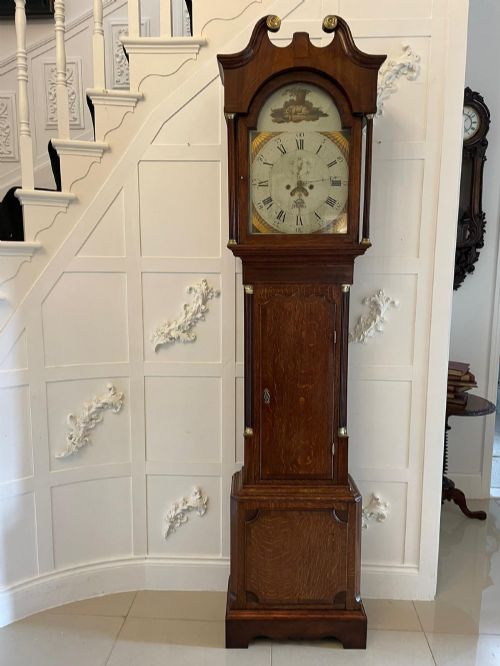
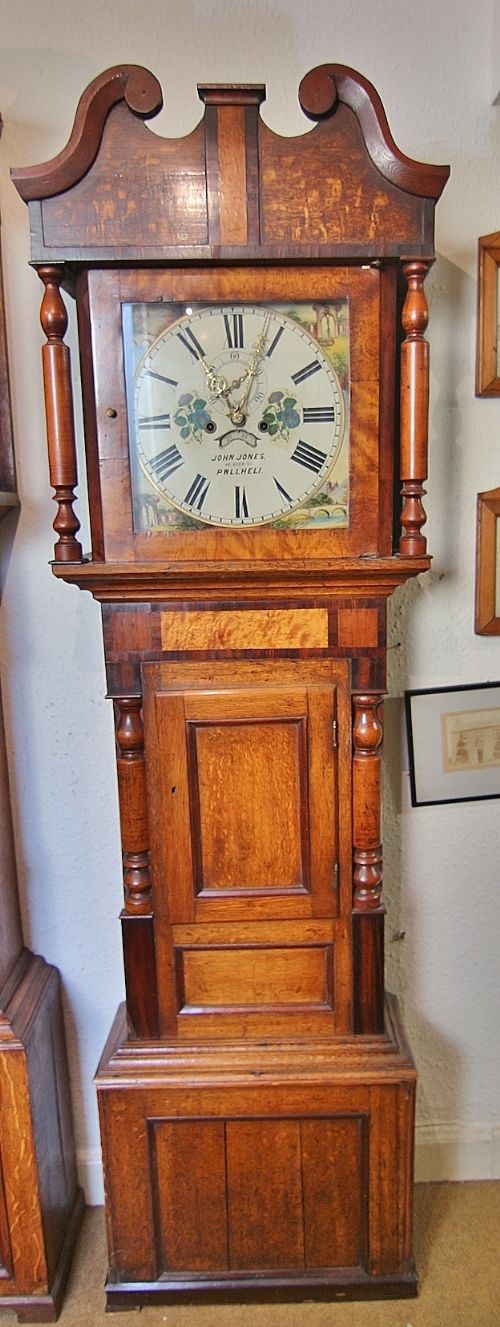
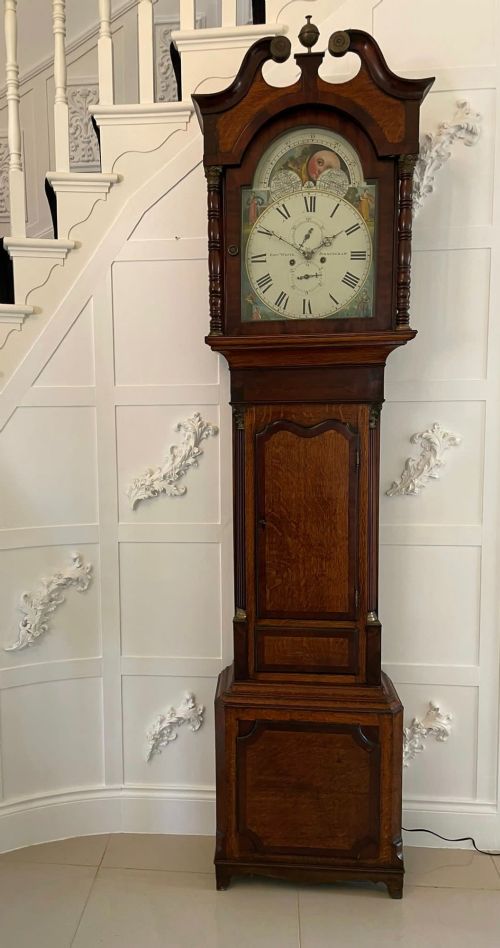
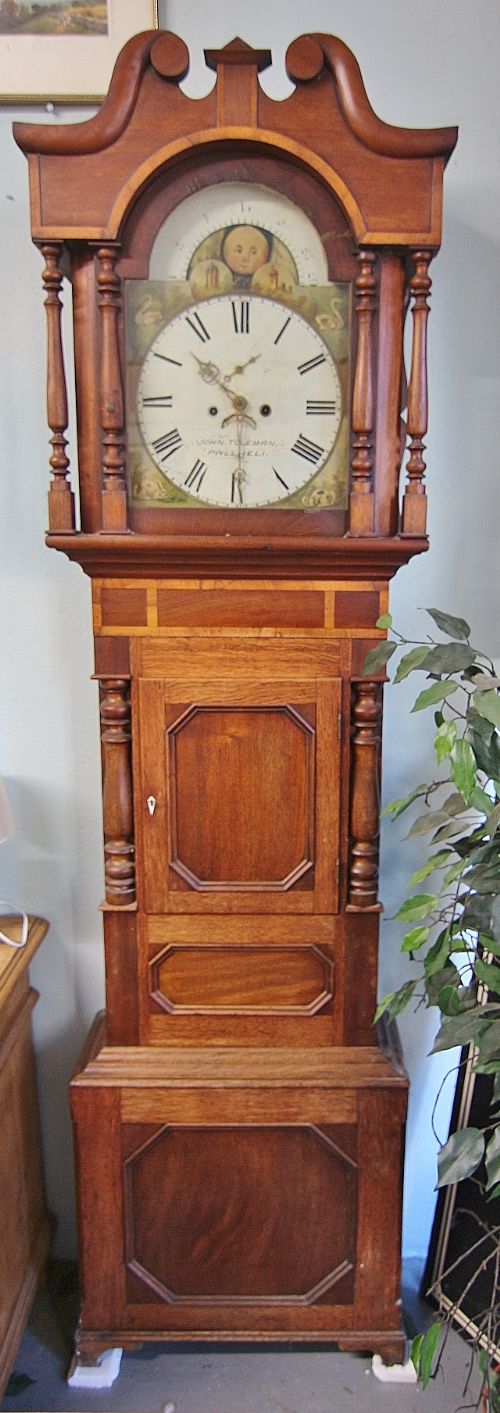
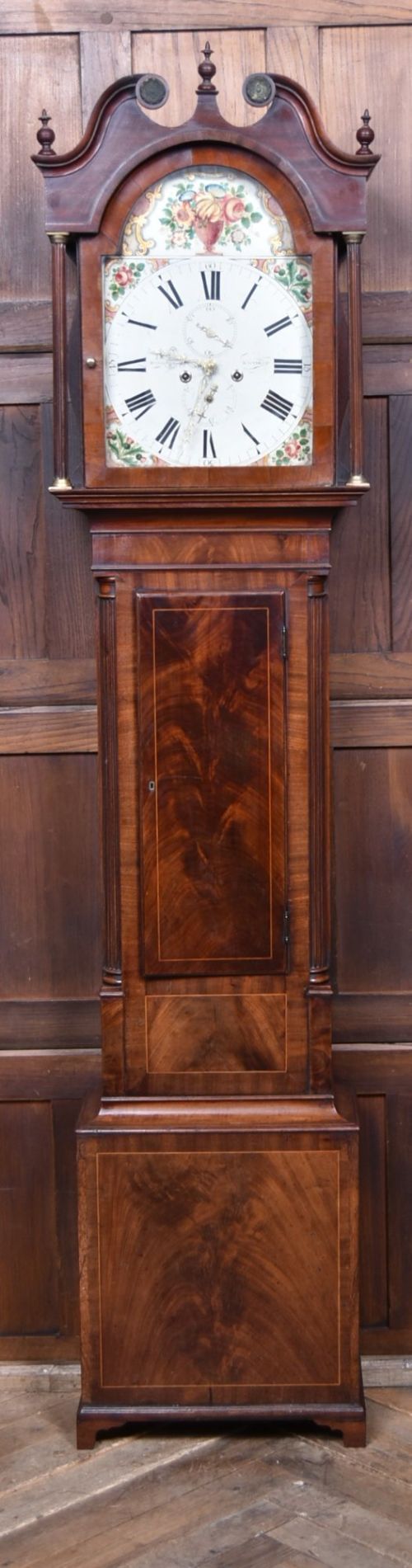
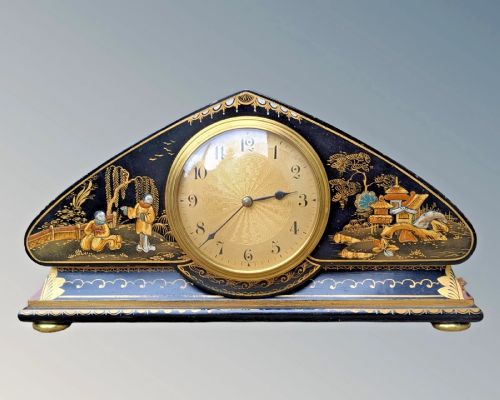
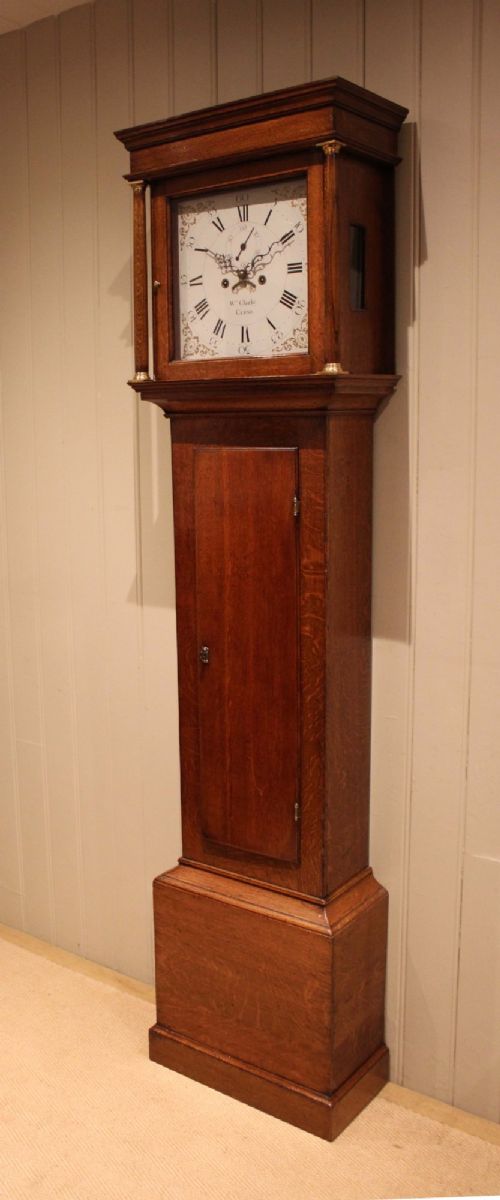
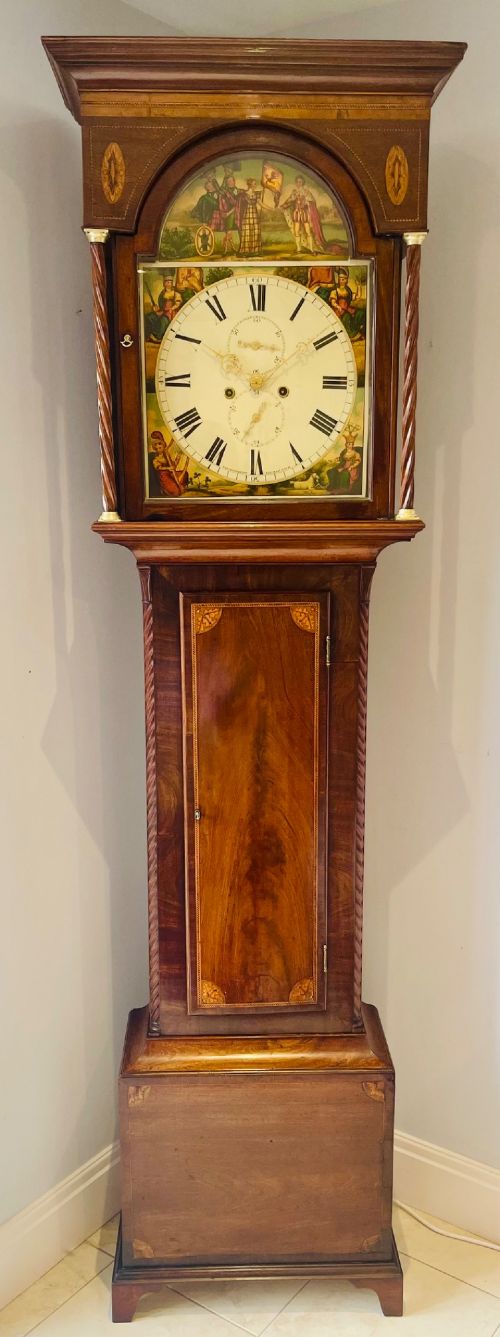
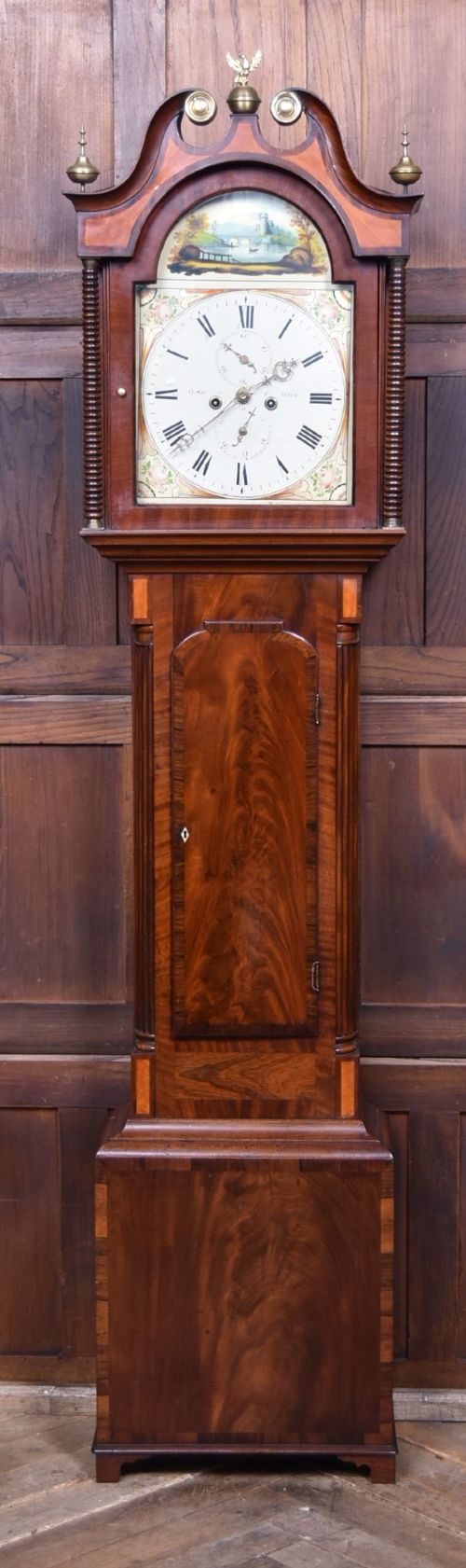
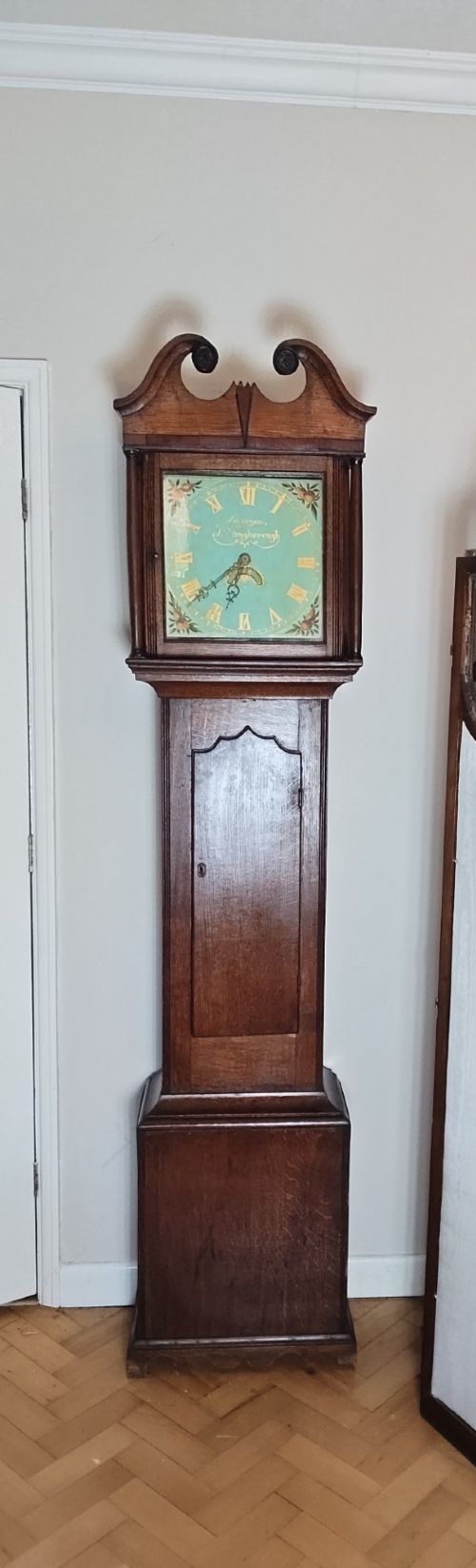
An antique clock with painted dial combines timekeeping mechanics with decorative artistry, appearing across longcase clocks, grandfather clocks, wall clocks, and mantel clocks. These pieces span the 18th century, Georgian era, 19th century, Victorian period, and the 1920s.
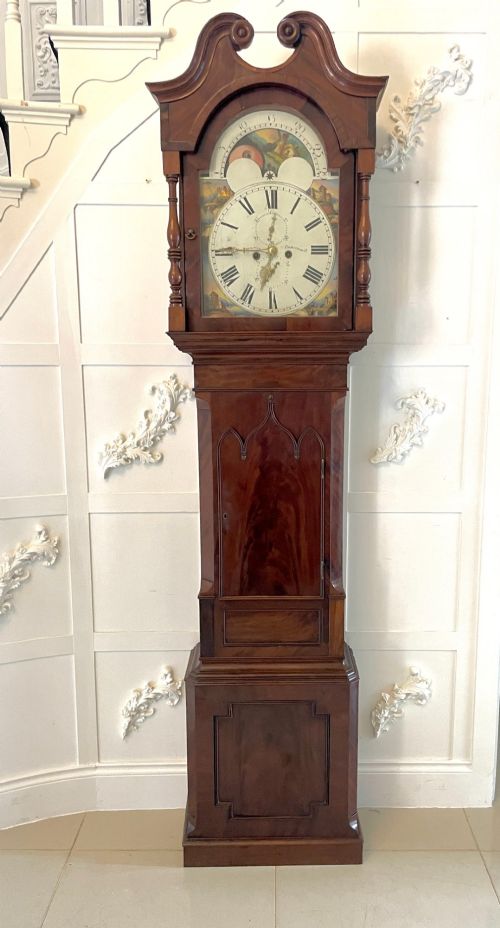
The longcase and grandfather formats dominate the selection, built from oak, mahogany, and ebonised wood. Regional makers from England, Scotland, Wales, Jersey, and France produced these timepieces, often incorporating moon phase movements, rocking figures, or arch dials.
Buyers encounter variations ranging from traditional oak and mahogany tall clocks to French mantel clocks and opalescent glass designs. Each piece reflects the specific regional cabinetmaking and dial painting traditions of its period.
Materials and construction
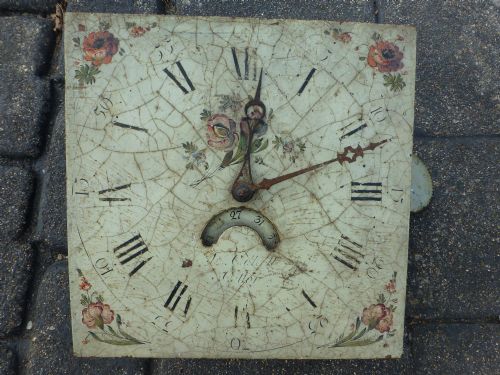
Dials received hand-applied painted decoration, often featuring floral motifs, starbursts, or elaborate moon roller and moon phase displays. Cases range from tall floor-standing longcase proportions to compact wall-hanging formats and ormolu-mounted mantel pieces.
Antique Clock with Painted Dial Retail Price Guide 2026
Typical asking prices for clock with painted dial among the pieces listed under this phrase on Sellingantiques today, from the lower quarter to the upper quarter. They describe what is for sale here now, not the wider market.
Listings feature oak, mahogany, brass, glass, enamel, and opalescent glass across Georgian, Victorian, and Art Deco styles.
Assessing quality and craftsmanship
Quality rests in the harmony between the cabinetwork and the execution of the painted dial. Finer examples display crisp inlay, well-figured mahogany or light oak, and intricate hand-painting on the dial face rather than simple stencilling.
The sophistication of the internal movement dictates distinction, with 8-day movements, moon rollers, and complex striking mechanisms elevating a piece above standard timepieces. The originality of the case timbers and the preservation of the painted surface remain central to value.
Edward White Birmingham·James Harvey of Abergavenny·Thomas De Gruchy Jersey·Furnival Oldham·Owen of Llanrwst·Rene Lalique
The Antique Clock with Painted Dial Glossary
- Moon phase movement
- A mechanical display on the dial tracking the lunar cycle. This feature uses a rotating disc behind an aperture to show the phases of the moon.
- Longcase clock
- A tall floor-standing timekeeper housed in a wooden case. These pieces protect the descending weights and pendulum.
- Arch dial
- A clock face featuring a curved upper section above the main chapter ring. This space often houses moon rollers or painted subsidiary scenes.
- Count wheel
- An external locking-plate mechanism used in older striking clocks to control the hours counted by the bell. It represents an earlier method before rack striking became standard.
- Ormolu
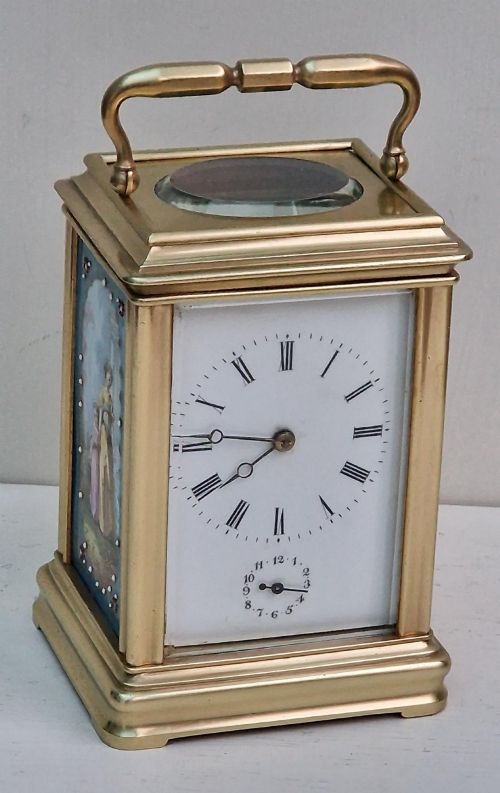
- Gilt bronze ornamentation applied to decorative mantel clocks. This technique provides metallic embellishment alongside porcelain panels.
Antique Clock with Painted Dial: Frequently Asked Questions
What is an antique clock with painted dial?
It is a mechanical timekeeper featuring a hand-painted face, encompassing tall grandfather clocks, wall clocks, and mantel pieces.
These clocks originate from periods including the Georgian era, the 19th century, and the 1920s, combining timber casework with decorated metal or enamel dials.
How do I tell different periods apart?
Cabinet timber choice, case proportions, and dial style indicate the era of manufacture. Earlier 18th-century and Georgian pieces often utilise oak or mahogany with architectural longcase proportions.
Later 19th-century and Victorian examples introduce varied materials like ormolu, porcelain, papier-mache, and opalescent glass, reflecting changing stylistic preferences.
Where were these clocks made?
Makers operated across diverse regional centres in Britain, including Birmingham, Abergavenny, Jersey, Oldham, Forres, and Llanrwst. Continental workshops in France and Switzerland also produced notable mantel and wall models.
Regional cabinetmakers frequently sourced local timbers such as Welsh or Scottish oak and mahogany for their tall clock cases.
How do I live with a longcase clock?
Longcase clocks require a stable, upright position against a wall to ensure the pendulum swings evenly. Placement should avoid direct sunlight and damp environments to protect the wooden case and painted dial.
Regular winding of the 8-day or weight-driven movements maintains accurate timekeeping and keeps the mechanical components functioning smoothly.