



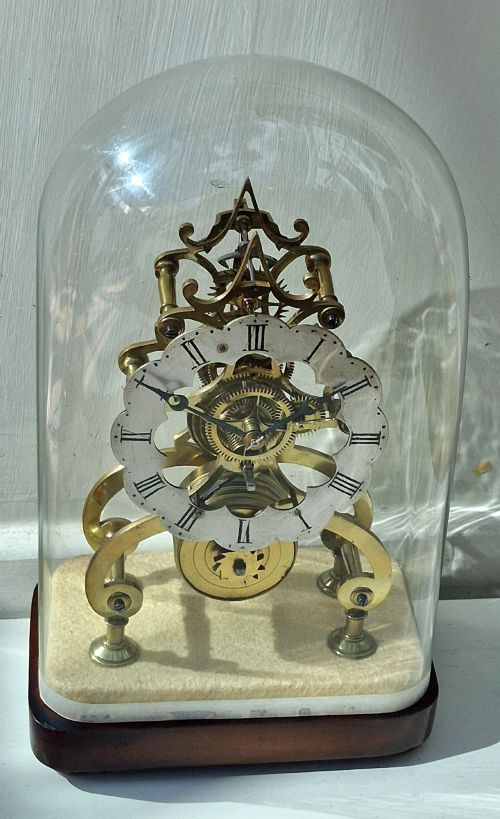
Antique Clock with Marble
These antique clock with marble pieces bring together heavy stone architecture and precise brass movement, offering an imposing centrepiece for a mantel or table.
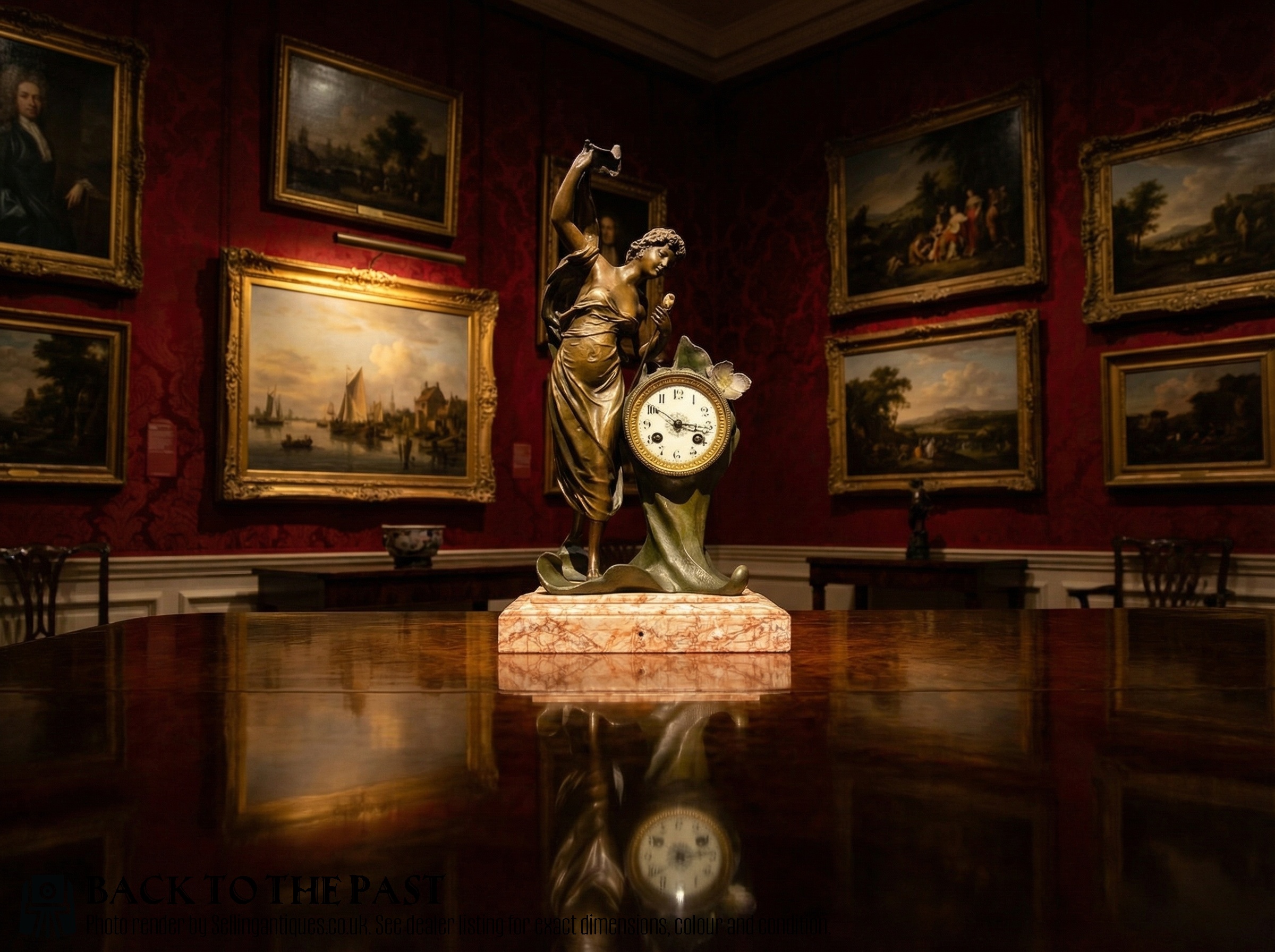
Antique Clock with Marble
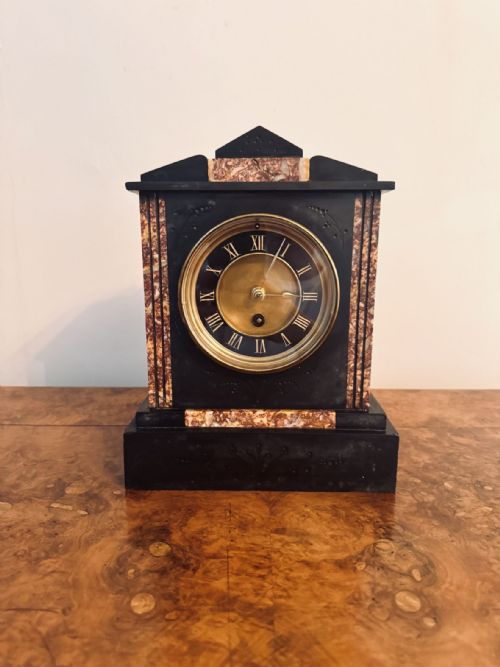
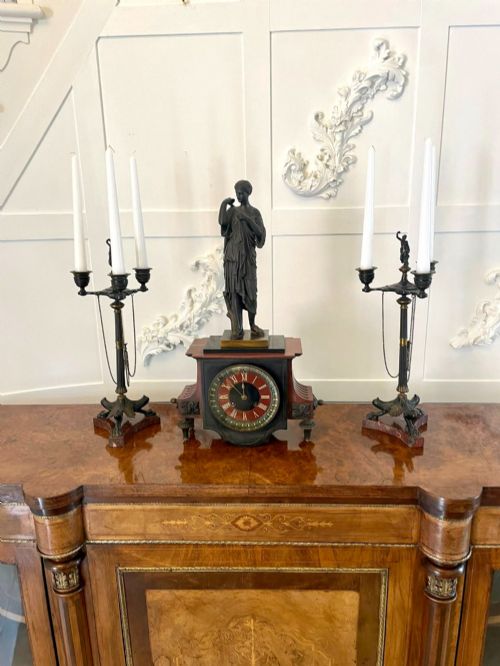
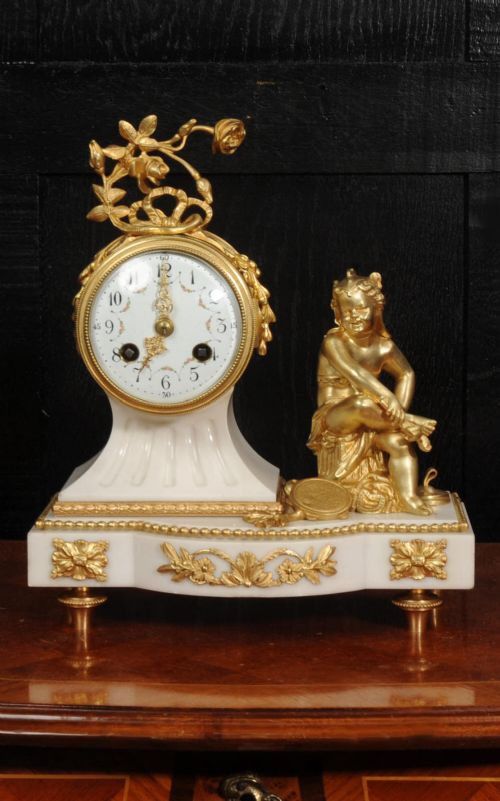
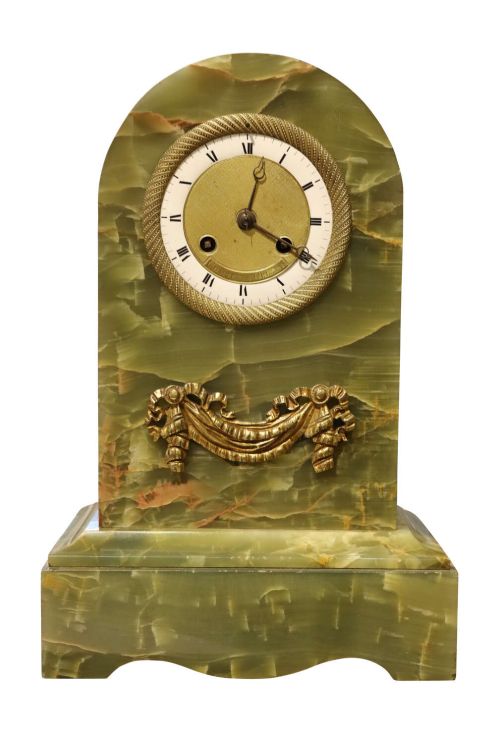
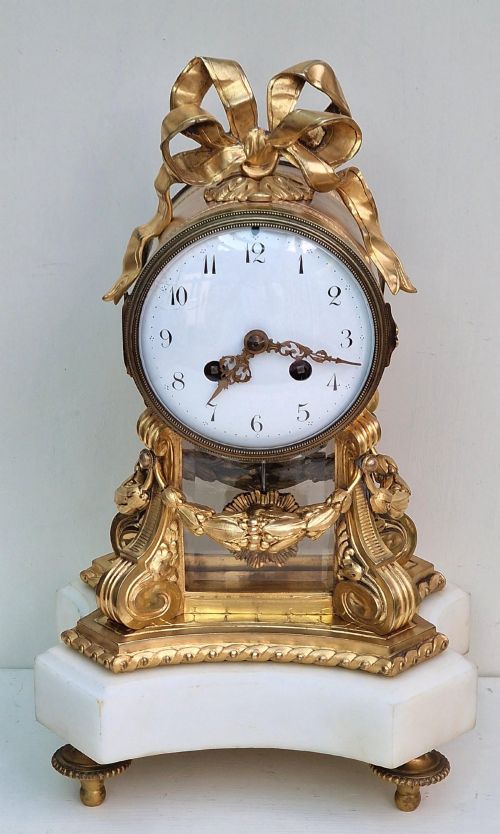
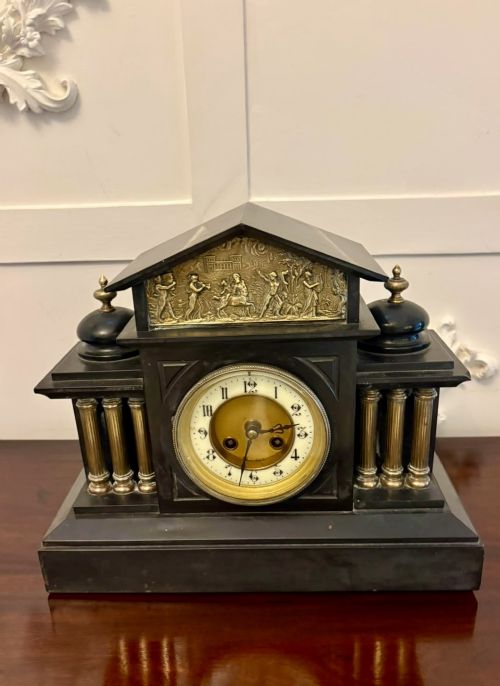
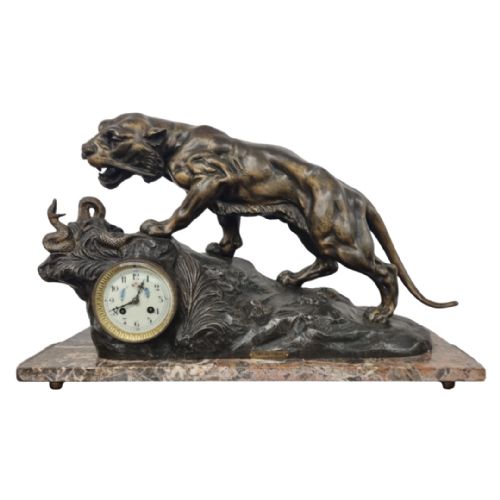
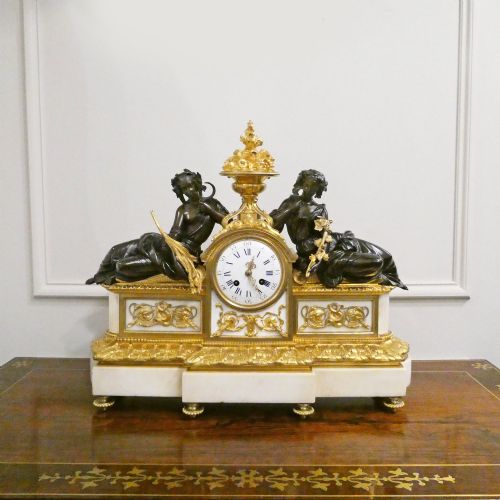
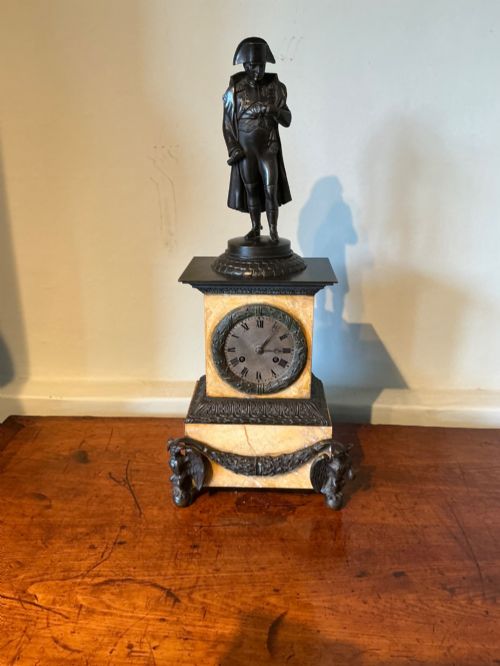
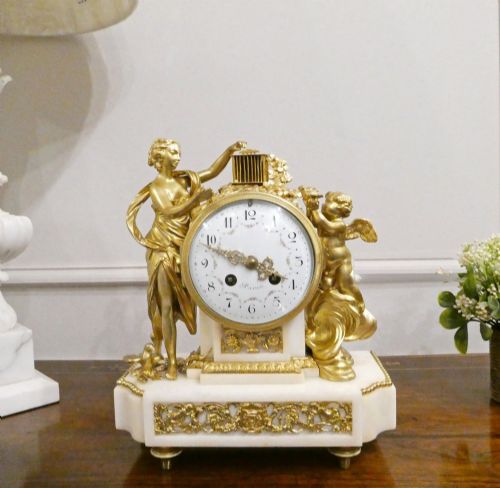
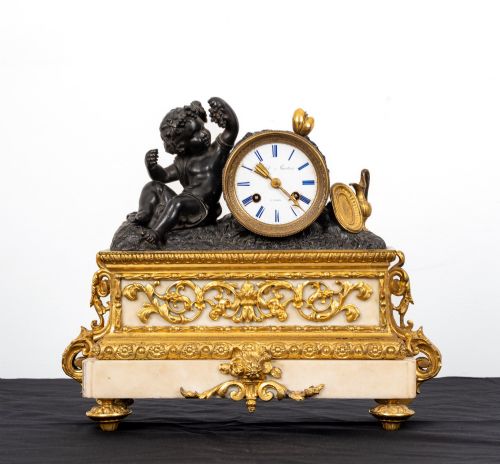
An antique clock with marble is typically housed in substantial stone cases shaped by Victorian, Regency, or Art Deco tastes, often accompanied by matching garnitures or candelabras. You will frequently encounter French mantel clocks featuring polished stone plinths paired with gilt bronze figures, cherubs, or animalier sculptures.
The selection spans from classical Egyptian Revival and Louis XVI styles to the geometric lines of the 1920s and 1930s. White, green, and black varieties of stone provide the heavy foundation for these architectural and figurative timepieces.
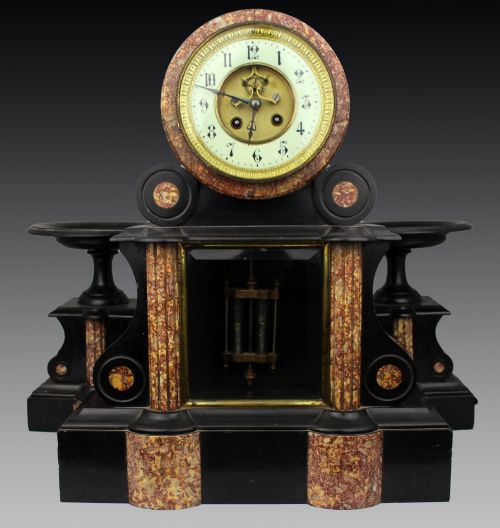
Makers housed complex movements inside these heavy mineral shells, producing everything from simple single fusee mechanisms to elaborate clock sets with visible pendulums and moon dials. The variety ranges from restrained Regency designs to ornate French garnitures featuring flanking ornaments.
Distinctions in quality
The sophistication of the casting work separates standard production pieces from exceptional examples, particularly in the crispness of the gilt bronze or ormolo mounts. High quality is also evident in the selection and variegation of the marble or slate itself, alongside the complexity of the internal movement.
Artisanal signatures on the dial or movement backplate elevate a piece, as do matching garniture sets that retain their original candelabras or side ornaments in uniform condition.
Object forms include simple mantel clocks, single fusee movements, and elaborate garniture sets complete with candelabras and visible pendulums.
R Varnier·Michel Decoux·F Marti·Farcot·Henry Berkeley·Nicoll
The Antique Clock with Marble Glossary
- Garniture
- A set consisting of a central clock flanked by matching decorative objects such as urns, candelabras, or figures. These matched sets were designed to create a symmetrical arrangement on a mantelpiece.
- Single Fusee
- A mechanism using a cone-shaped pulley to maintain equal force on the clock train as the mainspring unwinds. This system improves timekeeping accuracy across the duration of the wind.
- Ormolu
- Finely chopped high-karat gold applied to a bronze base using a mercury amalgamation technique. The resulting surface gives a rich, durable golden finish to the metal mounts.
- Silk Suspension
- A method of hanging the pendulum by a small loop of silk thread rather than a metal spring. This traditional French technique is typically found on mid-nineteenth-century movements.
- Black Slate
- A dense, dark stone frequently utilised for Victorian and later architectural clock cases. It provides a heavy, uniform appearance that contrasts sharply with gilt bronze mounts.
Antique Clock with Marble: Frequently Asked Questions
How do I wind an antique marble clock?
Most of these movements require a key inserted into the dial holes to tension the springs every eight days or daily depending on the mechanism. Care must be taken not to over-wind the springs.
Moving the hands should be done strictly following the maker instructions, usually avoiding counter-clockwise adjustments on striking models to protect the internal rack.
Where should I place a marble clock?
Because these timepieces rely on heavy stone housings and bronze elements, they require a stable, level surface such as a sturdy mantelpiece or sideboard. The considerable weight helps anchor the piece securely.
Direct sunlight and damp environments should be avoided to protect the delicate enamel dials, mercury or silk suspensions, and metal gilding over time.
How do I date a marble clock?
Dating relies on stylistic clues, such as the symmetrical restraint of Regency designs versus the geometric forms of Art Deco pieces from the 1920s. Signature engraving on the movement backplate or dial often points directly to specific makers active in the nineteenth or early twentieth century.
Materials also offer hints, as black slate and heavy architectural garnitures became particularly popular during the Victorian era, while variegated specimen marbles often appeared in mid-century French works.
What is a clock garniture set?
A garniture set pairs a central mantel clock with matching side ornaments, such as candelabras, urns, or sculpted figures. These matching pieces were manufactured together to decorate a complete fireplace mantel.
The side pieces often echo the materials of the main clock, combining matching marble plinths and bronze mounts to create a unified decorative scheme.